Al-Zubayr Fortress, Khaybar: The One Taken by Thirst
Short answer
Qal'at al-Zubayr was the last stronghold of the al-Natat region of Khaybar to fall. The sources record that those who had escaped from Na'im, al-Sa'b and other forts gathered there. The Muslims seized its water supply and stopped the flow, and the defenders came out to fight. Visiting is not a rite of Hajj or Umrah.
Key takeaways
- ✓Qal'at al-Zubayr was the last stronghold of the al-Natat region of Khaybar to fall.
- ✓Those who had escaped from Na'im, al-Sa'b ibn Mu'adh and other forts gathered there, making it the refuge of the region.
- ✓On paper it was the hardest one: concentrated defenders, high ground and nothing left to fall back to.
- ✓It fell not by assault but because the Muslims found and cut its water supply.
- ✓Without water the defenders could not stay behind walls, so they came out and fought on ground the besiegers had chosen.
- ✓The same principle won at Badr five years earlier, when al-Hubab ibn al-Mundhir advised taking the wells.
- ✓The decisive moments in both campaigns were logistics, not swordsmanship. A community that only valued bravery would have lost both.
Quick facts
- Location
- The al-Natat region of the Khaybar oasis
- Significance
- The last al-Natat stronghold to fall
- Who was in it
- Those who had escaped from the forts already taken
- How it fell
- Its water supply was seized and stopped
- The parallel
- Al-Hubab's advice on the wells at Badr
- A marked site today
- Not verified by us
- Part of Umrah or Hajj
- No
- Climbing the remains
- No. Structures are unsafe and fenced
- Evidence level
- B. Recorded in the seerah; ground identification unverified
Qal'at al-Zubayr was the last stronghold of the al-Natat region to fall, and it fell in a way none of the others did.
Not by assault. By thirst.
The seven forts, and the three regions
Khaybar was an oasis defended by a network of strongholds, not a single castle. The classical sources name seven: Na'im, al-Qamus, al-Katibah, al-Natat, al-Shiqq, al-Watih and al-Sulalim, grouped across three regions: al-Natat, al-Shiqq and al-Katibah.
The sources describe underground passages linking strongholds, used to move supplies during a siege. That is why the campaign ran as a sequence of operations rather than one assault.
The fort everyone retreated to
By the time the campaign reached it, Na'im had fallen and so had al-Sa'b ibn Mu'adh.
The sources record that people who had escaped from those strongholds and others gathered at Qal'at al-Zubayr. It became the refuge of al-Natat: the last position, holding the survivors of the ones already taken.
That makes it, on paper, the hardest one. Concentrated defenders, high ground, and nothing left to fall back to.
How it was taken
The Muslims found the fort's water supply, seized it, and stopped the flow.
The defenders could not stay behind walls without water. They came out, and the fighting happened in the open, on ground the besiegers had chosen.
Notice the pattern. At Badr, al-Hubab ibn al-Mundhir won the day by taking the wells. Here, five years later, the same principle takes the strongest fort in al-Natat.
Neither was a feat of arms. Both were a matter of looking at the ground and asking where the water was.
Why that is worth carrying
Because it is a corrective to how these campaigns are usually told.
The seerah gets narrated as courage and swords, and there was plenty of both. But the decisive moments at Badr and at Khaybar were both about logistics: who holds the water, who holds the food, and who thought about it first.
A community that only valued bravery would have lost both.
The site today
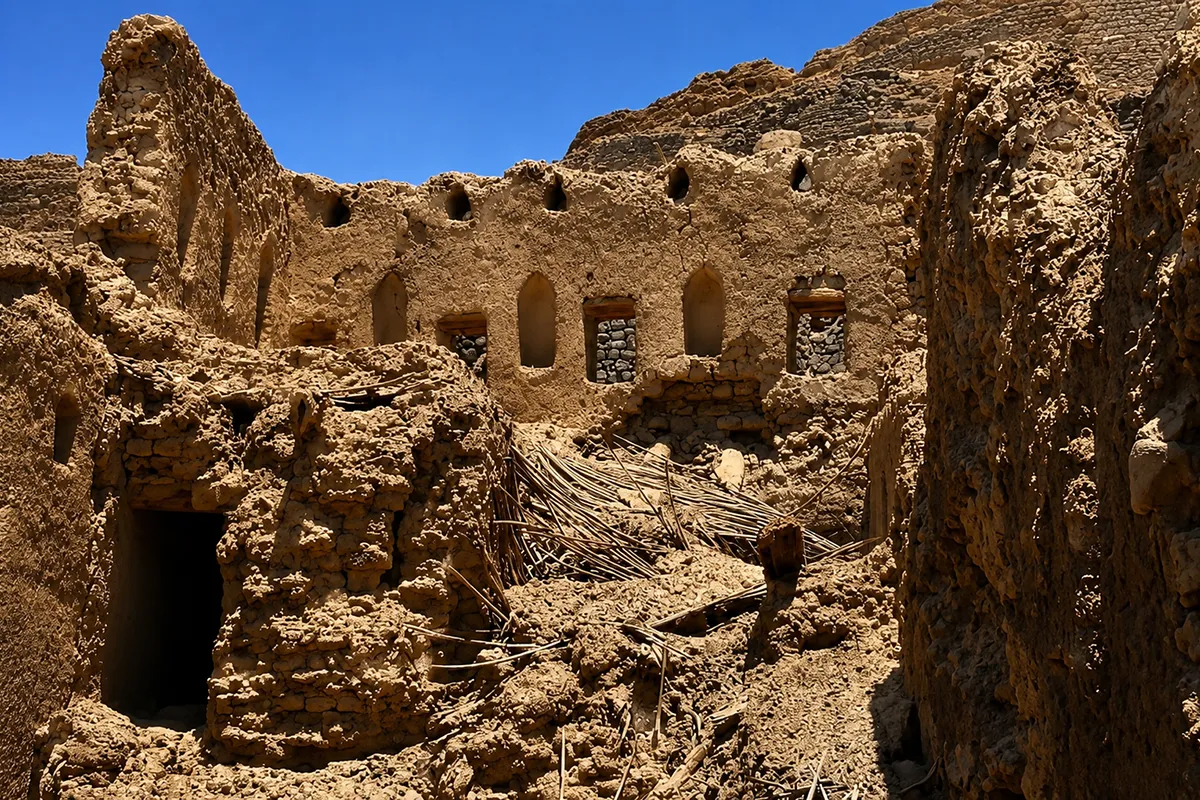
We could not verify a marked, signed or accessible site presented specifically as Qal'at al-Zubayr.
Khaybar has substantial remains and the main fortress area is fenced off as unsafe and under archaeological study. Identifying which walls belong to which named stronghold is a matter for archaeologists, not for a page or a roadside guide.
The evidence, plainly
- Qal'at al-Zubayr as the last al-Natat stronghold, holding those who had escaped from the others: recorded in the seerah literature.
- The water supply being seized and stopped, forcing the defenders out: the same sources.
- A specific identified or accessible fort site today: not verified by us.
- Any prescribed prayer or reward for visiting: none.
Is visiting part of Hajj or Umrah?
No. Not a rite of either.
Related
- The Khaybar guide — the oasis and the practicalities.
- Na'im Fort — the first to fall.
- Al-Watih — the one that ended it by agreement.
- The well of Badr — the same principle, five years earlier.
Getting there, honestly
We do not run a scheduled service to Khaybar and there is no published Wadana Go fare for it. A private car arranged in advance from Madinah or a hire car are the practical options; see driving yourself versus a private driver and renting a car in Saudi Arabia. Ask before you travel, not on the morning. Our Beyond the Haramayn guide covers Khaybar alongside Badr, Taif, Tabuk and al-Hijr.
Accuracy note
Qal'at al-Zubayr as the last stronghold of the al-Natat region, gathering those who had escaped from Na'im, al-Sa'b and other forts, and its fall after the Muslims seized the fort's water supply and stopped its flow so that the defenders came out to fight, are recorded in the seerah literature. The seven forts of Khaybar named in the classical sources are Na'im, al-Qamus, al-Katibah, al-Natat, al-Shiqq, al-Watih and al-Sulalim, grouped across the three regions of al-Natat, al-Shiqq and al-Katibah, with underground passages linking strongholds. The parallel with al-Hubab ibn al-Mundhir's advice on the wells at Badr is our own observation drawn from those two accounts, not a claim from the sources. We could not verify a marked, signed or accessible site presented specifically as Qal'at al-Zubayr today; the main fortress area at Khaybar is fenced off as unsafe and under archaeological study. Visiting is not a rite of Hajj or Umrah and no prescribed prayer or reward attaches to it. We do not run a scheduled service to Khaybar and have not quoted a fare. Content verified August 2026. Correction? Tell us.
Frequently asked questions
Planning a Saudi trip?
Pre-book a private car, find a stay, or ask us anything on WhatsApp.
Last updated: 4 September 2026·Sources reviewed by the Wadana Go editorial team.