Short answer
A Makkah Ziyarat private car costs SAR 200 for a standard sedan, SAR 230 for an SUV, SAR 280 for a van and SAR 380 for a minibus — one fixed fare for the whole vehicle, not per person. The round takes 3–5 hours and covers Jabal al-Noor, Jabal Thawr, Mina, Muzdalifah, Arafat and Masjid Aisha at Taneem. Your driver waits at each stop, so a family of four pays about SAR 50 each.
Key takeaways
- ✓The fare is per VEHICLE, not per person. Four people in a sedan pay SAR 200 between them, about SAR 50 each.
- ✓Allow 3–5 hours for the full round. A shorter version covering 5–6 sites fits into about 3 hours.
- ✓Go early. Leaving after Fajr means climbing Jabal al-Noor before the heat and finishing before the Dhuhr traffic.
- ✓Your driver waits at every stop. There is no meter, and no second fare for the return to your hotel.
- ✓Climbing is optional. Most of the sites are seen and photographed from the road; only Jabal al-Noor and Jabal Thawr involve a real climb.
- ✓Masjid Aisha at Taneem is a miqat, so you can enter ihram there and combine Ziyarat with a second Umrah.
Quick facts
- Distance
- 60 km
- Journey time
- 3–5 hours
- Fare
- From SAR 200 per vehicle
- Vehicles
- Standard Sedan, SUV, Luxury, Van, Minibus
- Sites
- Jabal al-Noor, Jabal Thawr, Mina, Muzdalifah, Arafat, Masjid Aisha
- Best start
- After Fajr
- Waiting
- Included at every stop
Ziyarat in Makkah is not one place. It is six or eight of them, spread from the edge of the Haram out to Arafat about 20 km to the south-east, and the only thing that makes it a single trip is a car that waits while you look. That is the whole product on this page: one vehicle, one driver, one fixed fare, and no negotiation at any stop.
What it costs
The fare is for the vehicle, for the whole round. It does not change with the number of passengers, and there is no meter.
| Vehicle | Seats | Ziyārat round (SAR) | Per person at full capacity |
|---|---|---|---|
| Standard Sedan | 4 | 200 | ~50 |
| SUV | 6 | 230 | ~38 |
| Van | 11 | 280 | ~25 |
| Minibus | 20 | 380 | ~19 |
The arithmetic is the point. A family of four in a sedan pays about SAR 50 each. The same family split across two taxis, negotiating at every stop and waiting to be collected, pays more and sees less. A group of eleven in a van pays about SAR 25 each, which is less than a single one-way taxi across the city.
Going up a class costs far less than most people expect. The step from a sedan to an SUV is SAR 30 for two more seats and the luggage space that comes with them.
The sites, and what actually happens at each
Jabal al-Noor (Cave of Hira)
The mountain where the first revelation came. This is the one stop where the climb is the visit: roughly 600 steps, and most people take between 45 minutes and an hour and a half depending on pace and fitness. It is steep near the top and there is no shade worth the name.
Be honest with yourself about this one. Plenty of pilgrims stop at the base, take their photograph and go on, and there is nothing wrong with that. If you do climb, go first, before the sun is high — that is the single biggest reason to start the round after Fajr rather than after breakfast.
Jabal Thawr (Cave of Thawr)
The cave where the Prophet ﷺ and Abu Bakr (RA) sheltered during the Hijrah. Steeper than Jabal al-Noor and a longer climb — two to three hours up and down for most people. Most Ziyarat groups view it from the road and do not attempt it, and a half-day round does not have time for both climbs.
Mina, Muzdalifah and Arafat
The Hajj plain, empty for most of the year and worth seeing precisely because it is empty. Mina sits about 8 km from the Haram, Muzdalifah about 12 km and Arafat about 20 km, so the three come one after another along the same road out.
At Arafat you stop at Jabal al-Rahmah. Outside Hajj season you can usually walk right up to it. This is the part of the round that turns Hajj from something you have read about into a place with a road and a car park, and it is the stop people most often say they were glad they did not skip.
Masjid Aisha (Taneem)
The mosque at Taneem, on the northern edge of the Haram boundary. It is a miqat, which is the practical reason it is on almost every itinerary: if you intend a second Umrah, this is where you enter ihram for it.
Tell your driver at the start if you plan to do this. It changes the order of the round — Taneem goes last so you can go straight from there to the Haram — and it adds time for changing and praying.
How long it takes, and when to go
Two shapes of round are normal:
- Short round, about 3 hours. Five or six sites, viewing rather than climbing. This is what most people actually want.
- Full round, 4–5 hours. Eight to ten sites, with time to climb Jabal al-Noor and to stop properly at Arafat.
Start after Fajr. It is the difference between climbing in the cool and climbing at forty degrees, and you are back before the Dhuhr traffic builds around the Haram. An afternoon round is possible and we will run it, but you will spend more of it in the car.
Ramadan changes this completely. Roads around the Haram close and reroute at prayer times, and a round that takes three hours in Shawwal can take five. If you are travelling in Ramadan, tell us and we will plan around the prayer times rather than the clock.
Choosing the vehicle
Seats are the easy part. The two things people get wrong are luggage and heat.
You are not carrying suitcases on Ziyarat, but you are carrying water, and in summer you want the air conditioning to still be cold in the back row after four hours of stopping and starting. That is the honest argument for the van over the sedan for a group of six or seven: not the seat count, the fact that nobody is squeezed against a hot window for half a day.
For a family with older parents, the SUV earns its SAR 30 in step height alone — getting in and out at eight stops is the part of the day that tires people, not the driving.
What your driver does, and does not, do
Your driver knows the route, the parking at each site and the order that avoids doubling back. He waits at every stop with the engine and the air conditioning running, and the fare covers that waiting — there is no per-hour charge ticking while you are on the mountain.
He is a driver, not a religious guide. We will not pretend otherwise. He will tell you what a place is and where to stand for the photograph. He will not deliver a lecture on its history, and he will not tell you what is or is not permissible. If you want a scholar, bring one; if you want to be driven well and left in peace, that is what this is.
Ask when you book if you would prefer a driver who speaks Urdu, Turkish, Bahasa or French. We can usually arrange it with a day's notice.
Booking it
Give us the date, your hotel, the number of passengers and roughly what time you want to leave. We confirm the vehicle and the fare before the day, and you pay the driver or transfer to us — nothing is taken up front.
Non-Muslim travellers cannot enter Makkah, so this round is for pilgrims already in the city. If you are planning a Ziyarat round in Madinah as well, it is a separate trip at the same fixed-fare model — see Ziyarat private car in Madinah.
For the full comparison of every Makkah fare, including airport transfers and the Madinah road, our Ziyarat private car guide sets the round beside the other routes.
Frequently asked questions
Book this route: Makkah Hotels → Makkah Ziyarat Sites
From 200 SAR per vehicle · 3–5 hours · verified drivers
Last updated: 1 August 2026·Sources reviewed by the Wadana Go editorial team.
Related routes & guides

Route
Ziyarat Private Car (Madinah)
Madinah Hotels → Madinah Ziyarat Sites

Activity
Makkah Ziyarat Tour
Makkah · Ziyarat
Guide
The Umrah, Step by Step — The Authenticated Ḥanafī Method with Every Duʿā
Umrah & Ziyarat
Guide
Makkah Ziyārat, Place by Place — the Authenticated Guide to Every Site
Umrah & Ziyarat
Blog
10 Tips for First-Time Umrah Travellers
Umrah & Ziyarat
Destination
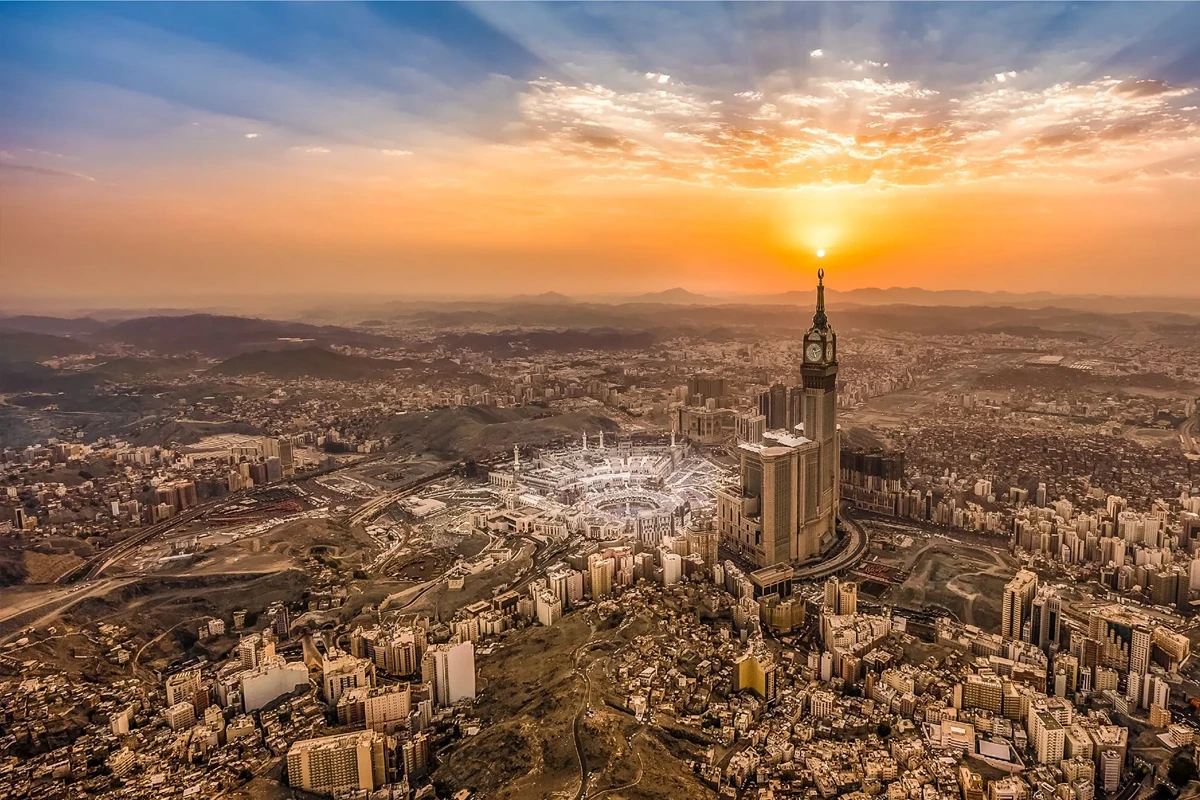
Makkah
The holiest city in Islam