Shi'b Abi Talib: Three Years of Boycott in a Makkah Valley
Short answer
Shi'b Abi Talib is a ravine on the eastern side of Makkah, between the hills of Abu Qubais and Khandama, where Banu Hashim and Banu al-Muttalib were confined during the Quraysh boycott. The boycott lasted about three years and cut them off from trade and marriage. Sahih al-Bukhari confirms the pact itself. The valley today is a built-up part of the city.
Key takeaways
- ✓Shi'b Abi Talib is a ravine on the eastern side of Makkah, between Jabal Abu Qubais and Jabal Khandama.
- ✓Quraysh agreed a pact to cut off Banu Hashim and Banu al-Muttalib from trade and marriage.
- ✓Sahih al-Bukhari records the Prophet referring to the place where Quraysh swore that pact.
- ✓The boycott is generally dated to around the seventh year of the call and lasted about three years.
- ✓It was hunger rather than violence that made it work, and children suffered most.
- ✓The clan supported the Prophet on tribal grounds, not because all of them were Muslim.
- ✓The valley is now covered by modern Makkah, with nothing preserved to see.
Quick facts
- City
- Makkah, Saudi Arabia
- Where
- Eastern side, between Abu Qubais and Khandama
- What happened
- The Quraysh boycott of Banu Hashim
- Length
- About three years
- Roughly when
- Around the 7th year of the call
- Anything preserved?
- No. The area is built over.
- Car access
- Yes, it is a normal city district
- Part of Umrah?
- No. Not a rite of Hajj or Umrah.
A ravine on the east side of the city
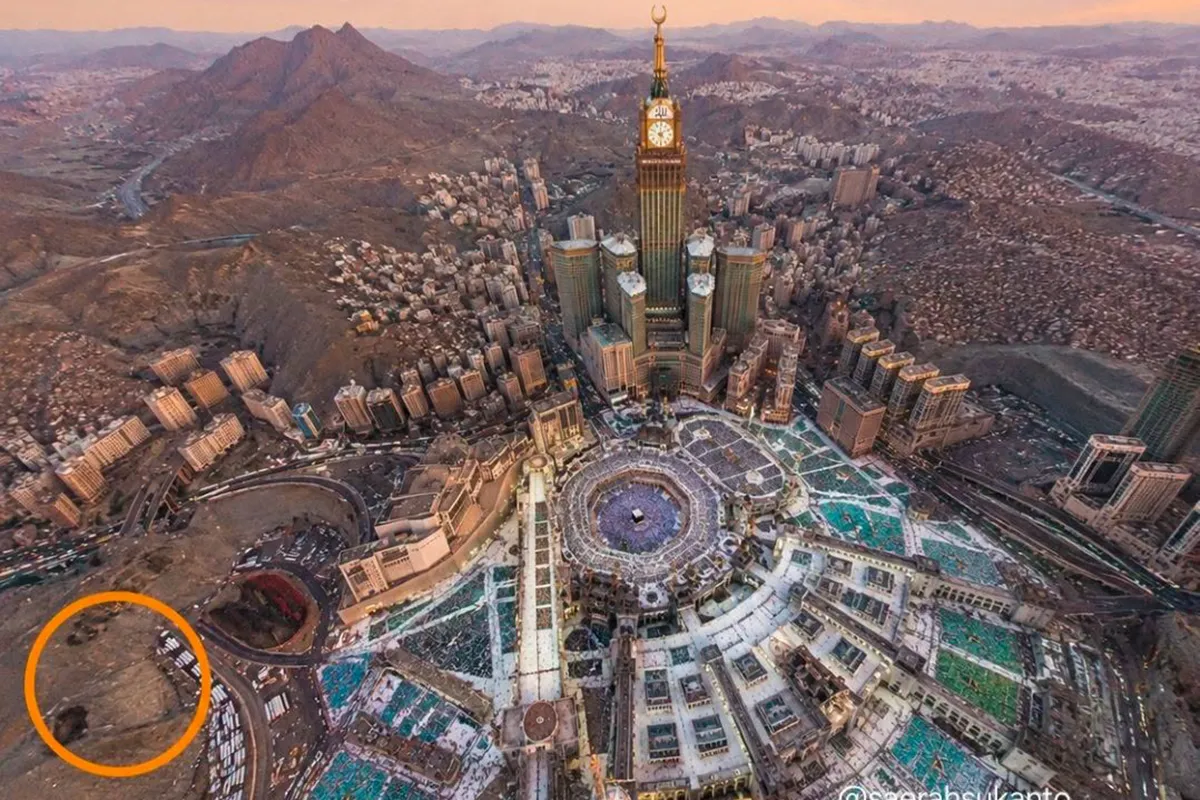
A shi'b is a ravine or narrow valley between hills. Shi'b Abi Talib is the one on the eastern side of Makkah, in the ground between the al-Hajun area and the hills of Abu Qubais and Khandama, close to the Kaaba.
It carries the name of Abu Talib, the Prophet's uncle, because this was the quarter of Banu Hashim, the clan he led.
You will not find a valley when you go looking. Makkah has grown over it. What was once a ravine you could seal at one end is now streets, apartment blocks and traffic, with the shape of the old ground only readable in the way the slopes rise on either side.
Nothing is preserved there and nothing is marked. That is the honest starting point for this one.
The pact, and what the hadith confirms
Most of what we know about the boycott comes from the seerah. One central piece of it, though, comes from Sahih al-Bukhari, and it is worth putting first.
On the Day of Nahr at Mina, near the end of his life, the Prophet said that they would stay the next day at Khayf Banu Kinana, where the pagans had sworn their oath of disbelief. Abu Hurayra's narration explains the reference: it was the place where Quraysh and Banu Kinana made a pact against Banu Hashim and Banu al-Muttalib not to marry into them and not to trade with them until they handed the Prophet over.
That is an authentic report, and it settles the central fact. There was a written pact, its terms were marriage and trade, and its object was to force the clan to give up one man.
The seerah literature fills in the rest: that the document was hung inside the Kaaba, and that the clan withdrew into their quarter, the shi'b, and stayed there.
How a boycott starves people
There was no army and no siege line. This was economic.
Banu Hashim could not buy, could not sell, and could not marry outside the clan. In a city that lived on caravan trade and where nothing was grown, that is a sentence of slow hunger.
The seerah accounts describe food reaching the valley only occasionally, smuggled by relatives on the other side who were unwilling to see children starve for a political quarrel. They describe the sound of children crying from hunger being audible outside the ravine. They describe people eating leaves.
It lasted about three years.
One detail is often missed and is worth stating. Not everyone in that valley was Muslim. Abu Talib himself never accepted Islam. Banu Hashim stood by the Prophet because he was one of theirs and handing him over would have been a disgrace, not because they all believed what he said. The boycott was aimed at a clan, and the clan behaved like a clan.
How it ended
It ended from the inside. Men within Quraysh, several of them related by marriage to the people in the valley, grew uncomfortable with what was being done and moved to break the agreement.
The seerah records that the document was found to have been eaten away, with a portion left, and that this was taken as a sign. Reports vary in the detail. Treat the specifics as historical narrative rather than as established evidence, because that is what they are.
What is not in doubt is that the boycott was abandoned and the clan came out.
The relief did not last. Within a short period the Prophet lost both Abu Talib, who had protected him, and Khadijah, his wife of twenty-five years, who had come through the boycott years with him and was by then an old woman. That period is remembered as the Year of Sorrow, and the journey to Taif followed it.
What is there to see
Very little, and we would rather say so than dress it up.
The area is residential Makkah. There is no ruin, no wall, no preserved section of the ravine and no visitor centre. Drivers who know the district know it as an ordinary part of the city.
Some operators point out a spot and call it the place. Nothing at street level is established as a specific location connected with the boycott, and you should treat a confident guide on this with the same caution you would anywhere else.
If you go, what you are going for is the ground and the shape of it. Standing between those slopes and thinking about three years of it does something that reading cannot. That is a legitimate reason to visit, and it is the only one on offer.
Practical notes
- It is close to the Haram, on the eastern side, near the al-Hajun area and the cemetery.
- Ten to fifteen minutes is enough. There is nothing to walk around.
- Pair it with the cemetery and Masjid al-Jinn, which are in the same part of the city.
- Do not go looking for a marked spot. There is not one, and being shown one is a reason to be sceptical rather than pleased.
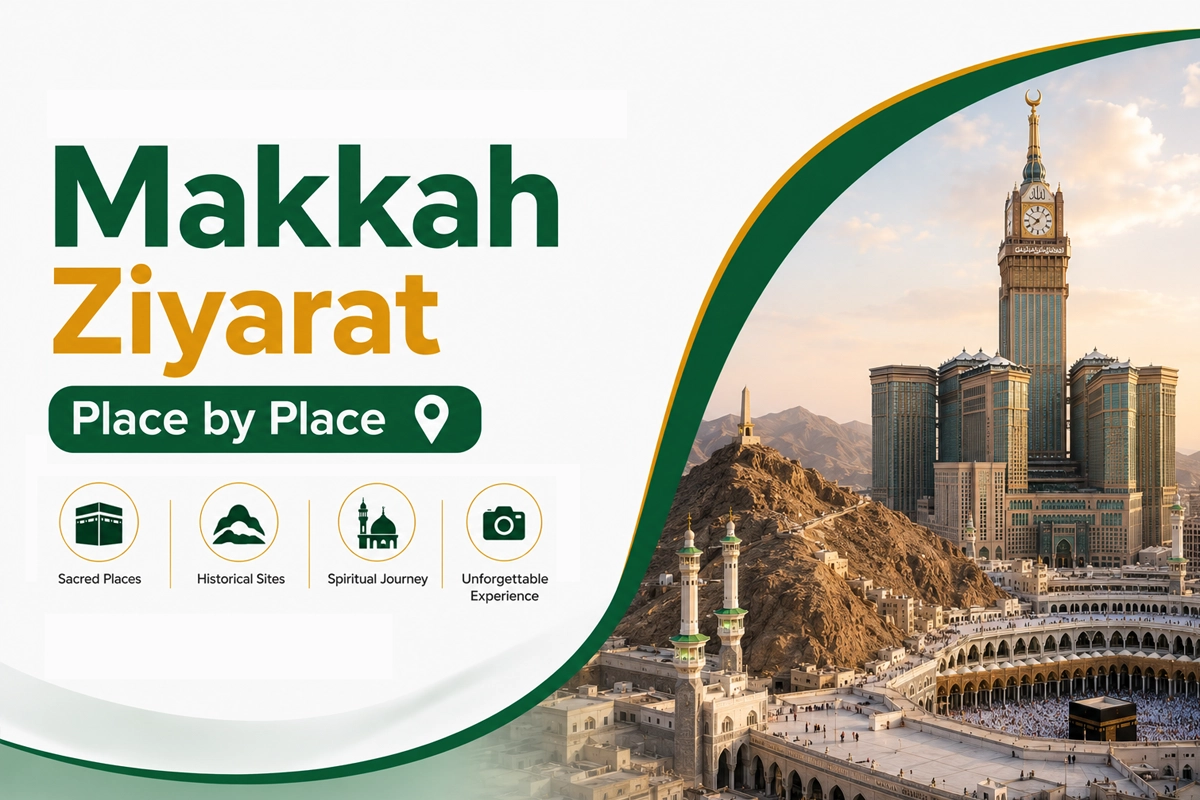
Because it sits between other stops on the northern side of the city, this is a place to see from the car rather than a trip of its own. It fits into a Makkah Ziyarat round at no extra cost, from SAR 200 per vehicle with waiting at each stop. Fares reviewed August 2026.
Is visiting it prescribed?
No. Shi'b Abi Talib is not a rite of Hajj or Umrah, no prayer is prescribed there, and no reward for visiting it is established in authentic evidence.
It is history, and it is history worth knowing. That is a good enough reason to spend a quarter of an hour on it, and there is no need to claim anything further.
Nearby
| Place | What it is |
|---|---|
| Jannat al-Mu'alla | Where Khadijah and Abu Talib were buried, in the same part of the city. |
| Masjid al-Jinn | Beside the cemetery, on the second ring road. |
| Dar al-Arqam | The house at Safa, from the years before the boycott. |
| Ghar Hira | Where the revelation began, on Jabal al-Noor. |
Our Makkah Ziyarat guide puts the northern sites into one workable order.
Accuracy note
The existence and terms of the pact are recorded in Sahih al-Bukhari, in the narration of Abu Hurayra, where the Prophet refers to Khayf Banu Kinana as the place where Quraysh swore their oath, and the narration explains that Quraysh and Banu Kinana agreed not to marry into or trade with Banu Hashim and Banu al-Muttalib until the Prophet was handed over. This is established evidence.
The withdrawal of the clan into the shi'b, the duration of about three years, the hunger, the smuggling of food and the manner in which the boycott ended come from the standard early biographies of the Prophet. That is reliable historical material rather than authentic hadith, and the details of the ending in particular vary between accounts.
The location of the ravine on the eastern side of Makkah between Abu Qubais and Khandama is the identification given in the historical sources. No specific present-day spot in that district is established as a particular site connected with the boycott, and nothing is preserved there. Visiting is not part of Hajj or Umrah and no reward for it is established. Fares are our own published rates, reviewed August 2026. Verified August 2026.
Frequently asked questions
Planning a Saudi trip?
Pre-book a private car, find a stay, or ask us anything on WhatsApp.
Last updated: 13 October 2026·Sources reviewed by the Wadana Go editorial team.