Saudi Arabia's New One-Year Multiple-Entry Umrah Visa: How the Pooled 90-Day Rule Really Works
Short answer
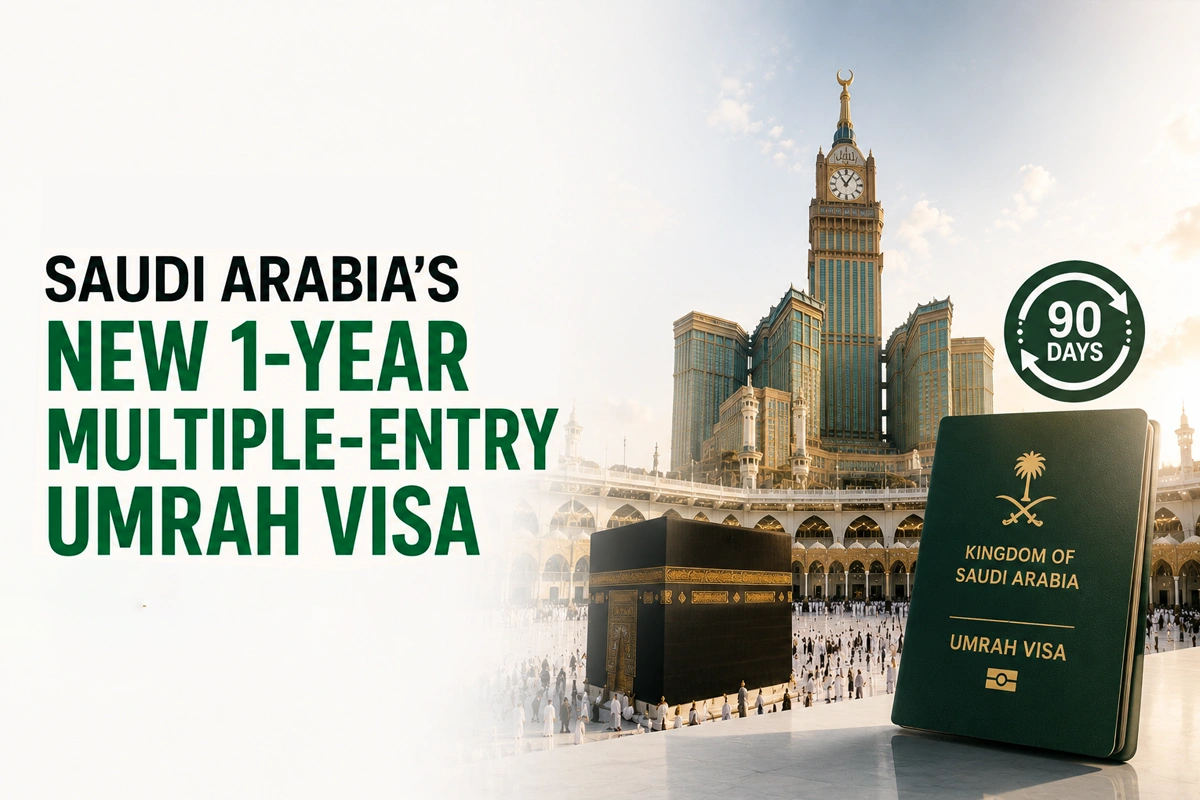
Saudi Arabia's new one-year multiple-entry Umrah visa, announced around 20–21 July 2026, is valid for 365 days from issuance and allows repeated visits — but the total stay is 90 days pooled across the whole year, and the allowance does not reset per trip. Before every entry you must buy an approved service package and obtain an Umrah permit on the Nusuk platform, and the visa cannot be used during the annual Hajj season. Confirm current rules on nusuk.sa before booking.
Key takeaways
- ✓Valid for 365 days from the date of issuance, with multiple entries — announced by Saudi authorities around 20–21 July 2026.
- ✓The 90-day stay allowance is pooled and cumulative across the whole year; it never resets between trips.
- ✓Every entry requires an approved Nusuk service package plus an Umrah permit obtained before you travel, and the package cannot exceed the days remaining on the visa.
- ✓The visa is deactivated each time you leave Saudi Arabia and reactivated once the next visit's requirements are met.
- ✓It is not valid during the annual Hajj season — verify current rules and package costs on nusuk.sa before booking.
Quick facts
- Validity
- 365 days from issuance
- Entries
- Multiple
- Total stay
- 90 days pooled per year
- Each entry needs
- Nusuk package + permit
- Hajj season
- Not valid
If you have ever performed Umrah more than once in a year, you know the drudgery: a fresh visa application every single time. In July 2026 Saudi Arabia changed that. It launched a one-year, multiple-entry Umrah visa that covers several return trips on a single document.
It is a big change, but the small print matters more than the headline, and one detail is already causing arguments in family group chats. The visa gives you 90 days of stay, and those 90 days are shared across the whole year, not handed to you fresh on each trip. This post covers what was actually announced: how the validity works, how that shared 90-day allowance is counted, what you have to do on Nusuk before every entry, and how the new visa stacks up against the tourist eVisa. One caveat up front: the policy is only days old, so treat everything here as verified in July 2026 and check the current rules on nusuk.sa before you book anything.
What is the one-year multiple-entry Umrah visa?
In plain terms: one application, one visa, and up to a year of return visits for Umrah. The visa is valid for 365 days from the date of issuance, and within that window you may enter Saudi Arabia multiple times, provided the requirements for each entry are met. Until now, returning for a second Umrah within the same year has generally meant starting a fresh application from scratch each time. For pilgrims who feel the pull of the Haram more than once a year, that friction has just been substantially reduced.
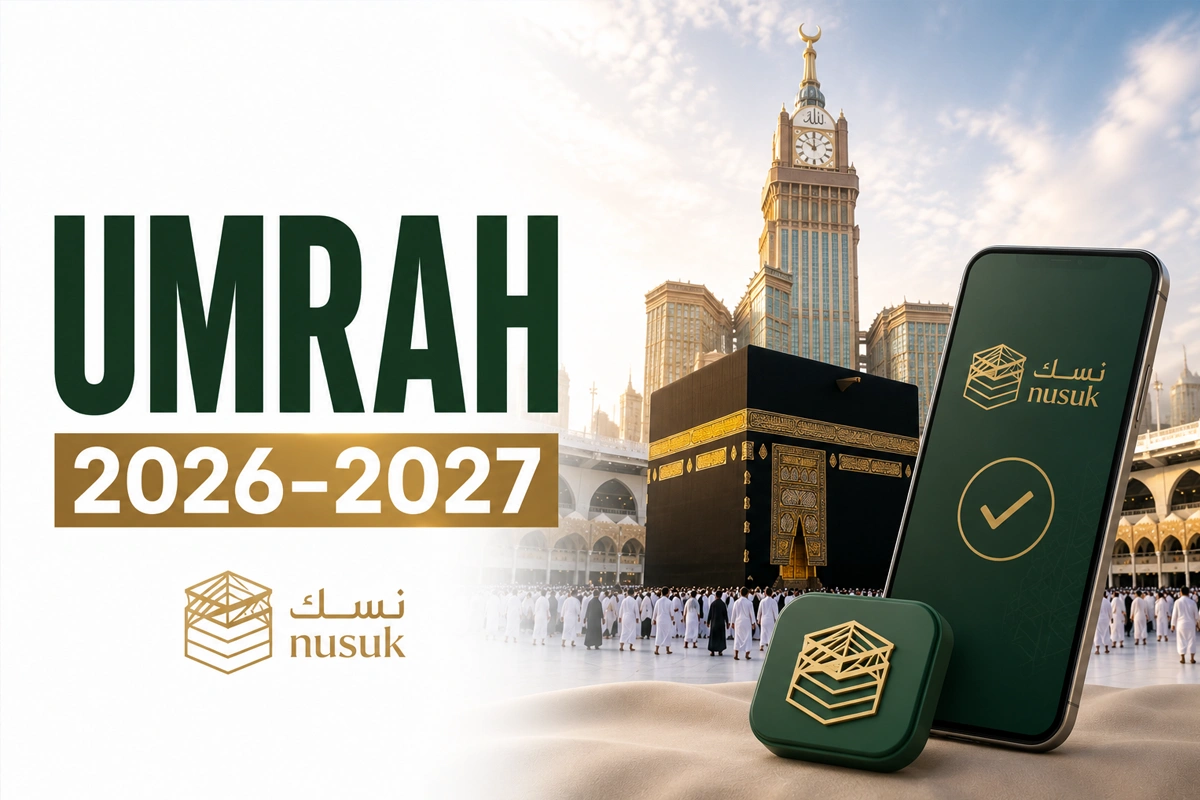
The easiest way to understand the structure is as a partnership between the visa and Nusuk. The visa grants you the year and the entries; Nusuk governs each individual visit. Nothing about a given trip happens automatically — every entry is unlocked by booking a service package with an approved provider and securing an Umrah permit in the Nusuk app before you travel. Skip either step and the visa, however valid on paper, will not carry you through the airport.
How the 365 days and multiple entries actually work
The year runs from the date of issuance, not from your first entry. If your visa is issued on 1 September 2026, it remains valid until the end of August 2027 regardless of when you first travel — so it makes sense to apply when you are actually ready to start using it. Within that year you may make several visits, and the announced mechanism for managing them is distinctive: each time you leave Saudi Arabia, the visa is deactivated. It is then reactivated for your next visit once the requirements are met again — a new approved service package and a new Umrah permit through Nusuk.
Think of it as a door that locks gently behind you each time you leave. What reopens it is not the visa document itself but the fresh package-and-permit combination for the next trip. This design keeps every visit organised through official channels, very much the direction of recent seasons — our explainer on the new Umrah Nusuk rules for 2026–2027 sets out that wider context.
The pooled 90-day rule (the part people get wrong)
Here is the point on which more pilgrims will stumble than any other. The visa allows a total stay of 90 days across the entire year of validity. That allowance is cumulative and shared between all of your trips: every day you spend inside Saudi Arabia is deducted from one shared pot of 90. Leave and come back, and you resume drawing down the same pot — there is no top-up at the border.
A worked example: three trips on one visa
Imagine your visa is issued on 1 September 2026 and, having checked the Hajj-season window on Nusuk, you plan three visits across the year, each kept comfortably short. Here is how the allowance draws down:
| Trip | When | Length of stay | Days used so far | Days left from 90 |
|---|---|---|---|---|
| Trip 1 — first Umrah of the year | October 2026 | 10 days | 10 | 80 |
| Trip 2 — winter return | January 2027 | 14 days | 24 | 66 |
| Trip 3 — longer spring visit | April 2027 | 21 days | 45 | 45 |
After three unhurried journeys, this pilgrim has used 45 of the 90 days, with 45 still available before the visa expires — provided each future trip clears the usual gates: package booked, permit issued, Hajj season avoided. Now flip the example. Someone who spends 45 days on their first visit and 45 on their second has exhausted the allowance in two trips. Their visa may still show months of validity on paper, but with nothing left in the pool there is nothing left to travel on. The 365 days and the 90 days run on separate clocks, and either can be the one that limits you, depending on how you travel.
One further announced rule ties directly into this: the service package you buy for any entry must not exceed the days remaining on your visa. In practice, that means keeping a simple running tally — a note on your phone is enough — of your entry and exit dates, and shaping each new booking around what actually remains rather than what you half-remember.
What must happen before every entry
The multiple-entry visa is emphatically not turn-up-and-go. Two requirements must be in place before each and every journey, and together they are what reactivates the visa for that visit:
- A service package from an approved provider on Nusuk. Booked through the official platform, this covers the arranged services for that specific visit. Choose the length carefully: it must not exceed the days remaining on your visa, and every day of it spent in the Kingdom draws down your 90-day pool.
- An Umrah permit obtained through the Nusuk app. The permit must be secured before travelling, not after arrival. Treat it as part of booking the trip itself: package first, permit confirmed, and only then finalise flights and everything else.
On cost: this is a brand-new policy and package pricing sits with the approved providers on Nusuk, so we deliberately do not quote figures that could date within weeks. Check nusuk.sa for the current visa requirements and package prices at the moment you book — it is the official source, and five minutes there is worth more than any second-hand number.
How it compares with the tourist eVisa
A fair question follows: the tourist eVisa also allows visitors to perform Umrah outside the Hajj season, so who needs the dedicated visa? The honest answer is that they serve different intentions, and the right choice depends on the shape of your year:
| Question | One-year multiple-entry Umrah visa | Tourist eVisa |
|---|---|---|
| Built for | Repeat Umrah journeys across a single year | Tourism and leisure, with Umrah possible outside Hajj season |
| Structure per visit | Approved Nusuk service package plus Umrah permit before every entry | See our first-timer guide for the current requirements |
| Stay allowance | 90 days pooled across the visa year — never reset per trip | Covered in our tourist eVisa guide |
| Hajj season | Visa not valid during the annual Hajj season | Umrah possible only outside Hajj season |
| Where to verify | Nusuk (nusuk.sa) | Official channels, alongside our guide |
If your year really does revolve around Umrah, with repeat visits structured through official packages and permits, then the dedicated multiple-entry visa is built for exactly that pattern. If Umrah is one meaningful part of a broader Saudi journey, start with our first-timer guide to the Saudi eVisa and weigh the two side by side. Either way, decide with the current rules in front of you, not last month's summary.
Who the new visa suits best
- Frequent pilgrims. If you have historically applied afresh for every journey, one document covering a year of visits removes real friction and lets you travel when the opportunity arises.
- Families pacing themselves. Several short, gentle trips are often kinder than one long stay, especially with elderly parents or young children — and pooled days reward exactly this style. Three 10-day visits use just 30 of the 90.
- Those pairing Umrah with wider plans. If work or family already brings you towards the region during the year, the visa lets Umrah fit around life rather than demanding one large block of leave — always within the shared allowance.
- Pilgrims hoping for a treasured season. If you would love one visit to fall in Ramadan, plan it deliberately: secure the package and permit as early as Nusuk allows, and remember those days come out of the same shared pool.
Not valid during Hajj season
One firm boundary sits over everything above: the visa cannot be used during the annual Hajj season. The Hajj window follows the Islamic calendar, so its Gregorian dates shift each year — build your plan around it from the start rather than discovering it late.
Planning a multi-trip year, step by step
- Verify before anything. Confirm on nusuk.sa that the visa is currently offered on the announced terms and is available to you. This policy was announced in July 2026, and details can be refined as it rolls out.
- Sketch the year around Hajj season. Mark the window you cannot use, then place your ideal trips across the remaining calendar.
- Budget the 90 days deliberately. Decide roughly how many trips you want and divide the pool with a reserve — three trips of two weeks still leaves a generous buffer for an unplanned return.
- For each trip: package, permit, then flights. Book the approved Nusuk package (no longer than the days remaining on your visa), secure the Umrah permit in the app, and only then lock in flights and ground plans.
- Settle a ground routine you can repeat. Because you will make the same journey several times, it pays to fix a pattern once: a pre-booked Jeddah Airport to Makkah transfer waiting on landing, a shortlist of Makkah stays near the Haram that you already trust, and a private car from Makkah to Madinah for the visits that continue to the Prophet's Mosque.
- Keep your tally. Record entry and exit dates after every trip, so your next booking is based on your true remaining days rather than a guess.
The practical upshot is simple. For anyone who returns to the Haram more than once a year, this visa turns a repeated chore into a single piece of admin. Plan your trips, keep an eye on the 90-day total, and the rest is just travel.
Ready to plan your visa year?
Wadana Go cannot issue your visa — only the official channels do that — but we can make every trip inside it smoother. Build a custom Umrah package with stays and transport arranged around each visit, and return to the same trusted setup every time you come back. Start with the official steps on nusuk.sa, then let us take care of the ground. And one final time, because it matters: this policy is new. Everything here is verified as of July 2026 — confirm the current rules on Nusuk before you book.
Frequently asked questions
Planning a Saudi trip?
Pre-book a private car, find a stay, or ask us anything on WhatsApp.
Last updated: 23 July 2026·Sources reviewed by the Wadana Go editorial team.