Riyadh · Heritage
Diriyah & At-Turaif Visit
⏱ 3 hours · Up to 12
Facts checked August 2026. Someone else sets the hours and ticket prices here — confirm them before you travel.
Diriyah's UNESCO-listed At-Turaif district near Riyadh is the mud-brick birthplace of the Saudi state; daytime entry (9am-5pm) is free, and the evening access pass is about SAR 50, redeemable against dining at Bujairi Terrace.
Walk Diriyah's At-Turaif district, the mud-brick birthplace of the first Saudi state, with its restored palaces, museums and Najdi architecture along Wadi Hanifah. Daytime access to At-Turaif and the adjacent Bujairi Terrace is free (9am-5pm); an evening access pass (about SAR 50) is redeemable against dining at Bujairi Terrace's restaurants. Guided tours and individual museums can be added.
Key takeaways
- Check the official site before you go. Hours and ticketing here change as the district is built out.
- Evening is the right time — the mud-brick walls are floodlit and the heat has gone.
- Bujairi Terrace, the restaurant district next door, is free to walk and does not need a ticket.
- Book a Bujairi table ahead on a Thursday or Friday. It is one of Riyadh's busiest dining spots.
- Allow three hours. Two for At-Turaif, one for dinner, more if you do the museums properly.
Diriyah sits on the edge of Riyadh along Wadi Hanifah, and it is where the Saudi state began. The At-Turaif district, built in Najdi mud-brick from the 15th century onwards, was the capital of the first Saudi state until it was destroyed in 1818. UNESCO listed it in 2010. It has since been restored at enormous expense and is the centrepiece of one of the largest heritage projects anywhere.
At-Turaif
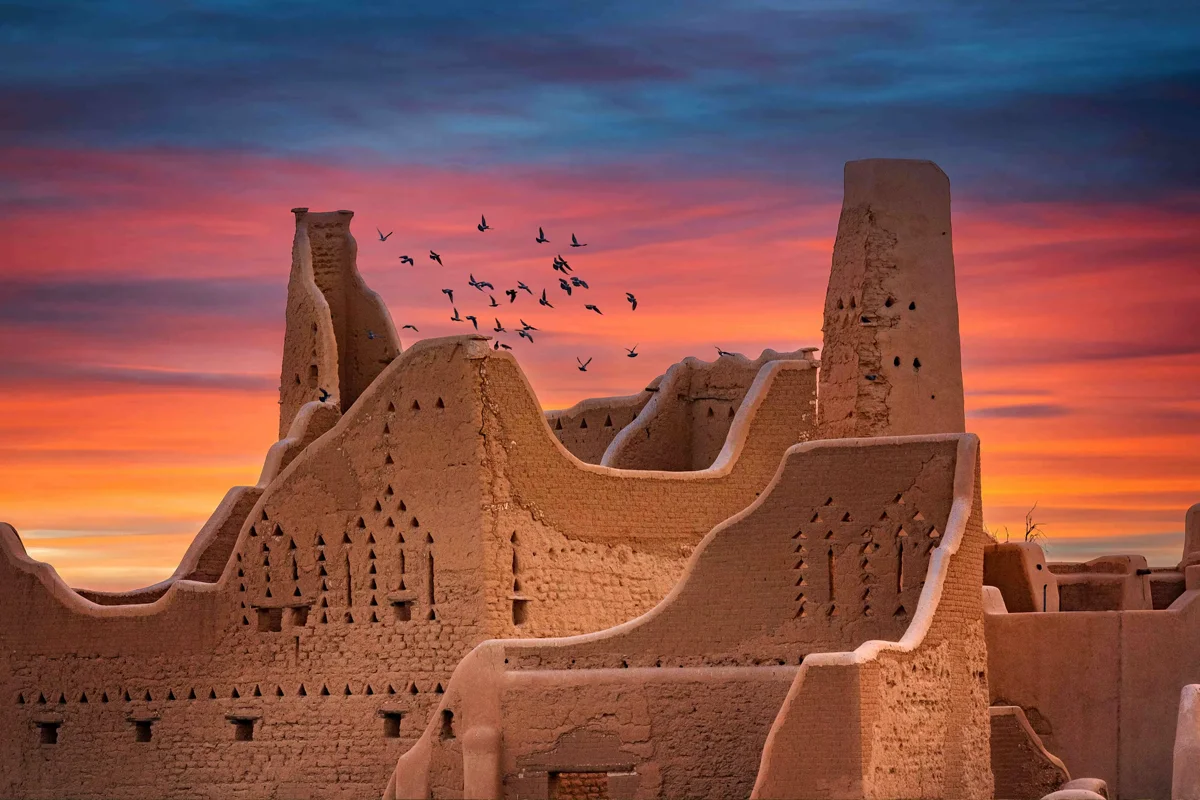
You walk it. Narrow lanes between high mud-brick walls, restored palaces, and the triangular openings and stepped parapets that mark Najdi building. Salwa Palace, the seat of the first Saudi rulers, is the largest structure and the anchor of the site.
Several museums sit within the walls, covering the founding of the state, Arabian horses, traditional trades and daily life. Which ones are open, and whether they are ticketed separately, has changed as the district develops.
The architecture is the reason to come even if you skip every museum. Mud-brick at this scale, restored properly, looks like nothing else — warm, thick, sculptural, and completely at home in the landscape.
Tickets and hours — check first
This is the part where we will not give you a number to rely on. Diriyah is an active development, and entry arrangements for At-Turaif and its museums have been reorganised more than once: free daytime access, ticketed evening passes, passes redeemable against dining, timed slots. Any figure printed here would be out of date at some point, and being told the wrong thing about a ticket is worse than being told nothing.
Look at diriyah.sa before you travel. Bujairi Terrace, the dining district immediately beside At-Turaif, is open to walk without a ticket.
Bujairi Terrace
A purpose-built restaurant district on the edge of the site, looking across at the floodlit walls of At-Turaif. Thirty-odd restaurants ranging from local Najdi food to international names, with wide terraces and no cars.
It is extremely popular. On Thursday and Friday evenings the good tables are booked, so reserve rather than turning up. It is also the best view of At-Turaif at night, from a chair, with dinner in front of you.
When to go
Evening, from late afternoon onwards. Riyadh's daytime heat makes walking mud-brick lanes at 14:00 a poor idea for most of the year, and the site is lit after dark in a way that flatters it enormously.
November to March is the comfortable season in Riyadh generally. Summer evenings still work — you simply start later.
Wadi Hanifah
The valley below has been rehabilitated into a long green park with walking and cycling paths, running for kilometres through the city. If you have a morning spare, it is a genuinely pleasant place to walk, and it explains why a settlement grew here in the first place.
Practical notes
- The lanes are paved and largely accessible, with shaded rest points. Comfortable shoes still help.
- Modest dress, as anywhere in Riyadh.
- There is parking, and any Riyadh driver knows Bujairi. Traffic on a Friday evening is heavy.
- Guided tours are available and worth it — the history is dense and the labelling alone will not carry it.
- Photography is fine. The golden hour on mud-brick is the shot.
A Riyadh weekend
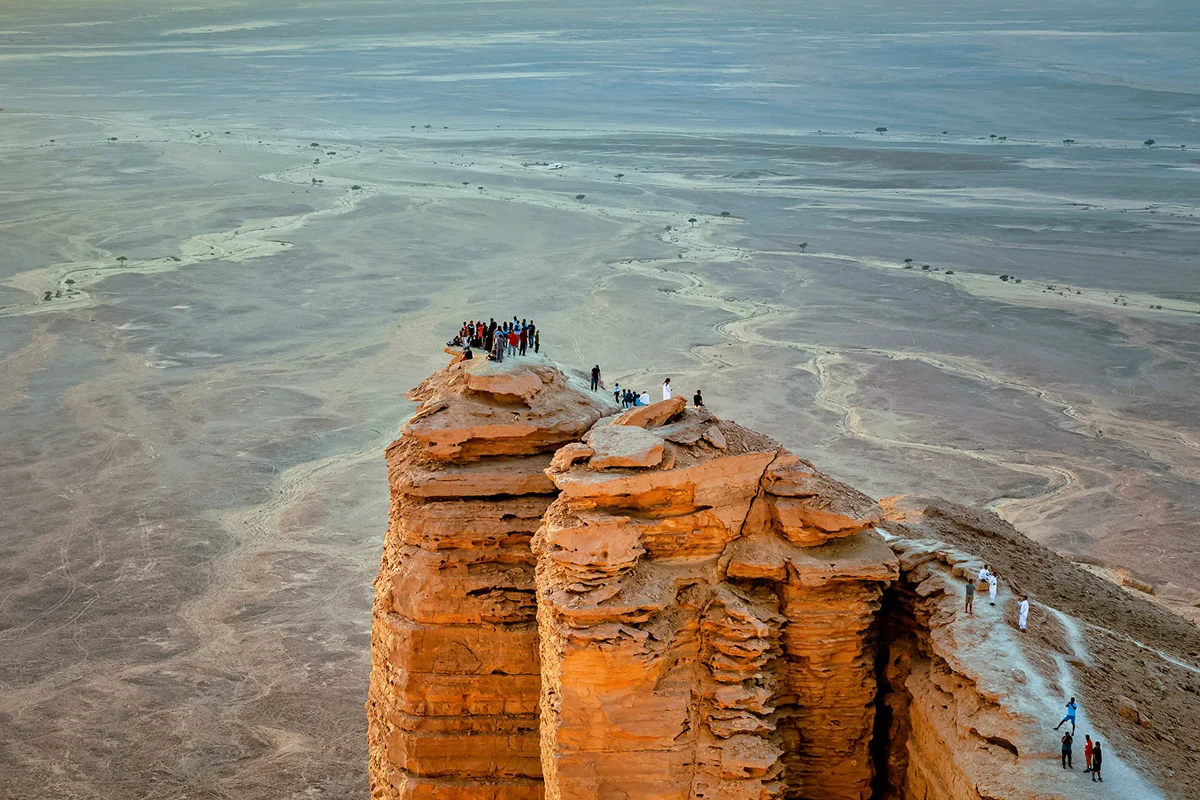
Diriyah in the evening and the Edge of the World for a late-afternoon sunset on a different day makes a good pair — one is culture and dinner, the other is desert and sky, and neither wants the middle of the day.
Official information: Diriyah ↗
- City
- Riyadh
- Duration
- 3 hours
- From
- SAR 50
- Daytime
- Free entry
FAQ
Yes — the restored district is explored on foot along accessible pathways with shaded rest points.
Daytime visits (9am-5pm) are free; an evening access pass costs about SAR 50 and is redeemable as credit at Bujairi Terrace restaurants. Some individual museums charge separately.
More to do in Riyadh
Activity
Hegra Guided Heritage Tour
AlUla · Heritage
Activity
Tayebat Museum Visit
Jeddah · Heritage
Destination
Riyadh
The dynamic capital
Activity
Edge of the World Day Trip
Riyadh · Adventure
Activity
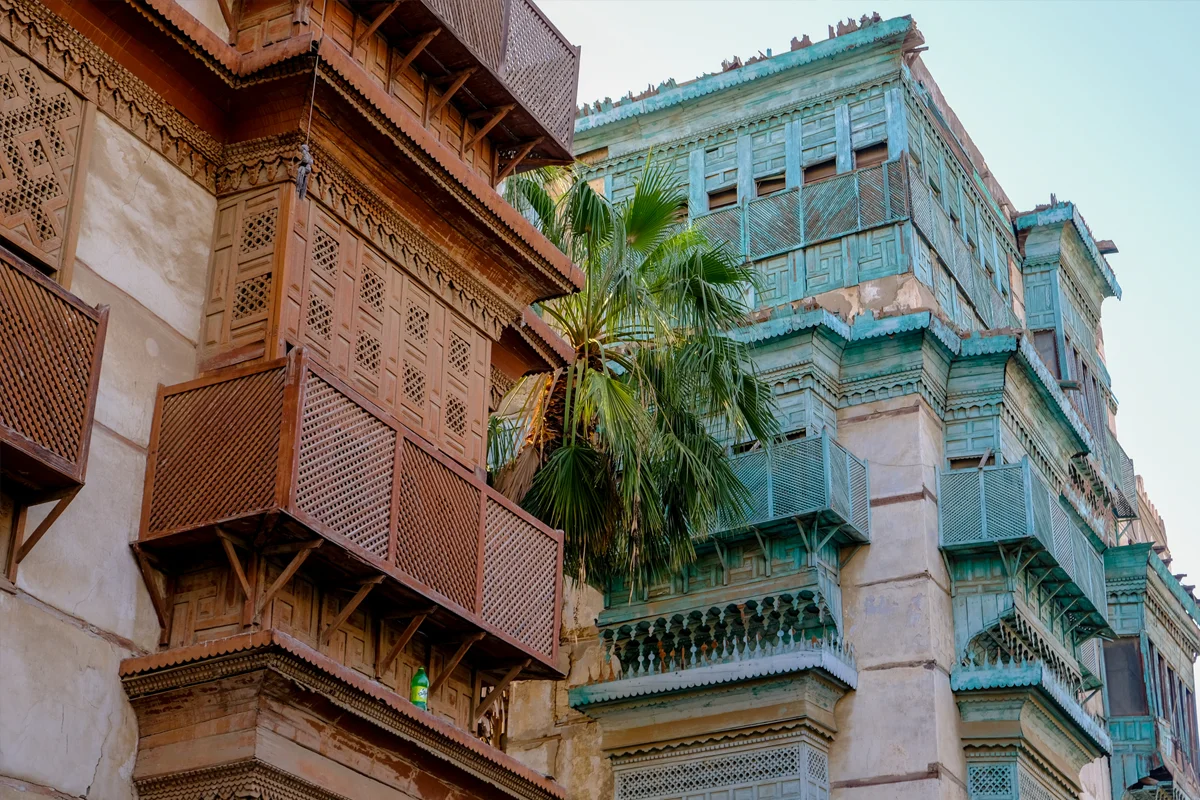
Al-Balad Heritage Walk
Jeddah · Culture

Guide
Riyadh Airport (RUH) to the City: Metro, Taxi or Private Car
Transport & Cars