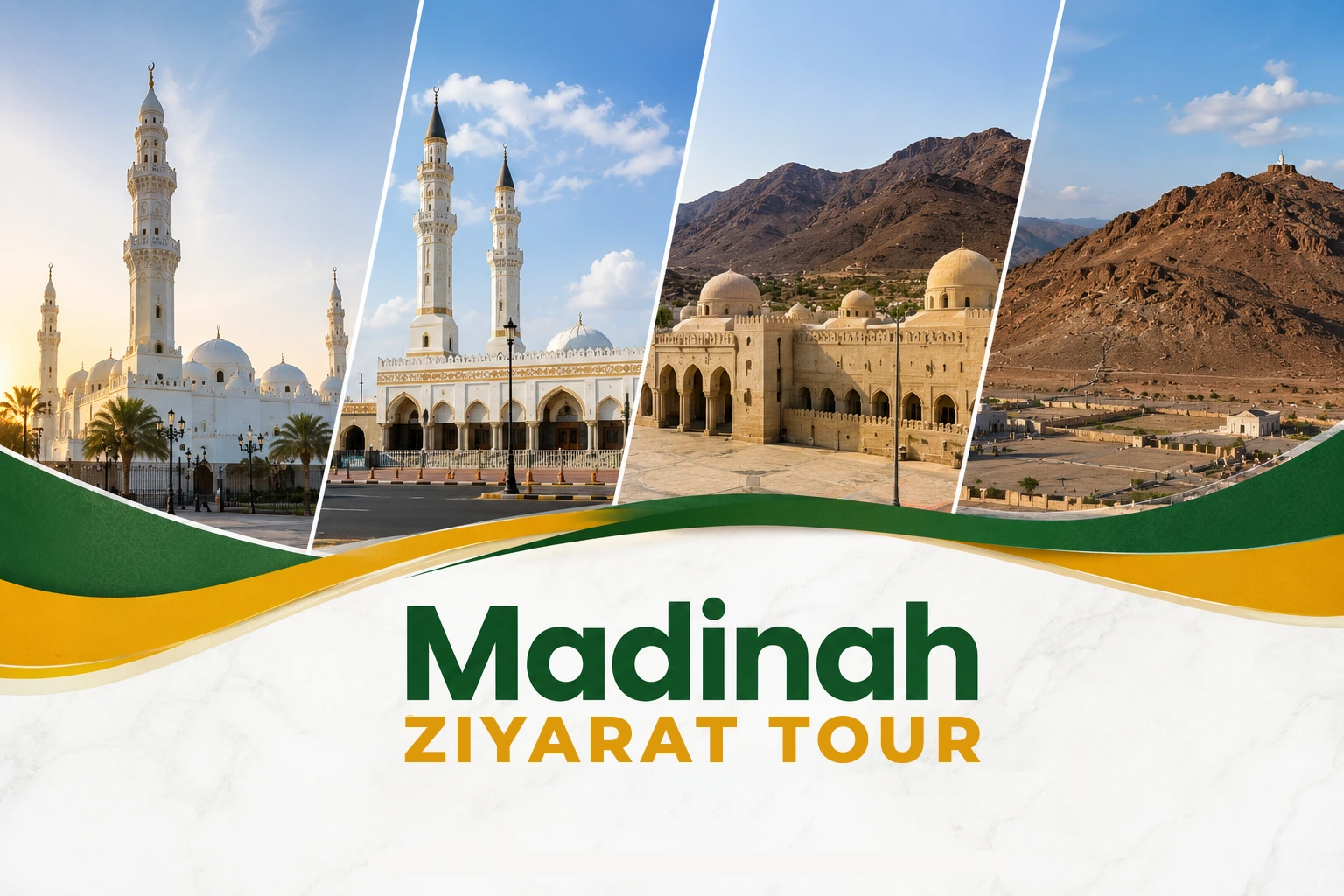
Madinah · Ziyarat
Madinah Ziyarat Tour
⏱ 3 hours · Up to 20
Facts checked August 2026. Fares are ours and are confirmed before you pay.
The Madinah Ziyarat tour is a 2-3 hour private-car visit to Quba, Qiblatayn, the Seven Mosques and Uhud with a driver who explains each site — from about SAR 150 per vehicle for a sedan.
A private-car Ziyarat around the blessed city: pray at Masjid Quba, the first mosque of Islam, see Masjid Qiblatayn where the qibla was turned towards Makkah, stop at the Seven Mosques by the Trench battlefield, and stand at Mount Uhud and the resting place of its martyrs. Entry to the mosques is free and open for worship — the price covers your private vehicle, driver and flexible 2-3 hour itinerary, with an optional date market stop.
Key takeaways
- Every mosque on this round is free to enter. You pay for the car, the driver and the waiting.
- Go to Quba first, and go in a state of wudu — two rak'ah there carries the reward of an Umrah.
- Uhud is the stop people linger at. Allow more time there than you think.
- Start after Fajr. By 10am in summer, Uhud's open ground has no shade at all.
- One fixed fare per vehicle, from a sedan for four up to a minibus for twenty.
Madinah is small enough that you could see most of this in an afternoon and slow enough that you will not want to. The classic Ziyarat round takes two to three hours, and the reason people book a car rather than taxis is simple: the stops are spread across the city, some have no easy taxi rank, and you do not want to be haggling for a ride home in the sun outside Uhud.
Masjid Quba — go first, and go in wudu
The first mosque built in Islam, on the spot where the Prophet stopped before entering Madinah on the hijrah. It has been rebuilt and expanded many times and is now very large and very calm.
There is a practical reason to make it the first stop: the Prophet said that whoever purifies himself at home, then comes to Masjid Quba and prays two rak'ah in it, has the reward of an Umrah. So make wudu at the hotel, and pray when you arrive. Doing it first also means you catch it before the day heats up.
Masjid Qiblatayn
The mosque of the two qiblas, where the command came mid-prayer to turn from Jerusalem towards Makkah, and the congregation turned with the Prophet where they stood. The building today is modern and white and does not look old at all — that surprises people. The significance is the ground, not the architecture.
The Seven Mosques and the Trench
This is the ground of the Battle of the Trench, where the defensive ditch was dug in 5 AH. It is traditionally called the Seven Mosques after the small mosques that stood here, including Masjid al-Fath.
Be prepared for the site to look different from older photographs and guidebooks. Much of this area has been redeveloped, and several of the small historic structures are no longer standing as they were. Your driver will know the current layout better than any printed guide.
Mount Uhud and the martyrs
The stop that stays with people. Uhud is where the battle of 3 AH was fought, where seventy companions were martyred, and where Hamza ibn Abd al-Muttalib (may Allah be pleased with him) is buried alongside them. The cemetery is enclosed; visitors stand at the railing, make dua, and read.
Opposite is Jabal al-Rumat, the small hill the archers were told to hold. Standing on it and looking across the battlefield explains more in two minutes than a book does in a chapter.
There is a wide open square, some shade at the edges, and stalls selling dates and drinks. Allow forty-five minutes here at least. Many people ask their driver for an hour.
Optional stops worth asking for
- Masjid al-Ghamama — a short walk from the Prophet's Mosque, on the site of the Eid prayer ground.
- The date market — Ajwa, Sukkari, Safawi and dozens more. Good for gifts, and a natural last stop before the hotel.
- Wadi al-Jinn — the road north where cars appear to roll uphill. It is a longer drive and adds an hour or more each way, so ask when you book, not on the day.
What it costs
From SAR 200 for a standard sedan seating four, with SUV, van and minibus priced on the same card. The fare is per vehicle and fixed before you set off, so eleven people in a van pay one total, not eleven. See the Madinah Ziyarat route page for every class.
None of the mosques charge entry. They are places of worship, open and free.
Etiquette and timing
- Dress as you would for the Prophet's Mosque. You will pray at more than one stop.
- Keep your voice down at Uhud and at any grave. Photograph respectfully, and not of people praying.
- Start after Fajr in summer. Between 10:00 and 16:00 from May to September, Uhud is an exposed plain with a mountain reflecting heat at you.
- Bring water and a hat, even for a three-hour trip.
If you have another day
The natural extension is Badr, about 150 km southwest, which is a full day rather than a morning. Travellers moving on to Makkah often go via Badr on the way, and the fares for that drive are on the Makkah–Madinah route page.
Operated by Wadana Go. Your own vehicle and an English-, Arabic- or Urdu-speaking driver for the whole group — the price is per vehicle, so it doesn’t change with the number of passengers. See our transport rates
- City
- Madinah
- Duration
- 3 hours
- From
- SAR 150
- Type
- Private car
FAQ
No — Quba and the other mosques are open for worship at no charge. The price is for the private car, driver and guidance between sites.
Yes — it is a private vehicle for your family or group, with a flexible route and timing.
More to do in Madinah
Activity
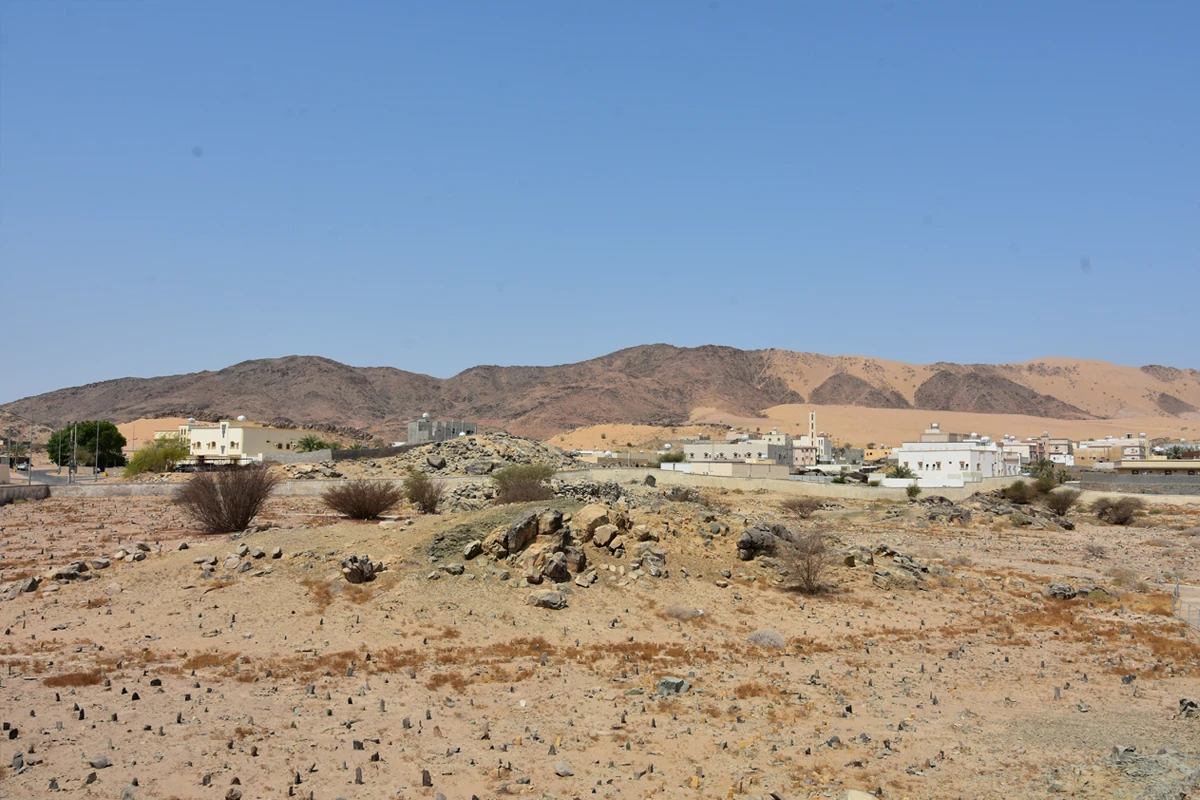
Badr Historical Day Trip
Madinah · Ziyarat
Destination
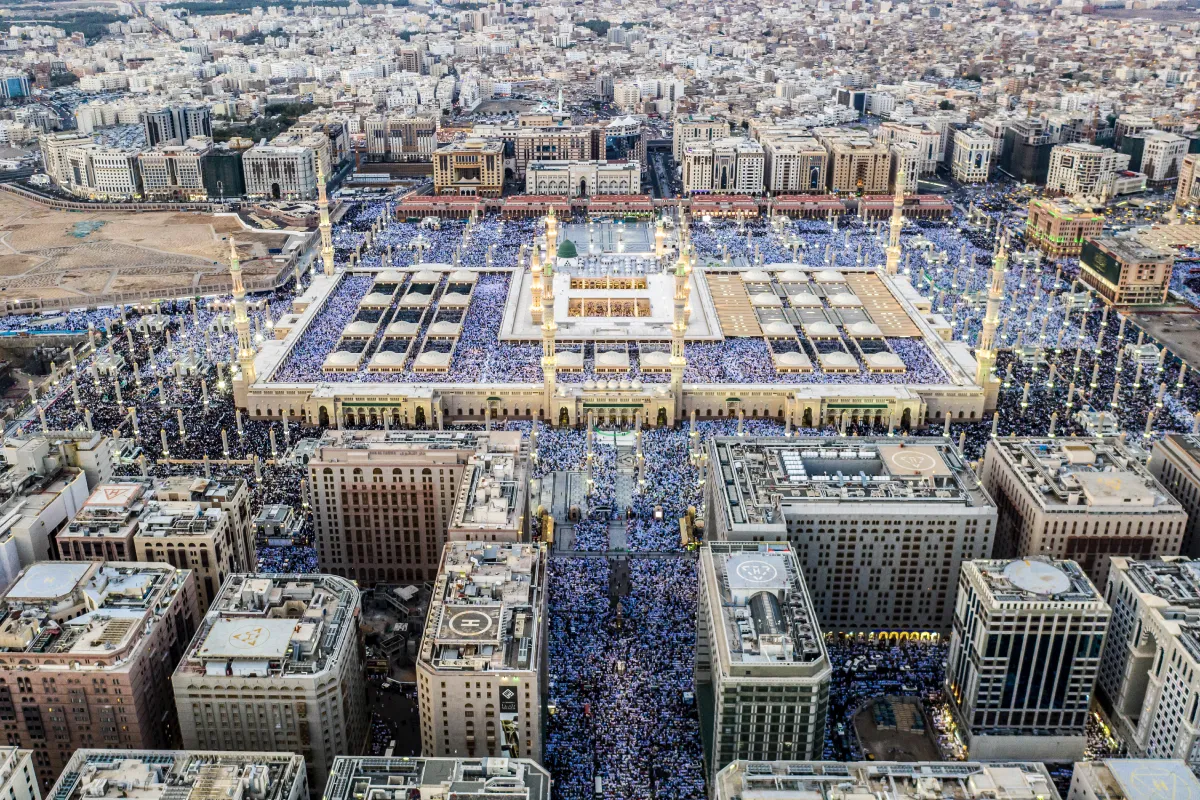
Madinah
The Prophet's city of peace
Guide
Madīnah Ziyārat, Place by Place — Thirty Sites, the Authenticated Guide
Umrah & Ziyarat
Guide
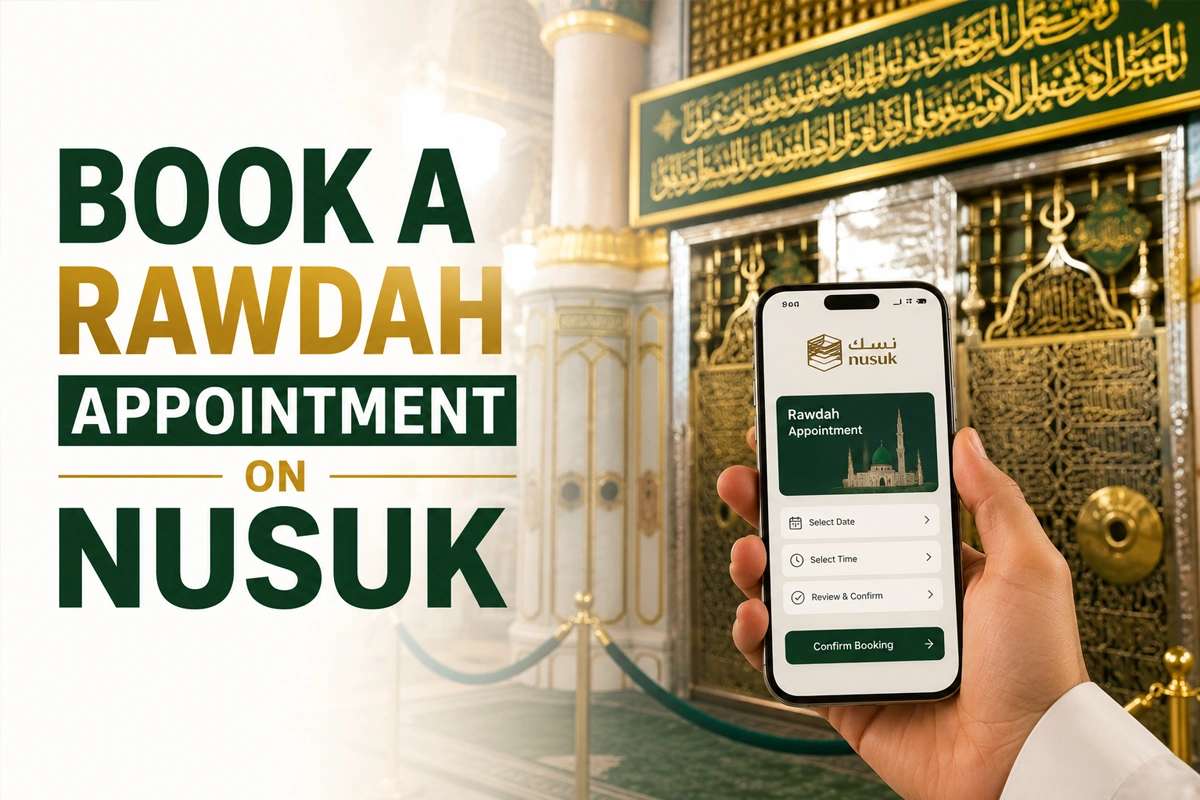
How to Book a Rawdah Appointment on Nusuk (Step by Step)
Umrah & Ziyarat
Activity
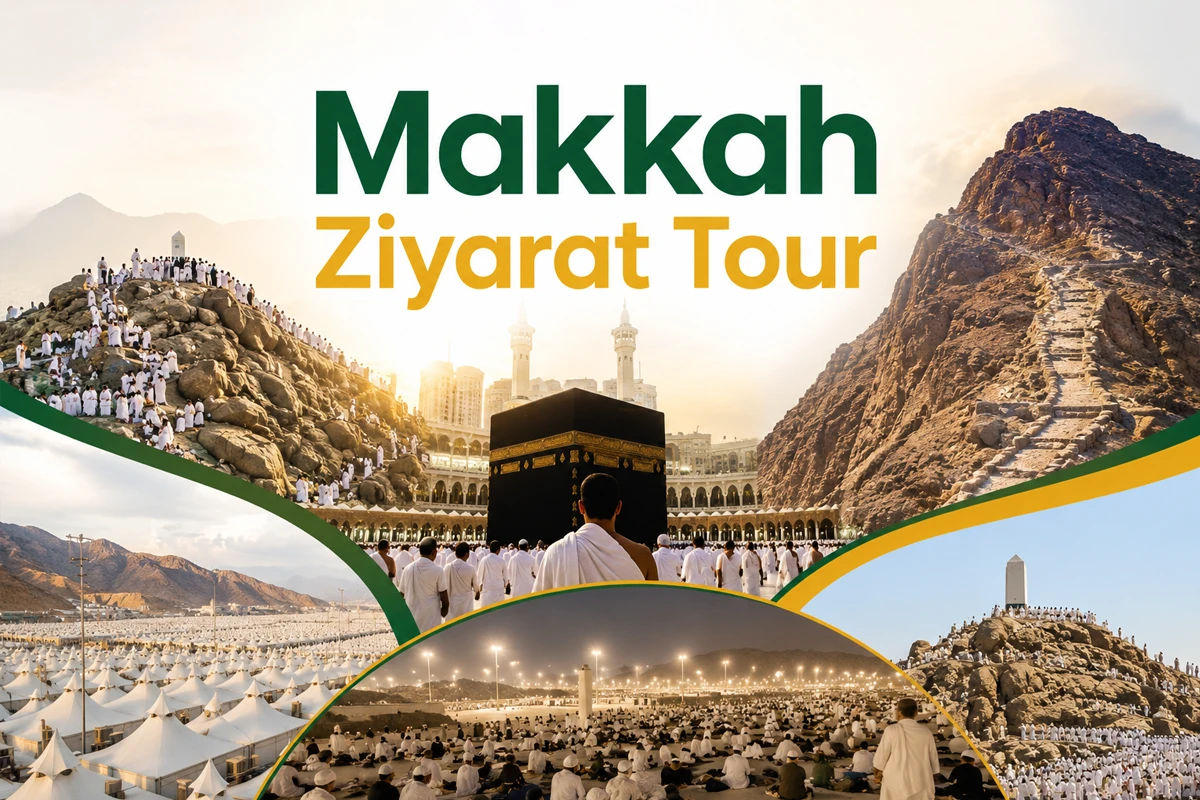
Makkah Ziyarat Tour
Makkah · Ziyarat
Guide
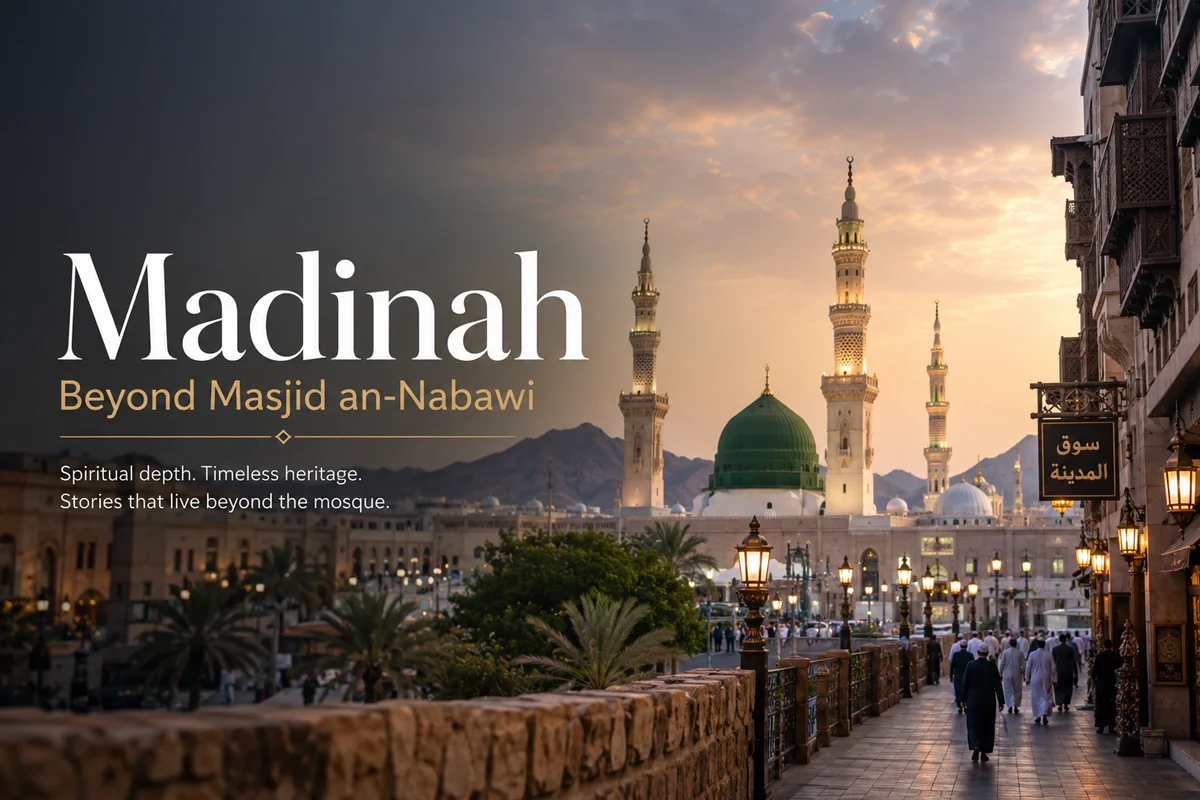
Madinah City Guide: Beyond Masjid an-Nabawī
City Guides