Madīnah Ziyārat, Place by Place — Thirty Sites, the Authenticated Guide
Quick reference · Ḥanafī method
Madīnah ziyārat at a glance
First visit? Read the site-by-site guide below. Been before? The essentials are here.
🔔 Before you go — verify on Nusuk
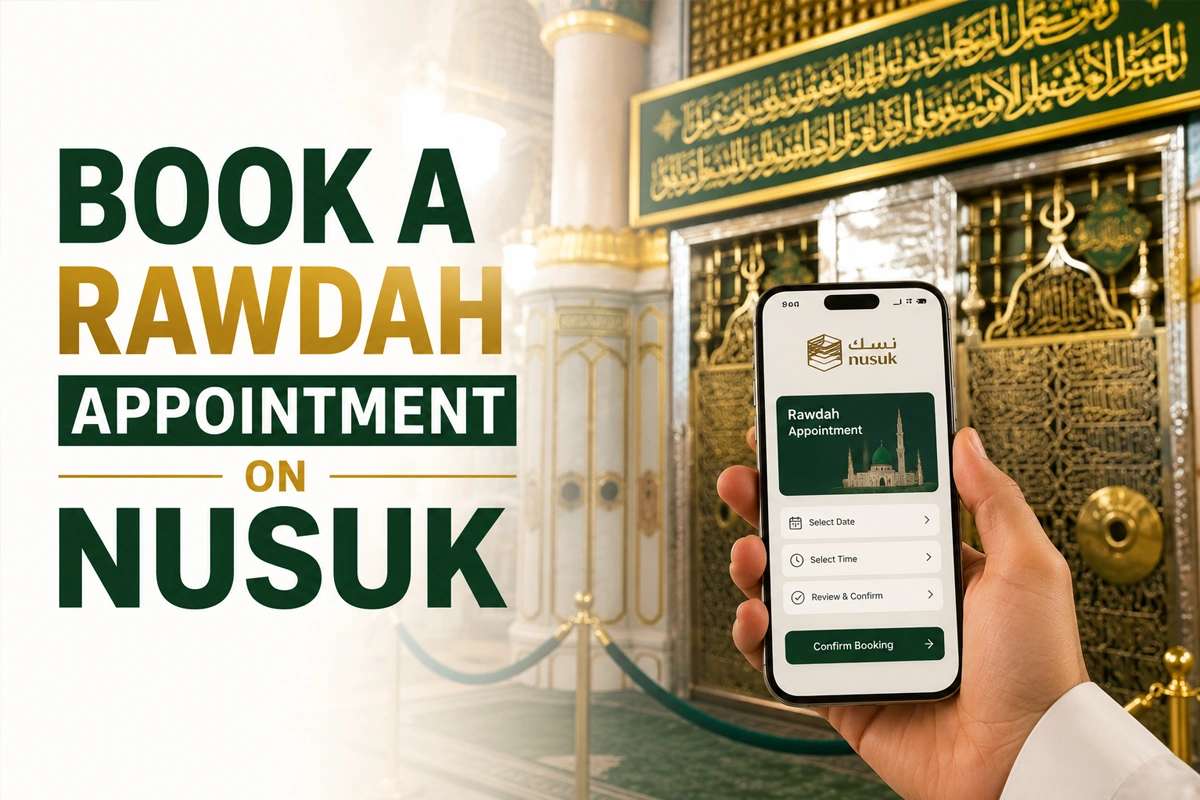
- The Rawḍah needs a free timed Nusuk permit — book days ahead; separate men/women slots.
- Baqīʿ and the martyrs' enclosure admit men only; women give the salām from the boundary.
- Site access, gates and hours change — the app and the on-site signage are the final word.
- Stay near the Ḥaram and pre-book your ziyārat transport.
Why you came
- The Masjid — pray every farḍ you can; one prayer here is worth a thousand.
- The Rawḍah — two rakʿah in the garden of Paradise (Nusuk permit).
- The Salām — to the Prophet ﷺ, then Abū Bakr and ʿUmar. He answers every salām.
The three marks
- ✦ Established — rests on a ṣaḥīḥ/ḥasan text; do what it establishes.
- ◈ Historical — real Sīrah ground; visit for reflection, no rite attaches.
- ⚠ Not established — a claim the muḥaddithīn could not verify; named honestly.
Two half-day circuits
- On foot — Baqīʿ, Masjid al-Ijābah, al-Sajdah, the Ghamāmah cluster, the Rawḍah.
- By car — Qubāʾ, al-Jumuʿah, al-Qiblatayn, the Khandaq, Uḥud, Dhul-Ḥulayfah.
- Keep every farḍ in the Masjid; mornings beat afternoons.
Never do this
- Ask the buried for needs — duʿā is to Allah, for them.
- Ṭawāf, bow or prostrate at the Chamber; kiss grilles, walls or pillars.
- Invent rites, fixed counts or threads at any site.
- Tour the sites but pray your farḍ in the hotel.
Short answer
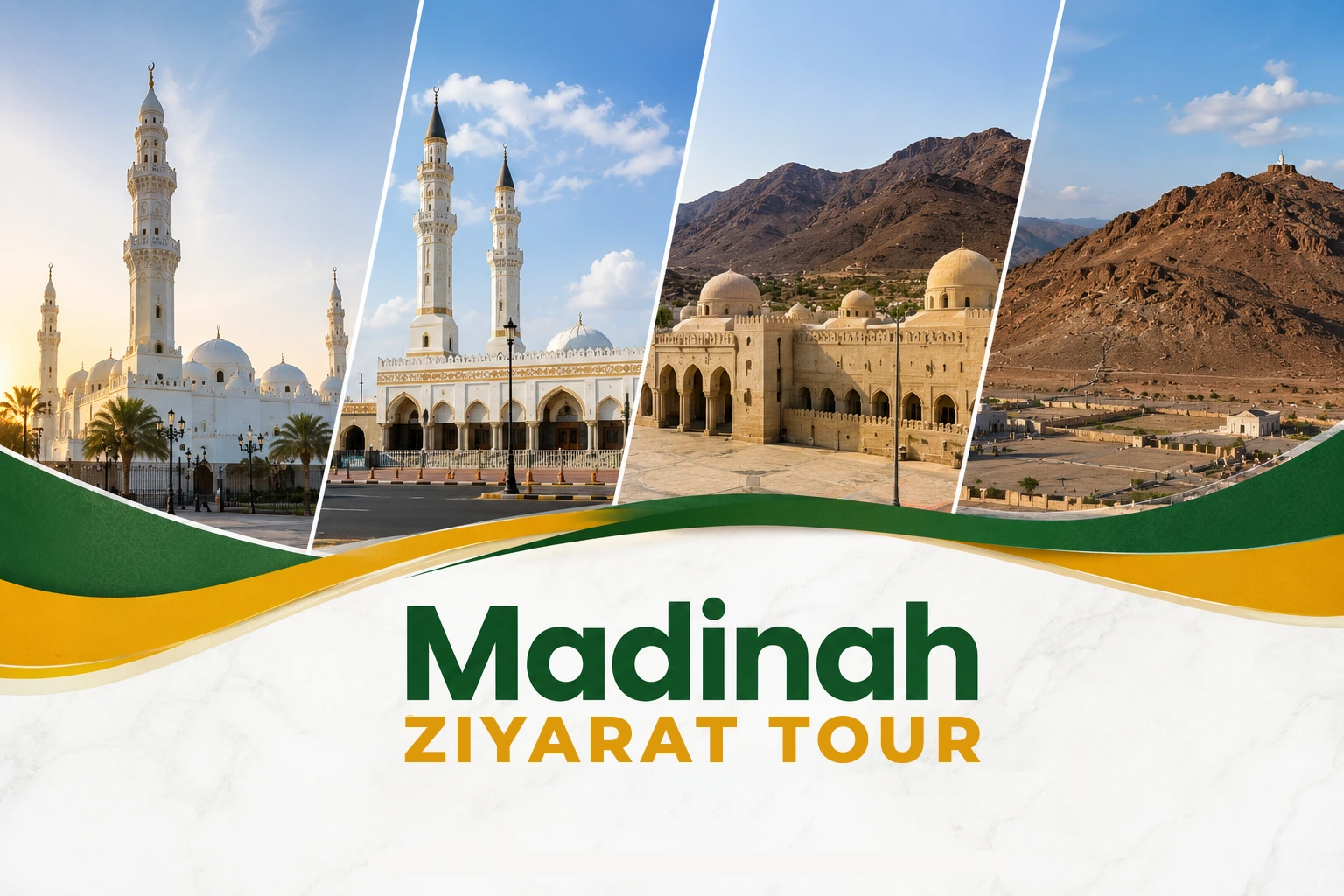
Madīnah ziyārat centres on three things at Masjid an-Nabawī: praying every farḍ you can (one prayer here is worth a thousand), praying two rakʿah in the Rawḍah (by a free Nusuk permit), and presenting the salām to the Prophet ﷺ, then Abū Bakr and ʿUmar. Beyond that, a person already in the city may visit some thirty Sīrah sites for reflection — Baqīʿ, Qubāʾ (the reward of an ʿUmrah), Uḥud, al-Qiblatayn, the Khandaq and more — each marked Established or Historical, always with duʿā to Allah alone and never a rite invented for the spot.
Key takeaways
- ✓You travel to Madīnah for the Masjid and the Salām; every other site is optional reflection for someone already in the city.
- ✓One farḍ in Masjid an-Nabawī is worth a thousand elsewhere — keep every prayer there, and never trade it for a ziyārat circuit.
- ✓The Rawḍah is entered only with a free timed Nusuk permit; separate men/women slots, booked days ahead. No permit means no loss to your ziyārat.
- ✓Present the salām standing, voice low, hands at rest — to the Prophet ﷺ, then Abū Bakr, then ʿUmar; he answers every salām.
- ✓For graves use the one transmitted salām and make duʿā FOR the buried — never ask anything OF them; du'a is to Allah alone.
- ✓Baqīʿ and the Uḥud martyrs' enclosure admit men only; women give the same salām from the boundary and lose none of the reward.
- ✓Masjid Qubāʾ carries the reward of an ʿUmrah — make wuḍū at your lodging, then pray two rakʿah there (a Saturday revives a second sunnah).
- ✓Sites marked ✦ rest on a ṣaḥīḥ/ḥasan text; ◈ are historical (reflection only); never invent prayers, counts, threads or soil-taking anywhere.
Quick facts
- Sites
- 30+
- The heart
- The Salām
- Best prayer
- Masjid an-Nabawī (1000×)
- Rawḍah
- Nusuk permit
- Qubāʾ
- Reward of an ʿUmrah
- Baqīʿ
- Men only
- School
- Ḥanafī
- Circuits
- Two half-days
How to read this guide
Madīnah is not visited the way other cities are seen. The Prophet ﷺ prayed for it — اَللّٰهُمَّ اجْعَلْ بِالْمَدِيْنَةِ ضِعْفَيْ مَا جَعَلْتَ بِمَكَّةَ مِنَ الْبَرَكَةِ, “O Allah, place in Madīnah twice the blessing You placed in Makkah” (al-Bukhārī) — he chose to live in it, die in it, and be raised from it; and its dust holds more of the ṣaḥābah than any ground on earth. So its ziyārat is walked slowly, with durūd on the tongue, and with the eyes of someone reading the Sīrah in the very places where it happened.
One rule frames everything else. The Prophet ﷺ said that journeys of devotion are set out upon only to three mosques — al-Masjid al-Ḥarām, his own Masjid, and al-Aqṣā (al-Bukhārī & Muslim). The traveller comes to Madīnah for the Masjid and the Salām; everything else in this guide is what a person already in the city may then visit for remembrance and reflection — no site below is itself a destination of pilgrimage, and no rite attaches to any of them beyond what its own text establishes.
✦ Established — the place or its virtue rests on a ṣaḥīḥ or ḥasan text, quoted at the site with its source. What the sunnah establishes there, you do; nothing more.
◈ Historical — the place is genuinely part of the Sīrah, and visiting it for reflection (ʿibrah) is permissible and beneficial; but no special prayer, act, or reward attaches to the spot itself.
⚠ Not established — a popular claim or practice that the muḥaddithīn could not verify. Named honestly, exactly as Rafīq-e-Ḥajj and Aḥkām-e-Ḥajj name such things, so that love is never built on invention.
On this page
- I — The adab of ziyārat, before you go
- II — Masjid an-Nabawī: prayer, Rawḍah, Salām
- III — Inside the Masjid: pillars, Ṣuffah, Dome
- IV — Jannat al-Baqīʿ
- V — Qubāʾ & the mosques of virtue
- VI — Uḥud, the mountain that loves us
- VII — The Khandaq & Jabal Salʿ
- VIII — The wells & orchards of the Sīrah
- IX — The memory-sites of the city
- Two half-day ziyārat routes
- Mistakes & innovations to avoid
- Sources & method
Part I — The adab of ziyārat, before you go anywhere
1 · Come as a lover, walk as a student
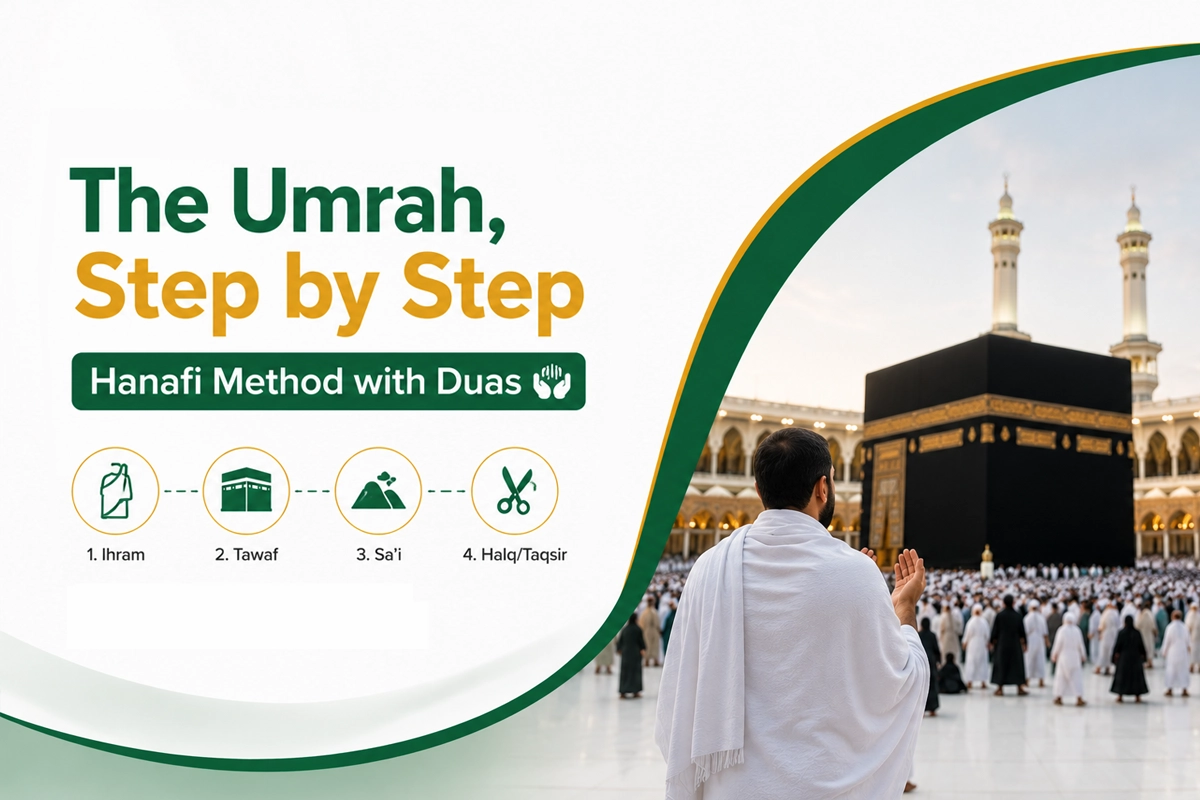
The manuals open the Madīnah chapter with intention: travel to the city intending the Prophet's ﷺ Masjid and the presenting of the salām — the niyyah and the road-adab are set out step by step in the companion guide, The Umrah, Step by Step. Within the city, the standing instruction is one word: durūd. Fill the streets with it; a city that holds him ﷺ is greeted through him. Dress with dignity, walk without haste, and treat every resident kindly — they are the neighbours of the Messenger of Allah ﷺ. Rafīq-e-Ḥajj
2 · Learn the one duʿā that serves every graveyard
Two of the thirty sites are graveyards, and several more hold graves. For all of them the sunnah gives a single transmitted greeting — the Prophet ﷺ taught it to ʿĀʾishah رضي الله عنها for Baqīʿ itself:
Entering any graveyard, say
اَلسَّلَامُ عَلَيْكُمْ أَهْلَ الدِّيَارِ مِنَ الْمُؤْمِنِيْنَ وَالْمُسْلِمِيْنَ، وَإِنَّا إِنْ شَاءَ اللهُ بِكُمْ لَاحِقُوْنَ، أَسْأَلُ اللهَ لَنَا وَلَكُمُ الْعَافِيَةَ
As-salāmu ʿalaykum ahlad-diyāri minal-mu'minīna wal-muslimīn, wa innā in shā'allāhu bikum lāḥiqūn, as'alullāha lanā wa lakumul-ʿāfiyah.
Peace be upon you, people of these dwellings, believers and Muslims. We too, if Allah wills, shall join you. I ask Allah for wellbeing — for us and for you.
Ṣaḥīḥ MuslimThen duʿā and istighfār for the buried — facing them if you wish while greeting, and facing the qiblah for your own duʿā — with the reward of whatever Qurʾān you recite gifted to them (īṣāl-e-thawāb, as the Ḥanafī school holds). Nothing is ever asked of them. Aḥkām-e-Ḥajj
3 · For women — the fiqh and the ground reality
4 · Carry the boundaries with you
Part II — Masjid an-Nabawī: the prayer, the Rawḍah, the Salām
5 · The Masjid itself ✦ Established
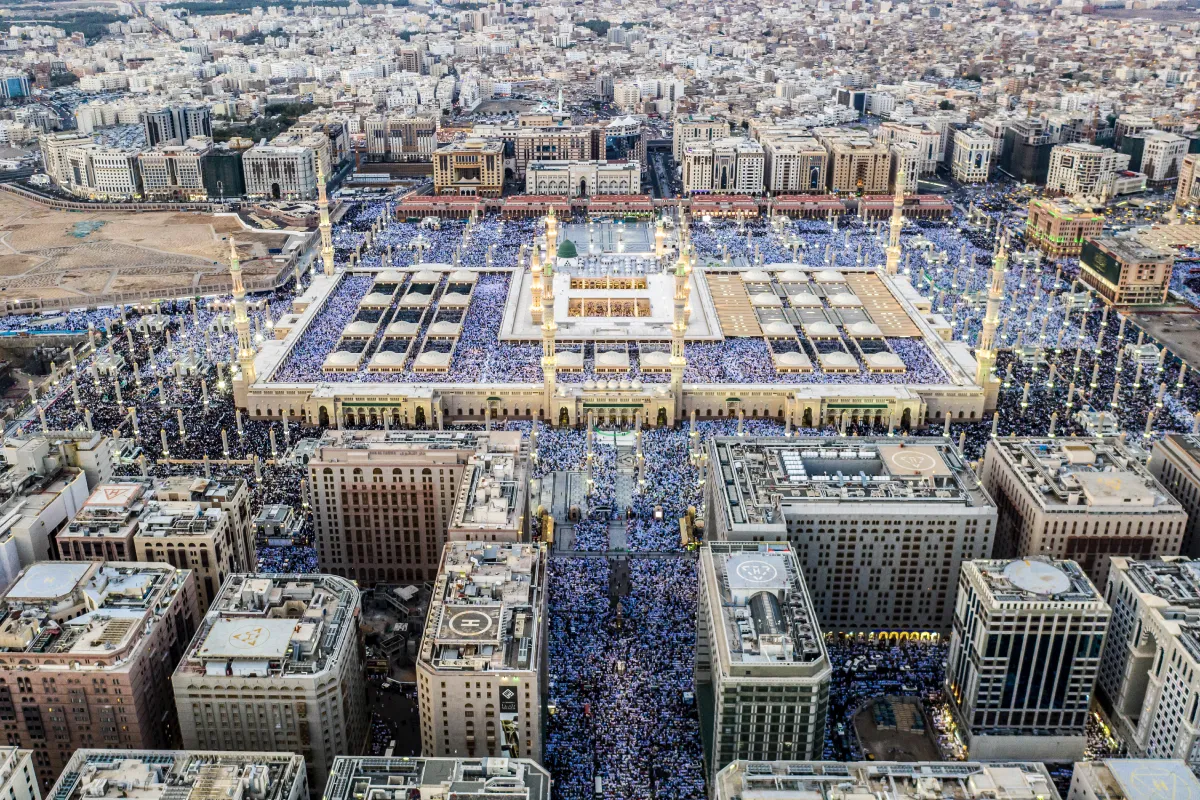
He ﷺ built it with his own hands in the first days of the Hijrah — palm-trunk pillars, a roof of fronds, the ground of earth — and prayed in it for ten years. Every expansion since, from ʿUmar's رضي الله عنه to the vast white courts of today, has grown outward around that original rectangle, which still lies at the heart of the present building, roughly between the Chamber and the old western wall. Its rank is fixed by his own words:
The virtue that makes every prayer here worth a thousand
صَلَاةٌ فِيْ مَسْجِدِيْ هٰذَا خَيْرٌ مِنْ أَلْفِ صَلَاةٍ فِيْمَا سِوَاهُ، إِلَّا الْمَسْجِدَ الْحَرَامَ
Ṣalātun fī masjidī hādhā khayrun min alfi ṣalātin fīmā siwāh, illal-Masjidal-Ḥarām.
One prayer in this masjid of mine is better than a thousand prayers anywhere else — except the Sacred Masjid.
Ṣaḥīḥ al-Bukhārī & MuslimWhat you do: pray every farḍ here that you possibly can, enter with the right foot and the masjid duʿā, and make the niyyah of nafl iʿtikāf each time you sit. The famous forty prayers: the narration “whoever prays forty prayers in my masjid, missing none…” stands in Musnad Aḥmad and its grading is discussed among the muḥaddithīn; the manuals therefore call the eight-day stay it implies mustaḥabb and beloved, not binding — a shorter visit forfeits nothing of the Salām, and no one should plan their tickets around an obligation that does not exist. Rafīq-e-Ḥajj
6 · The Rawḍah ✦ Established
Between the Prophet's ﷺ house — now the Chamber where he rests — and his minbar lies a strip of some twenty-two by fifteen metres, carpeted green where all else is red. Its name is not poetry; it is his own description:
The text of the Rawḍah
مَا بَيْنَ بَيْتِيْ وَمِنْبَرِيْ رَوْضَةٌ مِنْ رِيَاضِ الْجَنَّةِ
Mā bayna baytī wa minbarī rawḍatun min riyāḍil-jannah.
What lies between my house and my minbar is a garden of the gardens of Paradise.
Ṣaḥīḥ al-Bukhārī & MuslimWhat you do there: two rakʿah of nafl if there is space, then duʿā — brief, unhurried in the heart even when hurried by the crowd, and stepped aside from quickly so the next Muslim may stand where you stood. How you enter today: only with a free Nusuk permit, booked in the app before you reach Madīnah — slots open days ahead and vanish in minutes; men and women have separate hours and separate gates; the visit inside runs ten to fifteen minutes; children of five and above need their own permit; screenshot the QR code, arrive half an hour early, and know that the app restricts how soon a permit can be repeated. If no slot ever opens for you, nothing of your ziyārat is lost — the Rawḍah's prayer is a gift, not a duty. Nusuk · verified at writing
7 · The Sacred Chamber — presenting the Salām ✦ Established
Here is the reason the journey was made. Within the Chamber — the room of ʿĀʾishah رضي الله عنها — the Messenger of Allah ﷺ lies buried where he passed away, with Abū Bakr behind him and ʿUmar behind Abū Bakr رضي الله عنهما. You stand before the first grille-opening, about four paces back, eyes lowered, voice low, heart present — as you would have stood before him in life — and you say:
Facing the Prophet ﷺ — the Salām
اَلسَّلَامُ عَلَيْكَ أَيُّهَا النَّبِيُّ وَرَحْمَةُ اللهِ وَبَرَكَاتُهُ
As-salāmu ʿalayka ayyuhan-nabiyyu wa raḥmatullāhi wa barakātuh.
Peace be upon you, O Prophet, and the mercy of Allah and His blessings.
Rafīq-e-ḤajjAdd durūd and praise as your heart carries you, convey the salāms entrusted to you by name — اَلسَّلَامُ عَلَيْكَ يَا رَسُوْلَ اللهِ مِنْ فُلَانِ بْنِ فُلَانٍ — then step right to greet Abū Bakr, and right again for ʿUmar, with the words set out in full in the companion guide's Madīnah chapter. Why the salām is worth an ocean's crossing, he ﷺ told us himself:
His own promise about your salām
مَا مِنْ أَحَدٍ يُسَلِّمُ عَلَيَّ إِلَّا رَدَّ اللهُ عَلَيَّ رُوْحِيْ حَتّٰى أَرُدَّ عَلَيْهِ السَّلَامَ
Mā min aḥadin yusallimu ʿalayya illā raddallāhu ʿalayya rūḥī ḥattā arudda ʿalayhis-salām.
No one sends salām upon me except that Allah returns my soul to me, so that I may answer his salām.
Sunan Abī Dāwūd8 · The Minbar ✦ Established
His first minbar was three steps of tamarisk, made when the congregation grew too large to hear him from the ground. On it he ﷺ delivered the khuṭbahs that built a civilisation; and of it he said, in the same breath as the Rawḍah: وَمِنْبَرِيْ عَلٰى حَوْضِيْ — “and my minbar stands upon my Ḥawḍ” (al-Bukhārī): the spot marked today by the ornate Ottoman minbar corresponds to a place that will overlook his Pool on the Day of Rising. What you do: look, reflect, send durūd — the minbar is honoured by attention, not by touch. Ṣaḥīḥ al-Bukhārī
9 · The gates of the sunnah era ◈ Historical
Bāb Jibrīl on the eastern wall was his ﷺ habitual door, named for Jibrīl عليه السلام who appeared beside it in human form after the Trench; Bāb al-Salām in the western wall (today's Gate 1) is where generations of visitors have entered to present the salām, walking the length of the old masjid toward the Chamber; Bāb al-Raḥmah recalls the man who asked him ﷺ for rain during a khuṭbah and asked again, a week later, for it to stop — both duʿās answered from the minbar (al-Bukhārī). Entering by these gates when your route allows is a quiet joining of a very old procession; the numbered modern gates around them (women's ziyārat assembly is commonly at Gate 25) carry no rulings, only directions. Wafāʾ al-Wafā
Part III — Inside the Masjid: the pillars, the Ṣuffah, the Dome
10 · The historic pillars (Ustuwānāt) ✦ Established
The palm-trunks of the first masjid stood at spots the Companions never forgot; when stone replaced wood, each pillar kept its name, and today white columns with green bands and small plaques mark them inside and around the Rawḍah. Praying nafl beside them, where the crowd and the makrūh times allow, is the practice of centuries — the virtue belongs to the events, and the events are ṣaḥīḥ:
- Ustuwānah Mukhallaqah — marks the Prophet's ﷺ own muṣallā; the perfumed pillar, standing at the noblest prayer-spot in the masjid after the Rawḍah itself.
- Ustuwānah Ḥannānah — the place of the weeping trunk: when the minbar replaced the palm-stump he ﷺ had leaned on, the masjid heard it cry like a child until he descended and embraced it (al-Bukhārī). The muḥaddithīn count this among his greatest open miracles.
- Ustuwānah ʿĀʾishah — she related that people would have drawn lots to pray at this spot had they known its worth; the muhājirūn made their gathering here.
- Ustuwānah al-Tawbah (Abū Lubābah) — where Abū Lubābah رضي الله عنه bound himself for days until Allah revealed his repentance accepted (al-Tawbah 9:102); he was untied by the Prophet's ﷺ own hand.
- Ustuwānah al-Sarīr, al-Maḥras, and al-Wufūd — his iʿtikāf bed of palm-leaves; ʿAlī's رضي الله عنه guard-post before Allah revealed وَاللهُ يَعْصِمُكَ مِنَ النَّاسِ; and the seat where he ﷺ received the delegations of Arabia.
What you do: nafl prayer and duʿā beside them when possible — nothing is recited to a pillar, nothing rubbed, nothing asked of stone. Most now stand inside the permit zone around the Rawḍah, so your Nusuk slot is usually the moment to reach them. Wafāʾ al-Wafā · Rafīq-e-Ḥajj
11 · Dakkat al-Ṣuffah ✦ Established
A few steps past the Chamber, a raised platform marks where the Ahl al-Ṣuffah lived — the poor of the muhājirūn, sometimes seventy and more, who owned nothing but the masjid's shade and the Prophet's ﷺ table when there was one. Abū Hurayrah رضي الله عنه, who transmitted more ḥadīth than any Companion, would say plainly that hunger kept him at that platform while others were at the market — and that is why he heard what they missed. What you do: stand a moment and take the lesson the manuals draw: knowledge and closeness to him ﷺ were bought here with hunger, and the plaza's marble should not let you forget it. Nafl prayer on the platform itself is fine when open; no special rite exists. Ṣaḥīḥ al-Bukhārī · Wafāʾ al-Wafā
12 · The Green Dome ◈ Historical
The dome above the Chamber was first raised by Sultan Qalāwūn in 678 AH and painted its famous green in 1253 AH — it is architecture, not revelation, and the manuals say so without embarrassment: the honour is entirely in who lies beneath it. What you do: when it comes into view across the courtyard, let the heart lift, send durūd, and lower the camera before the salām — the sunnah of this skyline is اَللّٰهُمَّ صَلِّ عَلٰى مُحَمَّدٍ, not a photograph. No prayer, act or duʿā is directed at the dome itself. Rafīq-e-Ḥajj
Part IV — Jannat al-Baqīʿ: the neighbours of the Prophet ﷺ
13 · The cemetery of the Companions ✦ Established
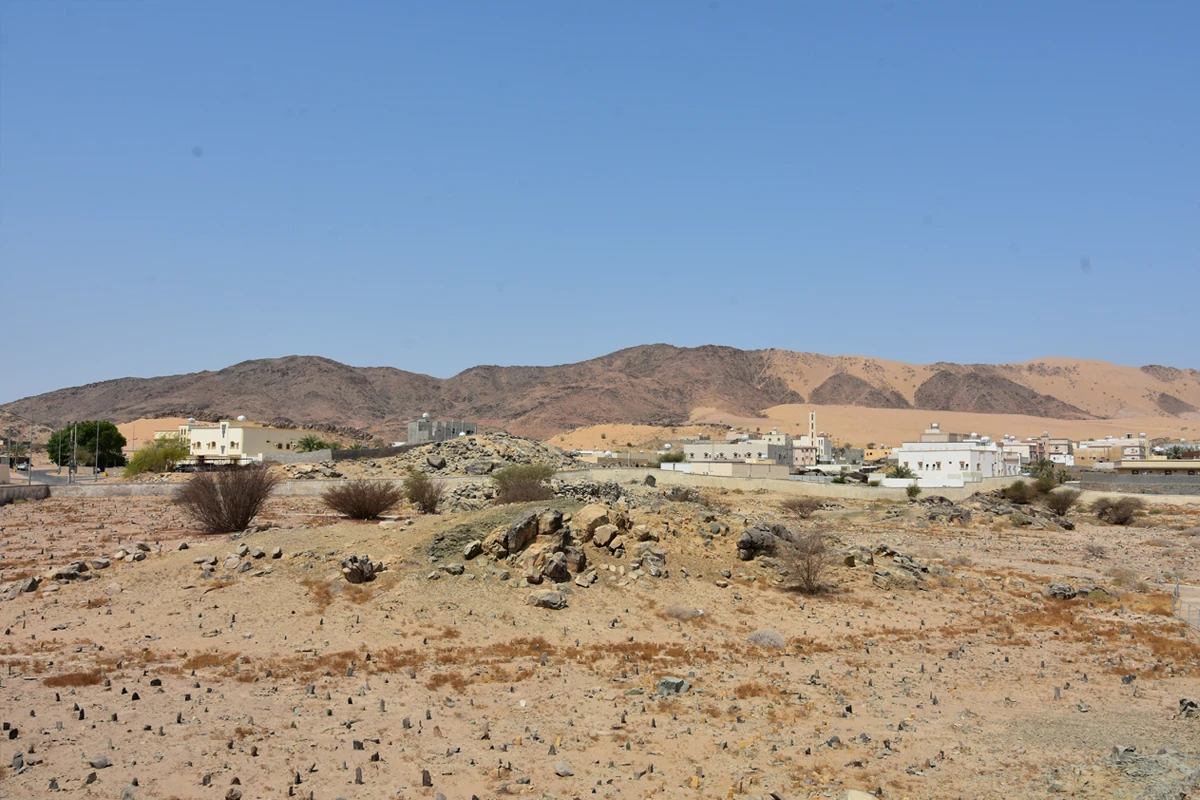
East of the masjid, across the marble plaza, lies Baqīʿ al-Gharqad — named for the boxthorn that once grew here — the graveyard he ﷺ himself chose for his city, visited by night, and prayed over: ʿĀʾishah رضي الله عنها followed him once in the dark and found him at Baqīʿ, hands raised, asking forgiveness for its people (Muslim). Some ten thousand Companions are believed to rest in its earth, and of his own house: ʿUthmān ibn ʿAffān, his uncle ʿAbbās, his grandson Ḥasan ibn ʿAlī, the Mothers of the Believers (all except Khadījah, who rests in Makkah, and Maymūnah), his daughters Ruqayyah, Umm Kulthūm and Zaynab — and Fāṭimah رضي الله عنها by the stronger of the reports — his infant son Ibrāhīm, over whom his eyes wept while his tongue said only what pleases the Lord; Saʿd ibn Muʿādh, for whose funeral the Throne shook; ʿUthmān ibn Maẓʿūn, the first of the muhājirūn laid here; Ḥalīmah al-Saʿdiyyah his nurse, by long tradition; and, from the generation after, Imām Mālik beside his teacher Nāfiʿ. رضي الله عنهم أجمعين.
What you do: enter (men) with the graveyard salām of step 2, walk the one-way path slowly, give the salām generally and to whomever you recognise by the raised kerbs, make duʿā and istighfār for them, gift them your recitation — and let the bare, unmarked mounds preach what they were left bare to preach: the best of all generations lies under plain earth, awaiting the same Day as you. Practicalities, as they stand: open to men after Fajr for roughly three hours and again briefly after ʿAṣr; entry by the gate facing the mosque's eastern plaza; photography is stopped by the guards; women make the salām from the boundary — see step 3 — with nothing of the reward lost. Timings shift with season and crowds; the signage on the day decides. Ṣaḥīḥ Muslim · Wafāʾ al-Wafā · verified at writing
Part V — Qubāʾ and the mosques of virtue
14 · Masjid Qubāʾ ✦ Established
About three kilometres south of the Ḥaram stands the first masjid of Islam — founded by his ﷺ own hands in the days he first reached the oasis, before he ever entered Madīnah proper; the Qurʾān itself calls it لَمَسْجِدٌ أُسِّسَ عَلَى التَّقْوٰى, “a masjid founded upon taqwā from the first day” (al-Tawbah 9:108). It is the only mosque on earth, after the three Ḥarams, with its own transmitted reward:
The text of its virtue
مَنْ تَطَهَّرَ فِيْ بَيْتِهِ ثُمَّ أَتٰى مَسْجِدَ قُبَاءٍ فَصَلّٰى فِيْهِ صَلَاةً، كَانَ لَهُ كَأَجْرِ عُمْرَةٍ
Man taṭahhara fī baytihī thumma atā masjida Qubā'in fa-ṣallā fīhi ṣalātan, kāna lahū ka-ajri ʿumrah.
Whoever purifies himself in his house, then comes to Masjid Qubāʾ and prays a prayer in it, has the reward of an ʿUmrah.
Sunan Ibn Mājah · al-Nasāʾī — ṣaḥīḥWhat you do — exactly as the ḥadīth draws it: make wuḍū at your lodging, travel to Qubāʾ with that intention, and pray two rakʿah (any prayer counts; avoid the makrūh times). He ﷺ himself came every Saturday, riding or walking (al-Bukhārī & Muslim) — so a Saturday visit revives a second sunnah on top of the first, but the reward stands on any day. The walk down the old Qubāʾ road is itself an old pilgrim habit; buses and taxis serve it constantly. Rafīq-e-Ḥajj
15 · Masjid al-Ijābah — the mosque of the answered prayer ✦ Established
A few hundred metres north of Baqīʿ, most groups drive past it unknowing. Here he ﷺ prayed two rakʿah and then asked his Lord three things for this ummah: that it not be destroyed by famine, that it not be drowned as nations before it, and that its violence not be turned upon itself — the first two were granted; the third was withheld (Ṣaḥīḥ Muslim). What you do: pray two rakʿah if it is open at a permissible hour, and stand a moment with the weight of that third answer — the manuals point here whenever they speak of the ummah's disunity. No other rite exists. Ṣaḥīḥ Muslim
16 · Masjid al-Qiblatayn ✦ Established
North-west of the city, in the lands of Banū Salamah: the congregation here was mid-prayer — Ẓuhr or ʿAṣr of Rajab, 2 AH — when the command of فَوَلِّ وَجْهَكَ شَطْرَ الْمَسْجِدِ الْحَرَامِ (al-Baqarah 2:144) reached them, and the rows turned from Bayt al-Maqdis to the Kaʿbah between two rakʿāt — one prayer, two qiblahs, and the name has never changed. What you do: two rakʿah of nafl and the reflection the manuals attach: the believer's direction is wherever his Lord commands, changed without argument in the middle of the act itself. The old double-miḥrāb arrangement is gone in the modern rebuilding; the event, not the architecture, is the ziyārat. Ṣaḥīḥ al-Bukhārī · Wafāʾ al-Wafā
17 · Masjid al-Jumuʿah ✦ Established
Between Qubāʾ and the city, in the valley of Rānūnāʾ: departing Qubāʾ for Madīnah on a Friday, the Prophet ﷺ was overtaken by the prayer-time among Banū Sālim ibn ʿAwf — and prayed here the first Jumuʿah of Islam, a hundred believers behind him. The mosque that marks it is small and white, minutes from Qubāʾ. What you do: two rakʿah if open; and if your own Friday in Madīnah ever feels routine, remember it began in this wadi. Wafāʾ al-Wafā · Rafīq-e-Ḥajj
18 · Masjid al-Ghamāmah and the ʿĪd-ground cluster ◈ Historical
South-west of the Ḥaram plaza, a tight cluster of Ottoman-era domes marks the muṣallā al-ʿĪd — the open ground where he ﷺ led the ʿĪd prayers and prayed istisqāʾ, the prayer for rain; al-Ghamāmah, “the cloud,” remembers the rain-cloud tradition attached to that duʿā. Beside it stand the small mosques of Abū Bakr, ʿUmar and ʿAlī, marking where the khulafāʾ in their turn led the same ʿĪd prayers. What you do: these are usually locked outside prayer times — view, reflect on an ʿĪd when the whole city was one congregation behind one imam, and move on; the buildings are Ottoman, the ground is the sunnah. Wafāʾ al-Wafā
19 · Masjid al-Sajdah (Abū Dharr) ✦ Established
A short way north of the Ḥaram on the old Abū Dharr street: here he ﷺ prostrated so long that a Companion feared his soul had been taken — and he ﷺ explained that Jibrīl had brought him glad tidings: whoever sends blessings upon me, Allah sends blessings upon him — and he had fallen in sajdat al-shukr, the prostration of gratitude (Musnad Aḥmad — ḥasan). What you do: two rakʿah if open, abundant durūd regardless — the site's whole lesson is the durūd itself, which needs no location. Musnad Aḥmad
20 · Masjid Dhul-Ḥulayfah (Abyār ʿAlī) ✦ Established
Fourteen kilometres south on the Makkah road stands the mīqāt of the people of Madīnah — where he ﷺ tied every iḥrām he made from this city, in the blessed valley of al-ʿAqīq: أَتَانِي اللَّيْلَةَ آتٍ مِنْ رَبِّيْ فَقَالَ صَلِّ فِيْ هٰذَا الْوَادِي الْمُبَارَكِ — “a messenger from my Lord came to me tonight and said: pray in this blessed valley” (al-Bukhārī). What you do: if you travel onward to Makkah intending ʿUmrah, this is where your iḥrām is tied — ghusl, two rakʿah, niyyah and talbiyah exactly as the companion guide sets out; the complex is built for it, with bathing rooms and iḥrām shops. Visiting without an onward journey is simple reflection in a valley the Prophet ﷺ was commanded to pray in. Ṣaḥīḥ al-Bukhārī · Rafīq-e-Ḥajj
Part VI — Uḥud, the mountain that loves us
21 · The mountain and the martyrs ✦ Established
Five kilometres north rises the long red wall of Uḥud, and beneath its southern face lies the field of Shawwāl, 3 AH — the day the archers left their hill, the day his ﷺ blessed face bled and his tooth broke, the day seventy of the best of creation fell. He ﷺ said of the mountain itself:
His word about this mountain
أُحُدٌ جَبَلٌ يُحِبُّنَا وَنُحِبُّهُ
Uḥudun jabalun yuḥibbunā wa nuḥibbuh.
Uḥud is a mountain that loves us, and we love it.
Ṣaḥīḥ al-Bukhārī & MuslimIn the fenced enclosure at its foot rest Sayyidunā Ḥamzah — the Prophet's ﷺ uncle, Sayyid al-Shuhadāʾ, the master of the martyrs — with Muṣʿab ibn ʿUmayr, the first envoy of Islam to Madīnah, over whose short shroud the Prophet ﷺ wept, ʿAbdullāh ibn Jaḥsh, and their brothers of that day, most buried two to a grave as he ﷺ directed, asking “which of them had more Qurʾān?” and placing that one first. He ﷺ visited these graves, and the manuals record the practice of the ummah after him. What you do: the graveyard salām of step 2 at the fence — the enclosure itself stays closed; the salām from outside it is the visit — duʿā for them, and the Sīrah read where it bled. No wailing, no cloth-tying on the fence, no soil taken. Women give the salām from the same fence as the men. Rafīq-e-Ḥajj · Wafāʾ al-Wafā
22 · Jabal al-Rumāh — the archers' hill ◈ Historical
The small dark mound facing the enclosure is ʿAynayn, where he ﷺ posted fifty archers under ʿAbdullāh ibn Jubayr with the command not to leave “even if you see the birds snatching us.” Forty left when victory looked complete; the battle turned through that gap in obedience. What you do: climb if you wish — it takes minutes — and take the lesson every manual draws on this exact soil: half-obedience is the door of every defeat. No prayer or rite belongs to the hill. Ṣaḥīḥ al-Bukhārī · Aḥkām-e-Ḥajj
23 · On the Uḥud road — al-Mustarāḥ and al-Shaykhayn ◈ Historical
Two small mosques thread the route he ﷺ marched that morning: Masjid al-Shaykhayn (al-Dirʿ), where he camped the night before the battle, reviewed the young volunteers — turning back those too small to fight, to their tears — and put on his armour; and Masjid al-Mustarāḥ, “the resting place,” where he ﷺ paused returning wounded from the field. What you do: two rakʿah where open, otherwise a pause of remembrance; they are footprints of the march, nothing more, and honest guides say so. Wafāʾ al-Wafā
Part VII — The Khandaq and Jabal Salʿ: where the wind was sent
24 · The Trench line and the Seven Mosques ✦ Established event
North-west of the Ḥaram, along the western foot of Jabal Salʿ, ran the trench of 5 AH — Salmān al-Fārisī's counsel, dug in bitter hunger by hands that included the Prophet's ﷺ own, against ten thousand confederates. Here the ummah learned وَلَمَّا رَأَى الْمُؤْمِنُوْنَ الْأَحْزَابَ (al-Aḥzāb 33:22), and here Allah sent the wind and the unseen hosts that broke the siege without a battle. For three days on the slope of Salʿ he ﷺ made duʿā against the confederates until it was answered — the spot marked ever since by Masjid al-Fatḥ, the largest of the little cluster pilgrims call the Seven Mosques (in truth six — Fatḥ, Salmān, Abū Bakr, ʿUmar, ʿAlī, Fāṭimah — with Qiblatayn or the great new mosque counted as the seventh), each marking a remembered command-post of those weeks. What you do: the large modern Masjid al-Khandaq now serves the site and its prayers; the historic mosques are visited briefly for the Sīrah — several stand locked, and status shifts with the ongoing landscaping, so take the ground as you find it. The duʿā of this slope was his ﷺ weapon here; make your own hard duʿā where his was answered — with no claim that the spot guarantees it, for that would be inventing what the texts did not say. Ṣaḥīḥ al-Bukhārī · Wafāʾ al-Wafā · verified at writing
25 · Jabal Salʿ and Ghār Banī Ḥarām ◈ Historical
Salʿ itself stands in the ṣaḥīḥ record: Kaʿb ibn Mālik heard the crier announce his forgiveness from its summit (al-Bukhārī), and the city's rain-prayers faced it. On its western side a small cave, Ghār Banī Ḥarām, is remembered as a place he ﷺ rested and prayed during the trench weeks — and where the miracle of the multiplied food of Jābir's household fed the whole workforce from one pot. What you do: reflection only; the cave has no rite, no prayer-count, no thread or candle — the manuals warn precisely here, because caves attract inventions. Wafāʾ al-Wafā · Rafīq-e-Ḥajj
Part VIII — The wells and orchards of the Sīrah
Madīnah was an oasis, and its story runs through its water. Most of these wells are capped, built over, or enclosed today — the ziyārat here is the account itself, read where it happened; no well's water carries a ruling, and no rite attaches to any of them.
26 · Bir ʿUthmān — the well of Rūmah ✦ Established
When the muhājirūn found Madīnah's sweetest water sold by the bucket, he ﷺ announced: “Whoever buys the well of Rūmah and makes it free for the Muslims — for him is Paradise.” ʿUthmān رضي الله عنه bought it and threw it open (al-Bukhārī, taʿlīqan; al-Tirmidhī) — the first great waqf of Islam, and it never stopped: the farm around it, north-west near Wādī al-ʿAqīq, is administered as ʿUthmān's endowment to this day, fourteen centuries of continuous charity from one purchase. What you do: reflection on what a single spend can outlive; the site is a working agricultural station, viewed from its surrounds. Jāmiʿ al-Tirmidhī · Wafāʾ al-Wafā
27 · Bir Aris — the well of the ring ✦ Established
By Qubāʾ lay the garden well where he ﷺ once sat on the rim, legs hanging into it, while Abū Mūsā kept the gate — and Abū Bakr, then ʿUmar, then ʿUthmān were each admitted with tidings of Paradise, ʿUthmān's joined to a trial to come (al-Bukhārī & Muslim). Into this same well, from ʿUthmān's hand in his caliphate, slipped the Prophet's ﷺ silver seal-ring — searched for and never found. What you do: the well itself is capped and lies within the Qubāʾ precinct's development; the account is the visit, usually told standing at Qubāʾ. Ṣaḥīḥ al-Bukhārī & Muslim
28 · Buḍāʿah, Bayruḥāʾ and Ghars ✦ / ◈
Bir Buḍāʿah ✦ stands in the books of fiqh itself — asked whether wuḍū was valid from it, he ﷺ answered: اَلْمَاءُ طَهُوْرٌ لَا يُنَجِّسُهُ شَيْءٌ, “water is pure; nothing defiles it” (Abū Dāwūd, ṣaḥīḥ) — a principle every madhhab then spent chapters refining. Bayruḥāʾ ✦ was Abū Ṭalḥah's beloved orchard facing the masjid; when لَنْ تَنَالُوا الْبِرَّ حَتّٰى تُنْفِقُوْا مِمَّا تُحِبُّوْنَ (Āl ʿImrān 3:92) came down, he gave the whole of it away that morning (al-Bukhārī & Muslim) — the plaza north of the Ḥaram covers it now. Bir Ghars ◈ at Qubāʾ is remembered as a well he ﷺ drank from and directed for his own ghusl after death, carried in the topography books. What you do: nothing but the stories — which is the point; the manuals include the wells to teach infāq and fiqh, not to create shrines. Sunan Abī Dāwūd · Ṣaḥīḥ al-Bukhārī · Wafāʾ al-Wafā
Part IX — The memory-sites of the city
29 · Saqīfah Banī Sāʿidah ◈ Historical
West of the Ḥaram, a small walled garden marks the roofed meeting-place where, on the very day of the Prophet's ﷺ passing, the Anṣār gathered and the ummah's first pledge was given to Abū Bakr al-Ṣiddīq رضي الله عنه — the hinge on which the continuity of this dīn turned. What you do: stand in the garden and take the manuals' lesson: the Companions buried their grief inside obedience, and chose unity before they chose rest. No rite; the trees are trees. Ṣaḥīḥ al-Bukhārī · Wafāʾ al-Wafā
30 · Bustān Salmān ◈ Historical
In the Qubāʾ district, a small grove is kept as the orchard of Salmān al-Fārisī's manumission: his mukātabah demanded three hundred date-palms planted and struck root — the Prophet ﷺ planted them with his own hands, and not one failed (Musnad Aḥmad). What you do: reflection on a freedom purchased by prophetic hands; palms today mark descent of place, not of tree. Musnad Aḥmad · Wafāʾ al-Wafā
31 · Mashrabat Umm Ibrāhīm ◈ Historical
In al-ʿAwālī, south-east of the city, a walled garden holds the site of the upper room of Māriyah al-Qibṭiyyah رضي الله عنها, where the Prophet's ﷺ son Ibrāhīm was born and nursed. His ﷺ love for this place, and his grief at the child's passing — “the eye weeps and the heart grieves, and we say only what pleases our Lord” — make it tender ground. What you do: access is limited and the site plain; a moment of remembrance if your route allows, nothing owed if it does not. Wafāʾ al-Wafā
32 · Thaniyyat al-Wadāʿ ◈ Historical
The “pass of farewell,” the old northern gap by which caravans left and returned, where the city traditionally came out to receive him ﷺ. The beloved song of welcome, Ṭalaʿa-l-badru ʿalaynā, is tied by common memory to this pass at the Hijrah — though the scholars of Sīrah note the stronger placing at his return from Tabūk, and this guide says so rather than sing history into certainty. What you do: a viewpoint of remembrance on the Uḥud road; no rite, no fixed act. Wafāʾ al-Wafā — with its discussion
33 · The Ḥaram boundaries of Madīnah ✦ Established
Few pilgrims know they are inside a second sanctuary: اَلْمَدِيْنَةُ حَرَمٌ مَا بَيْنَ عَيْرٍ إِلٰى ثَوْرٍ — “Madīnah is a sanctuary between ʿAyr and Thawr” (al-Bukhārī & Muslim): its trees are not cut, its game not hunted, its air weighted with his ﷺ duʿā for barakah in its measures and its fruit. The Ḥanafīs hold its sanctity real though without Makkah's penalties — reverence, not dam. He ﷺ also promised: “none remains patient upon its hardship except that I am his intercessor or witness on the Day of Rising” (Muslim). What you do: live inside the city as inside a sanctuary — gently, cleanly, gratefully — and if dates are bought, remember whose duʿā sweetened them. Ṣaḥīḥ al-Bukhārī & Muslim · Rafīq-e-Ḥajj
34 · Two modern visits worth an hour ◈ Historical
The King Fahd Qurʾān Printing Complex, north of the city, prints millions of muṣḥafs a year — the copy in your home very likely began here; group visits see the presses and often receive a muṣḥaf. The Hejaz Railway station at al-ʿAnbariyyah preserves the Ottoman line that once carried pilgrims from Damascus toward the two Ḥarams — a museum of how your great-grandparents' generation made this same journey. What you do: ordinary visits with ordinary manners; they carry history, not rulings — and they remind you that serving the Ḥaramayn has taken many forms in every age. General history · verified at writing
Two half-day routes that cover it all
The city's ziyārat divides naturally into two circuits, each fitting the cool hours between Fajr and mid-morning, or ʿAṣr and Maghrib. Keep every farḍ prayer in Masjid an-Nabawī — no circuit is worth trading a thousand-fold prayer.
- Baqīʿ straight after Fajr (men), while women give the salām from the boundary — sites 13, 3
- Masjid al-Ijābah, a short walk north of Baqīʿ — site 15
- Masjid al-Sajdah on the Abū Dharr line — site 19
- Back past the Ghamāmah cluster and the Saqīfah garden west of the Ḥaram — sites 18, 29
- The gates, pillars, Ṣuffah and Rawḍah as your Nusuk slot and the crowd allow — sites 6–12
- Masjid Qubāʾ — wuḍū made at the hotel first, for the ʿUmrah-reward prayer — site 14 (Saturday if you can)
- Masjid al-Jumuʿah, minutes away in the wadi — site 17
- Masjid al-Qiblatayn across the city — site 16
- The Khandaq / Seven Mosques under Jabal Salʿ — sites 24–25
- Uḥud: the martyrs' fence, the archers' hill, the road mosques — sites 21–23
- Southbound travellers end at Dhul-Ḥulayfah tying the ʿUmrah iḥrām — site 20
Mistakes & innovations to avoid
- Asking the buried for needs. The gravest error of all ziyārat: duʿā at a grave is for its person or to Allah in that blessed company — never to the person. The Prophet ﷺ himself is asked to be prayed upon, and Allah is asked through love of him; needs are laid before Allah alone.
- Ṭawāf, bowing, or sajdah at the Chamber. Circling any grave, bowing toward the grille, or touching the forehead to walls borrows the worship of the Kaʿbah for what is not the Kaʿbah. The salām is given standing, hands at rest.
- Kissing and rubbing the grilles, walls and pillars. Barakah is in following him ﷺ, say the manuals bluntly — not in brass. The guards prevent it for the same reason the fuqahāʾ forbade it.
- Treating the forty prayers as a duty. The eight-day stay is beloved, its narration discussed; pilgrims who weep over a shortened stay have been taught an obligation that was never there.
- Invented liturgies at sites. Fixed rakʿah counts at caves and wells, duʿās “special to” the archers' hill or the Seven Mosques, threads on the Uḥud fence, notes thrown into Baqīʿ — none has a basis; each takes the place of a sunnah that does.
- Wailing and theatrical grief at the martyrs. Ḥamzah رضي الله عنه is honoured with salām, duʿā and lowered voices — the Prophet ﷺ forbade the wailing that Uḥud's own day first tempted the city toward.
- Photography as the purpose. Filming the salām, posing against Baqīʿ, livestreaming the Rawḍah's ten minutes — the manuals could not have imagined it, but their rule covers it: presence of heart is the worship, and it cannot be performed for a lens.
- Confusing history with virtue. An Ottoman dome is not a revealed text; a rebuilt mosque is not the event it marks. Sites tagged ◈ are visited for reflection — inventing rewards for them wrongs both history and the sharīʿah.
- Pressing women toward closed enclosures — or shaming their salām from the boundary. Both err: the fence is the current rule, and the reward passes over it untouched.
- Neglecting the Masjid for the sites. Whoever tours all thirty places but prays his farḍ in the hotel has inverted the whole ziyārat — one prayer in the Masjid outweighs every circuit in this guide a thousand times.
Sources & method
This guide keeps the balance the Ḥanafī manuals keep: full-hearted love of the Prophet ﷺ and his city, and strict honesty about what the texts establish. Its material is drawn from:
- رفیق حج — Rafīq-e-Ḥajj of Muftī Muḥammad Rafīʿ ʿUthmānī رحمه الله (English: Companion of Hajj) — the frame of the Madīnah chapter: the salām, Qubāʾ, Baqīʿ, Uḥud, the adab, and the warnings.
- Aḥkām-e-Ḥajj of Muftī Muḥammad Shafīʿ ʿUthmānī — the rulings of ziyārat: what is sunnah, what is permissible reflection, and what is invention; followed especially in the sections on graves and on women's visiting.
- وفاء الوفاء بأخبار دار المصطفى — Wafāʾ al-Wafā of ʿAllāmah Nūr al-Dīn al-Samhūdī (d. 911 AH), the master reference of Madīnah's topography, on which every later description of the pillars, wells, gates and sites depends.
- The ḥadīth collections — al-Bukhārī, Muslim, Abū Dāwūd, al-Tirmidhī, al-Nasāʾī, Ibn Mājah, Musnad Aḥmad — every virtue quoted above carries its collection, and every discussed chain is flagged where it is quoted.
- Fatāwā ʿUthmānī of Muftī Muḥammad Taqī ʿUthmānī — contemporary questions: women and graves, īṣāl-e-thawāb, and conduct at the sites.
اَللّٰهُمَّ صَلِّ عَلٰى مُحَمَّدٍ وَعَلٰى آلِ مُحَمَّدٍ كَمَا صَلَّيْتَ عَلٰى إِبْرَاهِيْمَ وَعَلٰى آلِ إِبْرَاهِيْمَ إِنَّكَ حَمِيْدٌ مَّجِيْدٌ
O Allah, send blessings upon Muḥammad and the family of Muḥammad, as You sent blessings upon Ibrāhīm and the family of Ibrāhīm — truly You are Most Praiseworthy, Most Glorious.
When you are ready to plan the visit, we can help you find a stay near the Ḥaram, pre-book a private car for the ziyārat run and your transfers, or answer any question — see our Umrah & Ḥajj hub.
Step by step
- 1
Arrive with durūd; learn the graveyard salām
Come to the city for the Masjid and the Salām, filling the streets with durūd. Memorise the one transmitted graveyard greeting — it serves Baqīʿ, Uḥud and every grave — and the adab: du'a is to Allah, for the buried, never to them.
- 2
Masjid an-Nabawī — pray every farḍ you can
One prayer here is worth a thousand. Enter with the right foot and the masjid du'a, make the niyyah of nafl iʿtikāf, and don't plan tickets around the 'forty prayers', which is beloved but not binding.
- 3
The Rawḍah — two rakʿah by Nusuk permit
The green-carpeted strip between the house and the minbar is 'a garden of Paradise'. Book the free timed Nusuk permit days ahead (separate men/women slots), pray two rakʿah if there is space, then step aside for the next Muslim.
- 4
The Sacred Chamber — present the Salām
Stand about four paces from the first grille, eyes lowered, voice low, and give the salām to the Prophet ﷺ, then step right for Abū Bakr and right again for ʿUmar. He answers every salām.
- 5
Jannat al-Baqīʿ — the neighbours of the Prophet
Men enter with the graveyard salām and make du'a for the ten thousand Companions who rest there; women give the same salām from the boundary. No calling on the buried, no soil-taking, no invented rites.
- 6
Qubāʾ and the mosques of virtue
Make wuḍū at your lodging and pray two rakʿah at Masjid Qubāʾ for the reward of an ʿUmrah (a Saturday is extra sunnah); visit al-Qiblatayn, al-Jumuʿah, al-Ijābah and al-Sajdah for their events.
- 7
Uḥud, the Khandaq and the memory-sites
Give the salām at the Uḥud martyrs' fence and read the Sīrah where it happened — the archers' hill, Jabal Salʿ, the wells and orchards — visiting ◈ historical sites for reflection only, never inventing a rite for the spot.
Frequently asked questions
Planning a Saudi trip?
Pre-book a private car, find a stay, or ask us anything on WhatsApp.
Last updated: 21 July 2026·Sources reviewed by the Wadana Go editorial team.