Wheelchair & Accessibility in the Ḥaramayn
Short answer
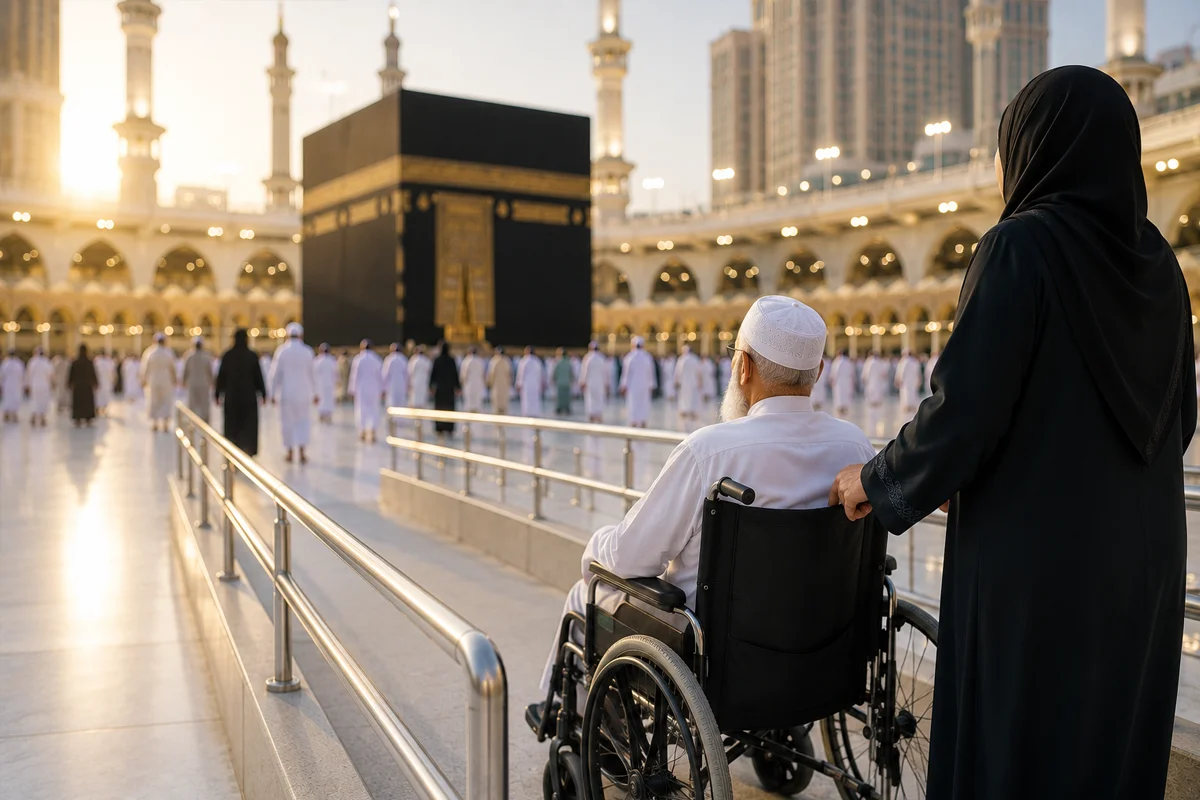
The Ḥaramayn are well set up for elderly and disabled pilgrims. Wheelchairs are available to rent, borrow or bring, and you can hire an attendant to take a pilgrim through ṭawāf and saʿy. Electric carts and dedicated wheelchair levels (the upper floors for ṭawāf and a designated saʿy track) let you avoid the crowds, and both mosques have step-free access, ramps and lifts. Stay in a close hotel zone, use a wheelchair-friendly car for transfers, and travel at cooler, quieter hours.
Key takeaways
- ✓Wheelchairs can be rented, borrowed or brought; paid attendants can take a pilgrim through the rites.
- ✓Electric carts and dedicated wheelchair levels (upper floors for ṭawāf, a set saʿy track) avoid the crowds.
- ✓Both mosques have step-free access, ramps and lifts — staff direct you to accessible gates.
- ✓Stay in a close hotel zone and use a wheelchair-friendly private car for transfers and Ziyārat.
- ✓Travel at cooler, quieter hours; keep water and medication to hand.
Quick facts
- Wheelchairs
- Rent / borrow / bring
- Attendant
- Hireable for rites
- Ṭawāf
- Upper wheelchair levels
- Saʿy
- Dedicated track
- Access
- Ramps, lifts, step-free
- Transfers
- Wheelchair-friendly car
The Ḥaramayn are large and busy, but they are also well set up for elderly and disabled pilgrims — with wheelchairs, electric carts, dedicated levels and accessible routes. With a little planning, anyone can perform Umrah with dignity and ease, so no one should feel the rites are out of reach. Here is how.
Wheelchairs
Wheelchairs are available to rent or borrow at the Grand Mosque and Masjid an-Nabawī, and you can bring your own. For ṭawāf and saʿy, you can push a companion yourself, or arrange a paid attendant who takes the pilgrim through the rites — a service many families use for elderly relatives who cannot manage the distance and crowds.
Electric carts & dedicated levels
To avoid the densest crowds, the mosques provide electric mobility carts and dedicated wheelchair levels — the upper floors and roof for ṭawāf, and the designated track for saʿy — where movement is smoother and cooler. These let elderly pilgrims complete the rites comfortably, away from the crush at ground level. Ask staff to direct you to the right level for your rite.
Accessible gates & routes
Both mosques have step-free access, ramps and lifts, and staff can direct you to the nearest accessible gate. Plan your entrance by the level you'll use for ṭawāf or saʿy to minimise distance — arriving at the right gate saves a long push around the complex, which matters a great deal in the heat.
Arranging help
- Hire a wheelchair attendant at the mosque for the rites if pushing is difficult.
- Choose a hotel in a close zone so the journey to the gates is short — see where to stay in Makkah.
- Use a private car with space for a wheelchair for transfers and Ziyārat.
- Travel at cooler, quieter hours and keep water and medication to hand.
- Bring any personal equipment (cushions, straps) your traveller relies on.
A dignified Umrah for everyone
With a wheelchair, the right level and a short hotel walk, elderly and disabled pilgrims can perform every rite calmly. The provisions are extensive and the staff helpful, so plan ahead and don't hesitate to use them. See Umrah with kids and elderly parents for pacing, and plan the trip with the DIY Umrah guide.
Frequently asked questions
Planning a Saudi trip?
Pre-book a private car, find a stay, or ask us anything on WhatsApp.
Last updated: 27 July 2026·Sources reviewed by the Wadana Go editorial team.