How to Plan Umrah Yourself: The Complete DIY Guide
Short answer
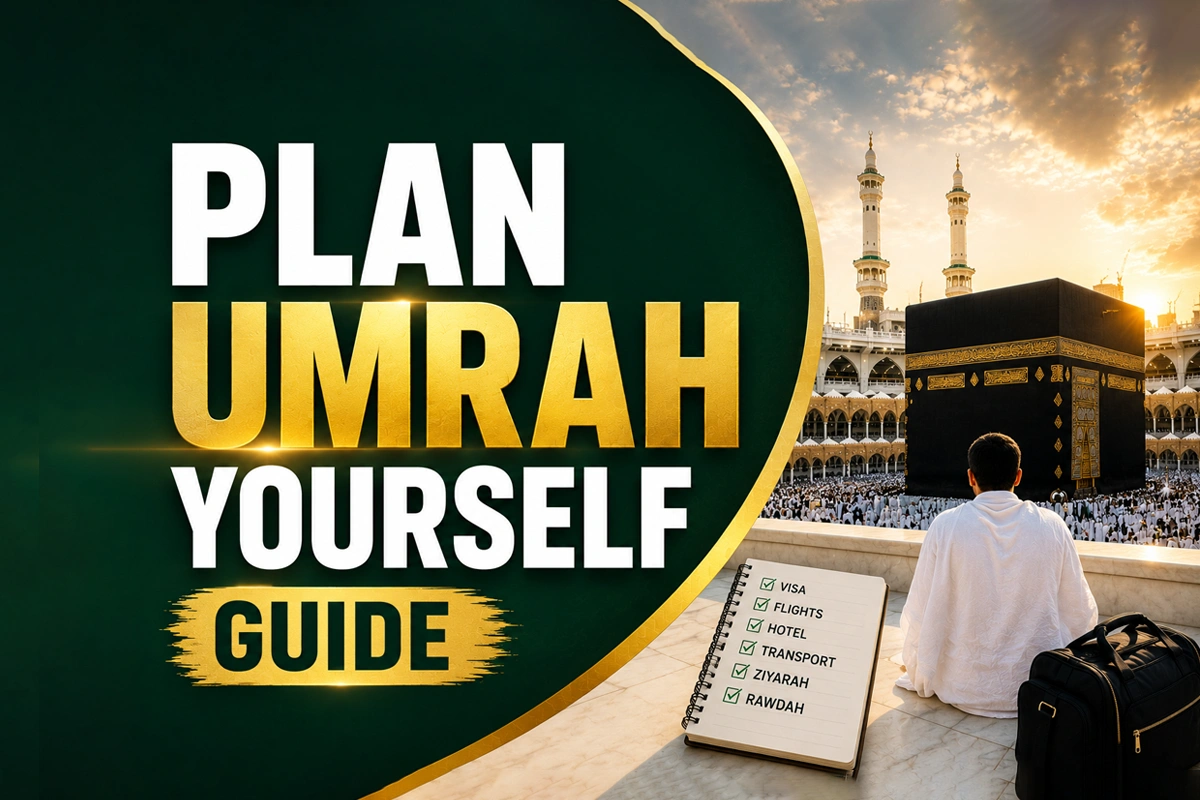
Yes — since the visa reforms you can plan Umrah yourself in nine steps: (1) apply for the tourist eVisa (~SAR 535, Umrah allowed outside Hajj), (2) book economy flights ($800–1,500), (3) choose a Makkah hotel by Ḥaram zone, (4) pre-book the Jeddah Airport transfer, (5) arrange Makkah↔Madinah by train or car, (6) set up Nusuk and book your Umrah and Rawdah permits, (7) pack ihram and essentials, (8) perform the rites, (9) do the ziyarat. DIY usually beats a package on cost and flexibility.
Key takeaways
- ✓eVisa-eligible travellers can plan the whole Umrah directly — no agent, no package mark-up.
- ✓Nine steps: visa → flights → hotel → airport transfer → intercity → Nusuk permits → packing → rites → ziyarat.
- ✓The tourist eVisa (~SAR 535) covers Umrah outside the Hajj season and lets you travel anywhere.
- ✓Pre-book the airport transfer and intercity car so nothing is left to chance in ihram.
- ✓Set up Nusuk early for the Umrah permit (peak times) and the free Rawdah appointment.
- ✓DIY typically wins on cost and flexibility; use Wadana Go for any single piece you'd rather not handle.
Quick facts
- Framework
- 9 steps
- Visa
- eVisa ~SAR 535
- Flights
- $800–1,500
- Permits
- Via Nusuk
- Best for
- eVisa-eligible travellers
- Vs package
- Cheaper + flexible
You no longer need a travel agent to perform Umrah. Since Saudi Arabia's visa reforms opened the tourist eVisa to Umrah, an eligible traveller can arrange the whole trip directly — and usually more cheaply, with far more control over where you stay, when you travel and how much you spend. This is the complete nine-step framework, with each step explained in plain language and linked to a deeper guide. Work through them in order and you will have planned a full Umrah yourself, from visa to the final ziyārat. Every figure here is indicative and dated — verified July 2026 — so confirm visa fees and permit rules on the official portals before you pay.
Can you really do Umrah without an agent?
Yes — if your nationality is eligible for the tourist eVisa (around 66 countries, plus holders of a valid, used US, UK or Schengen visa). You apply online, book your own flights, hotel and transport, and reserve permits through Nusuk. Nothing about the rites requires an agent, and the holy cities are set up for independent pilgrims with multilingual signage and staff.
If you are not eVisa-eligible, you use a dedicated Umrah visa through Nusuk, which bundles a hotel-and-transport package — that is less DIY, but the steps below still help you understand every moving part and question your operator well. Not sure which applies to you? Start with Umrah visa vs eVisa. And a reassurance before you begin: doing it yourself is not about cutting corners on worship — it is about arriving calm, rested and in control, which lets you focus on the ʿibādah.
Step 1 — Visa
Apply for the tourist eVisa on the official portal (about SAR 535 including mandatory insurance, and often approved within hours). It is valid one year, allows multiple entries of up to 90 days each, covers Umrah outside the Hajj season, and lets you travel anywhere in the Kingdom — so you can add Madinah, Jeddah or AlUla on the same visa. Apply at least a week before travel, enter your details exactly as they appear in your passport, and upload a clear photo and passport scan, since mismatches are the main cause of delay. Full walk-through in the Saudi eVisa guide and the visa comparison.
Step 2 — Flights
Book economy return flights — roughly $800–1,500 from the US, UK or Europe, less from South Asia and the Gulf — about six to ten weeks ahead for the best fares. You can fly into Jeddah (closest to Makkah, about 90 minutes away) or Madinah (start your trip in the Prophet's ﷺ city and travel to Makkah afterwards). Many pilgrims fly into one and out of the other to avoid backtracking. Prices climb steeply in Ramadan and the school holidays, so lock flights in early if your dates fall then. Compare flights.
Step 3 — Hotels by zone
Choose your Makkah hotel by one thing above all: distance to the Ḥaram, because you will walk it up to five times a day. Steps away (Zone A, roughly $250–800+ a night) lets you return to rest between prayers; a 5–10 minute walk (Zone B, $150–300) balances cost and convenience; and a shuttle ride out (Zone C, $50–100) is cheapest if you accept the commute. Sleeping one zone out is the single biggest saving on the whole trip. Book Madinah near the Central Area (Markaziyah) too, and if women in your group plan frequent Rawdah visits, choose a hotel near the women's gates. Browse Makkah stays, and see where to stay in Makkah for the full zone breakdown.
Step 4 — Airport transfer
Pre-book your Jeddah Airport → Makkah transfer so a driver meets you in arrivals with a name sign after a long flight — a fixed SAR 180–700 per car by class, with no haggling while you are tired and in ihram, and the driver tracks your flight so a slow immigration queue costs you nothing. This is the calmest possible start, especially with a family, luggage or a night arrival. Compare every option — taxi, Careem, train and car — in Jeddah Airport to Makkah, then book a transfer.
Step 5 — Intercity (Makkah ↔ Madinah)
Travel between the holy cities by Haramain high-speed train (about 2 hours 20 minutes, SAR 145–280 per person) or by private car door to door. The train is fastest for individuals and couples; a car is easiest with a family and luggage, and it is the only option that can stop at the miqat (Dhul-Ḥulayfah) if you intend an ʿUmrah on the return leg, which the train and bus cannot do. Remember the train stations sit several kilometres from each Ḥaram, so budget for a short transfer at both ends. Compare in Makkah to Madinah transport and the Haramain train guide.
Step 6 — Nusuk & permits
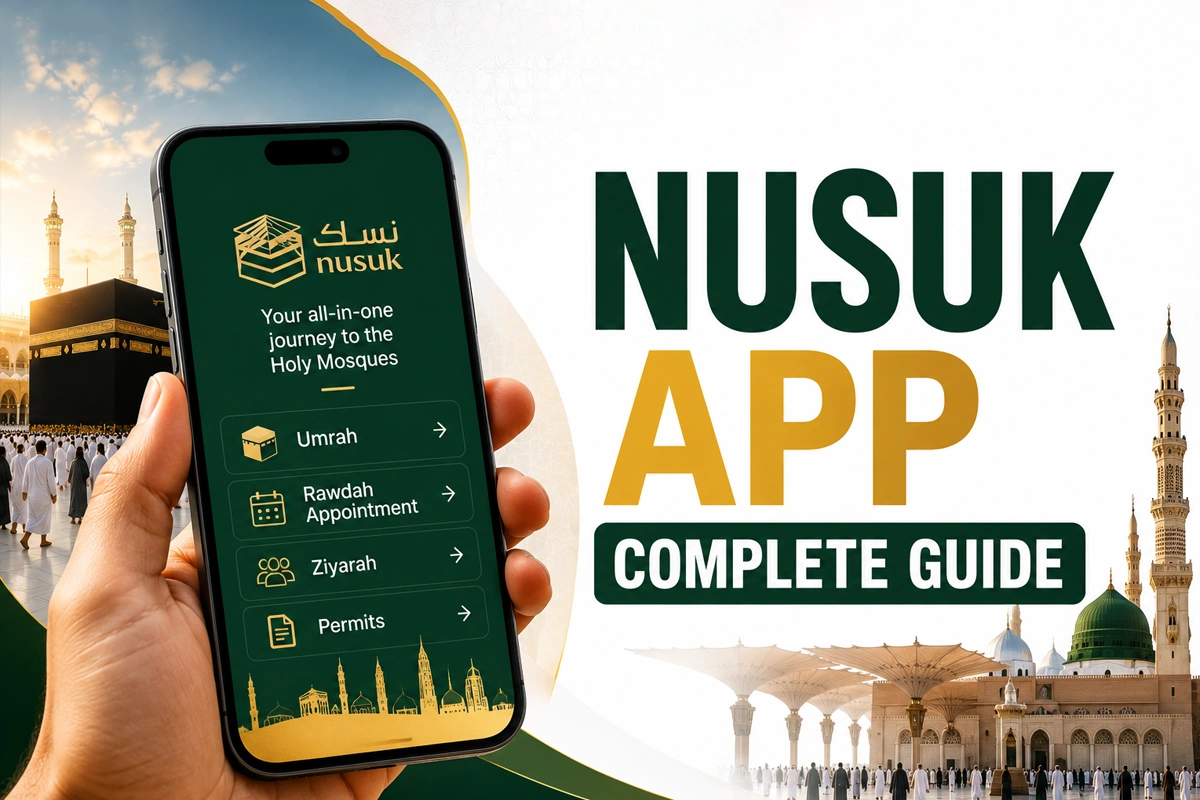
Set up the Nusuk app before you fly and log in with your passport details. Through it you book your Umrah permit where one is required (enforced especially in Ramadan) and your free Rawdah appointment for Madinah, whose slots open a few days ahead and go within minutes. Your visa gets you into the country; the Nusuk permit gives permission to perform the pilgrimage — they are separate and both matter. See the Nusuk app guide and how to book the Rawdah.
Step 7 — Packing
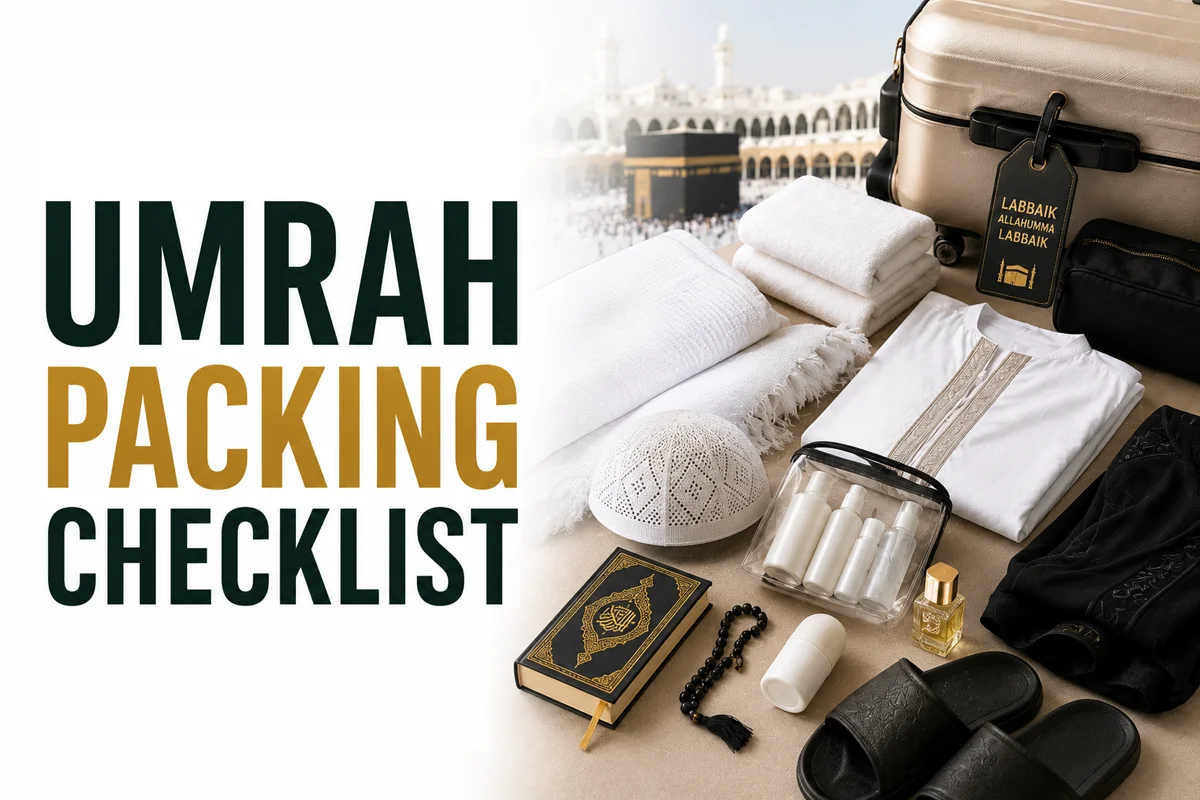
Pack light but complete. Men bring two sets of ihram (one spare) and a belt; women bring loose, modest everyday clothing. Everyone brings comfortable sandals or footwear, unscented toiletries (fragrance is prohibited in ihram), a refillable water bottle, blister plasters and any medication in hand luggage with prescriptions. Keep your passport, visa, vaccination certificate and a set of ihram in your carry-on so a delayed suitcase never delays your Umrah, and leave room for Zamzam on the way home. The full list is in the Umrah packing checklist.
Step 8 — Performing Umrah
The rites are simple and the same for everyone: enter ihram and make the intention at the miqat, perform ṭawāf (seven circuits of the Kaʿbah), pray two rakʿah, drink Zamzam, perform saʿy (seven times between Ṣafā and Marwah), and trim or shave the hair to exit ihram. Take it calmly, keep your du'ās sincere and in any language, and don't be anxious about perfect memorisation — there are only a few fixed duas. Follow the full step-by-step, with the duas in order, in our first-time Umrah guide, and read the ihram guide beforehand so the state and its prohibitions are clear.
Step 9 — Ziyārat
Round out the journey with the visits. In Makkah, the historic Makkah ziyārat sites — Jabal al-Nūr, Jabal Thawr and the Hajj plains — and in Madinah, the Prophet's ﷺ Mosque, the Rawdah, Qubāʾ, Uḥud and the Madīnah ziyārat route. A private ziyārat car keeps the sites in an efficient order with a driver who waits, which saves hours and spares elderly travellers the heat and crowds. Keep the spirit reflective — ziyārat is about remembering and taking lessons, and du'ā is to Allah alone.
DIY vs package: the cost comparison
The honest trade-off is cost and flexibility versus hand-holding:
| Line | DIY (self-booked) | Typical package |
|---|---|---|
| Visa | ~SAR 535 (eVisa), applied yourself | Bundled, usually marked up |
| Hotel | Any zone and standard you choose | Fixed, often Zone B/C |
| Transport | Booked to your own schedule | Shared, fixed departure times |
| Dates | Fully flexible | Set by the operator |
| Flexibility | Full — change anything | Limited |
| Cost | Usually lower | A convenience premium |
DIY typically wins on cost and flexibility; a package wins mainly on hand-holding — which the guides above largely replace, especially for a first-timer who reads ahead. If you would rather not handle one particular piece — an airport transfer, an intercity car, a ziyārat day — book just that on Wadana Go and keep the rest DIY. For the full numbers by budget, mid-range and comfort tier, see the Umrah cost breakdown.
Two-week countdown checklist
- Two weeks out: eVisa approved, flights and hotels booked, Nusuk account created and verified, meningitis (ACWY) vaccination done if you haven't already.
- One week out: airport transfer and intercity transport pre-booked; Rawdah slot secured if one is available; start packing the ihram and essentials.
- Three days out: pack fully, download offline maps of the Ḥaram areas, save your hotel addresses in Arabic on your phone, and check in for your flight.
- Day of travel: ihram ready for the miqat, documents and the Nusuk app on your phone, some cash in riyals, and your driver confirmed.
- On arrival: meet your driver, check in, rest, and begin Umrah refreshed rather than exhausted.
Common first-timer worries, answered
- “What if I make a mistake in the rites?” Minor slips are forgiven and often easily corrected; follow the step-by-step and ask the many helpers on site.
- “I don't speak Arabic.” English is widely understood around the Ḥaram, and apps and signage are multilingual.
- “Is it safe to plan it myself?” Yes — the cities are very well organised for pilgrims, and pre-booking removes almost all the uncertainty.
That is a complete Umrah, planned by you — cheaper, more flexible and, done this way, calmer. When you are ready, book any transfer or car on Wadana Go. All figures indicative, verified July 2026 — confirm current fees and rules on the official portals before you travel.
Step by step
- 1
Get your visa
Apply for the tourist eVisa online (~SAR 535); Umrah allowed outside Hajj season.
- 2
Book flights & hotel
Economy flights 6–10 weeks out; choose a Makkah hotel by Ḥaram zone.
- 3
Arrange transport
Pre-book the Jeddah Airport transfer and the Makkah↔Madinah train or car.
- 4
Set up Nusuk & permits
Book your Umrah permit (if required) and the free Rawdah appointment.
- 5
Pack, perform, visit
Pack ihram, perform the rites per the step-by-step guide, then do the ziyarat.
Frequently asked questions
Planning a Saudi trip?
Pre-book a private car, find a stay, or ask us anything on WhatsApp.
Last updated: 22 July 2026·Sources reviewed by the Wadana Go editorial team.