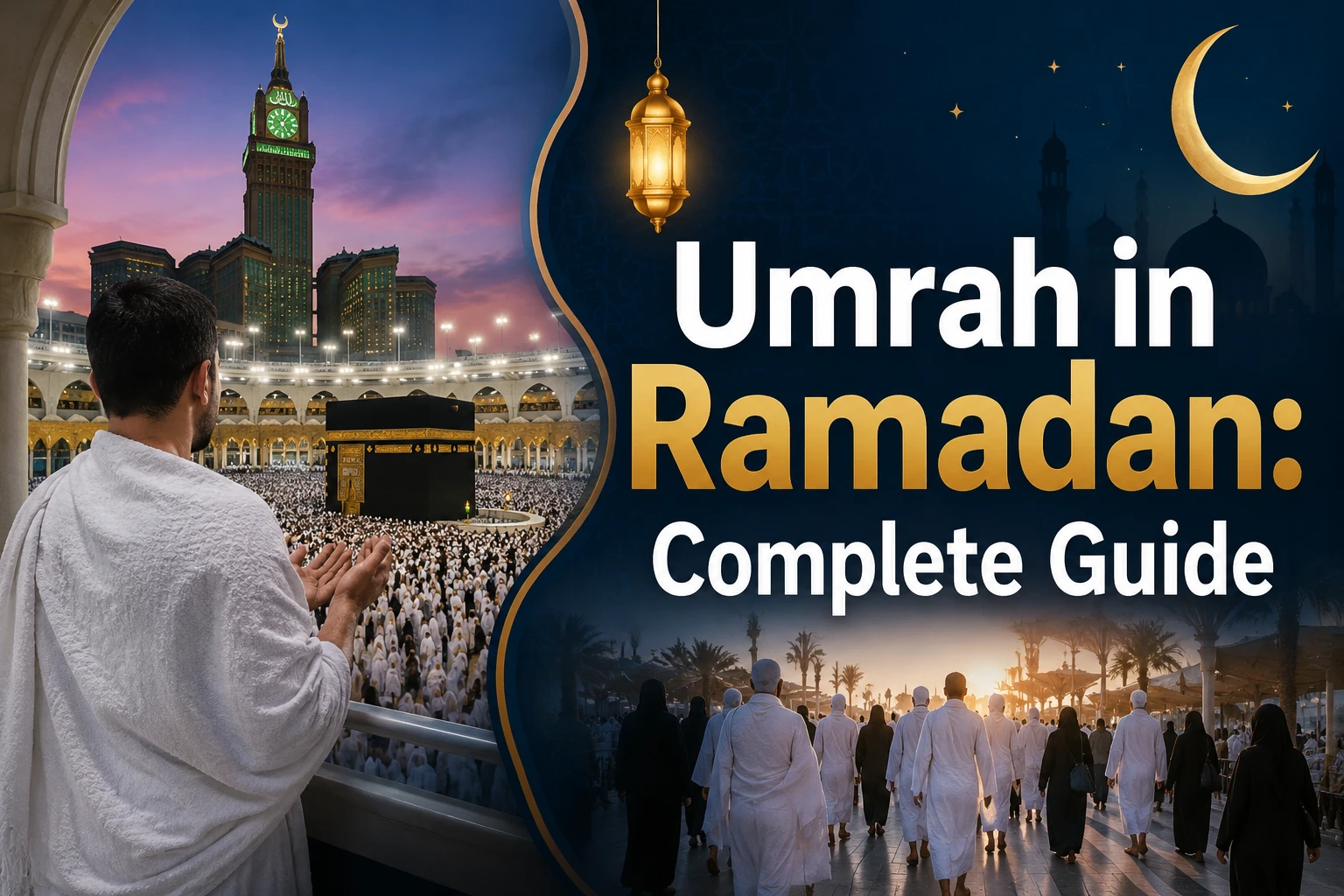
Umrah in Ramadan: Complete Guide (Crowds, Permits, Costs)
Religious guidance reviewed against classical sources. Rulings can differ by school and circumstance — for a decision specific to you, consult a qualified scholar. See our editorial policy.
Short answer
Umrah in Ramadan carries the reward of a Hajj (per authentic hadith) but is the busiest, priciest time to go. You may perform Umrah only once during Ramadan, and a Nusuk permit with a digital entry code is mandatory to enter the Grand Mosque. The last ten nights are the most crowded of the year, hotels run 3–5× higher, and you should book two to three months ahead. Arrive early for Taraweeh and Qiyam, and pre-book transport around the Iftar and prayer peaks.
Key takeaways
- ✓Umrah in Ramadan equals a Hajj in reward (authentic hadith) — confirm fiqh points with a scholar.
- ✓You may perform Umrah only ONCE during Ramadan; a Nusuk permit + digital entry code is mandatory.
- ✓The last ten nights are the most crowded days of the year in the Ḥaram — arrive early, use upper levels.
- ✓Hotels run 3–5× off-peak; book two to three months ahead as Nusuk slots release in phases.
- ✓Plan Taraweeh/Qiyam seating early; Iʿtikāf places are limited and may need registration.
- ✓Pre-book transport around the Iftar and post-Taraweeh traffic peaks. Rules current Jul 2026 — verify on Nusuk.
Quick facts
- Reward
- = Hajj (hadith)
- Umrah limit
- Once per Ramadan
- Permit
- Nusuk (mandatory)
- Hotels
- 3–5× higher
- Busiest
- Last 10 nights
- Book ahead
- 2–3 months
Umrah in Ramadan is among the most sought-after journeys in a Muslim's life — the Prophet ﷺ taught that an Umrah in Ramadan equals a Hajj in reward (an authentic tradition reported in al-Bukhārī and Muslim). But it is also the most crowded and expensive time to go, with rules that differ from the rest of the year, so it rewards careful planning more than any other trip. This guide covers the permits, crowds, costs and worship logistics so you can plan well and worship with a settled heart. Ramadan rules and dates change yearly — verify the current requirements on Nusuk before you book. Reward and fiqh points should be confirmed with a qualified scholar.
Why Ramadan Umrah is different
Beyond the immense reward, everything is amplified in Ramadan: the spiritual atmosphere of Taraweeh and Qiyam in the Ḥaram is unlike any other time, and so are the crowds, the heat of the day while fasting, and the cost. Planning that would be casual in a quiet month becomes essential here — where you sleep, when you travel, and when you go to the Ḥaram all need thought so the experience lifts you rather than exhausts you.
Crowd calendar: first ten vs last ten nights
The month splits in two. The first twenty days are busy but manageable, and a good choice if you want the Ramadan reward without the heaviest crush. The last ten nights — when people seek Laylat al-Qadr — are the most crowded days in the Ḥaram all year, with the Muṭāf (ṭawāf area) often closed to newcomers at peak times and movement slow. If you want the last ten nights, arrive early, expect to worship from the upper levels or courtyards, and build extra patience into every plan.
Permits & restrictions in Ramadan
Two rules matter most. First, you may perform Umrah only once during Ramadan — the permit system enforces one Umrah per pilgrim for the month, so plan which days you will use it. Second, a Nusuk permit is mandatory to enter the Grand Mosque for Umrah in Ramadan, with a digital entry code; there is no entry without it. Book your slot in the Nusuk app as early as you can, since slots release in phases and fill fast.
Costs: the Ramadan multiplier
Hotels near the Ḥaram run three to five times their off-peak rate, peaking in the last ten nights, and flights climb too. Budget accordingly, book months ahead, or consider staying one zone out and commuting to soften the cost. The full picture is in the Umrah cost breakdown, and the hotel zones in where to stay in Makkah. If budget is tight, remember the reward of Ramadan Umrah is the same whichever ten days you choose, so the first twenty days can be both cheaper and calmer.
Taraweeh & Qiyam in the Ḥaram: where to stand
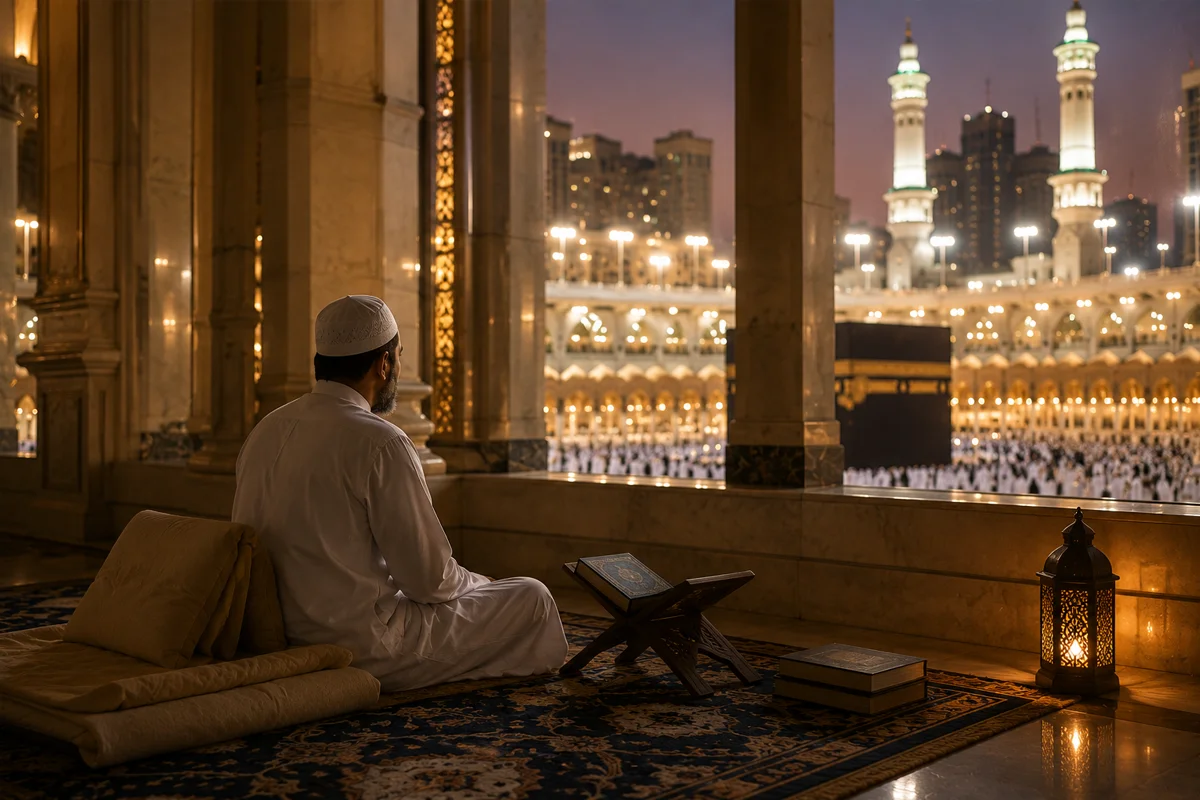
For Taraweeh (after ʿIshāʾ) and Qiyam (late night in the last ten), arrive well before the prayer to find a place — the mosque fills far ahead of the iqāmah. The upper floors and the outer courtyards are less crowded and still within the congregation, and they are often more comfortable for a long night prayer. Keep a small prayer mat, note your gate so you can find your group afterwards, and agree a meeting point in case you are separated in the crowds.
Iʿtikāf: how to register
Spending the last ten nights in Iʿtikāf in the Ḥaram is a cherished Sunnah, but places are limited and managed by permit or registration when offered. Check the current process and any registration on Nusuk and with the mosque administration well ahead. If formal Iʿtikāf places are full, many worshippers still spend the nights in worship within the mosque as space allows. See the Iʿtikāf guide for detail.
Suhoor & Iftar logistics
Iftar in the Ḥaram is a vast, beautiful operation — volunteers lay out dates, water and simple meals across the floors. Arrive early to be seated, help keep the space clean, and don't block the walkways. For Suhoor, nearby eateries stay open late; keep it light and hydrating so the day's fast and worship are easier. Drink plenty of water between Iftar and Suhoor, since long days of fasting and walking in the heat can quickly dehydrate you.
Booking timeline (when prices jump)
Prices and Nusuk slots move in phases, so start two to three months ahead. Secure your visa and hotel first — they gate the permit — then your permit slot, then transport. Leaving it late in Ramadan usually means either no availability or the very top prices, so early planning is the difference between going and missing out.
Transport in Ramadan traffic
Roads around the Ḥaram are heaviest just before Iftar and after Taraweeh, when everyone moves at once. A pre-booked private car with a driver who knows the closures and timing beats hunting for a taxi in the crush — especially with elders or children. Pre-book your transfers and plan journeys around, not through, the Iftar and prayer peaks.
All rules and figures current at July 2026 — verify on Nusuk before booking, and confirm any point of fiqh with a qualified scholar.
Frequently asked questions
Planning a Saudi trip?
Pre-book a private car, find a stay, or ask us anything on WhatsApp.
Last updated: 16 July 2026·Sources reviewed by the Wadana Go editorial team.