Iʿtikāf in the Ḥaramayn: How to Register
Religious guidance reviewed against classical sources. Rulings can differ by school and circumstance — for a decision specific to you, consult a qualified scholar. See our editorial policy.
Short answer
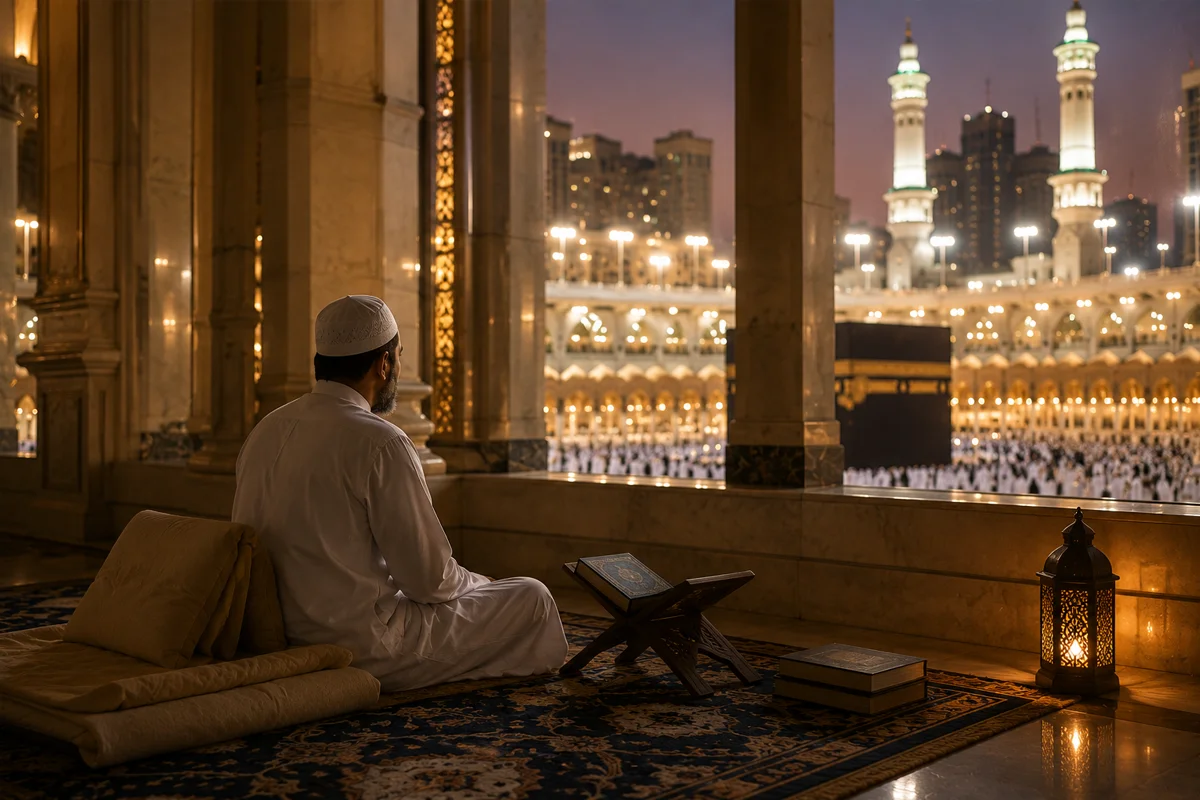
Iʿtikāf is secluding yourself in the mosque for worship, especially the last ten nights of Ramadan, seeking Laylat al-Qadr. In the Grand Mosque and Masjid an-Nabawī, places are limited and managed by permit or registration when offered — usually through Nusuk or the mosque authorities ahead of the last ten nights — so watch for the announcement and apply the moment it opens. If formal places are full, you can still spend the nights in worship within the mosque. Verify each year's process on Nusuk.
Key takeaways
- ✓Iʿtikāf is staying in the mosque for worship, especially the last ten nights of Ramadan (seeking Laylat al-Qadr).
- ✓Places in the Ḥaramayn are limited and managed by permit/registration via Nusuk or the mosque authorities.
- ✓Watch for each Ramadan's announcement and apply the moment it opens — places fill immediately.
- ✓If formal places are full, you can still spend the nights in worship within the mosque.
- ✓Pack minimal, arrange simple meals, stay in a close zone. Verify the process yearly; confirm fiqh with a scholar.
Quick facts
- When
- Last 10 nights of Ramadan
- Where
- Ḥaramayn (or any mosque)
- Places
- Limited, by permit
- Register via
- Nusuk / mosque authority
- If full
- Worship in-mosque anyway
- Verify
- Yearly + scholar
Iʿtikāf — secluding oneself in the mosque for worship, especially the last ten nights of Ramadan — is a cherished Sunnah, and doing it in the Ḥaramayn (the two holy mosques) is the dream of many. Here is what it involves, how registration works, and the practicalities. Places and rules change each year — verify the current process on Nusuk and with the mosque administration, and confirm fiqh with a scholar.
What Iʿtikāf is
It is staying in the mosque with the intention of worship — prayer, Qur'an, dhikr and du'ā — cutting off worldly distractions, following the Prophet's ﷺ practice in the last ten nights while seeking Laylat al-Qadr. It is a retreat of the heart as much as the body, a chance to give the closing nights of Ramadan wholly to Allah.
Registration in the Ḥaramayn
Because demand far exceeds space, Iʿtikāf places in the Grand Mosque and Masjid an-Nabawī are limited and managed by permit or registration when offered, typically through Nusuk or the mosque authorities ahead of the last ten nights. Watch for the announcement each Ramadan and apply the moment it opens, as places fill immediately. Have your details ready so you can register without delay.
If formal places are full
If you cannot secure a formal Iʿtikāf place, you can still spend the nights in worship within the mosque as space allows — many worshippers do, without a registered spot. The reward of the last ten nights and the pursuit of Laylat al-Qadr is not confined to a registered place, so do not be discouraged if the formal spots are gone.
Practicalities
- Bring minimal belongings — a small bag, prayer items, and a light cover.
- Arrange simple meals; Suhoor and Iftar are widely available in and around the mosque.
- Stay in a close hotel zone so family can rest nearby and you can slip back if needed.
- Follow the staff and signage for entry, sections and rules, which are well organised.
- Rest during the day so you can worship through the nights.
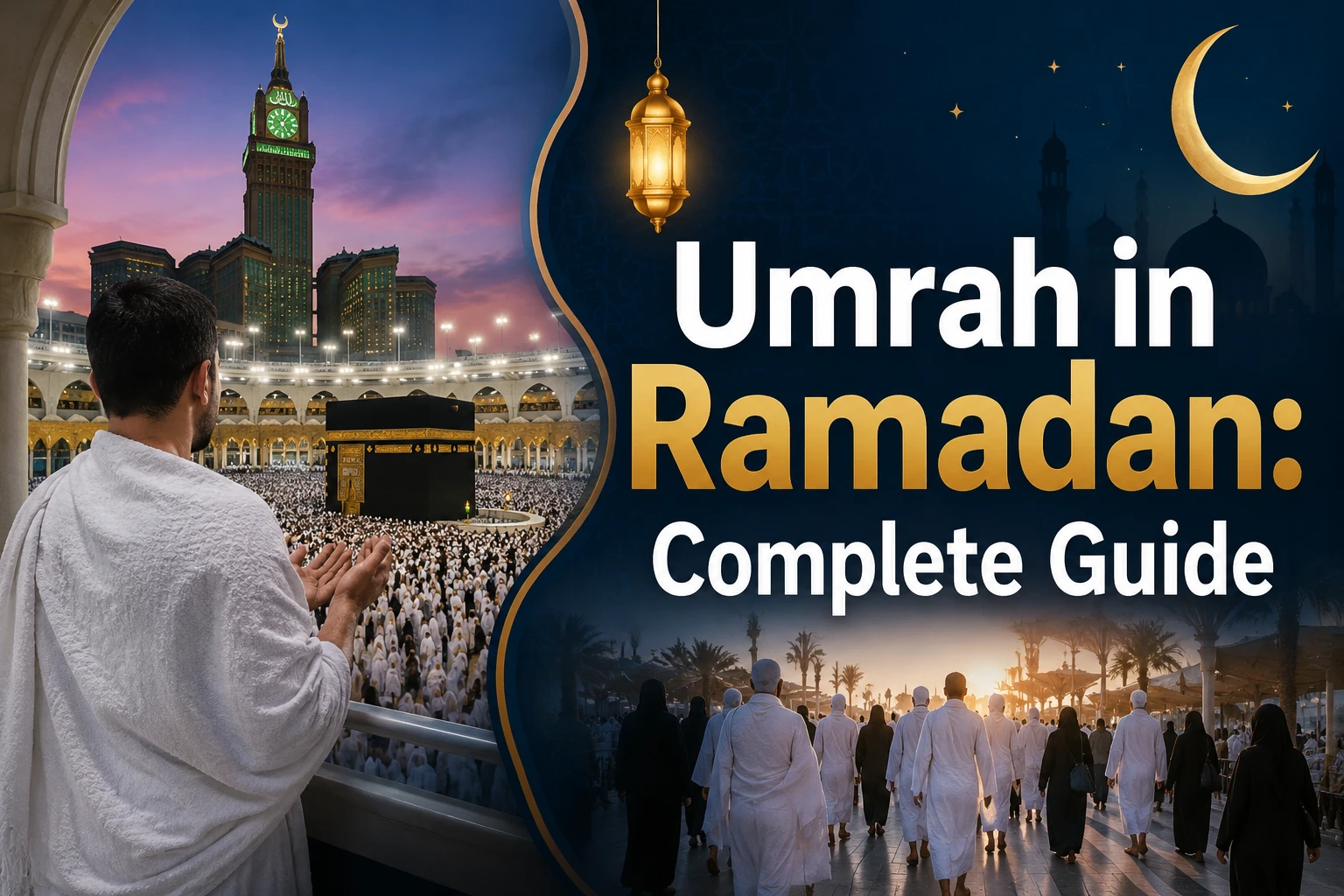
Plan the wider trip with the Umrah in Ramadan guide, and book the Rawdah in Madinah if your trip includes it. Verify the current Iʿtikāf process on Nusuk; confirm fiqh with a scholar.
Frequently asked questions
Planning a Saudi trip?
Pre-book a private car, find a stay, or ask us anything on WhatsApp.
Last updated: 27 July 2026·Sources reviewed by the Wadana Go editorial team.