Ihram: Rules, How to Wear It & Mistakes to Avoid
Religious guidance reviewed against classical sources. Rulings can differ by school and circumstance — for a decision specific to you, consult a qualified scholar. See our editorial policy.
Short answer
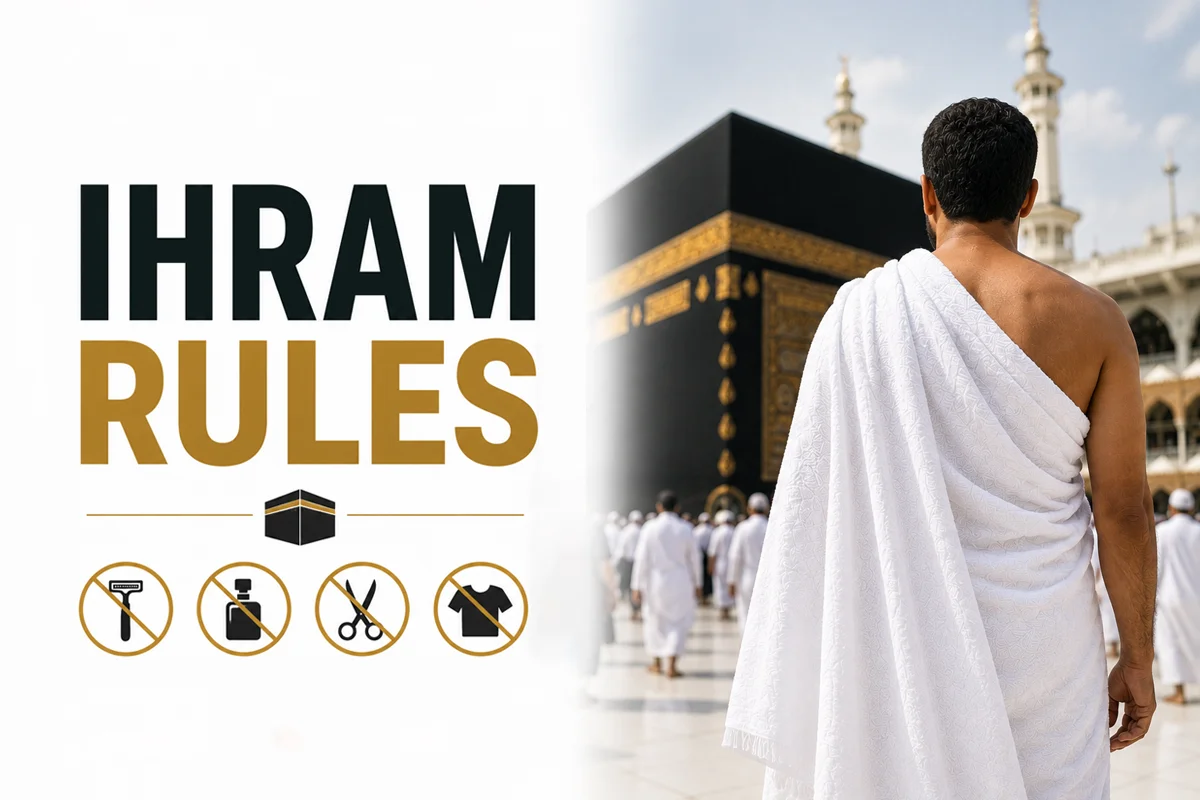
Ihram is the sacred state entered at the miqat with the intention for Umrah and the Talbiyah. Men wear two white unstitched sheets (izar and rida) and don't cover the head or wear stitched clothing; women wear ordinary modest clothing and leave the face and hands uncovered in the ihram state (no niqab or gloves). Prohibitions include perfume, cutting hair or nails, hunting, a marriage contract and intimacy. Breaking a minor prohibition may require a fidya — confirm any ruling with a scholar.
Key takeaways
- ✓Ihram is a state of intention entered at the miqat and sealed by the Talbiyah — the white garments are its outward sign.
- ✓Men: two unstitched sheets (izar + rida), no head covering, no stitched clothing, mid-foot bare.
- ✓Women: modest everyday clothing, face and hands uncovered in ihram (no niqab/gloves) per most rulings.
- ✓Prohibitions: perfume, cutting hair/nails, hunting, marriage contract, intimacy.
- ✓Minor violations may need a fidya (fast 3 days / feed 6 / sacrifice a sheep) — confirm with a scholar.
- ✓Biggest mistake: crossing the miqat without ihram. Points of fiqh summarised — verify with a scholar.
Quick facts
- Entered at
- The miqat
- Sealed by
- The Talbiyah
- Men
- Two unstitched sheets
- Women
- Modest everyday dress
- Key ban
- Perfume, cutting hair/nails
- Violation
- May need fidya
Ihram is the sacred state a pilgrim enters to perform Umrah or Hajj — a state of intention and consecration, marked for men by two white unstitched sheets and for everyone by a set of prohibitions. Understanding it before you travel means you enter it correctly at the miqat and avoid the common slips. This guide explains what ihram really is, how men and women enter and wear it, its prohibitions, and what to do about violations. Points of fiqh are summarised for guidance — confirm the ruling for your situation with a qualified scholar.
What ihram actually is
Ihram is not just the clothing — it is the state of intention (niyyah) you enter at the miqat (the appointed boundary), sealed by the Talbiyah. The white garments are the outward sign; the inward reality is devotion, humility and restraint, and a shedding of worldly distinction — rich and poor stand in the same two plain sheets. Keeping that inner meaning in mind is as much a part of ihram as the rules.
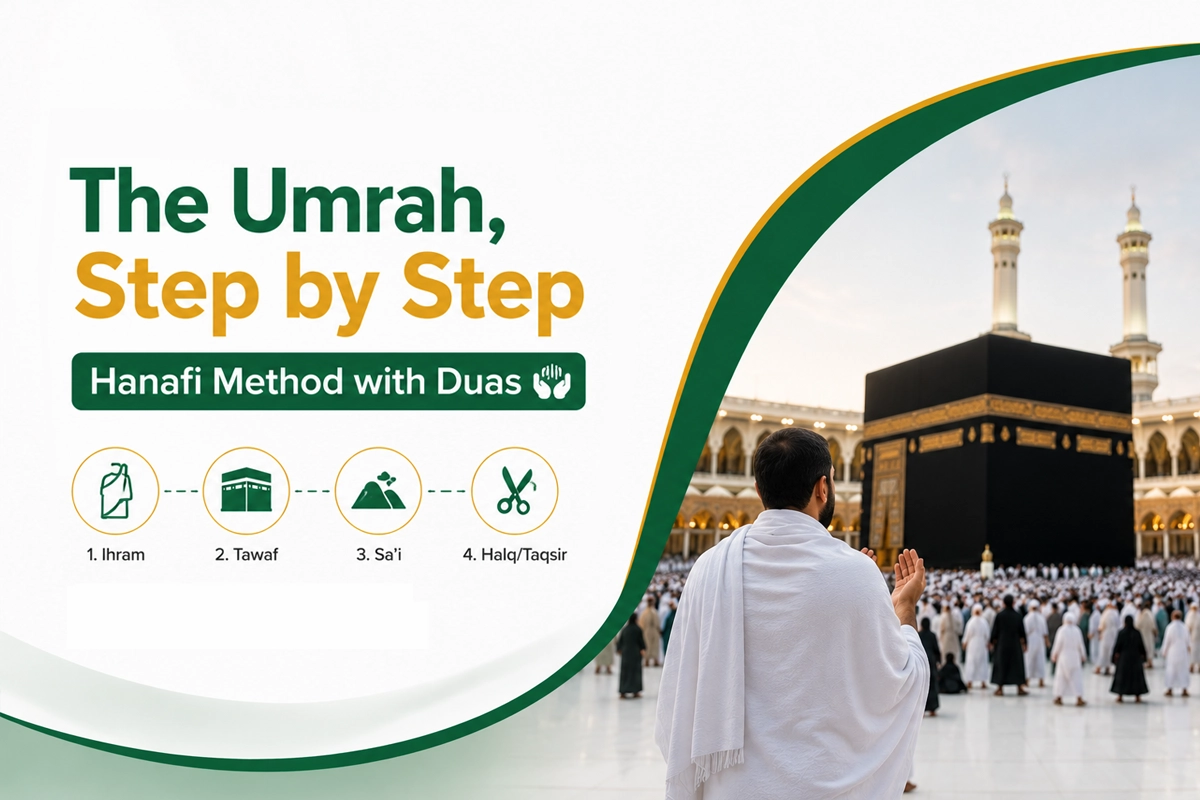
Entering ihram (step by step)
- Ghusl (a full bath) and grooming before ihram — trim the nails, remove unwanted hair, and men may apply scent to the body (not the garments) at this point.
- Men put on the two white sheets; women wear modest everyday clothing.
- At (or before) the miqat, make the intention for Umrah and recite the Talbiyah.
- From that moment the prohibitions of ihram apply, until you complete Umrah by trimming or shaving.
How men wear the two sheets
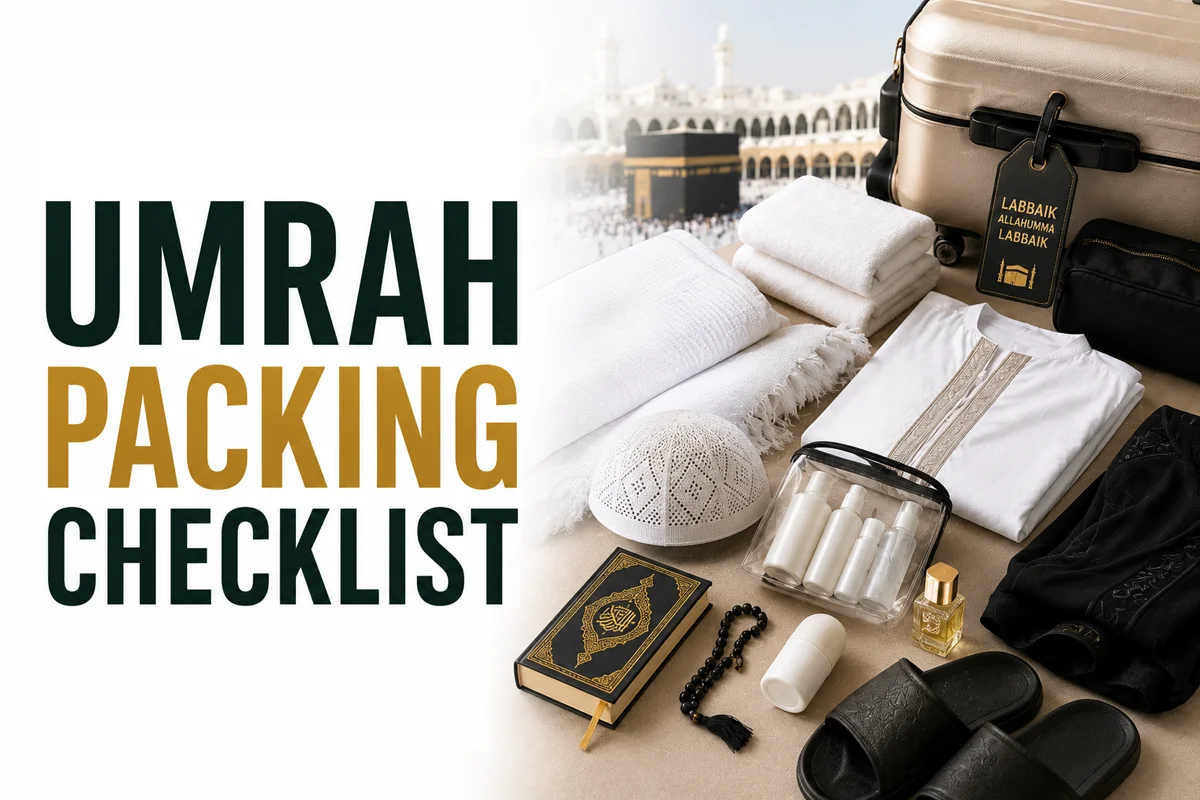
The lower sheet (izar) wraps around the waist; the upper (rida) drapes over the shoulders. An ihram belt secures the izar and holds your essentials. During the first part of ṭawāf, men uncover the right shoulder (iḍṭibāʿ), returning it afterwards. Men do not cover the head, nor wear stitched or fitted clothing, nor closed shoes over the mid-foot. A spare set is worth carrying in case one becomes soiled.
Women in ihram
Women wear ordinary modest clothing — there is no special garment — and, per most rulings, leave the face and hands uncovered in the ihram state (no niqāb or gloves), while covering from non-mahram men by other means, such as drawing the khimār, when needed. Perfume is avoided like everyone else. The full women's picture, including menstruation, is in the women's Umrah guide.
The prohibitions of ihram
- No perfume or scented products.
- No cutting hair or nails.
- No hunting or harming game.
- No marriage contract or intimacy.
- Men: no stitched/fitted clothing, no head covering, no closed shoes over the mid-foot.
- Women: no face veil (niqāb) or gloves in the ihram state.
Violations & fidya (expiation)
Breaking a prohibition may require a fidya (expiation). For minor violations — using perfume, wearing stitched clothing, or cutting hair out of need — the classical position offers a choice: fast three days, feed six needy people, or sacrifice a sheep. Intimacy before completing the rites is far more serious and has its own detailed ruling. Because circumstances vary, and a genuine mistake or necessity is treated differently from a deliberate act, ask a scholar about your specific case rather than assuming the worst.
Mistakes to avoid
- Passing the miqat without ihram — enter it before you cross, or a fidya may apply; on a flight, enter ihram before the miqat is reached in the air.
- Using scented soap or wet wipes out of habit — check the label before you pack.
- Men covering the head with a cap or by pulling the rida over it.
- Applying perfume after the intention — scent the body before entering ihram, which is fine.
For the full Umrah sequence that follows entering ihram — ṭawāf, saʿy and trimming — see the first-time Umrah guide, and for the words you'll say, the Umrah duas. Guidance summarised here; confirm specifics with a qualified scholar.
Frequently asked questions
Planning a Saudi trip?
Pre-book a private car, find a stay, or ask us anything on WhatsApp.
Last updated: 24 July 2026·Sources reviewed by the Wadana Go editorial team.