Saudi Dress Code for Visitors: Men & Women
Short answer
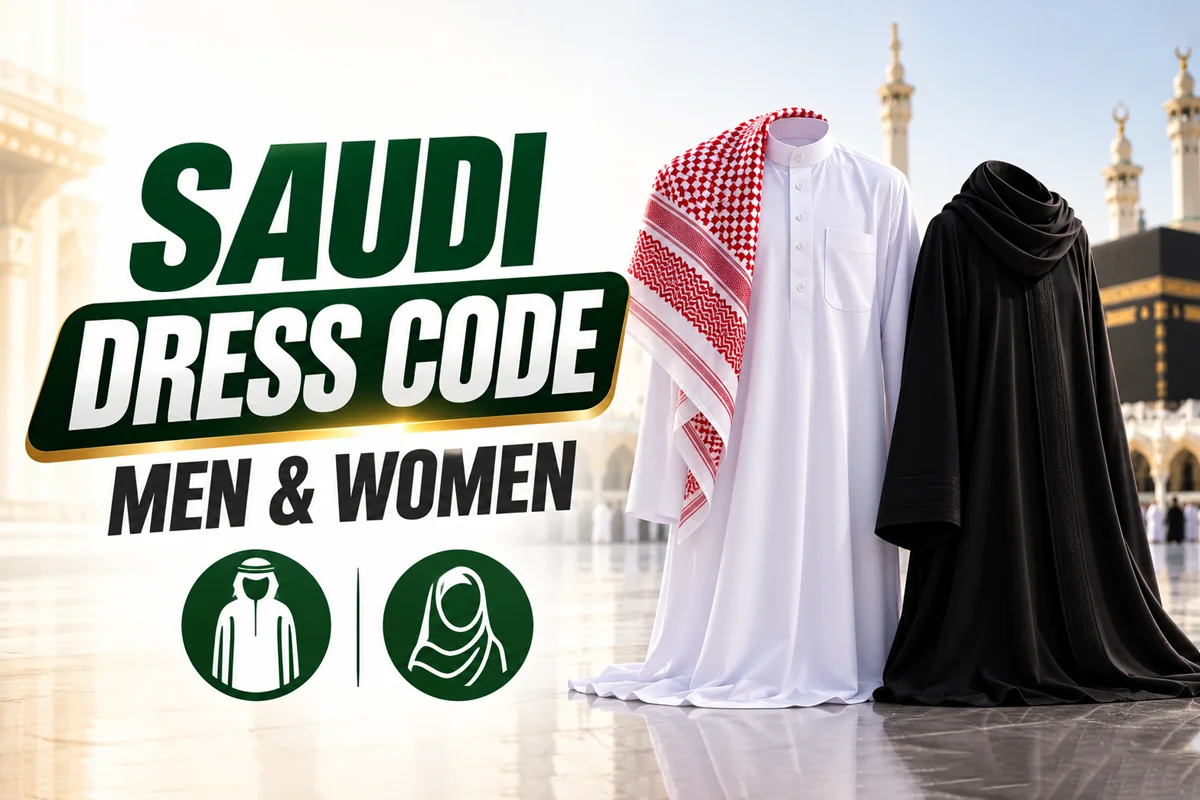
In Saudi Arabia, visitors should wear modest, loose clothing covering the shoulders and knees. For women, an abaya is not legally required for tourists and a headscarf isn't needed for non-Muslims in public (only to enter mosques), though many wear a loose abaya near the Ḥaram; aim for clothing covering arms and legs and carry a scarf. Men wear long trousers and a top covering the shoulders — no shorts or sleeveless tops in public. Dress is more conservative around the holy sites.
Key takeaways
- ✓General rule: modest, loose clothing covering shoulders and knees for everyone.
- ✓Women: abaya not legally required for tourists; headscarf only needed to enter mosques — but many wear an abaya near the Ḥaram.
- ✓Men: long trousers and a top covering the shoulders; no shorts or sleeveless tops in public.
- ✓Dress more conservatively around the Ḥaram and Masjid an-Nabawī.
- ✓In ihram, men wear two white sheets and women modest clothing with face/hands uncovered.
Quick facts
- General
- Modest, covers shoulders/knees
- Abaya
- Not required (tourists)
- Headscarf
- Only for mosques
- Men
- Long trousers + sleeves
- Haram
- More conservative
- Beachwear
- Private beaches only
Saudi Arabia's dress code is simpler than many visitors expect, and it relaxed with the opening to tourism — but modesty is still the rule, especially near the holy sites. Getting it right keeps you comfortable and respectful without needing a special wardrobe. Here is what men and women actually need to wear, in the cities and at the Ḥaram. Norms current at July 2026; when in doubt, dress modestly.
The general rule: modest & loose
For everyone, modest, loose clothing that covers the shoulders and knees is the standard in public. Tight or revealing clothing is out of place. Within that modesty, Saudi Arabia is relaxed about colour and style — you do not need traditional Saudi dress, and ordinary modest clothes from home are fine. Natural, breathable fabrics are the practical choice in the heat.
Women
An abaya is not legally required for tourists since the tourism reforms, and a headscarf is not required for non-Muslim visitors in public (it is needed to enter mosques). In practice, many women wear a loose abaya for comfort and to blend in, especially around the Ḥaram, and it's easy to buy one locally. Aim for loose clothing covering the arms and legs, and carry a scarf for mosques and the holy cities. Muslim women performing Umrah follow the ihram dress rules — see the women's Umrah guide and the ihram guide.
Men
Men wear long trousers and a shirt or top covering the shoulders — shorts and sleeveless tops are inappropriate in public. No traditional dress is expected; smart-casual modest clothing is fine everywhere, and more conservative dress is appropriate near the holy sites. In ihram, men wear the two white sheets, as covered in the ihram guide.
At the Ḥaram & in ihram
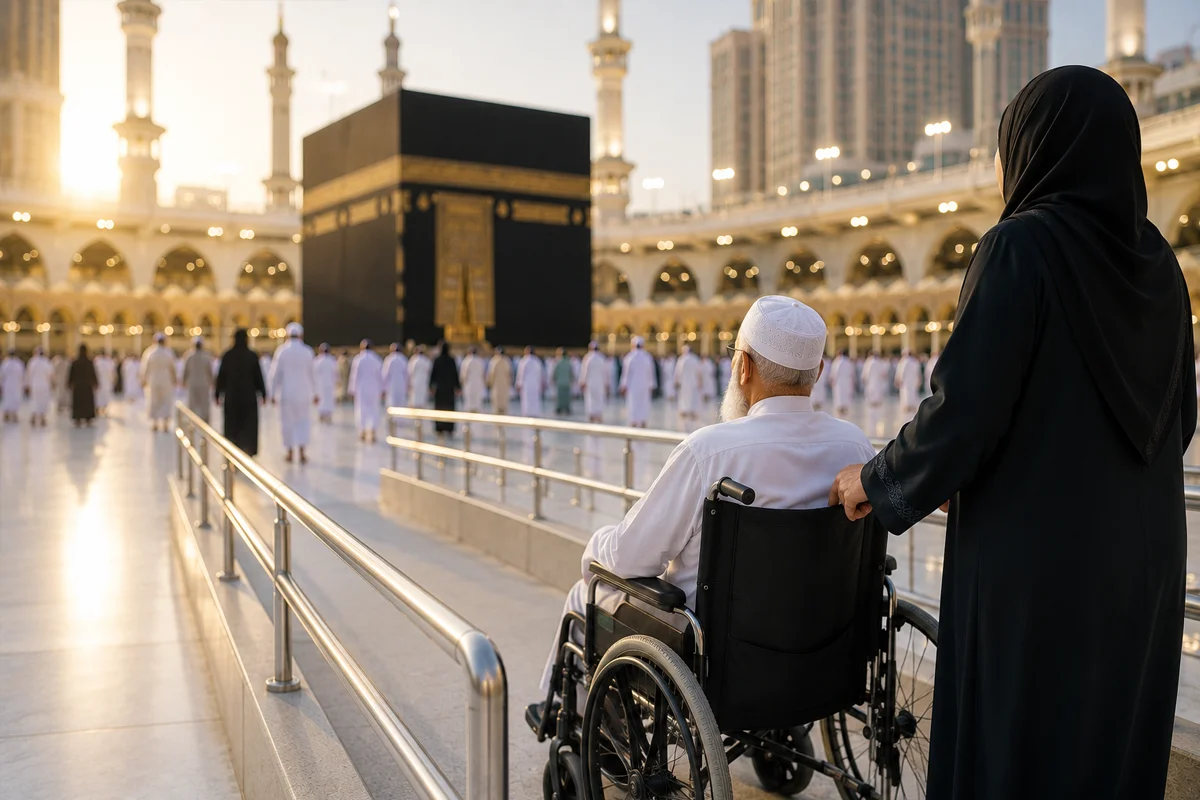
Near the Ḥaram and Masjid an-Nabawī, dress is more conservative — modest and fully covered. If you are performing Umrah, men wear the two white ihram sheets and women wear modest clothing with the face and hands uncovered in the ihram state. Carry a scarf for the mosques, and remember that comfortable, covered footwear matters as much as the clothing over long days of walking.
Quick answers
- Do I need an abaya? Not legally, but many women choose one near the Ḥaram for comfort and to blend in.
- Headscarf? Not for non-Muslims in public; yes to enter mosques.
- Shorts? Not in public for men; long trousers are expected.
- Beachwear? Only at private beaches and resort pools, not in public.
- Colours and patterns? Fine — modesty is about coverage, not colour.
Dress modestly and you will be comfortable and respectful everywhere, from the Ḥaram to a city mall. For the whole trip, see how to plan Umrah yourself, and pack per the packing checklist.
Frequently asked questions
Planning a Saudi trip?
Pre-book a private car, find a stay, or ask us anything on WhatsApp.
Last updated: 24 July 2026·Sources reviewed by the Wadana Go editorial team.