Money in Saudi: Cards, ATMs, Cash & Exchange
Short answer
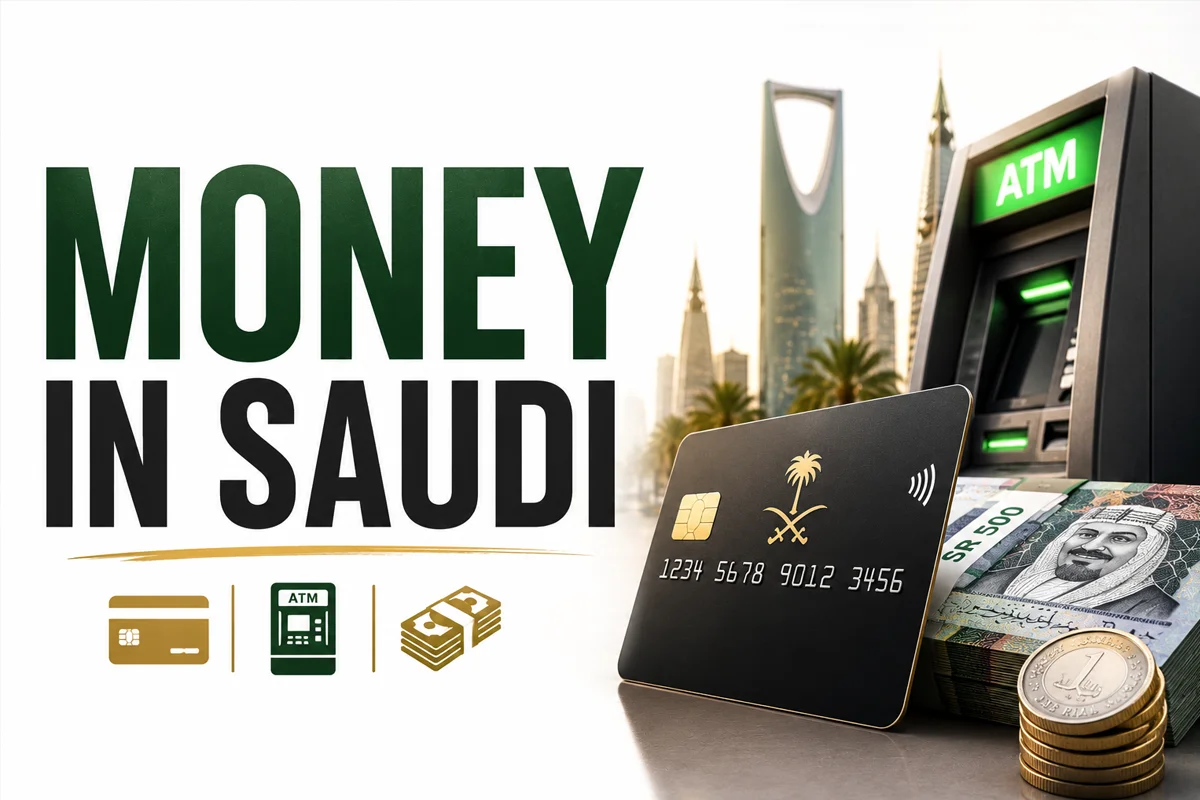
Saudi Arabia is largely cashless — Visa, Mastercard and especially Apple Pay are widely accepted, powered by the domestic mada network, and ATMs are plentiful. The riyal is pegged to the US dollar at about 3.75. Carry modest cash (a few hundred riyals per person for a week's Umrah) for small eateries, taxis, tips and souqs, but rely mainly on cards. Withdraw in riyals, decline machine currency conversion, and exchange at banks or licensed houses rather than airport counters.
Key takeaways
- ✓Largely cashless — Visa/Mastercard and Apple Pay widely accepted via the mada network.
- ✓The riyal (SAR) is pegged to the US dollar at about 3.75.
- ✓Carry modest cash for small eateries, taxis, tips and souqs — a few hundred riyals per person for a week.
- ✓ATMs are plentiful; withdraw in riyals and decline 'convert to home currency' offers.
- ✓Exchange at banks/licensed houses, not airport counters; a fee-free travel card is best value.
Quick facts
- Currency
- Saudi riyal (SAR)
- Peg
- ~3.75 per USD
- Cards
- Widely accepted (mada)
- Apple Pay
- Very common
- Cash for Umrah
- A few hundred SAR pp
- ATMs
- Plentiful
Saudi Arabia is largely cashless, and paying is easy for visitors — but a little cash still smooths the small stuff. Here is what to know about cards, the local mada network, ATMs, how much cash to carry for Umrah, and getting the best exchange. The riyal (SAR) is pegged to the US dollar at about 3.75, so dollar amounts convert predictably.
Cards & mada
Visa and Mastercard are widely accepted, and the domestic mada network powers most local card and contactless payments. Apple Pay is very widely accepted — often the fastest way to pay, and worth setting up before you travel. Most hotels, malls, restaurants and larger shops near the Ḥaram take cards, and contactless is the norm, so you rarely need to handle cash for anything substantial.
Where you still need cash
- Small eateries, bakeries and street vendors around the Ḥaram.
- Some taxis (though many take cards or app payment).
- Tips and charitable giving.
- Small purchases in older souqs.
Carry modest cash for these — you rarely need large amounts, and carrying a lot is unnecessary when cards work almost everywhere.
ATMs
ATMs are plentiful in the cities and near the holy sites, and accept international cards — watch for your own bank's foreign-withdrawal fees. Withdraw in riyals and decline any “convert to your home currency” offer at the machine, which almost always gives a worse rate than your bank would. Take out a sensible amount at once to minimise per-withdrawal fees.
How much cash for Umrah?
For a week's Umrah, a few hundred riyals per person in cash is usually plenty alongside a card — enough for taxis, snacks, tips and small buys. Don't rely on cash alone, and don't carry large sums; cards and Apple Pay cover the big costs like hotels and transport. See the full budget in the Umrah cost breakdown.
Currency exchange
Exchange at banks, licensed exchange houses or ATMs rather than airport counters, which give poorer rates. Because the riyal is pegged to the dollar, USD converts predictably; other currencies fluctuate with the market. A fee-free travel card is often the best value overall, giving near-market rates with no cash to carry. Bring a small amount of local cash for your first hour before you reach an ATM.
Practical tips
- Tell your bank you're travelling so cards aren't blocked for “unusual” activity.
- Set up Apple Pay or a payment app before you go — see essential apps.
- Keep a backup card separate from your main one in case of loss.
Rates and the peg current at July 2026; check your bank's fees before you travel, and plan the wider spend with the DIY Umrah guide.
Frequently asked questions
Planning a Saudi trip?
Pre-book a private car, find a stay, or ask us anything on WhatsApp.
Last updated: 24 July 2026·Sources reviewed by the Wadana Go editorial team.