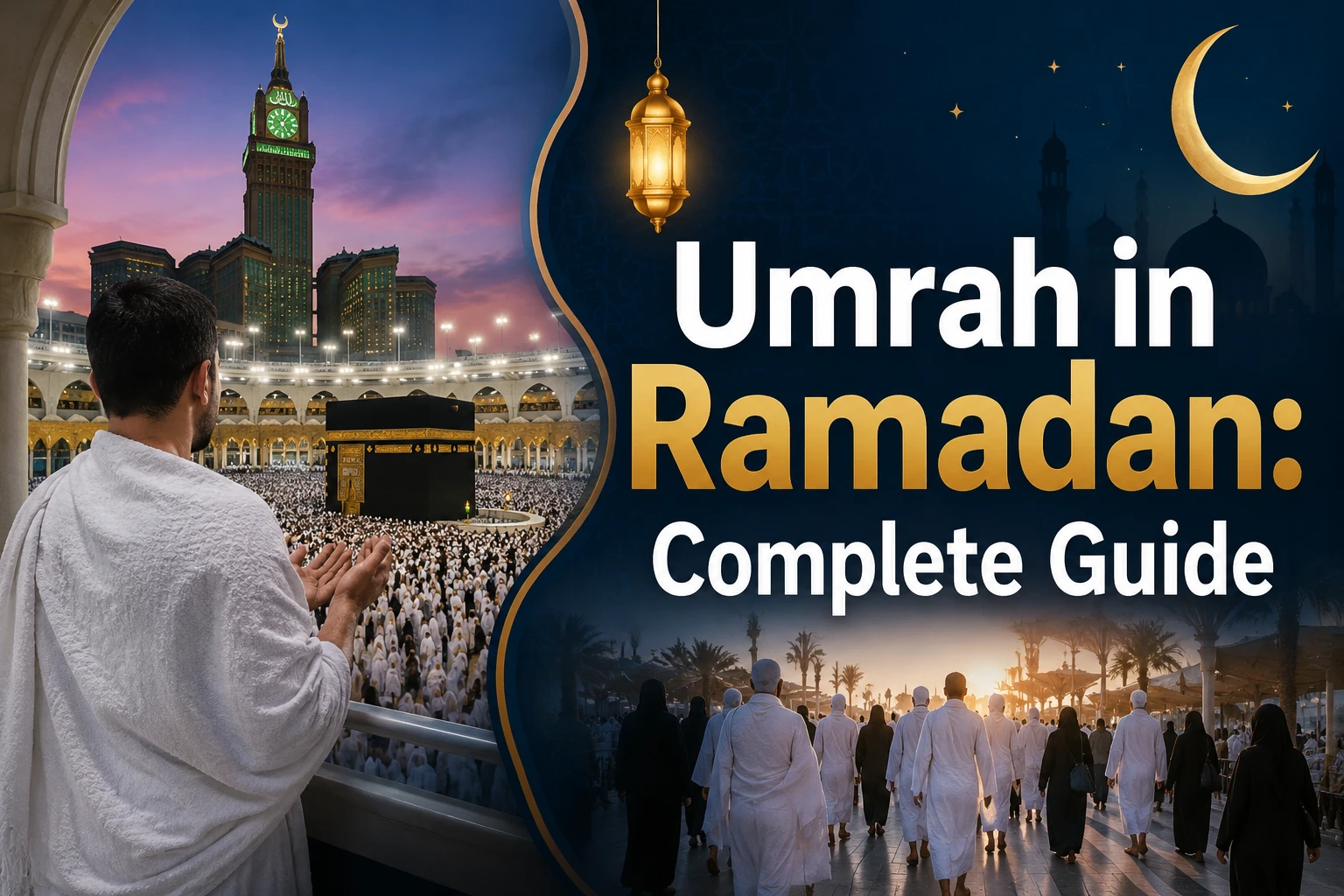
Beyond the Ḥaramayn, Place by Place — Ṭāʾif, Badr, Tabūk, Khaybar, al-Ḥijr
Quick reference · Ḥanafī method
Beyond the Ḥaramayn at a glance
Planning a day-trip? Read the site-by-site guide below. Just orienting? The essentials are here.
🔔 Good to know
- These are all outside the two sanctuaries — none is a pilgrimage, none is owed, none adds to a completed ʿUmrah or Ḥajj.
- They are permissible travel through the Sīrah — keep every farḍ prayer where the ummah prays it.
- Al-Ḥijr (Thamūd's warned land) has a binding rule: enter only weeping and reflecting — or don't enter.
- Day-trips from Makkah/Madīnah — pre-book a driver who knows the sites.
The far sites
- Ṭāʾif — the hardest day; the Ibn ʿAbbās mosque & grave.
- Badr — the battlefield, the martyrs' wall, al-ʿArīsh.
- al-Abwāʾ — the Prophet's ﷺ mother's grave; Tabūk, Khaybar.
- al-ʿUlā / al-Ḥijr (Thamūd); old Jeddah (al-Balad).
Day-trip routes
- From Makkah — the Ṭāʾif loop (return via the al-Sayl mīqāt), Jeddah's Balad on an arrival/departure day.
- From Madīnah — Badr (~2 hrs), Khaybar (~2 hrs); al-ʿUlā (2 days) and Tabūk (usually a flight).
The three marks
- ✦ Established — rests on a ṣaḥīḥ/ḥasan text; do what it establishes.
- ◈ Historical — real Sīrah ground; reflection only, no rite attaches.
- ⚠ Not established — a claim the muḥaddithīn could not verify; named honestly.
Never do this
- Treat a far site as pilgrimage, or vow a “ziyārat of Badr”.
- Petition the martyrs of Badr — they are asked for, never from.
- Pocket sand, stones or water as blessing from any site.
- Make ziyārat to the “grave of Ḥawwāʾ” in Jeddah — it is legend.
Short answer
These are the far ziyārāt of the Sīrah, all outside the two sanctuaries — Ṭāʾif (the city of the hardest day), Ḥunayn, Badr (the Day of the Criterion), al-Abwāʾ (the Prophet's ﷺ mother's grave), Tabūk, Khaybar, al-ʿUlā/al-Ḥijr (Thamūd's warned land) and old Jeddah. None is a pilgrimage or owed, and none adds to a completed ʿUmrah or Ḥajj; they are permissible travel through the pages of revelation, done with the road's adab, duʿā to Allah alone, and — at al-Ḥijr — only on the ḥadīth's terms: enter weeping and reflecting, or do not enter.
Key takeaways
- ✓Journeys of devotion are to three mosques only — none of these far sites is a pilgrimage, none is owed, and none adds to a completed ʿUmrah or Ḥajj.
- ✓Al-Ḥijr (Thamūd's dwellings near al-ʿUlā) has a binding rule: enter only weeping and reflecting — and if you cannot, the ḥadīth's own alternative is to not enter.
- ✓The martyrs of Badr and all the buried are prayed FOR with the graveyard salām, never petitioned; take no soil, sand or pebbles as blessing.
- ✓Ṭāʾif's famous long duʿā is graded weak — love its meaning if you wish, but anchor certainty in the ṣaḥīḥ 'angel of the mountains' reply.
- ✓The 'grave of Ḥawwāʾ' in Jeddah is legend — no text places it anywhere; the cemetery's ordinary Muslims get the ordinary salām, nothing is aimed at the story.
- ✓Wādī Wajj is not a third sanctuary (its narration is weak); the two ḥarams are Makkah and Madīnah alone.
- ✓Returning to Makkah from Ṭāʾif intending ʿUmrah? Tie iḥrām at Qarn al-Manāzil (al-Sayl); on the Hijrah road it is al-Juḥfah near Rābigh.
- ✓Weigh honestly: three spare days serve your ākhirah better at the Ḥaram than on a thousand kilometres of highway — keep every farḍ where the ummah prays.
Quick facts
- Scope
- Beyond the Ḥaramayn
- Status
- Not pilgrimage
- Key rule
- al-Ḥijr: enter weeping
- Ṭāʾif
- The hardest day
- Badr
- 17 Ramaḍān 2 AH
- al-Abwāʾ
- His ﷺ mother's grave
- Ḥawwāʾ grave
- Legend
- School
- Ḥanafī
How to read this guide
Everything in this guide lies outside the two sanctuaries — hours of highway from the Ḥaramayn, on the roads the Sīrah itself travelled. And that distance changes the fiqh before it changes the scenery. The Prophet ﷺ limited journeys of devotion to three mosques only (al-Bukhārī & Muslim); so none of these places is a pilgrimage, none is owed, and none adds a grain to a completed ʿUmrah or Ḥajj. What they are is permissible travel through the pages of revelation: a believer with a free day and a rented car may read Badr on the plain of Badr and Ṭāʾif on the road where he ﷺ bled — provided the adab travels with him.
And here, more than anywhere, honesty earns its keep. This guide holds the tenderest grave in the Sīrah (his ﷺ mother's, at a bend of the old road), the one land on earth with a binding prophetic etiquette of entry (al-Ḥijr of Thamūd), a duʿā the whole ummah loves whose chain the muḥaddithīn grade weak (Ṭāʾif), and a famous Jeddah “grave” that is legend, not history. Each is told exactly as it stands.
✦ Established — the place or its virtue rests on a ṣaḥīḥ or ḥasan text, quoted at the site with its source; what the sunnah establishes there, you do.
◈ Historical — genuinely part of the Sīrah; visited for reflection (ʿibrah), with no special act, prayer or reward attaching to the spot itself.
⚠ Not established — a popular claim the muḥaddithīn could not verify, named honestly so that love is never built on invention.
On this page
- I — The adab of the road
- II — Ṭāʾif: the city of the hardest day
- III — Badr: the day of the Criterion
- IV — The Hijrah road: al-Abwāʾ & al-Juḥfah
- V — Tabūk: the expedition of hardship
- VI — Khaybar: the standard of ʿAlī
- VII — Al-ʿUlā & al-Ḥijr: the warned land
- VIII — Jeddah: the gate of the Ḥaramayn
- Fitting the far sites into a real trip
- Mistakes & innovations to avoid
- Sources & method
Part I — The adab of the road, before the wheels turn
1 · Travel as he ﷺ travelled — with the duʿā of the saddle
These are all journeys, so their first sunnah is the journey's own: settle into the seat, say the takbīr thrice, and speak the words he ﷺ spoke whenever his mount straightened beneath him:
Setting out — after Allāhu akbar three times
سُبْحَانَ الَّذِيْ سَخَّرَ لَنَا هٰذَا وَمَا كُنَّا لَهُ مُقْرِنِيْنَ، وَإِنَّا إِلٰى رَبِّنَا لَمُنْقَلِبُوْنَ، اَللّٰهُمَّ إِنَّا نَسْأَلُكَ فِيْ سَفَرِنَا هٰذَا الْبِرَّ وَالتَّقْوٰى، وَمِنَ الْعَمَلِ مَا تَرْضٰى، اَللّٰهُمَّ هَوِّنْ عَلَيْنَا سَفَرَنَا هٰذَا وَاطْوِ عَنَّا بُعْدَهُ، اَللّٰهُمَّ أَنْتَ الصَّاحِبُ فِي السَّفَرِ، وَالْخَلِيْفَةُ فِي الْأَهْلِ
Subḥānalladhī sakhkhara lanā hādhā wa mā kunnā lahū muqrinīn, wa innā ilā rabbinā la-munqalibūn. Allāhumma innā nas'aluka fī safarinā hādhal-birra wat-taqwā, wa minal-ʿamali mā tarḍā. Allāhumma hawwin ʿalaynā safaranā hādhā waṭwi ʿannā buʿdah. Allāhumma antaṣ-ṣāḥibu fis-safar, wal-khalīfatu fil-ahl.
Glory be to Him who subjected this to us, for we could never have tamed it — and truly to our Lord we are returning. O Allah, we ask You in this journey of ours for righteousness and taqwā, and for deeds that please You. O Allah, make this journey easy for us and fold up its distance. O Allah, You are the Companion on the road and the Guardian over the family left behind.
Ṣaḥīḥ Muslim2 · The one duʿā for every graveyard on the way
Three of these journeys end at graves — the martyrs of Badr, his ﷺ mother at al-Abwāʾ, Ibn ʿAbbās at Ṭāʾif — and one greeting, taught by him ﷺ, serves them all:
At any graveyard or martyrs' enclosure, say
اَلسَّلَامُ عَلَيْكُمْ أَهْلَ الدِّيَارِ مِنَ الْمُؤْمِنِيْنَ وَالْمُسْلِمِيْنَ، وَإِنَّا إِنْ شَاءَ اللهُ بِكُمْ لَاحِقُوْنَ، أَسْأَلُ اللهَ لَنَا وَلَكُمُ الْعَافِيَةَ
As-salāmu ʿalaykum ahlad-diyāri minal-mu'minīna wal-muslimīn, wa innā in shā'allāhu bikum lāḥiqūn, as'alullāha lanā wa lakumul-ʿāfiyah.
Peace be upon you, people of these dwellings, believers and Muslims. We too, if Allah wills, shall join you. I ask Allah for wellbeing — for us and for you.
Ṣaḥīḥ Muslim3 · Carry the boundaries with you
Part II — Ṭāʾif, the city of the hardest day
Ninety kilometres south-east of Makkah, up the hairpins of al-Hadā or the long climb of al-Sayl, sits the cool garden city of Thaqīf — the city that stoned him ﷺ in the tenth year of prophethood, and embraced his dīn nine years later, weeping over what it had done. No stop in this guide holds more of his ﷺ heart.
4 · The journey of the hardest day ✦ Established
After the Year of Sorrow took Khadījah and Abū Ṭālib, he ﷺ walked to Ṭāʾif seeking one tribe's shelter — and its chiefs mocked him, set their fools and slaves on him, and drove him out with stones until his sandals ran with blood. Years later ʿĀʾishah رضي الله عنها asked him: was any day harder upon you than Uḥud? He answered with this day — and with what happened as he left: the angel of the mountains hailed him, offering to crush the city between its two hills. His reply is the summit of prophetic mercy:
His ﷺ answer to the angel of the mountains
بَلْ أَرْجُوْ أَنْ يُخْرِجَ اللهُ مِنْ أَصْلَابِهِمْ مَنْ يَعْبُدُ اللهَ وَحْدَهُ، لَا يُشْرِكُ بِهِ شَيْئًا
Bal arjū an yukhrijallāhu min aṣlābihim man yaʿbudullāha waḥdahū, lā yushriku bihī shay'ā.
No — rather I hope that Allah will bring forth from their descendants those who will worship Allah alone, associating nothing with Him.
Ṣaḥīḥ al-Bukhārī & Muslim5 · Masjid ʿAbdullāh ibn ʿAbbās — and his grave ✦ Established
In the heart of old Ṭāʾif stands the city's great historic mosque, holding the grave of ʿAbdullāh ibn ʿAbbās رضي الله عنهما — the Prophet's ﷺ cousin, the boy he embraced with the duʿā اَللّٰهُمَّ فَقِّهْهُ فِي الدِّيْنِ وَعَلِّمْهُ التَّأْوِيْلَ, “O Allah, give him deep understanding of the dīn and teach him interpretation” (al-Bukhārī; the taʾwīl wording in Aḥmad) — who grew into the Ḥabr of this ummah, its ocean of tafsīr. Exiled from Makkah's turmoil in his blind old age, he died at Ṭāʾif in 68 AH; Muḥammad ibn al-Ḥanafiyyah led his janāzah and said, “Today the rabbānī of this ummah has died.” What you do: pray in the mosque, give the graveyard salām of step 2 at his resting place, and thank Allah for the man through whom the ummah reads its Qurʾān — asking nothing of him, everything for him. The building is Ottoman-and-later; the history beneath it is solid. Ṣaḥīḥ al-Bukhārī · the histories of Ṭāʾif
6 · Masjid al-Kūʿ and the orchard of ʿAddās ◈ Historical
Ṭāʾif's tradition keeps two footprints of the hardest day: Masjid al-Kūʿ, the small mosque long said to mark where he ﷺ rested — its name from the wrist he leaned upon — and, by the old Wajj streambed, the remembered ground of the orchard of ʿUtbah and Shaybah, where the bleeding Prophet ﷺ took shade and the Christian slave-boy ʿAddās of Nineveh brought him grapes, heard him say bismillāh, heard the name of “my brother Yūnus, son of Mattā” — and kissed his head, the day's single believer. What you do: the story is ṣaḥīḥ-sīrah in its core; the spots are the city's continuous tradition, so they are visited as ◈ demands — prayer where a mosque stands open, reflection where an orchard once stood, and not one invented rite at either. The lesson outranks the location: on the worst day, the door that opened was a foreigner's heart. Ibn Hishām · the histories of Ṭāʾif
7 · Wādī Wajj ⚠ Sanctity not established
The valley that waters Ṭāʾif appears in a narration — “the game of Wajj and its thorn-trees are ḥarām, sanctified for Allah” — which the muḥaddithīn grade weak, and upon which the Ḥanafīs build no sanctuary rulings at all: Wajj is a beautiful wadi, not a third ḥaram. It is kept in this guide because tour guides quote the narration as settled fact. What you do: enjoy the valley as a valley; the two sanctuaries of this dīn are Makkah and Madīnah, and honesty guards their rank. Sunan Abī Dāwūd — with its grading · Aḥkām-e-Ḥajj
8 · Sūq ʿUkāẓ ◈ Historical
North-east of Ṭāʾif spread the most famous fair of pre-Islamic Arabia — poetry, trade, tribal politics — and its Islamic claim is this: season after season the Prophet ﷺ walked its crowds offering his message to every tribe, tasting refusal after refusal in the years before Madīnah said yes. The site is today a fenced heritage ground with a seasonal cultural festival. What you do: reflection for anyone who has ever had a door closed on good work — the daʿwah's greatest success grew from its most public rejections. No rite; the ground is history only. Ibn Hishām · the histories
9 · The mīqāt of this road — Qarn al-Manāzil ✦ Established
The Ṭāʾif road carries a live piece of fiqh: Qarn al-Manāzil, the mīqāt he ﷺ appointed for the people of Najd (al-Bukhārī & Muslim), stands at today's al-Sayl al-Kabīr on the lower road, with Wādī Maḥram as its aligned point on the al-Hadā mountain route. What you do: whoever returns from Ṭāʾif toward Makkah intending ʿUmrah must be in iḥrām from here — the mosques are built for it, with ghusl rooms and iḥrām shops; everything the ʿUmrah guide teaches happens at this boundary. Returning without an ʿUmrah intention needs no iḥrām at all. Ṣaḥīḥ al-Bukhārī & Muslim · Rafīq-e-Ḥajj
10 · Wādī Ḥunayn, on the road ✦ Established
Between Makkah and the Ṭāʾif climbs lies a valley the Qurʾān names outright: وَيَوْمَ حُنَيْنٍ إِذْ أَعْجَبَتْكُمْ كَثْرَتُكُمْ فَلَمْ تُغْنِ عَنْكُمْ شَيْئًا — “and on the day of Ḥunayn, when your numbers pleased you, and they availed you nothing” (al-Tawbah 9:25). Here, weeks after the Conquest, twelve thousand Muslims broke at dawn in Hawāzin's ambush — and here Allah sent down His sakīnah upon His Messenger, who stood fast on his mule calling “I am the Prophet, no lie; I am the son of ʿAbd al-Muṭṭalib” until the day turned. What you do: nothing marks the field; the ziyārat is the āyah read where it happened, from the car window if need be — numbers never won a battle, and the lesson needs no monument. al-Tawbah 9:25–26 · Ṣaḥīḥ Muslim
Part III — Badr, the day of the Criterion
A hundred and fifty kilometres south-west of Madīnah — under two hours by the coastal road — lies the small town whose name the Qurʾān wrote into the sky: وَلَقَدْ نَصَرَكُمُ اللهُ بِبَدْرٍ وَأَنْتُمْ أَذِلَّةٌ — “and Allah gave you victory at Badr when you were weak” (Āl ʿImrān 3:123). Here, on 17 Ramaḍān 2 AH, three hundred and thirteen faced a thousand, and the day earned the Qurʾān's own title: Yawm al-Furqān, the Day of the Criterion (al-Anfāl 8:41).
11 · The battlefield ✦ Established
The plain still reads like the sūrah: the near slope where the Muslims camped, the far slope of Quraysh, the wells the believers reached first, the sand where rain fell on one army as steadiness and on the other as mire (al-Anfāl 8:11). Here the angels came down — أَنِّيْ مُمِدُّكُمْ بِأَلْفٍ مِنَ الْمَلَائِكَةِ مُرْدِفِيْنَ (8:9) — and by the rise the tradition calls Jabal al-Malāʾikah their descent is remembered. What you do: walk it with Sūrat al-Anfāl open; the whole sūrah was revealed about this ground, and no battlefield on earth has a better guidebook. The tradition-named spots (the angels' hill, the two camp slopes) carry the ◈ rule inside a ✦ event: reflect, and invent nothing. al-Anfāl 8 · Ṣaḥīḥ Muslim
12 · The martyrs of Badr ✦ Established
Fourteen men bought this day with their lives — six of the muhājirūn, eight of the anṣār, ʿUbaydah ibn al-Ḥārith and ʿUmayr ibn Abī Waqqāṣ among them — and they rest where they fell, in a walled enclosure whose fourteen names are inscribed at its gate. Of the people of Badr as a whole the Prophet ﷺ said what he said to ʿUmar: “How do you know? Perhaps Allah looked upon the people of Badr and said: do as you wish, for I have forgiven you” (al-Bukhārī & Muslim). What you do: the enclosure stays closed — the graveyard salām of step 2 is given at the wall, with duʿā and istighfār for them, women and men alike from the same boundary. They are the ummah's honoured dead, not its intercessors on demand: nothing is asked of them, and no soil leaves with you. Ṣaḥīḥ al-Bukhārī & Muslim · verified at writing
13 · Masjid al-ʿArīsh — the command shelter ✦ Established
Some seven hundred metres from the enclosure stands the white mosque marking the ʿarīsh — the palm-frond shelter where the Prophet ﷺ spent the night before the battle in duʿā so intense his cloak fell from his shoulders, and Abū Bakr, alone beside him, pleaded gently: enough, O Messenger of Allah — your Lord will fulfil His promise. The words of that night are in Ṣaḥīḥ Muslim:
His ﷺ duʿā in the shelter, the night of Badr
اَللّٰهُمَّ أَنْجِزْ لِيْ مَا وَعَدْتَنِيْ، اَللّٰهُمَّ آتِ مَا وَعَدْتَنِيْ، اَللّٰهُمَّ إِنْ تُهْلِكْ هٰذِهِ الْعِصَابَةَ مِنْ أَهْلِ الْإِسْلَامِ لَا تُعْبَدْ فِي الْأَرْضِ
Allāhumma anjiz lī mā waʿadtanī, Allāhumma āti mā waʿadtanī, Allāhumma in tuhlik hādhihil-ʿiṣābata min ahlil-Islāmi lā tuʿbad fil-arḍ.
O Allah, fulfil for me what You promised me. O Allah, grant what You promised me. O Allah, if You let this small band of the people of Islam perish, You will not be worshipped on the earth.
Ṣaḥīḥ MuslimWhat you do: two rakʿah of nafl in the mosque at a permissible hour, and the lesson taken whole: the best-prepared army of faith still wins by duʿā before steel. The mosque is modern; the spot is the town's continuous memory of a ṣaḥīḥ event. Ṣaḥīḥ Muslim · verified at writing
14 · The qalīb — where he ﷺ addressed the slain ✦ Established
Three days after the battle, the slain chiefs of Quraysh were cast into a dry well of the plain, and the Prophet ﷺ stood over it calling them by name and their fathers' names: “Have you found what your Lord promised you to be true? For I have found what my Lord promised me to be true.” When ʿUmar asked how he could address dead bodies, he ﷺ answered: “You do not hear what I say better than they do — but they cannot reply” (al-Bukhārī & Muslim). What you do: the well itself is unmarked ground within the battlefield today; the account is the ziyārat — the Qurʾān's realism about death read aloud where its proof stood. Nothing is built on the spot, and this guide will not invent a marker the ground does not have. Ṣaḥīḥ al-Bukhārī & Muslim
Part IV — The Hijrah road: al-Abwāʾ and al-Juḥfah
The old coastal road between the Ḥaramayn — today's Highway 15 corridor past Rābigh and Masturah — is itself a ziyārat: the Hijrah went up it, the armies went down it, and two of its bends hold places every heart should know it is passing.
15 · Al-Abwāʾ — the grave of his ﷺ mother ✦ Established
Near the village of al-Abwāʾ, east of Rābigh, Āminah bint Wahb died returning from Madīnah when her son was six — and here, on a journey decades later, the Messenger of Allah ﷺ stopped at her grave, wept, and made those around him weep. His words about that visit are the founding text of all grave-visiting in Islam:
His ﷺ words at his mother's grave
اسْتَأْذَنْتُ رَبِّيْ فِيْ أَنْ أَسْتَغْفِرَ لَهَا فَلَمْ يُؤْذَنْ لِيْ، وَاسْتَأْذَنْتُهُ فِيْ أَنْ أَزُوْرَ قَبْرَهَا فَأُذِنَ لِيْ، فَزُوْرُوا الْقُبُوْرَ فَإِنَّهَا تُذَكِّرُ الْمَوْتَ
Ista'dhantu rabbī fī an astaghfira lahā fa-lam yu'dhan lī, wasta'dhantuhū fī an azūra qabrahā fa-udhina lī — fa-zūrul-qubūra fa-innahā tudhakkirul-mawt.
I asked my Lord's permission to seek forgiveness for her, and it was not granted; and I asked His permission to visit her grave, and it was granted. So visit the graves — for they remind you of death.
Ṣaḥīḥ MuslimWhat you do — and the honesty: the grave today is unmarked; no enclosure, no signpost, no certainty of the metre. The ziyārat is therefore the road's: as your bus or car passes the Abwāʾ stretch, the salām of step 2 is given toward the land, the ḥadīth remembered, and the tenderness of a Prophet who wept at a mother's grave carried home. Building anything more on an unmarked bend — searches, shrines, certainty — would betray the very honesty his ﷺ own words model here. Ṣaḥīḥ Muslim · the histories
16 · Al-Juḥfah — the mīqāt of the north-west ✦ Established
Near Rābigh stands the mīqāt he ﷺ appointed for the people of Shām (al-Bukhārī & Muslim) — the boundary of every pilgrim approaching from Egypt, the Levant, and today from Jeddah's northern highways when they have not flown over another mīqāt. The old town of Juḥfah drained away centuries ago — the Prophet's ﷺ duʿā in Madīnah had asked its fever be carried to Juḥfah (al-Bukhārī), and the historians watched it become a waypoint rather than a home — but the mīqāt ruling never moved. What you do: if your route to Makkah crosses here with an ʿUmrah intended, the iḥrām is tied at the mīqāt complex exactly as the ʿUmrah guide teaches; otherwise it is a signboard worth a moment's knowledge — fiqh has geography, and you are driving through it. Ṣaḥīḥ al-Bukhārī & Muslim
Part V — Tabūk, the expedition of hardship
Seven hundred kilometres north of Madīnah — the farthest the Prophet ﷺ ever marched — lies the oasis of the campaign the Qurʾān calls the hour of hardship (sāʿat al-ʿusrah, al-Tawbah 9:117): Rajab 9 AH, thirty thousand men raised in drought and heat, ʿUthmān's legendary equipping of the army, and twenty days of camp that ended without a battle but rewrote the map of the north.
17 · Masjid al-Tawbah ✦ Event ◈ Building
In Tabūk's old quarter stands the mosque of Repentance — also called the Mosque of the Prophet ﷺ — marking where he led the army's prayers through those twenty days. Its name carries the campaign's deepest lesson: this was the expedition of the three who stayed behind, whose fifty days of earth-narrowing boycott ended in the āyah وَعَلَى الثَّلَاثَةِ الَّذِيْنَ خُلِّفُوْا (9:118) — truthfulness rescued where excuses drowned. The present building is an Ottoman-then-Saudi rebuilding of a continuously remembered spot. What you do: pray in it, and read Kaʿb ibn Mālik's own narration of his repentance (al-Bukhārī — the longest and most human confession in the ṣaḥīḥ) somewhere within its walls; no invented rite comes near what that text does to a heart. al-Tawbah 9:117–118 · Ṣaḥīḥ al-Bukhārī
18 · ʿAyn Tabūk — the spring of the prophecy ✦ Established
Muʿādh ibn Jabal رضي الله عنه transmitted the scene: the army reached Tabūk's spring dribbling “like a shoelace”; the Prophet ﷺ gathered its trickle in his hands, washed his face in it, returned it — and it burst forth in abundance until the people drank their fill. Then he turned to Muʿādh with a prophecy:
His ﷺ words at this spring
يُوْشِكُ يَا مُعَاذُ، إِنْ طَالَتْ بِكَ حَيَاةٌ، أَنْ تَرٰى مَا هٰهُنَا قَدْ مُلِئَ جِنَانًا
Yūshiku yā Muʿādh, in ṭālat bika ḥayāh, an tarā mā hāhunā qad muli'a jinānā.
Soon, O Muʿādh — if your life is long — you will see all that is here filled with gardens.
Ṣaḥīḥ MuslimStand in Tabūk's farm belt today — wheat, olives, orchards spreading over what was a dying trickle — and the ḥadīth reads like a land-registry entry. What you do: the historic spring area is marked near the old town; the visit is the prophecy verified with your own eyes, and gratitude that you are part of the ummah it was spoken to. The water is water; the miracle was his ﷺ, not the tap's. Ṣaḥīḥ Muslim · verified at writing
Part VI — Khaybar, the standard of ʿAlī
19 · The forts of the black harrah ✦ Established
A hundred and seventy kilometres north of Madīnah, on a plain of black volcanic stone, rise the ruined forts of the oasis the Muslims besieged in 7 AH — al-Qamūṣ chief among them. The campaign's crown is one of the most beloved ḥadīth in the two Ṣaḥīḥs. After hard days at the walls, the Prophet ﷺ announced:
The night before the conquest, he ﷺ said
لَأُعْطِيَنَّ الرَّايَةَ غَدًا رَجُلًا يَفْتَحُ اللهُ عَلٰى يَدَيْهِ، يُحِبُّ اللهَ وَرَسُوْلَهُ، وَيُحِبُّهُ اللهُ وَرَسُوْلُهُ
La-uʿṭiyannar-rāyata ghadan rajulan yaftaḥullāhu ʿalā yadayh, yuḥibbullāha wa rasūlahū, wa yuḥibbuhullāhu wa rasūluh.
Tomorrow I shall certainly give the standard to a man through whose hands Allah will grant the conquest — a man who loves Allah and His Messenger, and whom Allah and His Messenger love.
Ṣaḥīḥ al-Bukhārī & MuslimThe Companions spent the night wondering; in the morning he ﷺ called for ʿAlī رضي الله عنه — eyes inflamed — spat lightly upon them and they healed on the spot, handed him the standard, and gave him the instruction that outweighs the conquest: “By Allah, that Allah should guide a single man through you is better for you than red camels.” What you do: Khaybar is a battle-and-daʿwah site like Badr — not a punished land, so no weeping rule applies; its ruins and old town are visited for reflection, its dates still famous, and the folklore of “cursed Khaybar” dismissed as folklore. The ḥadīth of the standard, read below the fort it opened, is the whole ziyārat. Ṣaḥīḥ al-Bukhārī & Muslim
Part VII — Al-ʿUlā and al-Ḥijr, the warned land
Three hundred kilometres north of Madīnah opens the sandstone country of al-ʿUlā — and twenty-two kilometres beyond its town lies the one place in this whole family of guides that carries a binding prophetic etiquette of entry: al-Ḥijr, the rock-hewn dwellings the Qurʾān assigns to Thamūd, the people of Ṣāliḥ عليه السلام, and the world's brochures call Hegra or Madāʾin Ṣāliḥ.
20 · Al-Ḥijr — and the rule of entering it ✦ Established
Thamūd carved security out of mountains — وَتَنْحِتُوْنَ مِنَ الْجِبَالِ بُيُوْتًا فَارِهِيْنَ (al-Shuʿarāʾ 26:149) — demanded a sign, received the she-camel, were warned not to touch her, hamstrung her, and were taken by the ṣayḥah in three days, exactly as promised (Hūd 11:65–67; al-Shams 91:11–14). Marching to Tabūk, the Prophet ﷺ led his army through these very hollows — head lowered, cloak drawn, pace quickened — ordered the water drawn from Thamūd's wells poured out and the dough kneaded with it fed to the camels, allowed only the well of the she-camel, and gave the ruling that governs every visitor until the end of time:
His ﷺ command at al-Ḥijr — the etiquette of every punished land
لَا تَدْخُلُوْا عَلٰى هٰؤُلَاءِ الْمُعَذَّبِيْنَ إِلَّا أَنْ تَكُوْنُوْا بَاكِيْنَ، فَإِنْ لَمْ تَكُوْنُوْا بَاكِيْنَ فَلَا تَدْخُلُوْا عَلَيْهِمْ، لَا يُصِيْبُكُمْ مَا أَصَابَهُمْ
Lā tadkhulū ʿalā hā'ulā'il-muʿadhdhabīna illā an takūnū bākīn; fa-in lam takūnū bākīna fa-lā tadkhulū ʿalayhim, lā yuṣībukum mā aṣābahum.
Do not enter upon these punished people except weeping. And if you are not weeping, then do not enter upon them — lest there strike you what struck them.
Ṣaḥīḥ al-Bukhārī & MuslimWhat you do — the guide's plainest counsel: this is not a leisure stop, and no ticket reclassifies it. Whoever has reason to enter, enters as the sunnah drew it: briefly, humbly, reflecting to the point of tears on a civilisation's three-day end — no picnics, no posing against the tombs, no music in the punished hollows, no water or “souvenirs” of the ground taken, and the pace quickened as his ﷺ was. Whoever cannot bring that state has the ḥadīth's own alternative: do not enter — and generations of scholars, including the fatwā of the senior ʿulamāʾ that long restricted the site, chose exactly that caution. Reading Sūrat al-Shams over the plain from its edge loses a person nothing. Ṣaḥīḥ al-Bukhārī & Muslim · Aḥkām-e-Ḥajj — method
21 · Al-ʿUlā town — and where the rule stops ◈ Historical
Precision protects both truth and people: al-Ḥijr is a fenced archaeological zone twenty-two kilometres from al-ʿUlā's town, and the weeping-entry ruling attaches to the punished dwellings, not to the whole governorate. The old mud-brick town, the oasis, the ordinary valleys where Muslims have farmed for fourteen centuries carry no such rule — travellers have lodged there since the Tabūk army itself camped in the region. What you do: if the north calls you, the town is a lawful base with ordinary travel adab; entry to al-Ḥijr itself runs only through the official managed visits (booked tours, timed tickets) — and the believer takes the ḥadīth of site 20 in with him, or contentedly stays out. Extending the warning to all of al-ʿUlā wrongs its people; erasing it from al-Ḥijr wrongs the ḥadīth. Ṣaḥīḥ al-Bukhārī & Muslim · verified at writing
Part VIII — Jeddah, the gate of the Ḥaramayn
22 · The “grave of Ḥawwāʾ” ⚠ Not established
Old Jeddah keeps a long walled cemetery its people call Maqbarat Ummina Ḥawwāʾ — the grave of our mother Eve — and folklore once even derived the city's name from jaddah, grandmother. The verdict of the muḥaqqiqīn is unambiguous: no established text places Ḥawwāʾ's grave anywhere on earth — Ibn Kathīr and the critics of narration dismiss the attribution, and the domed tomb that once stood over it was removed generations ago for exactly this reason. What you do: if you pass the cemetery, it holds ordinary Muslims of Jeddah — the graveyard salām of step 2 serves them fully; but no ziyārat is made to Ḥawwāʾ there, no duʿā is aimed at the legend, and a guide who sells the story is corrected gently with this page. Honouring our mother عليها السلام needs no address. Ibn Kathīr — al-Bidāyah · the muḥaqqiqīn
23 · Al-Balad — the historic gate ◈ Historical
Jeddah's true Islamic title is written in its stones: in 26 AH, ʿUthmān رضي الله عنه fixed it as the port of Makkah, and for fourteen centuries nearly every seaborne pilgrim on earth stepped onto these lanes first — a service to the Ḥaramayn that UNESCO's listing of “Historic Jeddah, the Gate to Makkah” merely certifies. The coral-stone towers with their wooden rawāshīn balconies, and the old mosques among them — al-Shāfiʿī with its ancient minaret, the ʿUthmān ibn ʿAffān (Ebony) mosque — are the surviving furniture of that hospitality. What you do: an evening's walk of the Balad with this frame — every alley fed pilgrims — plus prayers in its old mosques as in any mosque; heritage manners, no rites, and the recognition that serving the road to the House has been an act of love in every century, including whichever one your own flight lands in. The histories of Jeddah · verified at writing
Fitting the far sites into a real trip
Unlike the city circuits of Makkah and Madīnah, these are day-trips and detours — and none is owed. Take what your dates, strength and budget allow, keep every farḍ prayer where the ummah prays it, and let the rest go without a backward glance.
- Ṭāʾif day loop — up the al-Hadā hairpins in the morning: the Ibn ʿAbbās mosque, al-Kūʿ and the ʿAddās ground, Sūq ʿUkāẓ if the season is open — sites 4–8 — reading Ḥunayn's āyah on the road out — site 10
- Return via al-Sayl (Qarn al-Manāzil) — and if a fresh ʿUmrah is intended, the iḥrām is tied there — site 9
- Jeddah's Balad fits the arrival or departure day — an evening walk, the old mosques, and the Ḥawwāʾ-grave story known for what it is — sites 22–23
- Badr day trip — under two hours each way down the coastal road: battlefield, martyrs' wall, al-ʿArīsh, with Sūrat al-Anfāl as the guidebook — sites 11–14; the Abwāʾ / Juḥfah stretch is this same corridor's continuation toward Makkah — sites 15–16
- Khaybar day trip — under two hours north: the forts, the ḥadīth of the standard, the date country — site 19
- Al-ʿUlā — a two-day journey; the town as base, and al-Ḥijr only on the ḥadīth's terms through the official timed visits — sites 20–21. Tabūk lies far beyond — usually a flight, paired with the north — sites 17–18
Mistakes & innovations to avoid
- Turning the far sites into pilgrimage. Devotional journeys are to three mosques only; vowing a “ziyārat of Badr” or grading anyone's Ḥajj by whether they reached Ṭāʾif invents an obligation the sharīʿah never wrote.
- Petitioning the martyrs of Badr. The people of Badr hold the ummah's highest honour — and they are asked for, never asked from; litanies that call upon “Ahl Badr” for needs invert the graveyard salām into what it forbids.
- Pocketing battlefield blessings. Sand from Badr, stones from the harrah of Khaybar, water hoarded as “special” — the ground of a miracle is still ground; barakah is in obedience, not gravel.
- The spitting theatre at Badr's “Abū Lahab grave.” He is not buried there — he died in Makkah — and spitting or stoning graves is no act of this dīn regardless. Sūrat al-Masad is his account; recite it and walk on.
- Reciting the weak as if certain. The Ṭāʾif duʿā's chain is graded weak, the Wajj-sanctity narration weaker still; loving their meanings is fine — presenting them as verbatim revelation, or building rulings on them, is not.
- Tourism inside al-Ḥijr against its ḥadīth. Picnics, posed photos, music and merchandise among the punished dwellings collide head-on with a ṣaḥīḥ, explicit command. Enter weeping, or take the ḥadīth's own alternative and do not enter.
- Stretching or shrinking the al-Ḥijr rule. Extending it to all of al-ʿUlā wrongs its living people; erasing it from al-Ḥijr wrongs the text. The fence of the ruling is where the ruins are.
- Ziyārat to the “grave of Ḥawwāʾ.” The attribution is legend; duʿā aimed at it builds worship on a story. The Muslims buried in that cemetery receive the ordinary salām — our mother عليها السلام needs no address to be honoured.
- Inventing arithmetic for road mosques. “A prayer at al-ʿArīsh equals…” — no, it does not; no text says so. The road's mosques are prayed in like any mosque, and their worth is the history they mark.
- Collecting kilometres while the Ḥaram waits. Whoever tours every site in this guide but trades away his congregations has bought stories at the price of the one thing the journey was for.
Sources & method
This guide walks the farthest ground with the shortest leash on speculation. Its material is drawn from:
- رفیق حج — Rafīq-e-Ḥajj of Muftī Muḥammad Rafīʿ ʿUthmānī رحمه الله (English: Companion of Hajj) — the frame of adab for travel and graves, and the standing warnings against invented practices.
- Aḥkām-e-Ḥajj of Muftī Muḥammad Shafīʿ ʿUthmānī — the method: what a text establishes, what history carries, what a weak chain may and may not bear.
- The ḥadīth collections — al-Bukhārī, Muslim, Abū Dāwūd, al-Tirmidhī and the Musnad — the angel of the mountains, the ʿArīsh duʿā, the qalīb address, his ﷺ mother's grave, the spring of Tabūk, the standard of Khaybar, and the entry-rule of al-Ḥijr are all quoted from them directly, with every disputed grading flagged.
- The Sīrah of Ibn Hishām and the histories — al-Azraqī's school for the Ḥijāz towns, the historians of Ṭāʾif and Jeddah — for topography and identifications, always labelled as history, never promoted to ḥadīth.
- Ibn Kathīr (al-Bidāyah wa'l-Nihāyah, the Tafsīr) and the muḥaqqiqīn — for the verdicts on legend: the Ḥawwāʾ grave, the Wajj narration, the Abū Lahab folklore.
- Fatāwā ʿUthmānī of Muftī Muḥammad Taqī ʿUthmānī — contemporary conduct at sites, and the balance between lawful travel and invented devotion.
أَعُوْذُ بِكَلِمَاتِ اللهِ التَّامَّاتِ مِنْ شَرِّ مَا خَلَقَ
I take refuge in the perfect words of Allah from the evil of what He has created. (He ﷺ promised: whoever alights at any stop and says this, nothing will harm him until he departs — Ṣaḥīḥ Muslim.)
When the road calls and you would rather travel it in comfort, we can help you find a stay, pre-book a car and a driver who knows the sites, or answer any question — see our Umrah & Ḥajj hub.
Step by step
- 1
Travel with the du'a of the saddle
These are journeys, so keep the journey's sunnah — the takbīr thrice and the saddle du'a. Learn the one graveyard salām for the martyrs of Badr, the Prophet's ﷺ mother, and Ibn ʿAbbās.
- 2
Ṭāʾif — the city of the hardest day
Read the ṣaḥīḥ 'angel of the mountains' reply where he ﷺ was stoned and forgave; pray at the Ibn ʿAbbās mosque and give the salām at his grave. The famous long du'a is graded weak — loved, not certain.
- 3
Badr — the day of the Criterion
Walk the battlefield with Sūrat al-Anfāl open; give the salām at the martyrs' wall (for them, never to them), pray two rakʿah at Masjid al-ʿArīsh, and walk past the 'Abū Lahab grave' theatre.
- 4
The Hijrah road — al-Abwāʾ & al-Juḥfah
Give the salām toward al-Abwāʾ (the Prophet's ﷺ mother's unmarked grave, the founding text of grave-visiting) as you pass; know al-Juḥfah, the mīqāt of the north-west, near Rābigh.
- 5
Tabūk & Khaybar
At Tabūk pray in Masjid al-Tawbah and see the spring of the prophecy fulfilled in the farm belt; at Khaybar read the ḥadīth of the standard of ʿAlī below the forts. Neither is a punished land.
- 6
Al-ʿUlā & al-Ḥijr — the warned land
Al-Ḥijr (Thamūd) is entered only weeping and reflecting, briefly, taking nothing — or not entered at all, the ḥadīth's own alternative. The rule attaches to the fenced ruins, not to al-ʿUlā's living town.
- 7
Jeddah — the gate of the Ḥaramayn
Walk al-Balad, the historic port ʿUthmān fixed for Makkah, and pray in its old mosques; know the 'grave of Ḥawwāʾ' for the legend it is, and make no ziyārat to it.
Frequently asked questions
Planning a Saudi trip?
Pre-book a private car, find a stay, or ask us anything on WhatsApp.
Last updated: 21 July 2026·Sources reviewed by the Wadana Go editorial team.