Masjid al-Haram: A Complete Visitor Guide for Pilgrims
Short answer
Masjid al-Haram is the mosque in Makkah that surrounds the Kaaba. It is the holiest site in Islam and the direction Muslims face in prayer. It is open only to Muslims, as is the city of Makkah. Prayer there carries greater reward than in any other mosque, including the Prophet's Mosque in Madinah. It is busiest before each prayer and quietest late at night.
Key takeaways
- ✓Masjid al-Haram is open to Muslims only, and so is Makkah itself. This is checked at road checkpoints.
- ✓A prayer here outranks one in any other mosque, including the Prophet's Mosque. That is established in Bukhari and Muslim.
- ✓The often-quoted figure of 100,000 prayers comes from a weaker chain than most people assume. Worth knowing.
- ✓Photograph your gate number on the way in. Losing your gate is the most common first-visit mistake.
- ✓Late night, between Isha and Fajr, is the quietest time for tawaf near the Kaaba.
- ✓Upper floors are far less crowded and better for wheelchairs, but a circuit up there is much longer.
- ✓No car can reach the mosque. Your hotel's walking distance decides the shape of your whole trip.
Quick facts
- City
- Makkah
- Open to
- Muslims only
- Quietest
- Between Isha and Fajr
- Busiest
- Before each prayer, Fridays, Ramadan
- From Jeddah airport
- About 90 km, 60-90 min
- Car access
- None at the mosque; you walk in
Masjid al-Haram is the mosque that surrounds the Kaaba in Makkah. It is the holiest place in Islam, the direction every Muslim faces in prayer, and the destination of Hajj and Umrah. If you are travelling for Umrah, this is where most of your time will go.
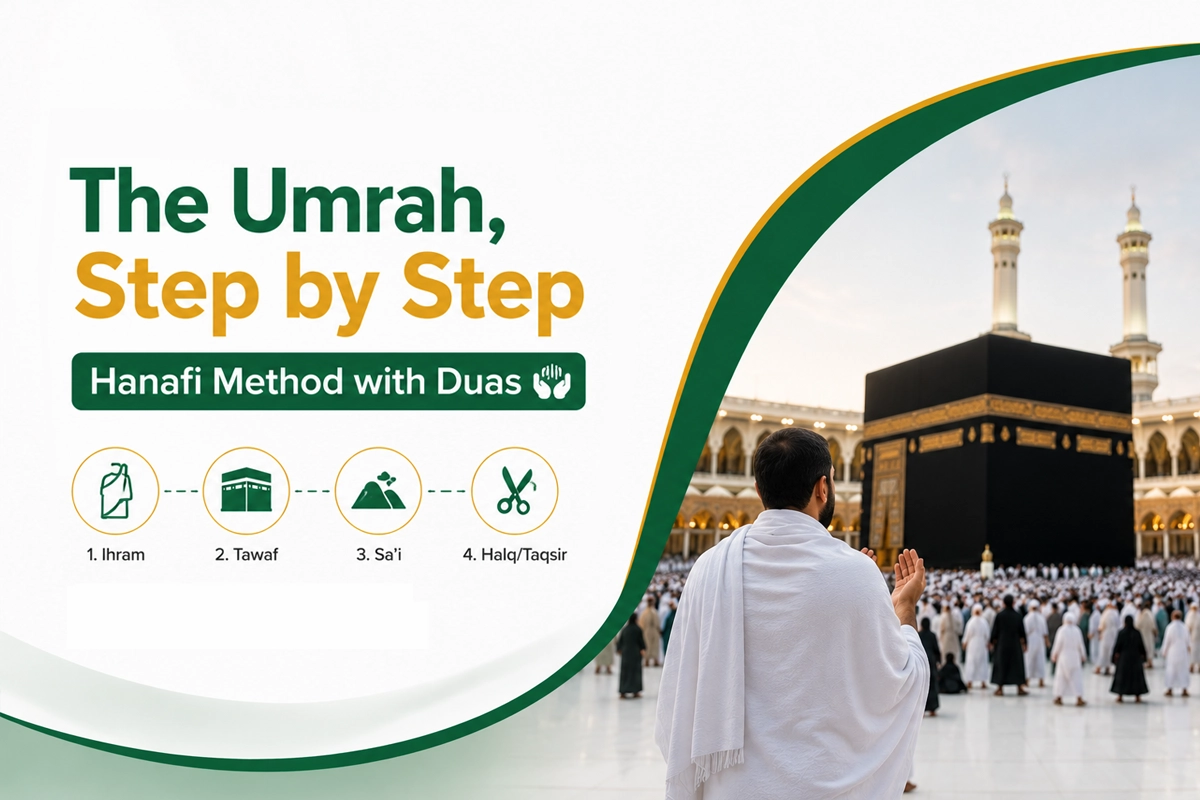
This article explains what the mosque is, what you will actually see when you arrive, and the practical things that make a first visit easier. For the method of performing Umrah itself, step by step, read our complete Umrah guide.
What Masjid al-Haram is
The name means "the sacred mosque". It is built around the Kaaba, and it has grown outward over centuries as more people came. Today it is the largest mosque in the world.
Two things make it different from every other mosque:
- It holds the Kaaba, which Muslims face in prayer from anywhere on earth.
- Fighting is forbidden inside its sanctuary. The name itself comes from that prohibition.
The Quran instructs the Prophet, and through him every Muslim, to face it in prayer: "So turn your face toward al-Masjid al-Haram. And wherever you are, turn your faces toward it" (Quran 2:144). Before that verse, Muslims prayed toward Jerusalem. The change happened in Madinah, and the mosque where it took place is still standing.
The reward for praying there
This is worth stating carefully, because it is often repeated loosely.
What is firmly established: the Prophet said that a prayer in his mosque in Madinah is better than a thousand prayers anywhere else, except for Masjid al-Haram. That hadith is in both Sahih al-Bukhari and Sahih Muslim, and it places Masjid al-Haram above every other mosque including his own.
What is commonly said, with a weaker chain: that a prayer in Masjid al-Haram equals one hundred thousand prayers elsewhere. This is reported by al-Tabarani and al-Bazzar, and al-Bazzar described its chain as sound but not of the strongest grade. Many scholars accept it. It is worth knowing where the number comes from rather than repeating it as though it were in Bukhari.
Either way, the point stands. Prayer here carries a weight no other place does. That is why pilgrims plan their days around prayer times rather than around sightseeing.
What you actually see
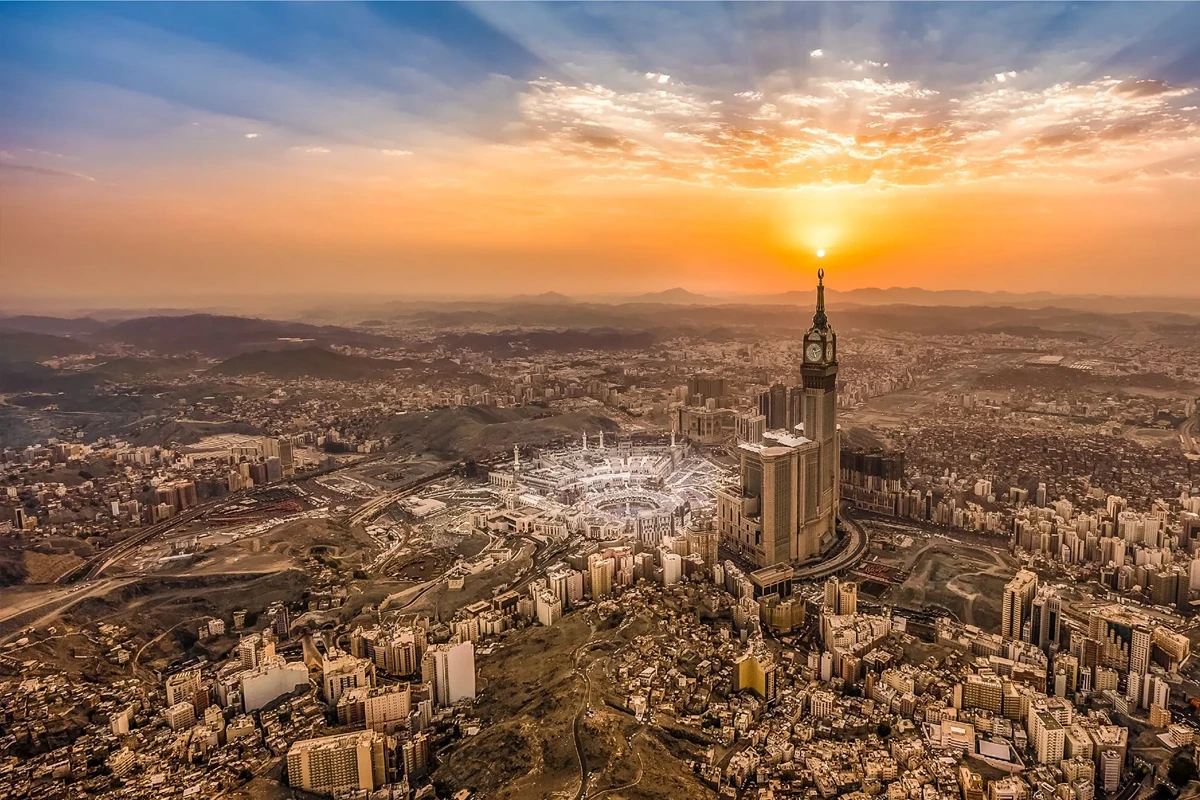
Most people are surprised by the scale. The mosque is not one hall but a complex of levels, courtyards and corridors, and it keeps going further than you expect.
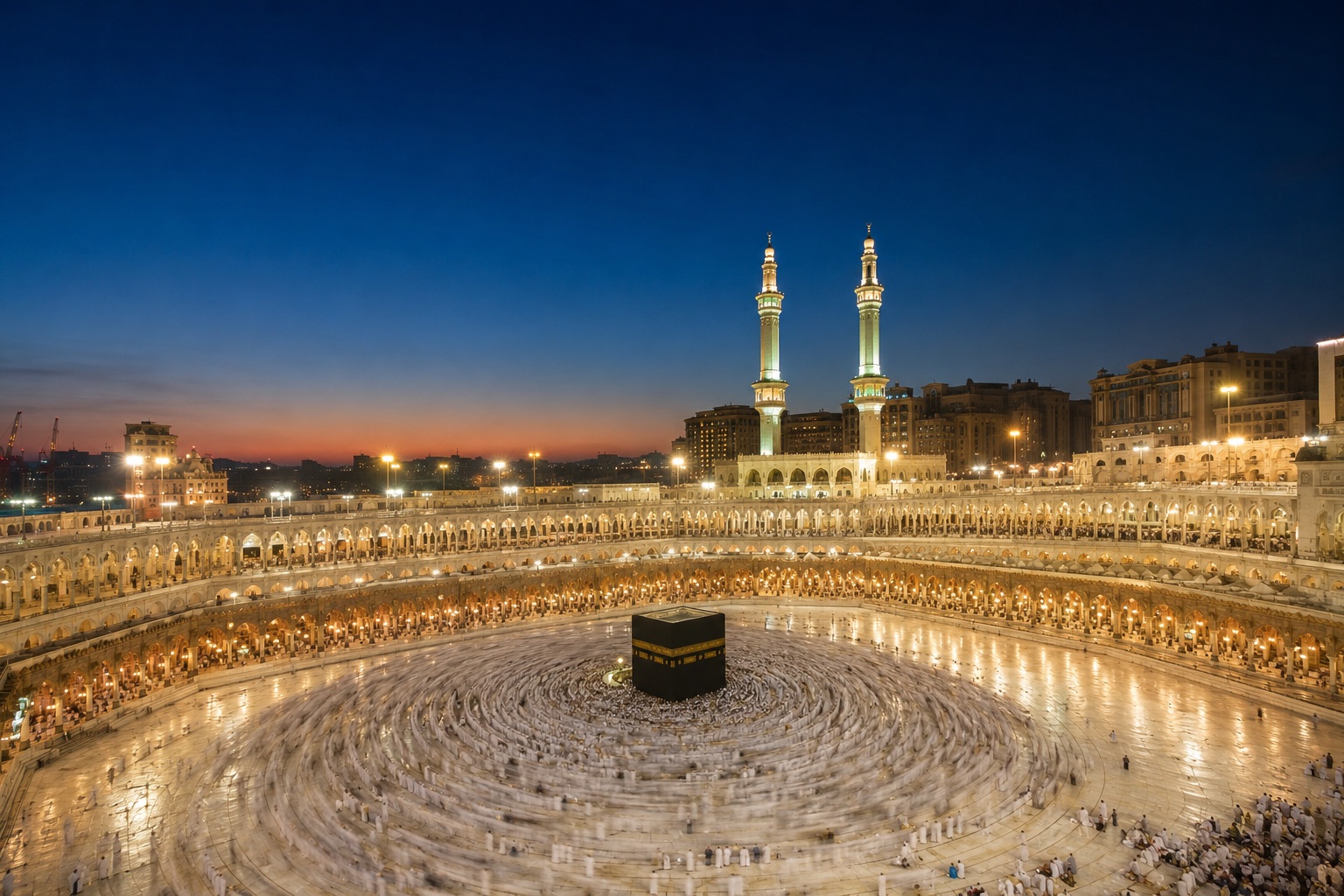
- The Kaaba stands in an open marble courtyard at the centre. Read more about the Kaaba itself.
- The mataf is that courtyard, where tawaf is performed. It is the busiest place in the mosque and the hardest to move through at peak times.
- The Safa and Marwah corridor runs along one side, on several levels, air-conditioned and wide.
- Multiple floors and a roof level, all usable for prayer and for tawaf.
- Zamzam water in coolers throughout the mosque, free, with cups provided.
- Many gates, each numbered and named. King Abdulaziz Gate and King Fahd Gate are the two most people use as landmarks.
Remember your gate number. This is the single most useful piece of advice for a first visit. The mosque looks the same in every direction once you are inside, and people regularly leave through a different gate and cannot find their hotel. Photograph the number on your way in.
Who may enter
Masjid al-Haram is open to Muslims only, and so is the city of Makkah. This is not a mosque rule. It is Saudi law, and it is checked at road checkpoints on every approach to the city.
If you are planning a family trip where not everyone is Muslim, they cannot travel to Makkah with you. Jeddah is open to everyone and is ninety minutes away, which is where most families in that situation base the rest of the group.
The best times to go
The mosque never closes. But how crowded it is changes enormously through the day and through the year.
Quietest: late at night, roughly between Isha and Fajr. If you want to perform tawaf near the Kaaba rather than on an upper floor, this is when.
Busiest: the hour before each of the five prayers, all day Friday, and the whole of Ramadan. In the last ten nights of Ramadan the mosque fills hours in advance and the surrounding streets fill with it.
By season: Hajj season is the peak, and Umrah access is restricted during it. Winter is more comfortable than summer. From May to September the marble outside is genuinely hot by mid-morning, and the open courtyards are hard work in the middle of the day.
Wheelchairs, elderly pilgrims and children
The mosque is well set up for people who cannot walk long distances, better than most first-time visitors expect.
- Wheelchairs are available inside, and there are dedicated tawaf and sa'i routes on the upper levels which are far less crowded than the ground floor. The trade is distance: a circuit upstairs is much longer than one beside the Kaaba.
- Electric carts operate on some levels for those who need them.
- Escalators and lifts serve the upper floors.
- Children manage well, but the crowd is the risk rather than the walking. Agree a meeting point at a named gate before you go in, and keep small children held rather than following.
If you are travelling with parents or young children, our guide to Umrah with kids and elderly parents goes into how to pace the days.
Getting there
You walk. Cars cannot reach the mosque itself, and the closest a driver can drop you is often several hundred metres out, further at prayer times when the roads around the Haram close.
That makes your hotel choice the decision that shapes the whole trip. A room in the towers beside the mosque costs a great deal and saves you a walk five times a day. A room in Aziziyah costs far less and means a shuttle or a car every time. Most people find the middle sensible: Ajyad, or along the Ibrahim Al Khalil road, five to twenty minutes on foot. See where to stay in Makkah for how the distance bands price up.
Almost everyone arrives through Jeddah. The airport run is about 90 km and takes 60 to 90 minutes.
Arriving for Umrah? After a long flight, in ihram, with luggage and family, a pre-booked car that meets you at arrivals is worth more than the money it saves. Our Jeddah Airport to Makkah transfer is a fixed fare per vehicle, from SAR 260, agreed before you land rather than negotiated at the terminal.
What else is close
Two museums sit within walking distance of the mosque, both useful if you have hours between prayers:
- The Museum of the Prophet's Biography, a guided tour of about an hour in the Clock Towers complex. Book ahead; the slots are timed and language-specific.
- The Clock Tower Museum, whose terrace gives the view over the Haram that everyone has seen in photographs.
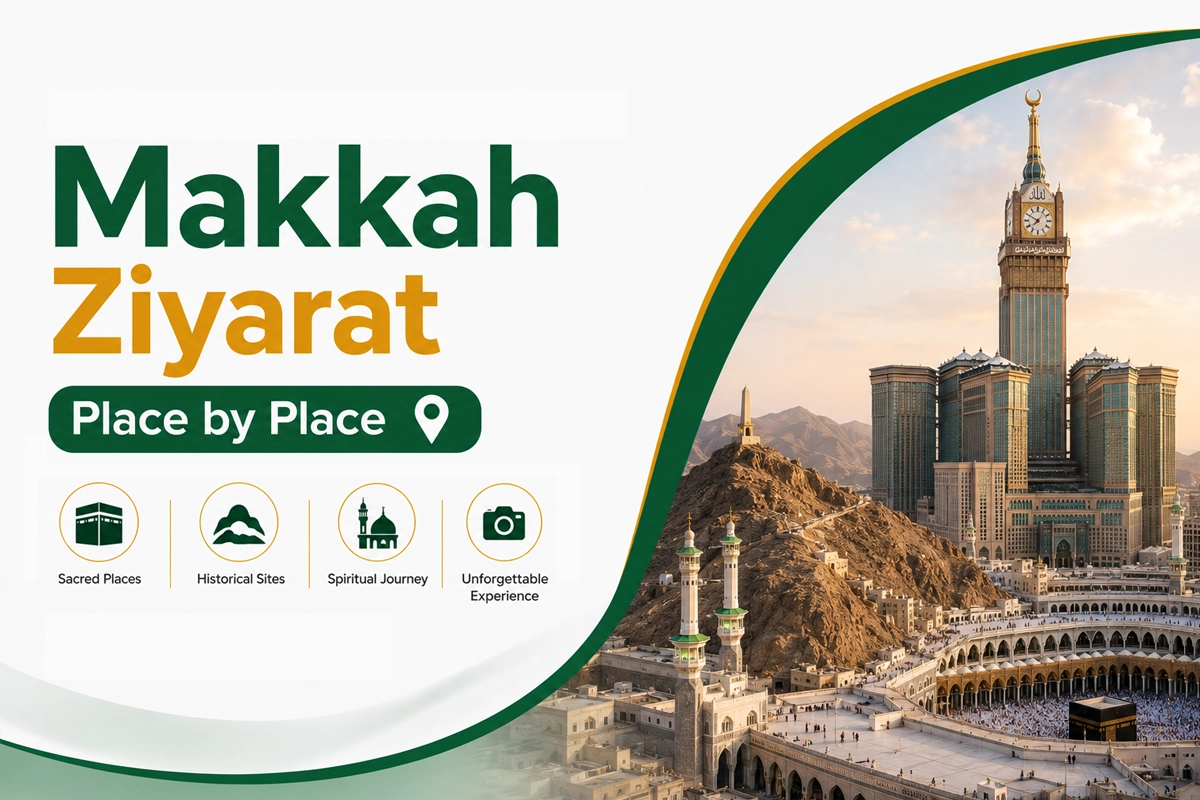
The wider Ziyarat sites — Jabal al-Noor, Mina, Arafat, Jannat al-Mu'alla — are spread across the city and need a car. Our Makkah Ziyarat guide covers what is authentically established at each one.
Accuracy note
Religious claims here were checked against the strongest available sources, and where a well-known report has a weaker chain we have said so rather than smoothing it over. Access rules, crowd patterns and mosque arrangements change, particularly around Ramadan and Hajj. Check current conditions before you travel.
Planning your Umrah? Tell our Jeddah-based team your dates and how close to the Haram you want to be, and we will quote the hotel, the flights and the transport together. Get a free quote.
Frequently asked questions
Planning a Saudi trip?
Pre-book a private car, find a stay, or ask us anything on WhatsApp.
Last updated: 22 August 2026·Sources reviewed by the Wadana Go editorial team.