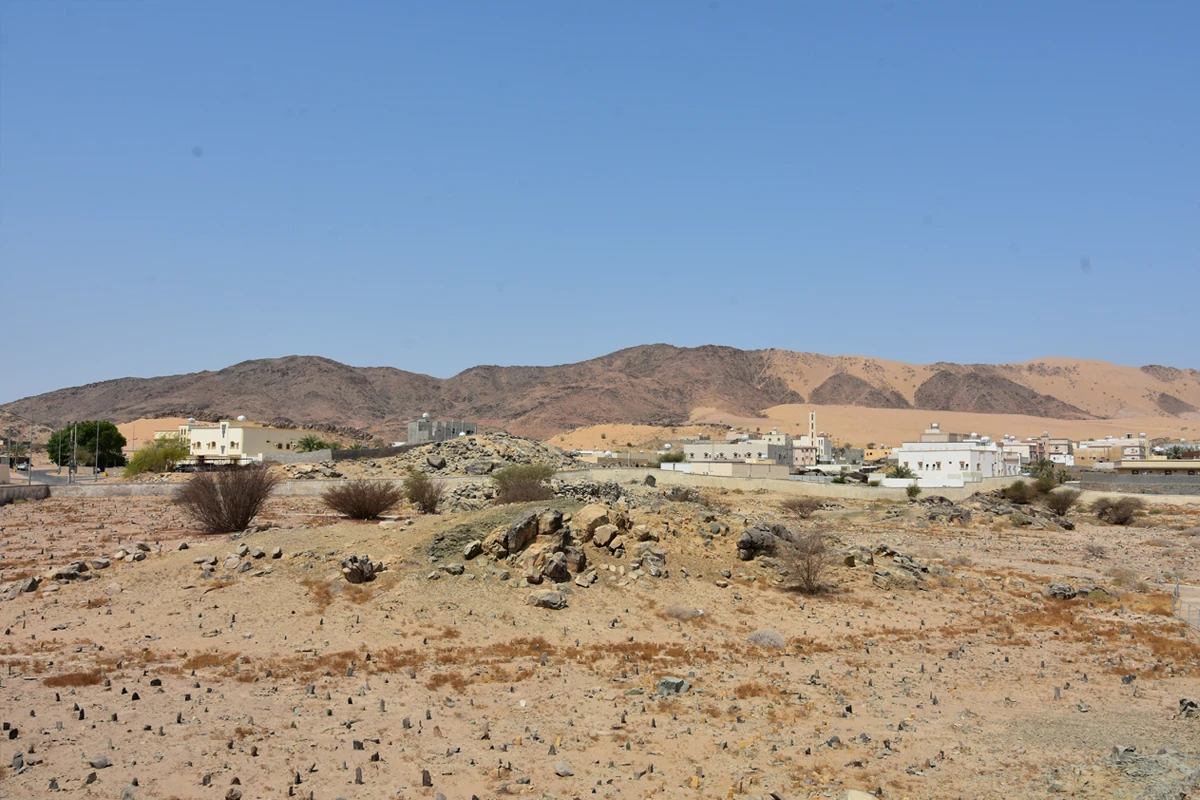
Sha'b al-Jarrar: The One on the List That Was Never a Mosque
Short answer
Sha'b al-Jarrar is the one entry on Saudipedia's list of twenty-five places in Madinah where the Prophet ﷺ prayed that is described as a prayer area rather than a mosque. A sha'b is a mountain pass or narrow valley. It belongs to the group of seven whose location is known, and there is nothing standing to visit.
Key takeaways
- ✓A sha'b in Arabic is a mountain pass or a narrow valley between hills. The name describes landscape, not a building.
- ✓Sha'b al-Jarrar is the only entry on Saudipedia's list of twenty-five that is described as a prayer area rather than a mosque.
- ✓It belongs to the group of seven whose location is known rather than the eighteen mosques still standing.
- ✓The list of twenty-five is a record of places where prayer happened, not a list of buildings the Prophet ﷺ attended.
- ✓Most of his prayers were not in mosques at all: on journeys, at halts, on open ground, in people's houses.
- ✓We could not verify a specific narration, an exact location, a marker, access, or the meaning of the name Jarrar.
- ✓Wherever you are when the adhan goes is a place where prayer happens. That is the most portable idea on this list.
Quick facts
- City
- Madinah
- Type
- A prayer area, not a mosque
- Sha'b means
- A mountain pass or narrow valley between hills
- Status
- Location known; nothing standing to visit
- On the list of
- 25 places: 18 mosques standing, 7 known locations
- Specific narration
- Not verified by us
- Meaning of Jarrar
- Not verified by us
- Part of Umrah or Hajj
- No
- Evidence level
- B. On a published official list; nothing further verified
Sha'b al-Jarrar is the last entry on Saudipedia's list of places in Madinah where the Prophet ﷺ prayed, and the only one on that list described not as a mosque but as a prayer area.
That distinction is worth a page, because it tells you something about how the list was built and how to read the rest of it.
What a sha'b is
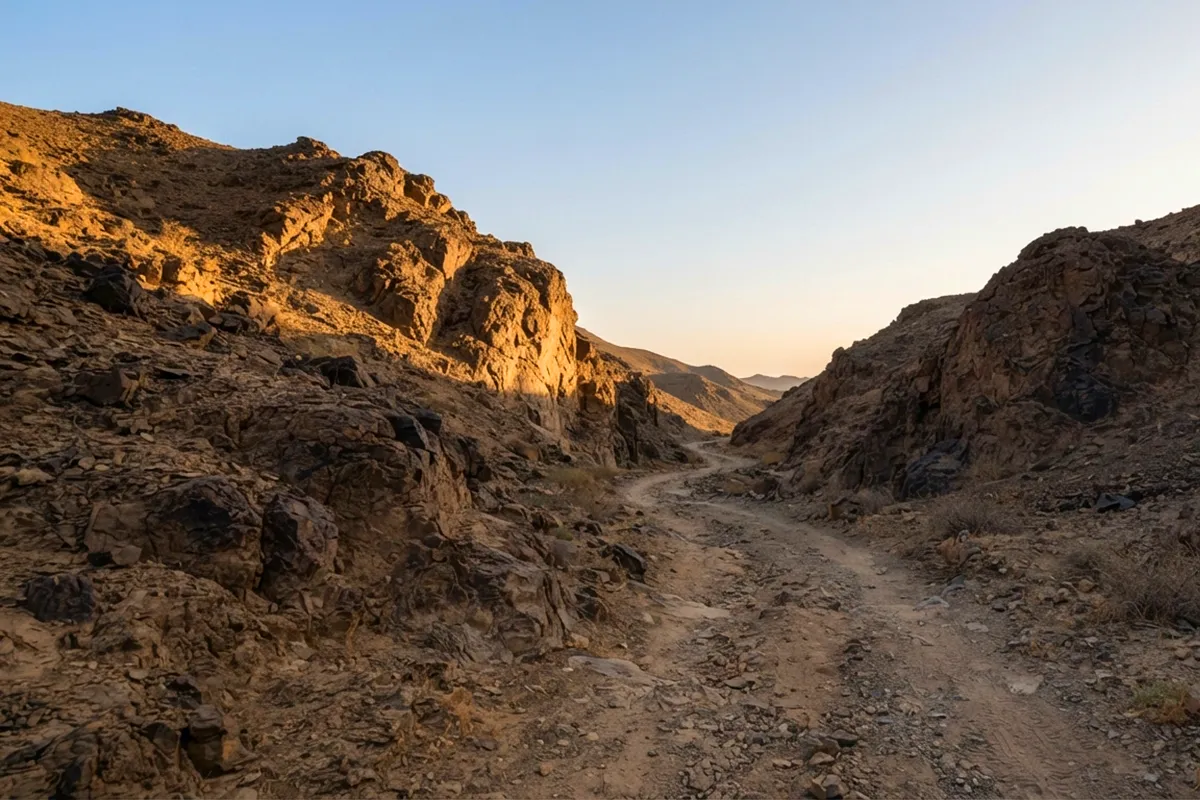
A sha'b in Arabic is a mountain pass or a narrow valley between hills. It is a geographical word, not an architectural one.
So the name does not describe a building. It describes a place in the landscape, and the list records it as somewhere the Prophet ﷺ prayed rather than somewhere a mosque was later built and preserved.
Why the distinction matters
Saudipedia's list of twenty-five splits into eighteen surviving mosques and seven places whose location is known. Sha'b al-Jarrar is in the second group, and within that group it is the one entry that is not called a mosque at all.
Here is why that is useful to you.
Most of the Prophet's ﷺ prayers were not performed in mosques. He prayed on journeys, in valleys, at halts, on open ground, in people's houses. The list of twenty-five is not a list of buildings he attended. It is a record of places where prayer happened, and later generations marked some of them with buildings and did not mark others.
A pass between hills where he stopped and prayed is exactly as real as a mosque with a dome on it. It just did not get a dome.
What we could and could not verify
Verified: Sha'b al-Jarrar appears on Saudipedia's published list, in the group of seven, described as a prayer area rather than a mosque.
Not verified: a specific narration describing what happened there; the exact modern location; any marker; any access; the meaning behind the name Jarrar.
We are not going to write around those gaps. A page that admits four unknowns is more useful than one that fills them convincingly.
Is visiting part of Hajj or Umrah?
No. Not a rite of either, and there is nothing standing to visit.
The idea worth taking
You will spend part of your trip worrying about whether you are in the right place: the right part of the Rawdah, the right column, the right corner of the mosque.
The man whose prayer this whole list records prayed in a gap between two hills, on the road, because it was time.
Wherever you are when the adhan goes, that is a place where prayer happened. That is the whole idea, and it is the most portable thing on this website.
Related
- The seven mosques you cannot visit — the group this belongs to, explained.
- Masjid Banu Khatmah — and the list of twenty-five.
- Atban ibn Malik — on praying where you actually are.
- Madinah Ziyarat guide — the sites actually worth your day.
Getting there
Madinah's smaller historic sites are scattered, and reaching them one taxi at a time turns a short list into a whole morning. Our Madinah Ziyarat private car covers the round on one fixed fare for the whole vehicle with the driver waiting at every stop, and the Madinah Ziyarat tour is the guided version. For arrival, the Madinah airport transfer has fixed fares.
Accuracy note
Saudipedia publishes a list of places in Madinah where the Prophet ﷺ prayed, totalling twenty-five: eighteen mosques still standing and seven whose location is known. Sha'b al-Jarrar appears in the second group and is described there as a prayer area rather than as a mosque. A sha'b in Arabic is a mountain pass or narrow valley between hills. We could not verify a specific narration describing an event at Sha'b al-Jarrar, its exact modern location, any marker, any access, or the meaning behind the name Jarrar, and we have stated those gaps rather than filling them. There is nothing standing to visit, and visiting is not a rite of Hajj or Umrah. Content verified August 2026. If you hold a sourced reference for this site, please send it to us and we will update the page.
Frequently asked questions
Planning a Saudi trip?
Pre-book a private car, find a stay, or ask us anything on WhatsApp.
Last updated: 16 September 2026·Sources reviewed by the Wadana Go editorial team.