Awtas: Where the Defeated Regrouped After Hunayn
Short answer
Awtas is a valley in the highlands beyond Taif where part of the defeated Hawazin regrouped immediately after the Battle of Hunayn in the eighth year after the Hijrah. The Prophet sent a force after them under Abu Amir al-Ash'ari, who was killed there. The engagement and its aftermath are recorded in the authentic collections.
Key takeaways
- ✓Awtas is a valley in the highland country beyond Taif, in western Saudi Arabia.
- ✓Part of the defeated Hawazin regrouped there immediately after Hunayn.
- ✓The Prophet sent a force after them under Abu Amir al-Ash'ari.
- ✓Abu Amir was killed at Awtas, and his nephew Abu Musa took the standard.
- ✓Sahih Muslim records the Prophet's supplication for Abu Amir afterwards.
- ✓The captives taken at Awtas are the subject of a well-known ruling in Sahih Muslim.
- ✓The valley is broadly identified but no precise site is fixed or marked.
Quick facts
- Where
- Highland country beyond Taif
- When
- 8 AH, straight after Hunayn
- Who
- Hawazin, pursued by a Muslim force
- Commander sent
- Abu Amir al-Ash'ari, killed there
- Recorded in
- Sahih Muslim
- Precise site fixed?
- No
- Anything to see?
- No monument or marked ground
- Part of Umrah?
- No. Not a rite of Hajj or Umrah.
A second fight, in different country
Most accounts of the eighth year after the Hijrah run: the conquest of Makkah, then Hunayn, then the siege of Taif, then the division of the spoils at al-Ji'ranah.
Awtas belongs between the first two of those, and it is usually compressed into half a sentence.
When the coalition broke at Hunayn, the defeated scattered in three directions. One group went towards Taif and shut themselves into the city. Another went to Nakhlah. And a third fell back to Awtas, a valley in the highland country beyond Taif, where their families and herds had been left.
The Prophet sent a force after them.
Abu Amir al-Ash'ari
He gave the standard to Abu Amir al-Ash'ari and sent him with a body of men to Awtas.
Abu Amir was killed there. The account preserved in Sahih Muslim comes from his nephew, Abu Musa al-Ash'ari, who was with him and who took the standard after he fell and completed the engagement.
Abu Musa's account continues past the fighting, and this is the part people remember. When they returned, he told the Prophet what had happened. The Prophet raised his hands and asked Allah to forgive Abu Amir, and to make him among the highest of His creation on the Day of Resurrection.
Abu Musa then asked the Prophet to ask forgiveness for him as well, and he did.
The whole exchange is in Sahih Muslim. It is the reason Awtas is remembered at all by most people who have heard of it.
The ruling that came out of Awtas
A second thing came out of this engagement, and it is why the name appears in books of law as well as of history.
Sahih Muslim records a question that arose about the captives taken at Awtas and the answer given, which became a settled point in the rules governing captives. Abu Sa'id al-Khudri is the narrator, and a verse of Surah al-Nisa is connected with it in the report.
We are not going to set out the ruling here, because it is a matter of fiqh with conditions attached and a travel page is the wrong place for it. What is worth knowing is that the name Awtas carries legal weight as well as historical weight, and that if you meet it in a book of jurisprudence, this is the event being referred to.
Where exactly is it?
Honestly: broadly, not precisely.
The sources place Awtas in the highland country in the region beyond Taif, in the lands of Hawazin. That is a general identification of an area rather than a fixed point on a map.
There is no monument, no marked site and no accepted precise location for the engagement. Nothing has been excavated and nothing is signposted.
If you see a page confidently giving coordinates for the battle of Awtas, treat that with caution. What is established is that it happened, where it fits in the sequence, who commanded and who died. Where exactly the fighting stood is not.
Why it is worth knowing anyway
Because it fills a gap in the story that most retellings leave open.
Hunayn is usually told as a rout followed by a recovery followed by a victory, and then the narrative jumps to the division of the spoils. But the enormous quantity of property and the very large number of captives that were divided at al-Ji'ranah were not all taken in the valley itself. Awtas is where a good part of that came from.
And the human detail is worth keeping. A commander sent out after a broken enemy, killed in the follow-up rather than in the famous battle, and his nephew coming back to report it and being told what was asked for him.
Can you visit?
There is nothing arranged to visit. No site, no signage and nothing to see beyond open highland country.
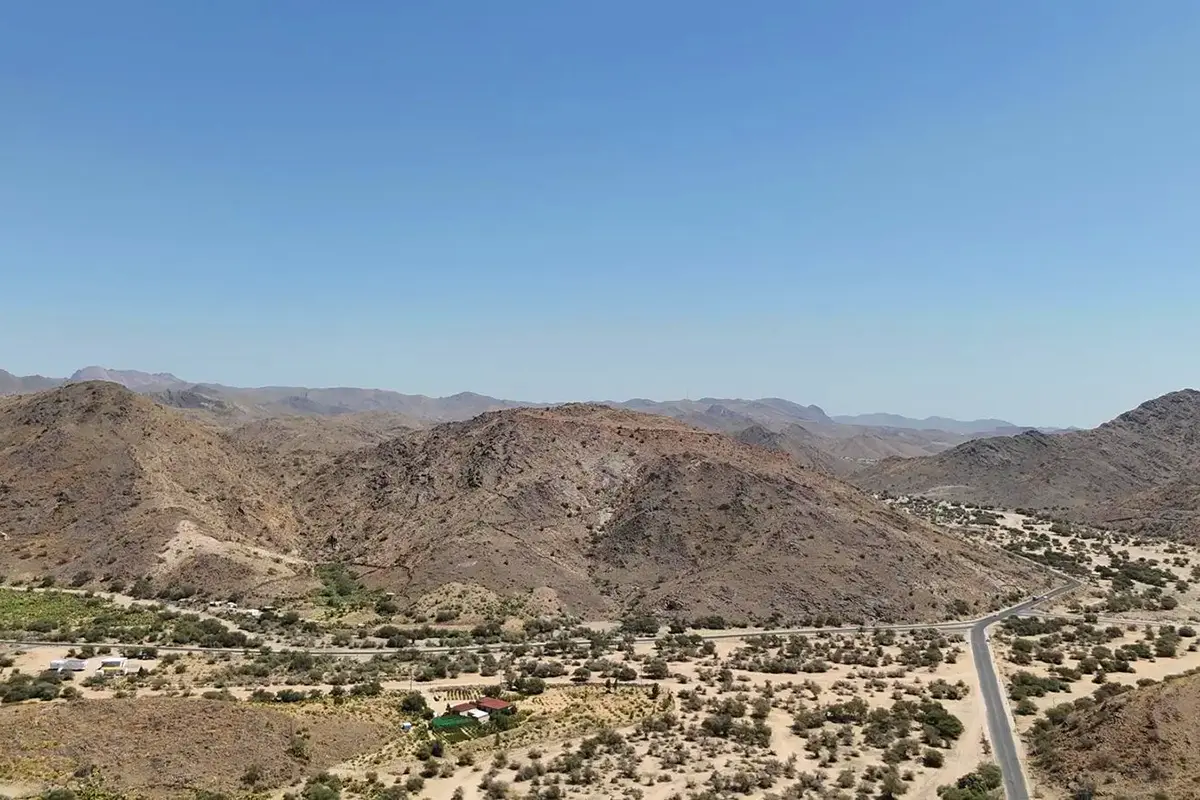
The realistic version of a visit is the road east of Taif, in the direction of the highlands, which gives you the terrain the Hawazin fell back into. That is worth an hour if you are already in Taif and interested in the geography.
Our Taif day trip guide covers the road up from Makkah, and the Taif Ziyarat tour covers the sites in and around the city that are actually established and visitable. On our fixed fares a Taif Ziyarat round is SAR 430 for a standard sedan and SAR 580 for a van, per vehicle with waiting included. Fares reviewed August 2026.
Where it sits in the sequence
| Event | Place | Visitable? |
|---|---|---|
| The ambush and the rout | Wadi Hunayn | The valley, yes |
| The pursuit | Awtas | No fixed site |
| The siege | Taif | The city, yes |
| The division of the spoils | Al-Ji'ranah | Yes, with a mosque |
Accuracy note
That part of the defeated Hawazin fell back to Awtas after Hunayn, that the Prophet sent a force after them under Abu Amir al-Ash'ari, that Abu Amir was killed there and that Abu Musa al-Ash'ari took the standard and completed the engagement is recorded in Sahih Muslim on the authority of Abu Musa, as is the Prophet's supplication for Abu Amir and then for Abu Musa afterwards. This is established evidence.
The question that arose concerning the captives of Awtas, and the answer given, is recorded in Sahih Muslim on the authority of Abu Sa'id al-Khudri. We have deliberately not set out the ruling, because it is a matter of jurisprudence with conditions attached and this is not the place for it.
The sources place Awtas in the highland country beyond Taif in the lands of Hawazin. That is a general identification of an area. No precise location for the engagement is established, nothing has been excavated and nothing is marked, and we have said so rather than repeating coordinates we cannot support.
No prayer or reward is established at the site and visiting is not part of Hajj or Umrah. Fares are our own published Taif Ziyarat rates, reviewed August 2026. Verified August 2026.
Frequently asked questions
Planning a Saudi trip?
Pre-book a private car, find a stay, or ask us anything on WhatsApp.
Last updated: 10 October 2026·Sources reviewed by the Wadana Go editorial team.