Al-Ji'ranah: Thirteen Nights, the Spoils of Hunayn, and a Hard Sermon
Short answer
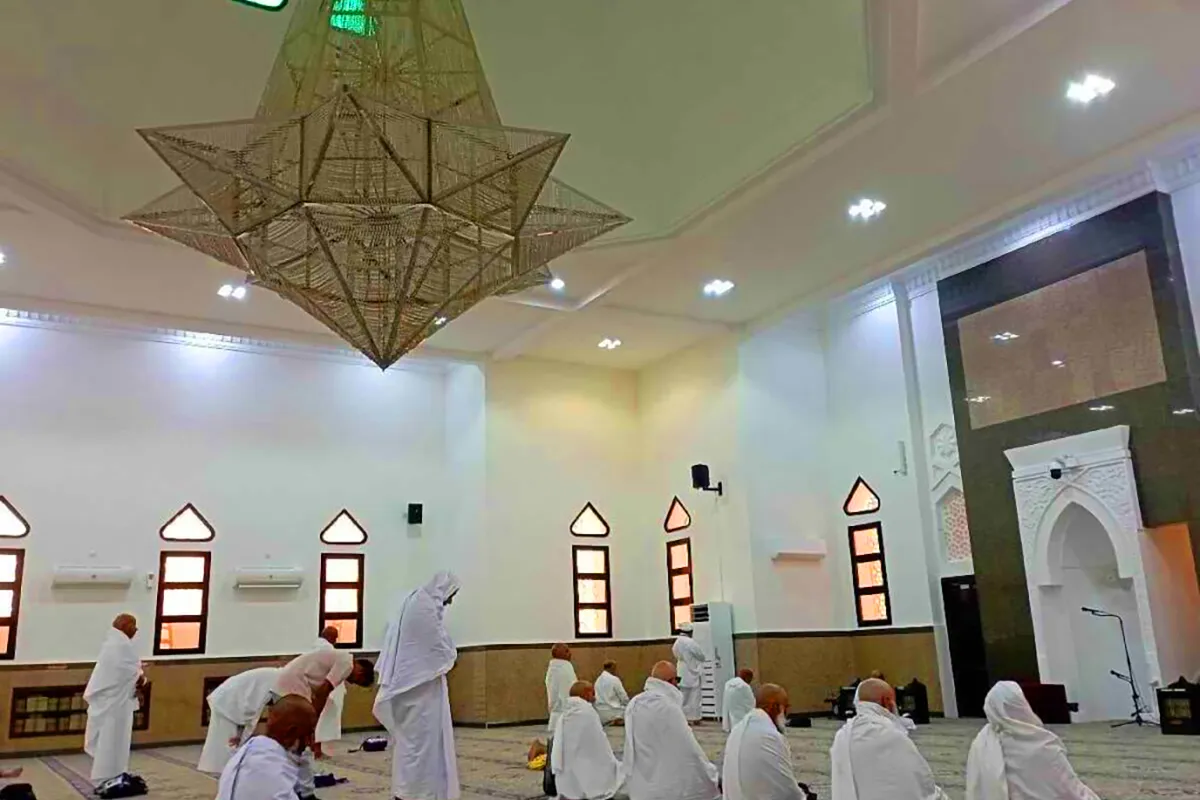
Al-Ji'ranah is a valley about 29 kilometres north-east of Makkah, on the road towards Taif. In the eighth year after the Hijrah the Prophet Muhammad camped there for thirteen nights after the Battle of Hunayn, divided the spoils taken from Hawazin, and entered ihram there for one of his Umrahs. It is still used as a miqat today.
Key takeaways
- ✓Al-Ji'ranah lies about 29 km north-east of Makkah, on the Taif road, outside the Haram boundary.
- ✓The Prophet camped there thirteen nights in 8 AH after the Battle of Hunayn.
- ✓He divided the Hawazin spoils there and gave large shares to tribes newly come to Islam.
- ✓The Ansar received nothing and were upset. Sahih al-Bukhari records what he said to them.
- ✓He entered ihram at al-Ji'ranah for Umrah, which is why the place works as a miqat.
- ✓Because it sits outside the Haram boundary, people inside Makkah can enter ihram there for a fresh Umrah.
- ✓There is little to see beyond open valley and the mosque. The value of the visit is the history.
Quick facts
- City
- Makkah Province, Saudi Arabia
- Distance from Makkah
- About 29 km north-east
- Direction
- On the road towards Taif
- Year of the events
- 8 AH, after Hunayn
- Nights camped there
- Thirteen
- Is it a miqat?
- Yes, for people already inside the Haram boundary
- Car access
- Yes. No useful public transport.
- Allow
- About 2 hours including the drive
Where it is
Al-Ji'ranah is a valley about 29 kilometres north-east of Makkah, out along the road that climbs towards Taif. Saudipedia gives that distance for the place, and puts the mosque there about 24 kilometres from the Grand Mosque.
It sits outside the boundary of the Haram. That single fact is why it still matters practically, and we come back to it below.
What you see today is open valley, low hills, and a small white mosque. Nothing dramatic. Everything that makes this place worth knowing happened here in a single fortnight, more than fourteen hundred years ago.
Why the army stopped here
In the eighth year after the Hijrah, shortly after the conquest of Makkah, the tribes of Hawazin and Thaqif gathered against the Muslims. The two sides met at Hunayn. The Muslim army was caught in an ambush in the valley, broke, and then reformed and won.
What came out of it was an enormous quantity of property. Thousands of camels, tens of thousands of sheep and goats, and a very large number of captives.
The army then went on to besiege Taif, did not take it, and withdrew. On the way back they stopped at al-Ji'ranah, where the captured property had been held.
The Prophet camped here for thirteen nights. A delegation from Hawazin came to him, and the captives were returned. Then he began dividing what was left.
The division, and who was upset
He gave very large shares to men whose acceptance of Islam was recent, several of them leaders of Quraysh who had fought against him only weeks before. A hundred camels to some of them.
The Ansar, the people of Madinah who had taken him in when Makkah drove him out, and who had fought beside him for years, received nothing from that distribution.
They felt it. Sahih al-Bukhari records that they said among themselves that the Prophet had met his own people, meaning Quraysh. Word reached him and he gathered them.
What he said to them is recorded in Bukhari. He asked them: did I not find you astray, and Allah guided you through me? Divided, and Allah brought you together through me? Poor, and Allah made you rich through me? To every question they answered that Allah and His Messenger had done more.
Then he asked whether they were not content that other men should go home with sheep and camels, while they went home with the Messenger of Allah.
They wept. Bukhari records that they said they were content with Allah's Messenger as their share.
This is one of the most quoted passages in the whole seerah, and it is worth being precise about why. It is not a story about people being told off. It is a record of a complaint being made openly, heard, and answered rather than ignored.
The Umrah from al-Ji'ranah
Before leaving, the Prophet entered ihram at al-Ji'ranah and travelled to Makkah to perform Umrah. This was one of the small number of Umrahs he performed in his life.
That is the origin of the site's second role. Because al-Ji'ranah lies outside the Haram boundary and the Prophet entered ihram from it, it is one of the recognised points from which a person already inside the Haram area may enter ihram for a fresh Umrah.
Saudipedia lists it alongside al-Taneem and Arafat as the places the people of Makkah use for this.
Using it as a miqat, honestly
In practice, hardly anybody does.
Masjid Aisha at Taneem is about five kilometres from the Haram. Al-Ji'ranah is around twenty-four. Both work, and one of them takes a quarter of the time.
People choose al-Ji'ranah for one of two reasons: they are already travelling that way, towards Taif, or they want the history along with the ihram. Both are perfectly good reasons. Neither makes it better than Taneem in any religious sense, and no extra reward for entering ihram at al-Ji'ranah rather than Taneem is established.
The same difference of opinion about repeating Umrah inside a single trip applies here as at Taneem. We set out both scholarly positions on the Masjid Aisha page rather than repeating them.
Visiting it
Set your expectations first. This is a quiet valley with a mosque in it. There is no visitor centre, no exhibition, and nothing marked out on the ground.
What the place gives you is space to picture the thing properly: an army camped for nearly two weeks, an enormous herd of captured animals, delegations arriving, and a quarrel that got settled in the open.
- Allow about two hours including the drive both ways.
- Combine it with Taif if you are going that way. It sits on the same road and adds very little time.
- Go early. There is no shade in the valley to speak of.
- Bring water. Facilities out there are limited to the mosque itself.
If a Taif day trip is already in your plan, this is the stop to add to it. Our Makkah Ziyarat private car covers the standard round from SAR 200 per vehicle, and a Taif run is a separate longer fare. Fares reviewed August 2026.
What connects to it
| Place | What it is |
|---|---|
| Masjid al-Ji'ranah | The mosque on the site, and where people actually enter ihram. |
| Masjid Aisha (Taneem) | The far closer miqat, about 5 km from the Haram. |
| Al-Hudaybiyah | The treaty site west of Makkah, on the opposite side of the city. |
| Jabal Thawr | The Hijrah mountain, south of the Haram. |
Our Makkah Ziyarat guide sets out the standard round, and the Makkah Ziyarat tour runs it with waiting time at each stop.
Accuracy note
The Battle of Hunayn, the camp at al-Ji'ranah, the return of the Hawazin captives, the division of the spoils, the large gifts to those recently come to Islam, the complaint of the Ansar and the Prophet's address to them are recorded in Sahih al-Bukhari. This is established evidence.
That the Prophet entered ihram for Umrah at al-Ji'ranah is likewise recorded in the authentic collections.
The distances, the position north-east of Makkah on the Taif road, and the site's use as a point of ihram for people inside the Haram area come from Saudipedia. Sources differ slightly on the distance, with figures between roughly 24 and 29 kilometres depending on whether the mosque or the wider area is meant, so treat it as approximate.
No extra reward for entering ihram at al-Ji'ranah rather than at another valid point is established. Fares are our own published rates, reviewed August 2026. Verified August 2026.
Frequently asked questions
Planning a Saudi trip?
Pre-book a private car, find a stay, or ask us anything on WhatsApp.
Last updated: 13 October 2026·Sources reviewed by the Wadana Go editorial team.