Masjid Aisha (Taneem): The Miqat Inside Makkah, and the Ruling Behind It
Short answer
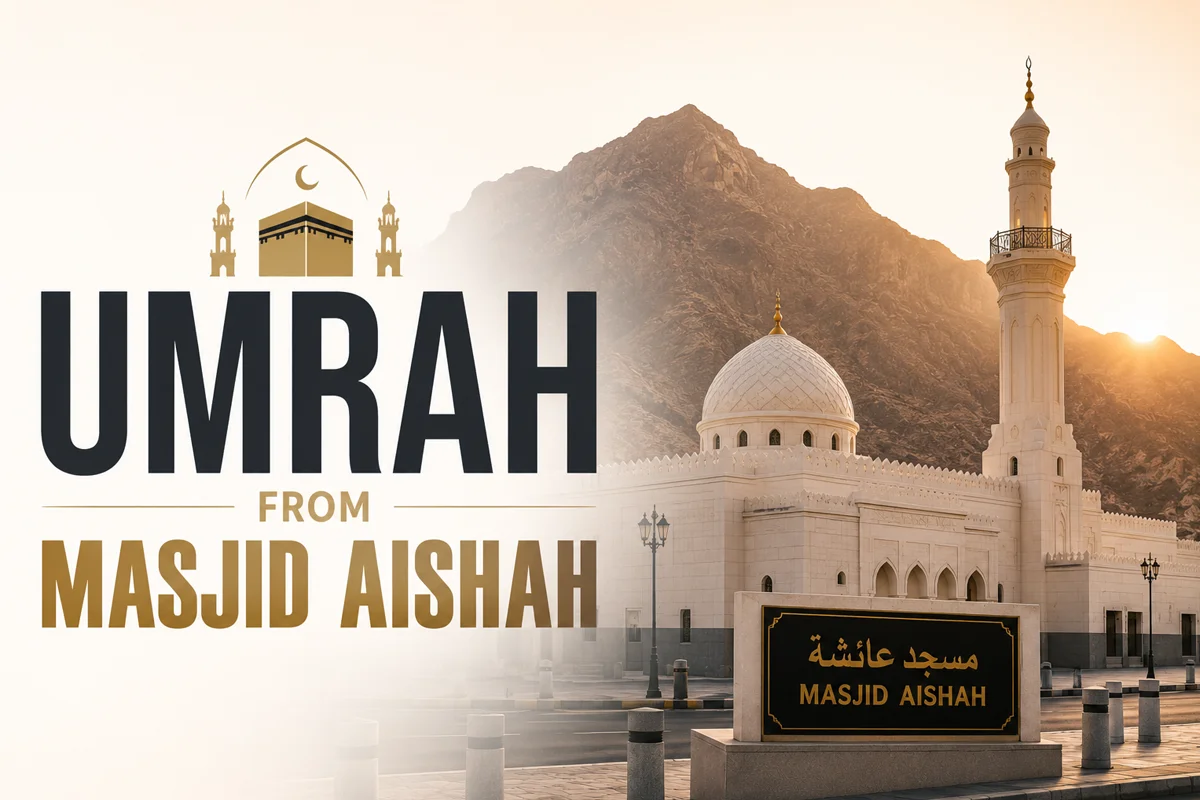
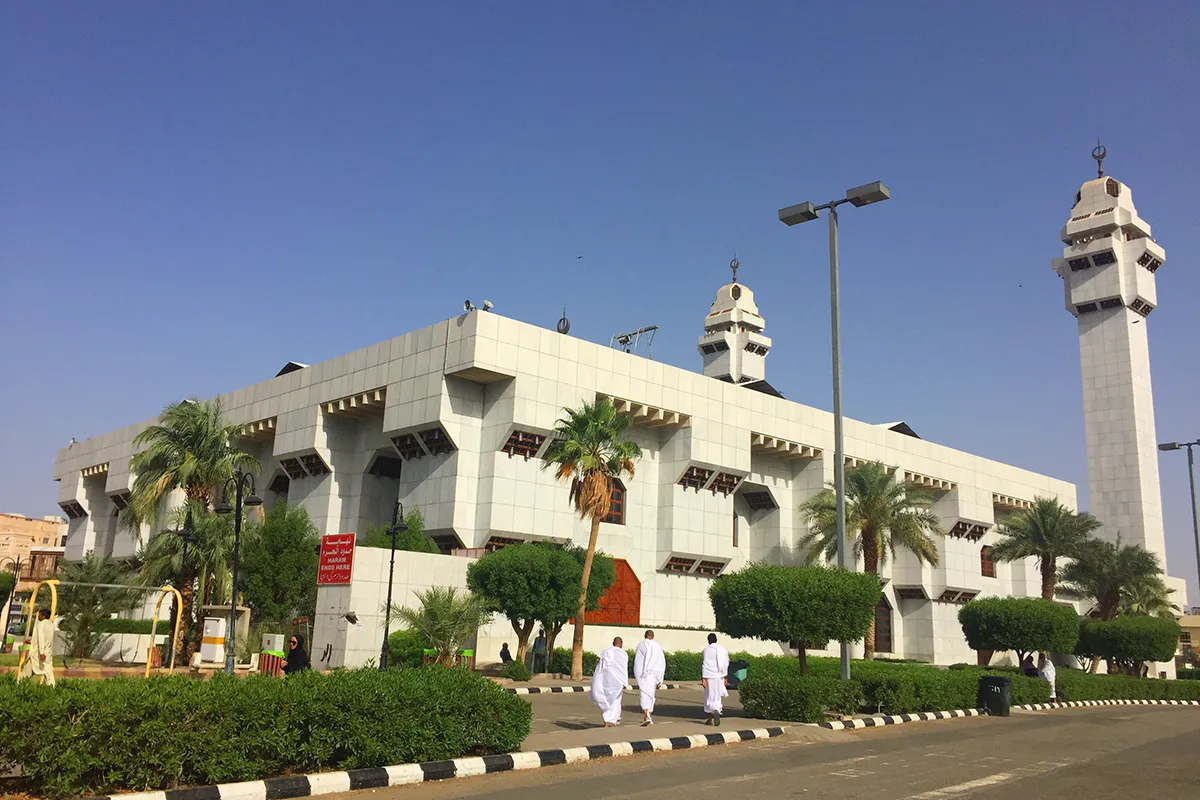
Masjid Aisha, also called Masjid al-Taneem, stands about five kilometres north of the Grand Mosque on the Makkah to Madinah road. It is the nearest miqat to Makkah, the point where someone already inside the city enters ihram for a fresh Umrah. It is named for Aisha, whom the Prophet sent there with her brother to begin her Umrah during the Farewell Pilgrimage.
Key takeaways
- ✓Masjid Aisha at Taneem is about 5 km north of the Haram, on the Makkah to Madinah road.
- ✓It is the closest miqat to Makkah and the usual place to enter ihram for a second Umrah.
- ✓The hadith behind it is authentic: the Prophet sent Aisha with her brother Abd al-Rahman to enter ihram at Taneem.
- ✓Aisha's case was a specific one. She had missed Umrah because of menstruation, and her brother did not repeat his own.
- ✓Scholars differ on repeating Umrah in one trip. Ibn Baz saw no harm; Ibn 'Uthaymeen called it an innovation.
- ✓The mosque itself has no special reward attached. Its role is practical: it marks the boundary.
- ✓Allow extra time. Changing, praying and the drive both ways takes longer than people expect.
Quick facts
- City
- Makkah, Saudi Arabia
- Also called
- Masjid al-Taneem, Masjid al-Umrah
- Distance from the Haram
- About 5 km north
- What it is
- The nearest miqat to Makkah
- Car access
- Yes, with large parking areas
- Facilities
- Washrooms and changing areas for ihram
- Part of Umrah?
- Only if you are starting a fresh Umrah from inside Makkah
- Allow
- 1 to 2 hours including the drive both ways
The boundary marker, five kilometres out
Masjid Aisha sits on the Makkah to Madinah road, about five kilometres north of the Grand Mosque, in the area called al-Taneem. You will also hear it called Masjid al-Taneem or Masjid al-Umrah.
It is a large modern mosque with wide courtyards, washrooms and space for people to change. That is not decoration. The building exists to handle a specific job, and the job is boundaries.
Taneem is the closest point outside the boundary of the Haram, the sacred precinct of Makkah. Anyone already inside Makkah who wants to begin a fresh Umrah has to leave that boundary first and enter ihram from outside it. Taneem is simply the nearest place to do that, which is why almost everyone uses it.
So the mosque is not sacred in itself. It is a practical marker with a mosque built at it.
Why it carries Aisha's name
The name comes from an authentic and rather human episode during the Farewell Pilgrimage.
Aisha had set out intending Umrah, and then began menstruating, which meant she could not perform tawaf. She completed the rites of Hajj with everyone else, but she was left with the feeling that the others had done both Hajj and Umrah while she had done only Hajj. She was upset about it, and she said so.
The Prophet instructed her brother, Abd al-Rahman ibn Abi Bakr, to take her out to al-Taneem so that she could enter ihram there and perform her Umrah. She did, and she came back satisfied.
That is the origin of the mosque's name, and it is recorded in the most authentic collections.
The part most pages leave out
Read the story again and notice something. Abd al-Rahman went with her all the way to Taneem and back. He did not enter ihram and perform a second Umrah himself.
That detail matters, and it sits at the centre of a real difference of opinion among scholars about repeating Umrah in a single trip.
Shaykh Ibn Baz held there is no harm in performing another Umrah in the same season, whether for yourself or on behalf of someone else.
Shaykh Ibn 'Uthaymeen took the opposite view and considered repeating Umrah in one journey an innovation. His argument was historical: the Prophet entered Makkah at the conquest and stayed about nineteen days without going out to Taneem for an Umrah, and his companions did not do it either. On that reading, Aisha's case was a concession for a woman who had been prevented, not a general practice.
The Standing Committee's position runs along similar lines: someone who has entered Makkah for Umrah is not instructed to repeat it unless they leave Makkah without intending to come back, and then enter again.
We are a transport company, not a fatwa council, and we are not going to pick a side for you. What we will do is tell you plainly that this is a genuine difference among respected scholars, so that nobody books a car to Taneem thinking the matter is settled when it is not. Follow the scholar you trust, and know that you are not neglecting anything if you choose not to go.
If you are going, how it works
The mechanics are simple, but people underestimate the time.
- Do your ghusl at the hotel if you can. It is easier than doing it at the mosque, especially in a crowd.
- Travel to Taneem in normal clothes or already in ihram cloth. Either is fine.
- Change and pray at the mosque. There are washrooms and changing areas, and they get busy at peak times.
- Make the intention and begin the talbiyah at the mosque, which is outside the Haram boundary.
- Return to the Haram and perform tawaf and sa'i as normal.
Allow one to two hours end to end. The drive is short but the road is heavy, and the changing and praying take longer than people plan for.
Our ihram guide covers the restrictions in detail, and the second Umrah from Taneem guide walks through the whole trip step by step.
Common mistakes
- Entering ihram at the hotel. The whole point is to cross out of the Haram boundary first. Ihram taken inside Makkah for an Umrah does not do what you need it to do.
- Assuming the mosque itself is the miqat. The boundary is the boundary. The mosque is a convenient building next to it.
- Thinking Masjid Aisha carries a special reward. No extra reward for praying in this mosque is established. It is a normal mosque doing a practical job.
- Going in the middle of the day in summer. Two pieces of unstitched cloth, a hot car park and a queue for the washrooms is a bad combination. Go early or after Asr.
- Not telling the driver. If Taneem is on your Ziyarat round, it should be the last stop so you can go straight from there to the Haram.
Getting there
Taxis run to Taneem constantly and it is a short trip, but the return leg is where people get stuck: you come out of the mosque in ihram, in a crowd, all wanting a car at the same moment.
Most pilgrims either take a car that waits, or fold Taneem into a wider round. On our fixed Makkah Ziyarat fare, one vehicle covers the whole circuit and waits at every stop, from SAR 200 for a standard sedan. Tell us at the time of booking if you intend to enter ihram, because it changes the order of the route.
Full detail on the round is on our Makkah Ziyarat private car page. Fares reviewed August 2026.
Where it sits in a Makkah round
| Place | What it is |
|---|---|
| Jabal al-Noor | The mountain with Ghar Hira at its summit. |
| Jannat al-Mu'alla | Makkah's oldest cemetery, about 1 km north of the Haram. |
| Masjid al-Jinn | Beside the cemetery, on the second ring road. |
| Jabal Thawr | The Hijrah mountain, at the southern end of the round. |
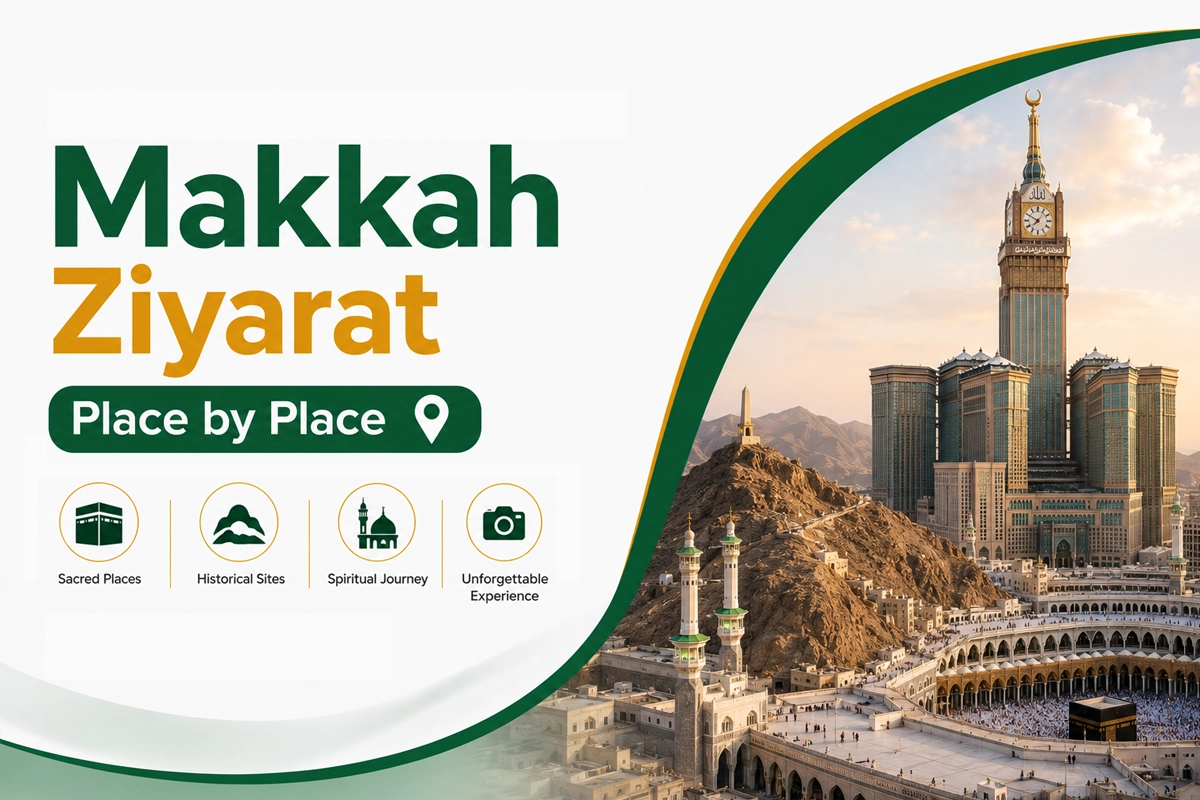
Our Makkah Ziyarat guide puts these into a workable order, with Taneem placed last for anyone entering ihram. The Makkah Ziyarat tour runs the same route with waiting time included.
Accuracy note
The account of Aisha missing Umrah because of menstruation, her distress at it, and the Prophet instructing her brother Abd al-Rahman ibn Abi Bakr to take her to al-Taneem to enter ihram is recorded in the authentic collections. This is established evidence.
That Abd al-Rahman accompanied her without performing a second Umrah himself is part of the same reports, and it is the point several scholars build on.
The scholarly difference is quoted as it stands: Shaykh Ibn Baz permitted a further Umrah in the same season, Shaykh Ibn 'Uthaymeen considered repeating Umrah in one journey an innovation and cited the Prophet's nineteen days in Makkah at the conquest, and the Standing Committee's position is that repeating it is not prescribed unless a person leaves Makkah without intending to return. We have not adopted a position between them.
No special reward for praying in Masjid Aisha itself is established in authentic evidence. Distances and facilities describe the site as it is currently arranged and can change. Fares are our own published Makkah Ziyarat rates, reviewed August 2026. Verified August 2026.
Frequently asked questions
Planning a Saudi trip?
Pre-book a private car, find a stay, or ask us anything on WhatsApp.
Last updated: 2 September 2026·Sources reviewed by the Wadana Go editorial team.