Masjid al-Jinn, Makkah: The Mosque Named for a Night in Surah al-Jinn
Short answer
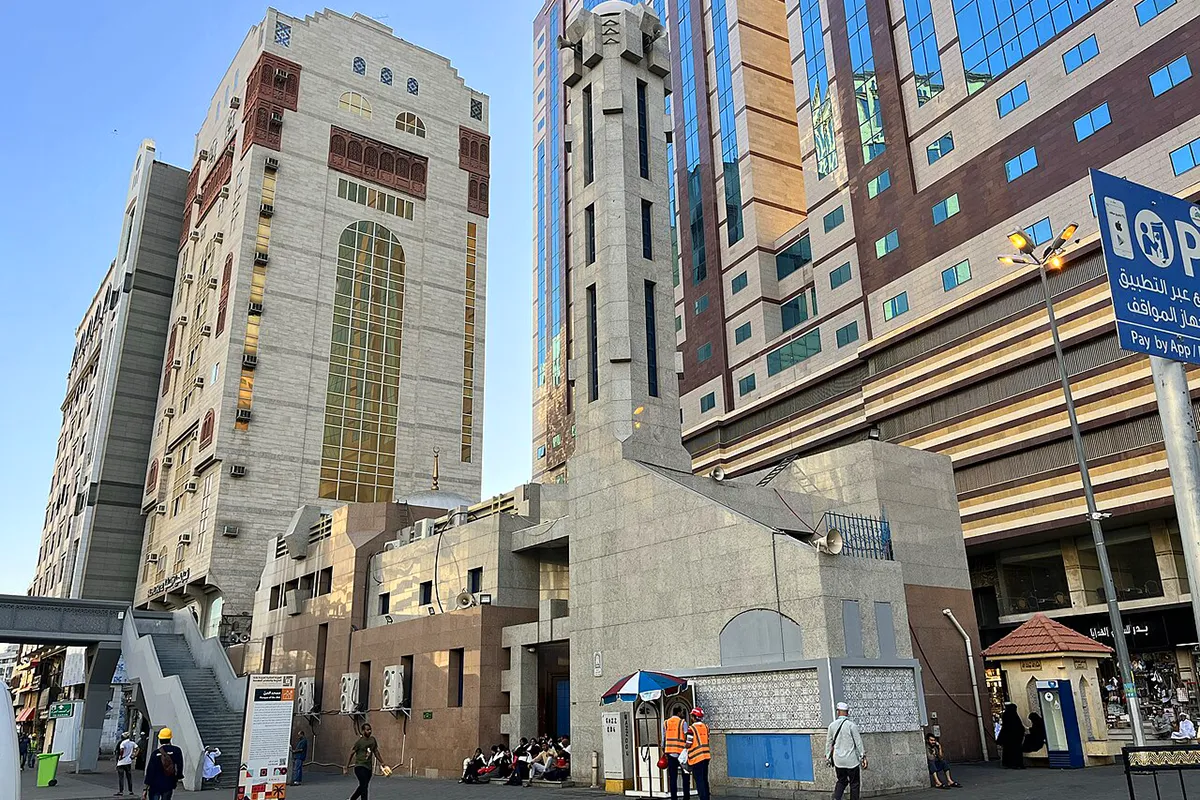
Masjid al-Jinn is a historic mosque in the al-Ghazzah district of Makkah, about 900 metres north of the Grand Mosque and next to al-Mu'alla cemetery. It is named for the night a group of jinn listened to the Prophet Muhammad reciting the Qur'an, an event recorded in Surah al-Jinn and in Sahih Muslim. Praying there carries no special reward, and visiting is not part of Umrah.
Key takeaways
- ✓Masjid al-Jinn stands in al-Ghazzah, about 900 m north of the Grand Mosque, beside the al-Mu'alla cemetery.
- ✓The event it is named for is in the Qur'an: Surah al-Jinn and Surah al-Ahqaf both describe jinn listening to the recitation.
- ✓Sahih Muslim carries Ibn Mas'ud's account of the night, which makes the event itself established evidence.
- ✓That this exact spot is where it happened comes from later historical sources, not from the Qur'an or hadith.
- ✓The mosque was lost under flood silt and rebuilt after its mihrab was found three metres down in 1714.
- ✓It is a working mosque. You can pray a normal prayer there, but no extra reward for doing so is established.
- ✓Its door faces the cemetery entrance, so it is the natural stop to pair with a visit to Jannat al-Mu'alla.
Quick facts
- City
- Makkah, Saudi Arabia
- District
- Al-Ghazzah, on the second ring road
- Distance from the Haram
- About 900 m north
- Also called
- Masjid al-Haras, the Guard Mosque
- Car access
- Yes, with parking
- Can you pray inside?
- Yes. It is an active mosque.
- Part of Umrah?
- No. Not a rite of Hajj or Umrah.
- Pair it with
- Jannat al-Mu'alla, directly opposite
A working mosque on the ring road
Masjid al-Jinn is not a ruin and not a museum. It is a busy neighbourhood mosque in the al-Ghazzah district of Makkah, sitting right against the second ring road, the one named for Umar ibn al-Khattab.
Saudipedia puts it about 900 metres north of the Grand Mosque, which makes it one of the closest historic mosques to the Haram. On its northern side it runs along the wall of al-Mu'alla cemetery. One of its doors opens almost directly opposite the cemetery entrance.
That last detail explains most of what you will see there. Funeral processions heading for the cemetery gather at this mosque, and people who arrive too late for a funeral prayer at the Haram come here to join one instead.
It has parking, and shops and restaurants around it. Close enough to the Haram that you can hear the adhan from it.
What the Qur'an records
The mosque is named for an event, and the event is in the Qur'an twice.
Surah al-Jinn opens by saying that it has been revealed to the Prophet that a group of the jinn listened, and then said to their people that they had heard a wonderful recitation which guides to what is right, and that they believed in it.
Surah al-Ahqaf gives a fuller scene. A company of the jinn was directed to the Prophet to listen to the Qur'an. When they were present they told each other to be silent. When it was finished they went back to their people as warners, calling them to respond to the one calling to Allah.
This is as strong as evidence gets. The Qur'an states it plainly.
What Ibn Mas'ud reported
Sahih Muslim carries the account of Abdullah ibn Mas'ud, who was with the Prophet that night.
The companions lost sight of the Prophet and searched the valleys and the hills for him. They feared he had been taken or killed. They spent the worst night men could spend. At dawn he came to them from the direction of Hira'.
He told them that a caller from among the jinn had come to him, and that he had gone with him and recited the Qur'an to them. He then took the companions and showed them the traces of the jinn and the traces of their fires.
They asked him about their provision, and he answered them about bones on which the name of Allah has been mentioned, and about camel dung being fodder for their animals.
That is recorded evidence, in one of the two most authentic collections.
Where the certainty stops
Now the part most pages skip.
The Qur'an confirms the event. Sahih Muslim confirms the night and what was said. Neither of them names this street, this district, or this mosque.
Saudipedia puts it carefully, and so will we: historical sources indicate the mosque was named al-Jinn because it was built near the place where the Prophet met the jinn. The identification of the spot comes from those later historical sources, not from the Qur'an or from an authentic hadith.
Take that for what it is. A serious historical tradition about the location, attached to an event that is beyond doubt. Not the same footing as the event itself, and it costs nothing to say so.
Lost under a flood, and found again
The mosque on this site is old. Saudipedia dates it back to the early third century of the Islamic calendar.
Makkah is a valley, and Makkah floods. At some point the building disappeared under the silt entirely. In 1714 a search was made for what was left of it, and the mihrab, the prayer niche in the wall, was found three metres below the ground level of the day. The mosque was rebuilt from there.
It carried a second name for a long time. During the Umayyad period it was called the Guard Mosque, because the watchmen of Makkah gathered there before being posted around the city's quarters.
Renovations and expansions have continued since. The most recent large one was carried out in the reign of King Fahd, in 2000, which is the building you see now: modern construction with stone facing on the outer walls.
Is praying there special?
No, and this needs a straight answer.
No extra reward for praying in Masjid al-Jinn is established in authentic evidence. It is not one of the mosques a hadith singles out. Visiting it is not part of Hajj or Umrah, and your Umrah is complete whether you go or not.
What you can do is pray a normal prayer in a normal mosque, which is worth doing anywhere, and stand for a minute in a place that a long tradition connects to a night the Qur'an describes. Nothing more needs to be claimed for it.
Visiting it
Ten minutes covers it, and most people fold it into a stop at the cemetery next door.
- Time it with a prayer. The obvious way to visit is to arrive shortly before Dhuhr or Asr, pray with the congregation, and walk across to the cemetery afterwards.
- Dress as you would for any mosque. This is an ordinary working mosque in a residential district, not a monument, and locals are praying there.
- Do not expect a sign or a marked spot. There is nothing inside pointing to where anything happened, and that is deliberate.
- Parking exists but the second ring road is heavy at prayer times and during Hajj and Umrah seasons.
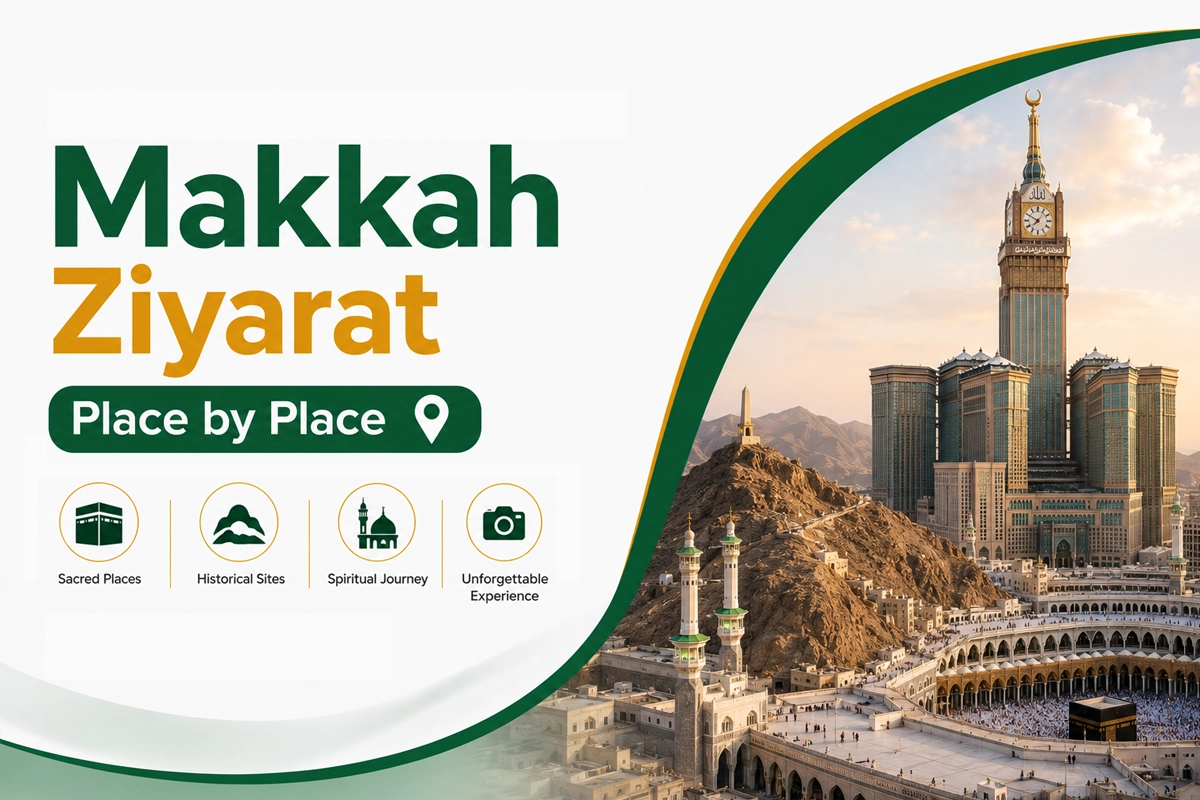
Walking from the Haram is possible at under a kilometre, but the road is busy and uphill in places. If you are already doing a Makkah Ziyarat round by car, the driver will simply stop here on the way past the cemetery. It costs no extra time.
What is close by
| Place | What it is | Distance |
|---|---|---|
| Jannat al-Mu'alla | Makkah's oldest cemetery, where Khadijah was buried. | Adjacent |
| Masjid al-Haram | The Grand Mosque. | About 900 m |
| Jabal al-Noor | The mountain with Ghar Hira at its summit. | About 4 km |
| Jabal Thawr | The Hijrah mountain, at the southern end of the round. | About 4 km |
Our Makkah Ziyarat guide sets these into one workable morning, and the Makkah Ziyarat tour runs the standard route with waiting time at each stop. A sedan is SAR 200 for the whole round, fares reviewed August 2026.
Accuracy note
The verses referred to are Surah al-Jinn 72:1 and following, and Surah al-Ahqaf 46:29 to 32. Ibn Mas'ud's account of the night, the search for the Prophet, his return from the direction of Hira' and the traces of the fires are recorded in Sahih Muslim. This is established evidence.
The mosque's location in al-Ghazzah, its distance of about 900 metres from the Grand Mosque, its position beside al-Mu'alla cemetery, its dating to the early third century AH, the loss of the building to floods, the recovery of the mihrab three metres down in 1714, the alternative name of the Guard Mosque and the expansion in 2000 all come from Saudipedia.
The identification of this precise spot as the place of the meeting rests on later historical sources rather than on the Qur'an or authentic hadith, and we have said so in the article rather than blurring it. No special reward for praying here is established. Fares are our own published Makkah Ziyarat rates, reviewed August 2026. Verified August 2026.
Frequently asked questions
Planning a Saudi trip?
Pre-book a private car, find a stay, or ask us anything on WhatsApp.
Last updated: 2 September 2026·Sources reviewed by the Wadana Go editorial team.