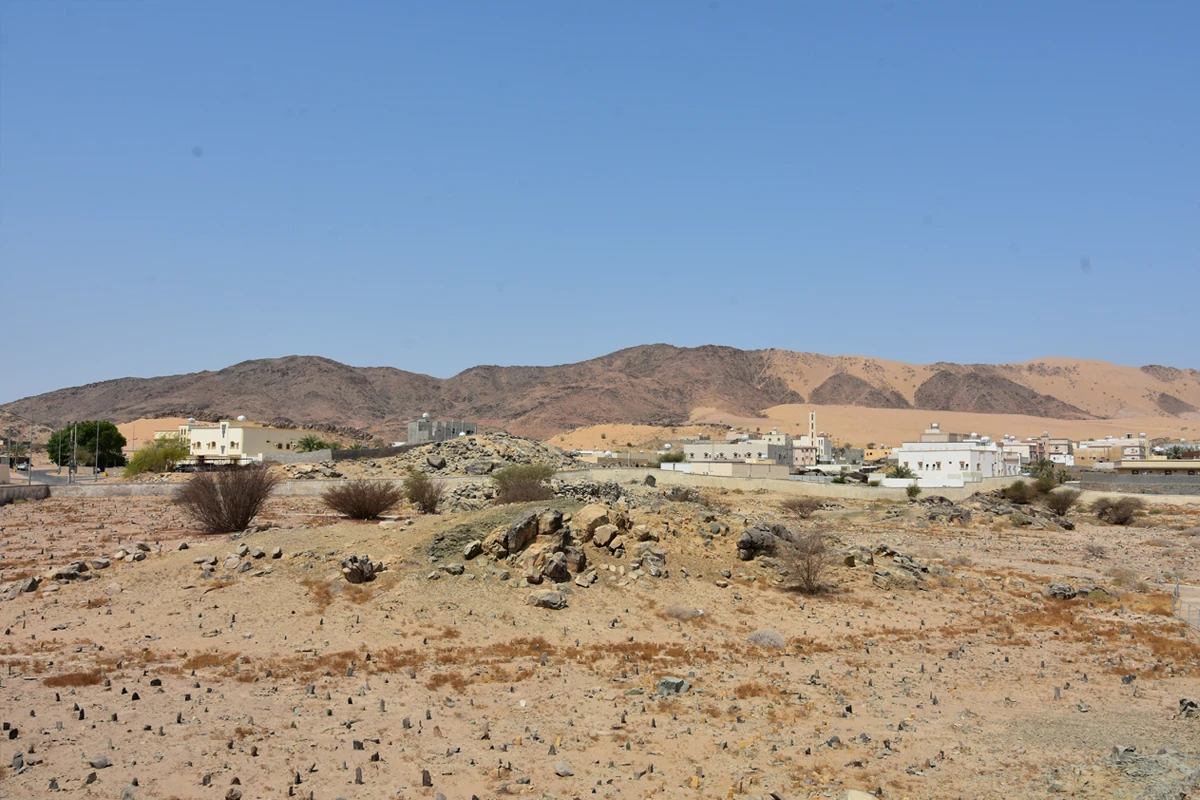
Ayn al-Nabi (Al-Uyaynah): Why We Are Not Repeating the Name

Short answer
Ayn al-Nabi is a name attached to a historic spring in the al-Uyaynah area of Madinah, where a settlement grew around a productive water source. We could not verify any authentic narration connecting the Prophet ﷺ to a spring of this name. The attribution is traditional, level C. Visiting is not a rite of Hajj or Umrah.
Key takeaways
- ✓Al-Uyaynah is a genuine historic settled area in the Madinah region, built around a productive spring.
- ✓The name Ayn al-Nabi, the Prophet's Spring, is used for a historic spring associated with that area.
- ✓We could not verify any authentic narration connecting the Prophet ﷺ to a spring of this name.
- ✓Names of this kind attach themselves to old features over centuries. Nobody sets out to deceive; a name gets used, repeated, then written down.
- ✓The right question is not whether the name is old, but whether the early sources connect him to the place.
- ✓Evidence level C. If someone says he drank here, ask which narration. They may have one; most will not.
- ✓Skip it. Madinah has more documented material than any visitor can get through in a week.
Quick facts
- City
- Madinah region, al-Uyaynah area
- What it is
- A historic spring with a settlement around it
- The name means
- The Prophet's Spring
- Authentic narration
- None that we could find
- When the name began
- Not verified by us
- Condition and access
- Not verified by us
- Part of Umrah or Hajj
- No
- Virtue in the water
- None established
- Evidence level
- C. Traditional attribution, not established
- Better alternatives
- Bir Rumah and Bir Ghars
Ayn al-Nabi, "the Prophet's Spring", is a name attached to a historic water source in the al-Uyaynah area of Madinah, where a settlement grew up around a productive spring.
This page is going to be more careful than most, because the name itself is the problem.
Names that begin with "the Prophet's"
Across the Muslim world you will find springs, wells, stones, trees and caves called the Prophet's this and the Prophet's that.
Sometimes the name records something real. Very often it does not. Names of that kind attach themselves to old features over centuries, especially where a place is genuinely old and genuinely near somewhere important. Nobody sets out to deceive. A name gets used, then repeated, then written down, and by the fourth century it looks established.
So when you meet a site called Ayn al-Nabi, the question is not whether the name is old. It is whether anything connects the Prophet ﷺ to it in the early sources.
What we could verify
- Al-Uyaynah is a historic settled area in the Madinah region, and a community grew there around a productive water spring.
- The name Ayn al-Nabi is used for a historic spring associated with that area.
What we could not verify
- Any authentic narration connecting the Prophet ﷺ to a spring of this name.
- When the name was first used, or by whom.
- The spring's exact location, condition, or whether it still flows.
- Any access arrangement for visitors.
The first of those is the one that matters. We looked, and we did not find it.
Evidence level
C. This is a traditional attribution. The site is a real historic water source in a real historic area. The connection carried in its name is not established by early evidence that we could locate, and it should not be presented to you as though it were.
If someone tells you the Prophet ﷺ drank here, ask them which narration. They may have one. Many people who repeat it will not.
This is not scepticism for its own sake
Worth saying, because pages like this can read as cold.
Madinah has an enormous amount that is documented: mosques named in Bukhari, a well Uthman bought, a garden Abu Talha gave away, a hill where archers were told to stay. There is more genuine material than any visitor can get through in a week.
Given that, there is no need to spend an afternoon on an attribution nobody can source. And there is a real cost to repeating one: it teaches a pilgrim that a site is true because a guide said so, which is the habit that produces all the rest of the folklore.
Is visiting part of Hajj or Umrah?
No. Not a rite of either, no prescribed prayer, and no reported reward. There is also no established virtue in the water.
Honest verdict
Skip it.
If you want a water site in Madinah with something real behind it, go to Bir Rumah or Bir Ghars. Both are documented, both are accessible, and neither requires you to take anyone's word for anything.
Related
- Bir Rumah — the strongest water site in the city.
- Bir Ghars — documented and preserved.
- Al-'Ihn Well — and how lists of seven actually work.
- Madinah Ziyarat guide — every site with its evidence stated.
Getting there
Madinah's historic sites are scattered across the city, and reaching them one taxi at a time turns a short list into a whole morning. Our Madinah Ziyarat private car covers the round on one fixed fare for the whole vehicle with the driver waiting at every stop, and the Madinah Ziyarat tour is the guided version. For arrival, the Madinah airport transfer has fixed fares.
Accuracy note
Al-Uyaynah is a historic settled area in the Madinah region where a community grew around a productive water spring, and the name Ayn al-Nabi is used for a historic spring associated with that area. We could not verify any authentic narration connecting the Prophet ﷺ to a spring of this name, when the name was first used or by whom, the spring's exact location or condition, whether it still flows, or any visitor access arrangement. On that basis the attribution carried in the name is level C, traditional and not established by early evidence that we could locate, and we have said so plainly rather than repeating it. No prescribed prayer, reported reward or established virtue in the water attaches to the site, and visiting is not a rite of Hajj or Umrah. Content verified August 2026. If you hold an early sourced reference connecting this spring to the Prophet ﷺ, please send it to us and we will correct this page.
Frequently asked questions
Planning a Saudi trip?
Pre-book a private car, find a stay, or ask us anything on WhatsApp.
Last updated: 10 September 2026·Sources reviewed by the Wadana Go editorial team.