Masjid Abu Dhar al-Ghifari: The Man from the Tribe of Robbers
Short answer
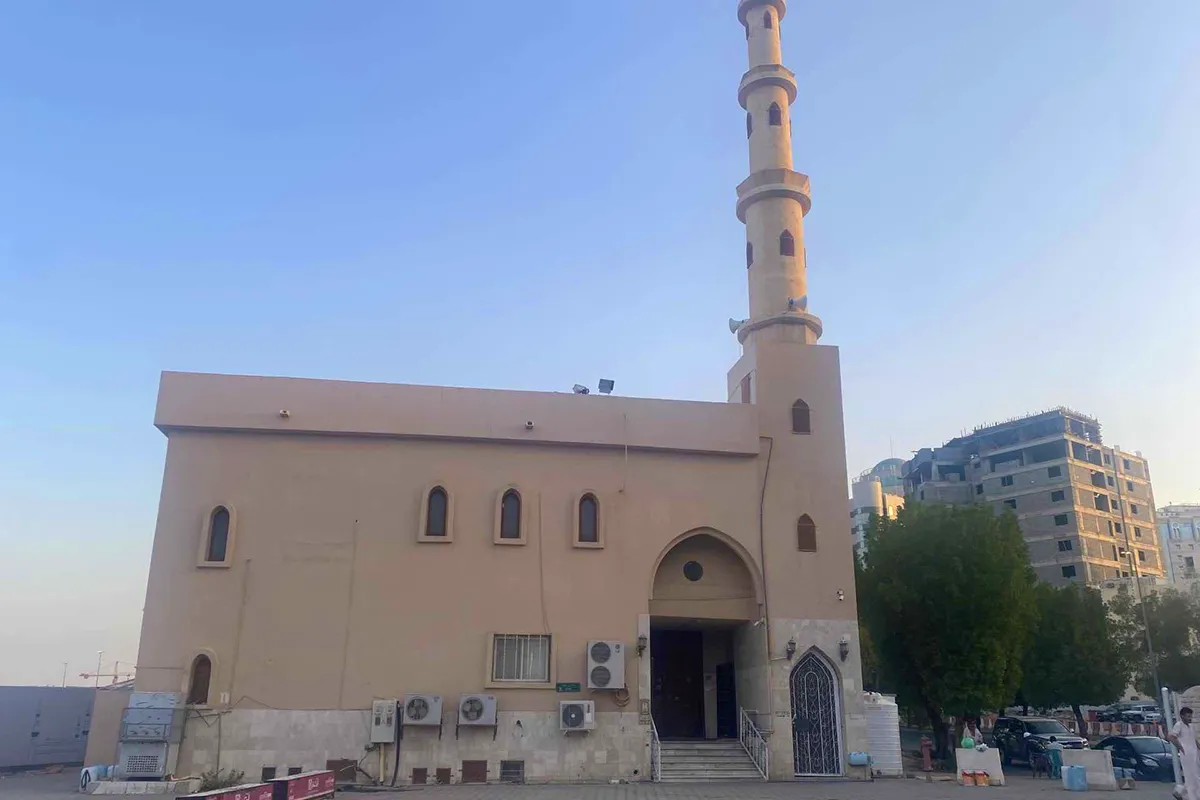
Masjid Abu Dhar al-Ghifari is another name for Masjid al-Sajdah, about 900 metres north of Masjid an-Nabawi. Abu Dhar was of Ghifar, a Hijazi tribe once known for robbing pilgrims. Sahih Muslim preserves his own account of living on Zamzam for about a month in Makkah until he found the Prophet ﷺ and accepted Islam.
Key takeaways
- ✓Masjid Abu Dhar al-Ghifari and Masjid al-Sajdah are two names for the same building, 900 metres north of the Prophet's Mosque.
- ✓Abu Dhar was of Ghifar, a tribe with a pre-Islamic reputation for robbing pilgrims on the road.
- ✓Bukhari and Muslim record the Prophet ﷺ naming Ghifar, with Aslam, Muzaynah and Juhaynah, as better than several of the great Arab tribes.
- ✓Sahih Muslim preserves his account of staying in the Haram area with nothing but Zamzam for about a month, and growing stronger on it.
- ✓Ali ibn Abi Talib noticed him and brought him to the Prophet ﷺ. He is counted among the very earliest Muslims.
- ✓Told to keep it quiet, he went to the Kaaba and announced it at the top of his voice, and was beaten for it. Twice.
- ✓He is remembered for plain speech and voluntary poverty, and died at al-Rabadhah in the desert, poor and alone.
Quick facts
- City
- Madinah, about 900 m north of Masjid an-Nabawi
- Also called
- Masjid al-Sajdah
- Tribe
- Ghifar, of the Hijaz
- His Islam
- Recorded at length in Sahih Muslim
- Lived on
- Zamzam alone, for about a month
- Died at
- Al-Rabadhah, in the desert east of Madinah
- Part of Umrah or Hajj
- No
- Special prayer or reward
- None authentically reported
- Time to allow
- About 5 minutes
- Evidence level
- A for his Islam and the tribal hadith; B for the mosque
The small mosque about 900 metres north of Masjid an-Nabawi that most people know as Masjid al-Sajdah is also called Masjid Abu Dhar al-Ghifari.
One building, two names. We have covered the mosque itself and the prostration it is named for on the Masjid al-Sajdah page. This page is about the man in the second name, because he deserves one.
Where he came from
Abu Dhar was of Ghifar, a tribe of the Hijaz with a reputation, before Islam, for robbing pilgrims on the road.
Hold that next to the hadith in Sahih al-Bukhari and Sahih Muslim in which the Prophet ﷺ named Aslam, Ghifar, Muzaynah and Juhaynah as better than several of the great and famous Arab tribes.
Ghifar. Named in public, ranked above the aristocracy of Arabia.
How he became Muslim
His own account is preserved at length in Sahih Muslim, and it is one of the best stories in the collection.
Word reached him in the desert that a man in Makkah was claiming prophethood. He sent his brother to find out. The report came back inconclusive, so he went himself.
He did not know who to ask, and asking openly was dangerous. So he stayed in the Haram area, sleeping there, with nothing to live on but Zamzam. He says he was there about a month, and that he grew stronger on it, with the folds of his stomach filling out.
Eventually Ali ibn Abi Talib, may Allah be pleased with him, noticed him and took him in, and after some caution brought him to the Prophet ﷺ. He accepted Islam on the spot.
He is counted among the very earliest Muslims.
What he did next
The Prophet ﷺ told him to keep it quiet and go back to his people.
Abu Dhar went to the Kaaba and announced it at the top of his voice.
He was beaten for it, badly, and the narration says al-Abbas found him and stopped the crowd by pointing out that their trade routes ran through Ghifar's country. He did it again the next day, and was beaten again.
Then he went home, and through him his tribe accepted Islam.
Truthfulness and poverty
He is remembered for two things above all: plain speech and voluntary poverty.
There is a well-known report, in al-Tirmidhi and Ibn Majah, that the earth has not carried nor the sky shaded anyone more truthful than Abu Dhar. Hadith scholars discuss the strength of the various chains of that report, so we are naming it as reported rather than presenting it as of the highest grade.
What is not in dispute is the pattern of his life. He kept nothing. He said what he thought about wealth and those who accumulated it, to the powerful, out loud, for decades.
He died at al-Rabadhah, in the desert east of Madinah, away from the cities, in circumstances the historical sources describe as very poor and very isolated.
The evidence, plainly
- His account of becoming Muslim, and the month on Zamzam: level A, in Sahih Muslim.
- The hadith praising Ghifar among four tribes: level A, in Bukhari and Muslim.
- The report that no one was more truthful than him: reported in al-Tirmidhi and Ibn Majah, with the chains discussed. Reported, not top grade.
- His death at al-Rabadhah: historical literature.
- The mosque: the same building as Masjid al-Sajdah, 900 m north of Masjid an-Nabawi.
Is visiting part of Hajj or Umrah?
No. Not a rite of either, and no reward for praying at the mosque is authentically reported.
Visiting
- Five minutes, and it is walkable from the central Haram area.
- Use both names. Masjid al-Sajdah is the more common one; some know it as Abu Dhar al-Ghifari.
- Do not look for two mosques. It is one building.
- Read his story before you go. Five minutes at a small building means nothing; five minutes there knowing what he did means something.
Related
- Masjid al-Sajdah — the same mosque, and the prostration it is named for.
- Banu Juhaynah and Bali — and the hadith about the four tribes.
- Zamzam — which he lived on for a month.
- Madinah Ziyarat guide — the whole city, site by site.
Getting there
Madinah's smaller historic sites are scattered, and reaching them one taxi at a time turns a short list into a whole morning. Our Madinah Ziyarat private car covers the round on one fixed fare for the whole vehicle with the driver waiting at every stop, and the Madinah Ziyarat tour is the guided version. For arrival, the Madinah airport transfer has fixed fares.
Accuracy note
Abu Dhar al-Ghifari's own account of coming to Makkah, remaining in the Haram area with nothing but Zamzam for about a month, being noticed and taken in by Ali ibn Abi Talib, meeting the Prophet ﷺ and accepting Islam, and then announcing it publicly at the Kaaba and being beaten, is recorded at length in Sahih Muslim. The hadith in which the Prophet ﷺ named Aslam, Ghifar, Muzaynah and Juhaynah as better than several larger and more prestigious Arab tribes is in Sahih al-Bukhari and Sahih Muslim. The report that the earth has not carried nor the sky shaded anyone more truthful than Abu Dhar is recorded in al-Tirmidhi and Ibn Majah, and hadith scholars discuss the strength of its chains; we have named it as reported rather than presenting it as of the highest grade. His death at al-Rabadhah, east of Madinah, in poor and isolated circumstances, is recorded in the historical literature. Masjid Abu Dhar al-Ghifari and Masjid al-Sajdah are two names for the same mosque, about 900 m north of Masjid an-Nabawi. No reward for praying there is authentically reported, and visiting is not a rite of Hajj or Umrah. Content verified August 2026. Correction? Tell us.
Frequently asked questions
Planning a Saudi trip?
Pre-book a private car, find a stay, or ask us anything on WhatsApp.
Last updated: 16 September 2026·Sources reviewed by the Wadana Go editorial team.