Masjid al-Sajdah: The Mosque of the Long Prostration
Short answer
Masjid al-Sajdah stands about 800 metres north of Masjid an-Nabawi in Madinah, also known as Masjid al-Shukr and Masjid al-Aswaf. It marks the place where, according to the hadith literature, the Prophet ﷺ prostrated in thanks after Jibril brought him news that whoever sends blessings upon him is blessed in return. Visiting is not a rite of Hajj or Umrah.
Key takeaways
- ✓The mosque is named after a prostration of thanks, sajdat al-shukr, and is also called Masjid al-Shukr and Masjid al-Aswaf.
- ✓The report describes the Prophet ﷺ prostrating so long in a palm garden that those with him feared something had happened.
- ✓Jibril had brought news that whoever sends blessings upon him is blessed in return, and whoever gives him salam is greeted in return.
- ✓The report is narrated from Abd al-Rahman ibn Awf and is in the hadith literature, not in Bukhari or Muslim. Its grading is discussed.
- ✓The practice of prostrating in thanks on receiving good news is itself well established in the sunnah.
- ✓The lesson travels: salawat costs nothing, needs no permit and no queue, and works from anywhere.
- ✓The building is tiny, about 182 square metres after the 1399 AH reconstruction, and is open for prayer at prayer times.
Quick facts
- City
- Madinah, about 800 m north of Masjid an-Nabawi
- Also called
- Masjid al-Shukr, Masjid al-Aswaf
- Marks
- A prostration of thanks after news brought by Jibril
- Size
- About 182.3 m² after the 1399 AH reconstruction
- Access
- Open for visits and prayer at prayer times
- Special prayer or reward
- None authentically reported
- Part of Umrah or Hajj
- No
- Can a car reach it
- Yes, and it is walkable from the Haram area
- Time to allow
- About 5 minutes
- Evidence level
- A for sajdat al-shukr as a practice; the specific report's grading is discussed
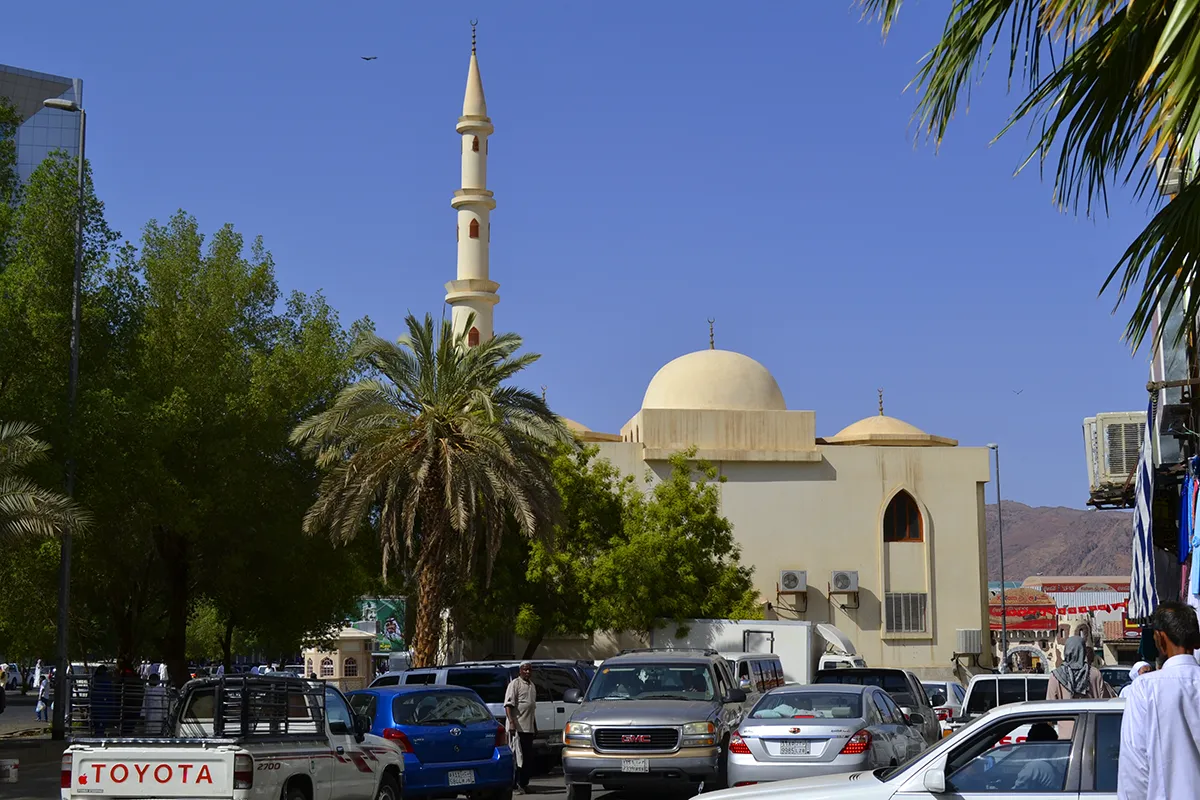
Masjid al-Sajdah stands about 800 metres north of Masjid an-Nabawi. It is small, easy to miss, and named after a prostration.
You will also see it called Masjid al-Shukr, the mosque of thanks, and Masjid al-Aswaf, after the area.
What happened here
The account preserved in the hadith literature is this. The Prophet ﷺ went into a palm garden and prostrated, and stayed down so long that those with him feared something had happened to him.
When he raised his head he told them that Jibril had come to him with news from Allah: that whoever sends blessings upon him, Allah blesses that person in return, and whoever gives him salam, Allah returns the greeting.
He had prostrated in thanks.
The report is recorded in the hadith literature, narrated from Abd al-Rahman ibn Awf, may Allah be pleased with him. It is not in Bukhari or Muslim, and its grading is discussed by hadith scholars, though the practice of prostrating on receiving good news is itself well established.
The part you can act on
Look at what the news actually was.
It was not about a battle or a conquest. It was that every salawat you send on the Prophet ﷺ comes back to you, and every salam you give him is returned.
That costs nothing, needs no travel, no permit and no queue. You can do it on the flight home. Which makes this one of the few small mosques in Madinah where the lesson is more portable than the site.
The prostration of thanks
The sajdat al-shukr is a single prostration made when something good happens or bad news is averted. It is well attested in the sunnah: when the Prophet ﷺ received good news, he would go down in prostration in gratitude to Allah.
It is not part of any prayer. No wudu debate needs settling before you can benefit from knowing about it. You hear good news, you go down, you thank Allah, you get up.
The building
Small and plain. Official Madinah information records a reconstruction in 1399 AH that brought the total area to about 182.3 square metres, with a minaret added at the northwestern corner during the Saudi period. It is open for visits and for prayer at prayer times.
182 square metres. That is a large room, and it is the whole mosque.
The evidence
- The prostration of thanks as a practice: established in the sunnah.
- The report of this specific prostration and what Jibril brought: in the hadith literature, from Abd al-Rahman ibn Awf, not in Bukhari or Muslim, with its grading discussed.
- That this building marks the exact garden: historical tradition, level B.
- A special reward for praying here: none that we know of.
Is visiting part of Hajj or Umrah?
No. Not a rite of either.
Visiting
- Five minutes. It is one small room with a minaret.
- It is walkable from the central Haram area, being under a kilometre north.
- Open at prayer times, per the official information, though access can vary.
- Do not confuse it with Masjid al-Ijabah, which is a different small mosque in the same general part of the city with a different hadith attached.
Nearby
- Masjid al-Ijabah — the other small hadith-linked mosque in this area.
- Jannat al-Baqi — a short walk away.
- Masjid an-Nabawi — 800 metres south.
- Madinah Ziyarat guide — the full list with evidence levels.
Getting there
Madinah's historic sites are spread across the city and doing them one taxi at a time wastes most of a morning. Our Madinah Ziyarat private car covers the round on one fixed fare for the whole vehicle, with the driver waiting at every stop, and the Madinah Ziyarat tour is the guided version. For arrival, the Madinah airport transfer has fixed fares.
Accuracy note
The report of the Prophet ﷺ prostrating at length in a palm garden and then relating what Jibril brought him, that whoever sends blessings upon him is blessed in return and whoever gives him salam is greeted in return, is narrated from Abd al-Rahman ibn Awf and recorded in the hadith literature. It is not in Sahih al-Bukhari or Sahih Muslim and its grading is discussed by hadith scholars; we have said so rather than presenting it as of the highest grade. The prostration of thanks as a practice, made on receiving good news, is well established in the sunnah. The identification of this building with that garden is historical tradition, level B. The location about 800 m north of Masjid an-Nabawi, the reconstruction in 1399 AH bringing the total area to about 182.3 square metres, the minaret added at the northwestern corner in the Saudi period, and the mosque being open for visits and prayer at prayer times, follow the official Madinah destination information. We know of no authentic report of a special reward for praying in this mosque. Visiting is not a rite of Hajj or Umrah. Content verified August 2026. Something wrong? Tell us.
Frequently asked questions
Planning a Saudi trip?
Pre-book a private car, find a stay, or ask us anything on WhatsApp.
Last updated: 22 September 2026·Sources reviewed by the Wadana Go editorial team.