Jannat al-Baqi: The Cemetery Beside the Prophet's Mosque
Short answer
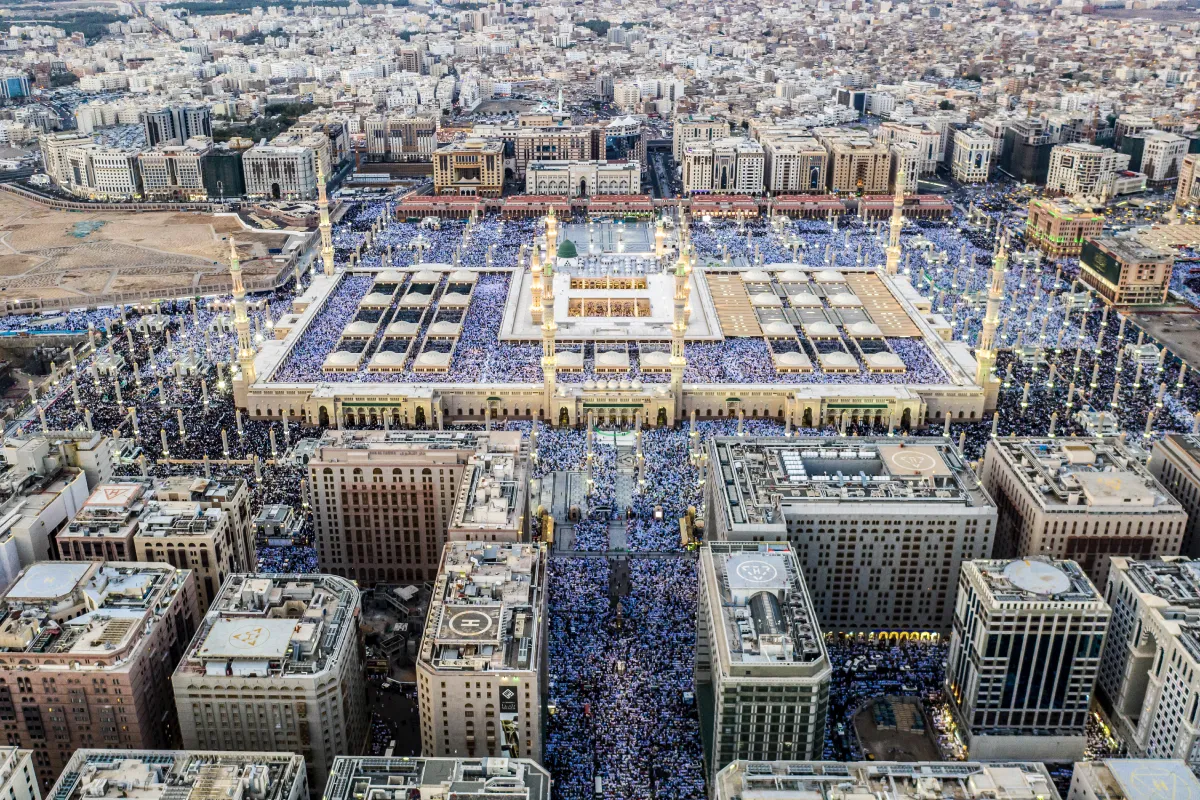
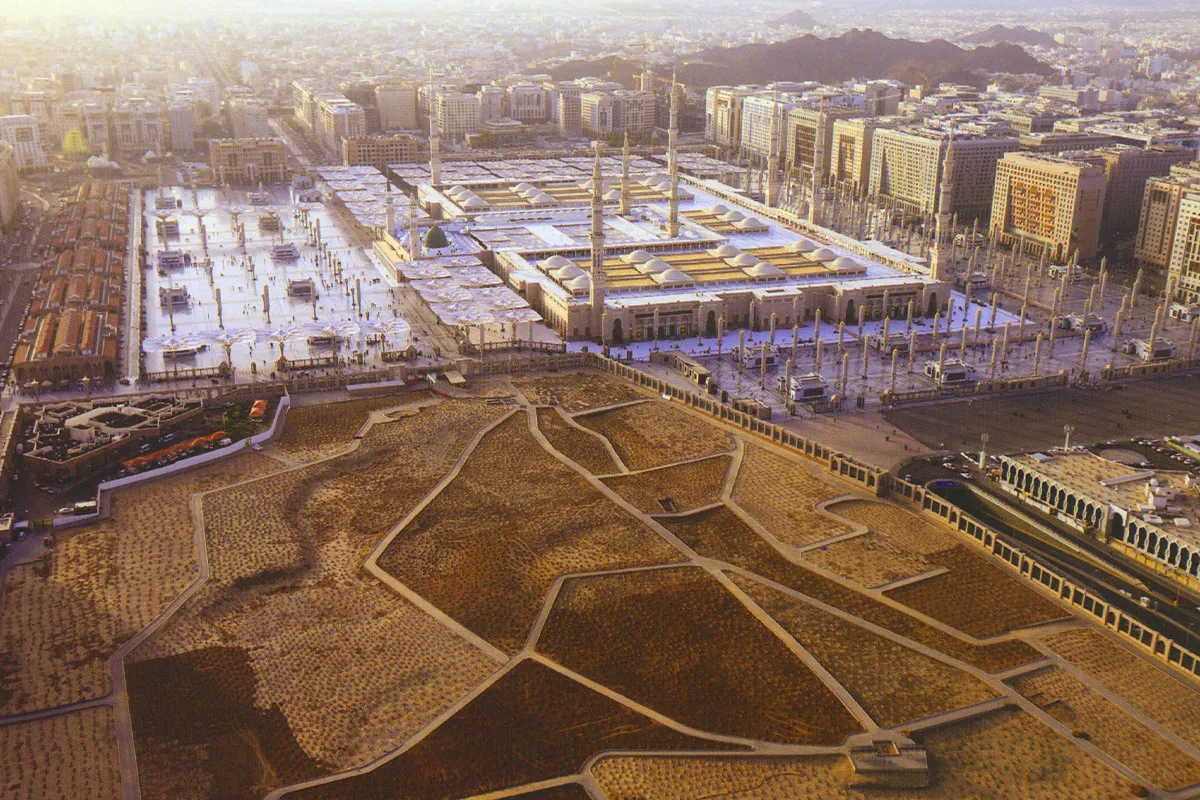
Jannat al-Baqi is the main cemetery of Madinah, immediately east of Masjid an-Nabawi. Historical sources record around ten thousand Companions buried there, along with members of the Prophet's family. The graves are plain and unmarked and none can be identified today. It opens briefly after Fajr and after Asr. Visiting is not a rite of Hajj or Umrah.
Key takeaways
- ✓Al-Baqi is next to the Prophet's Mosque and holds an estimated ten thousand Companions, along with members of the Prophet's ﷺ family.
- ✓None of the graves can be identified today. Anyone naming a specific spot is going beyond what can be known.
- ✓Sahih Muslim records that the Prophet ﷺ visited al-Baqi at night and gave salam to the people of the graves.
- ✓He also said he had once forbidden visiting graves and now instructed people to visit them, because they remind you of the Hereafter. That is the stated purpose.
- ✓Domes and built structures were removed in the 1920s, on the basis of reports prohibiting raising or building over graves. The cemetery has been kept plain since.
- ✓It opens for short windows after Fajr and after Asr. Entry is currently for men; women give salam from outside the boundary.
- ✓Visiting is not part of Hajj or Umrah. Nobody who misses it, for any reason, has missed an obligation.
Quick facts
- City
- Madinah, immediately east of Masjid an-Nabawi
- Full name
- Baqi al-Gharqad, after a thorny shrub that grew there
- Buried there
- An estimated 10,000 Companions and members of the Prophet's family
- Marked graves
- None. Plain earth with a low stone border
- Opening
- Short windows after Fajr and after Asr; times move with prayer
- Entry
- Currently men only; women give salam from outside
- Part of Umrah or Hajj
- No. A sunnah visit, not a rite
- Can a car reach it
- No need. It is a short walk from the mosque
- Evidence level
- A for the Prophet's visits and the du'a; B for who is buried where
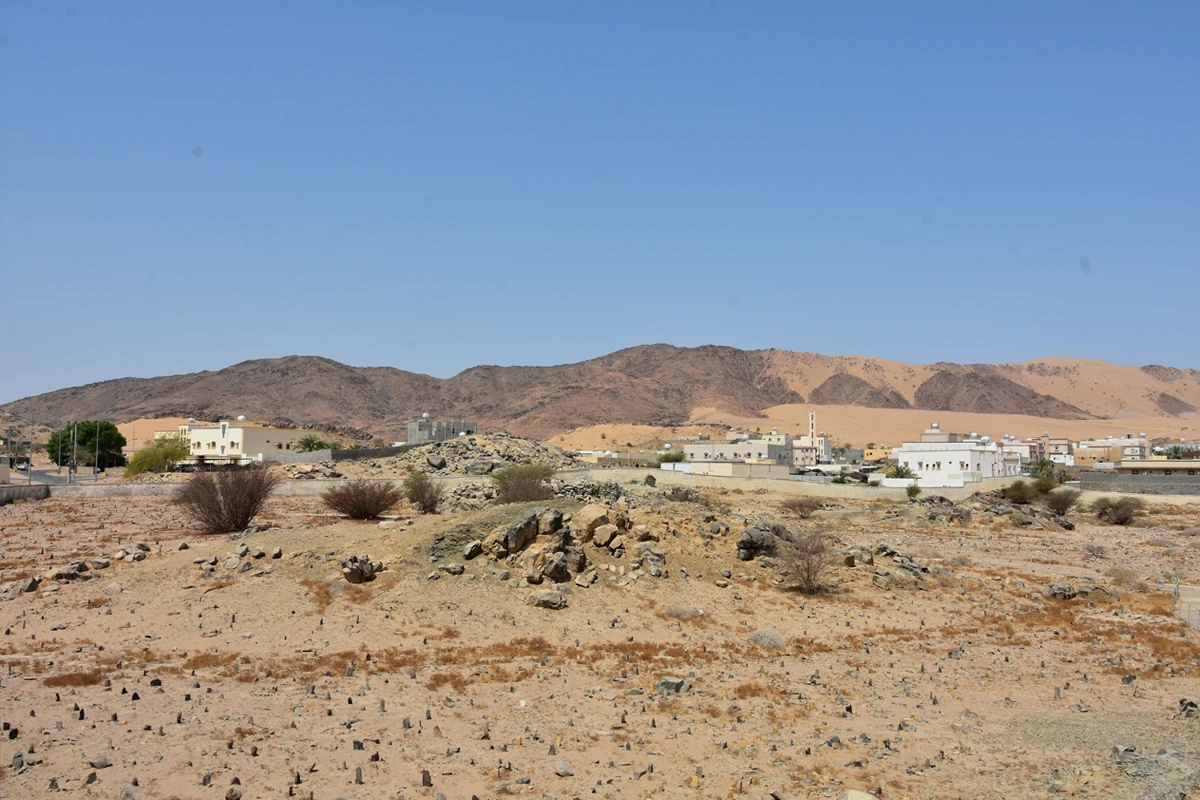
Step out of the eastern side of Masjid an-Nabawi and you are at a wall. Behind it is a wide field of plain earth and grey stones, with no headstones, no names and no decoration of any kind.
That field is Jannat al-Baqi, the main cemetery of Madinah, and it is thought to hold around ten thousand of the Companions of the Prophet ﷺ, along with members of his family.
People are often surprised by how bare it looks. That plainness is the point, and this page explains why.
The name
The full name is Baqi al-Gharqad. A baqi is a piece of ground with trees or roots in it, and gharqad is a thorny shrub that grew there. The name is a description of the land, from before it was a cemetery.
Today most people simply say al-Baqi, or Jannat al-Baqi.
Who is buried there
Historical sources record a very large number of the Companions buried at al-Baqi, commonly given as around ten thousand. Among those named in the sources are:
- Ibrahim, the infant son of the Prophet ﷺ.
- Several of the Mothers of the Believers, his wives, including Aisha, may Allah be pleased with her.
- His daughters.
- His uncle al-Abbas ibn Abd al-Muttalib.
- Uthman ibn Affan, the third caliph, may Allah be pleased with him.
- Hasan ibn Ali, the Prophet's grandson, may Allah be pleased with him.
- Many other Companions and scholars of the early generations.
The first person buried there is commonly reported as Uthman ibn Maz'un, may Allah be pleased with him, one of the early Muslims.
Please note the honest limit on all of this: none of these graves can be identified today. Anyone who points confidently at a particular patch of ground and names a person is going beyond what can be known. What the sources tell you is who is in the cemetery, not where.
The Prophet's own visits
Aisha, may Allah be pleased with her, reported that when it was her night, the Prophet ﷺ would go out to al-Baqi in the last part of the night and give salam to the people of the graves. This is recorded in Sahih Muslim.
The words he taught for visiting a graveyard are also preserved. In meaning: peace be upon you, people of these dwellings, believers and Muslims; we will, God willing, join you; we ask Allah for wellbeing for us and for you.
He also said, in a report in Sahih Muslim, that he had once forbidden visiting graves and now instructed people to visit them, because they remind you of the Hereafter.
That is the whole purpose of the visit, stated by him. It is not to ask anything of the dead. It is to remember where you are going.
Why the graves are unmarked
Al-Baqi once had domes, mausoleums and built structures over some graves. These were removed in the 1920s.
The stated basis was the group of reports in which the Prophet ﷺ instructed that graves not be raised or built over, and warned against taking graves as places of worship, which are recorded in the authentic collections. Since then the cemetery has been kept plain: level ground, a low border of rough stones around each grave, and nothing else.
Muslims hold different views about that history, and this is a travel page rather than a place to argue them out. What matters for a visitor is the practical reality: you will find no markers, no names and no structures, and you should not expect to.
Visiting today
The cemetery sits immediately east of Masjid an-Nabawi. You do not need transport; it is a short walk from the mosque.
What you should know before you go:
- It opens twice a day, generally for a period after Fajr and again after Asr. The windows can be short.
- Entry is currently for men. Women give salam from outside the boundary. This arrangement has changed in the past and could change again.
- Timings are enforced and they move. Prayer times shift through the year, and the schedule follows them. Ask at your hotel or check on the day.
- Walk on the paths. Do not step over the stone borders or walk across the graves themselves.
- Photography is restricted. Do not film inside, and do not photograph other visitors.
What to do when you are there
Simple, and short.
- Give the salam to the people of the graves, using the wording taught in the hadith or its plain meaning in your own language.
- Make du'a to Allah for them, and for yourself.
- Walk, look and think about the fact that these were people who saw the Prophet ﷺ with their own eyes, and are now under plain stones with no names.
- Leave when the staff close the gates, without arguing.
Do not ask anything of the dead. Do not wipe your hands on the ground or the walls. Do not raise your voice. Do not turn it into a photo stop.
Is visiting al-Baqi part of Hajj or Umrah?
No. It is not part of either. Visiting graves in general is a sunnah with a stated purpose, and al-Baqi is a good place to do it, but no rite of yours depends on it.
Women who cannot enter have not missed an obligation. The salam given from outside the wall is the same salam.
An honest word about the experience
Some people find al-Baqi the most affecting place in Madinah, more than anything else they see. Others walk in, look at a field of stones, and feel nothing much at all.
Both reactions are normal. The value of the visit is not measured by how much you felt. The Prophet ﷺ said graves remind you of the Hereafter. If you leave thinking about your own death for ten minutes, the visit did its job.
Nearby
- Masjid an-Nabawi — the mosque next door.
- The Prophet's chamber — and how to give salam there.
- The Rawdah — and how the Nusuk permit works.
- Madinah Ziyarat guide — thirty sites, with the evidence for each.
Getting around Madinah
Al-Baqi needs no car. It is beside the mosque and you will walk.
The sites that do need a car are the ones further out: Quba, Uhud, Qiblatayn and the Trench mosques, which are spread across the city and slow to do one taxi at a time. The Madinah Ziyarat private car covers the round on one fixed fare for the vehicle with the driver waiting at each stop. For arrival, our Madinah airport transfer and the airport to hotel guide cover the options and prices.
Accuracy note
The report of the Prophet ﷺ visiting al-Baqi at night and giving salam to the people of the graves, the wording taught for visiting graves, and the instruction to visit graves because they remind of the Hereafter, are all recorded in Sahih Muslim. The list of those buried at al-Baqi follows the historical and biographical literature; the figure of around ten thousand Companions is the commonly cited estimate, not a count. No grave at al-Baqi can be identified today and we have not pretended otherwise. The removal of domes and built structures in the 1920s is a matter of documented history; the reports on not raising or building over graves are in the authentic collections. Visiting is not a rite of Hajj or Umrah. Opening times are tied to the prayer times and change through the year, and the current arrangement admits men while women give salam from outside; both have changed before, so check locally rather than relying on this page. Content verified August 2026. Something out of date? Tell us.
Frequently asked questions
Planning a Saudi trip?
Pre-book a private car, find a stay, or ask us anything on WhatsApp.
Last updated: 9 October 2026·Sources reviewed by the Wadana Go editorial team.