Al-Rawdah al-Sharifah: What It Is, and How to Get a Permit
Short answer
The Rawdah is the area between the Prophet's chamber and his minbar in Masjid an-Nabawi. An authentic hadith in Bukhari and Muslim calls it a garden from the gardens of Paradise. It measures roughly 26.5 by 15 metres. Entry needs a free timed permit from the Nusuk app, and a visit lasts about ten to fifteen minutes. It is not a rite of Hajj or Umrah.
Key takeaways
- ✓The hadith is in Bukhari and Muslim: the area between the Prophet's ﷺ house and his minbar is a garden from the gardens of Paradise.
- ✓Scholars have read that literally and figuratively for centuries. Both readings are respectable and neither changes what you do there.
- ✓Saudipedia gives about 26.5 m by 15 m, roughly 397.5 square metres. Other sources say 22 m by 15 m. It is small either way.
- ✓Entry is by free timed permit through the Nusuk app only. Anyone charging for Rawdah access is selling something that costs nothing.
- ✓A visit lasts about ten to fifteen minutes, in an organised moving group. Men and women have separate slots and gates.
- ✓No authentic hadith gives a special reward for praying beside one named pillar. Do not push anyone aside to reach one.
- ✓Praying in the Rawdah is not part of Hajj or Umrah. If you miss it you have lost an opportunity, not a rite.
Quick facts
- City
- Madinah, inside Masjid an-Nabawi
- Size
- About 26.5 m x 15 m (397.5 m²) per Saudipedia
- Access
- Free timed permit, Nusuk app only
- Visit length
- About 10 to 15 minutes
- Men and women
- Separate slots and separate gates
- Children
- Aged 5 and above generally need their own permit
- Part of Umrah or Hajj
- No. A virtue, not a rite
- Evidence level
- A. Named in authentic hadith in Bukhari and Muslim
- Cost
- Nothing. Never pay anyone for access
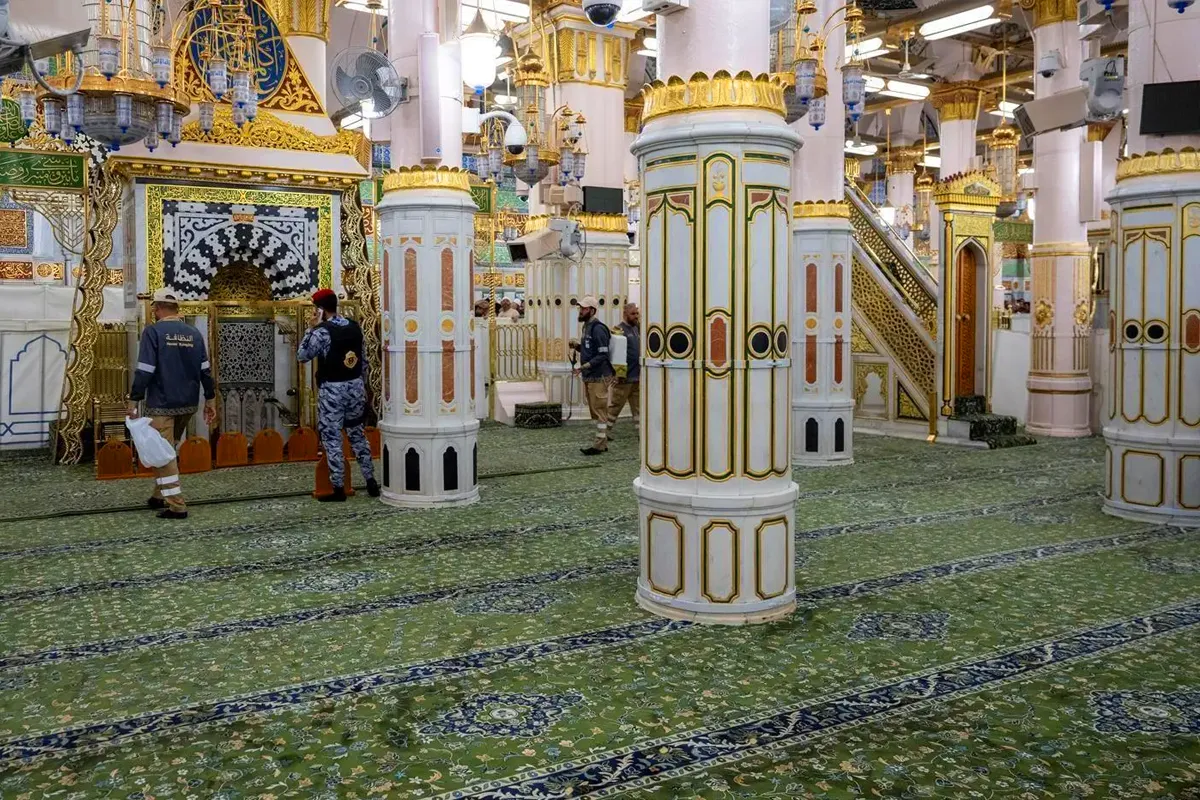
The Rawdah is a strip of floor inside Masjid an-Nabawi, roughly the size of a tennis court, marked out by different carpet. Millions of people a year want to pray in it. That gap between the size and the demand explains almost everything about how a Rawdah visit works today.
This page covers what the authentic hadith actually says, how the permit works, what happens once you are inside, and the things people believe about it that the sources do not support.
The hadith
The Prophet ﷺ said that the area between his house and his minbar is a garden from the gardens of Paradise, and that his minbar is upon his cistern.
This is recorded in Sahih al-Bukhari and Sahih Muslim. It is authentic, and you do not need to soften it or add anything to it.
What the words mean has been discussed by scholars for centuries. Some understood it literally, that this piece of ground is in some real sense part of Paradise. Others understood it as saying that worship performed there leads to Paradise. Both readings are held by serious scholars, and neither one changes what you do when you get there.
Where the Rawdah is, and how big
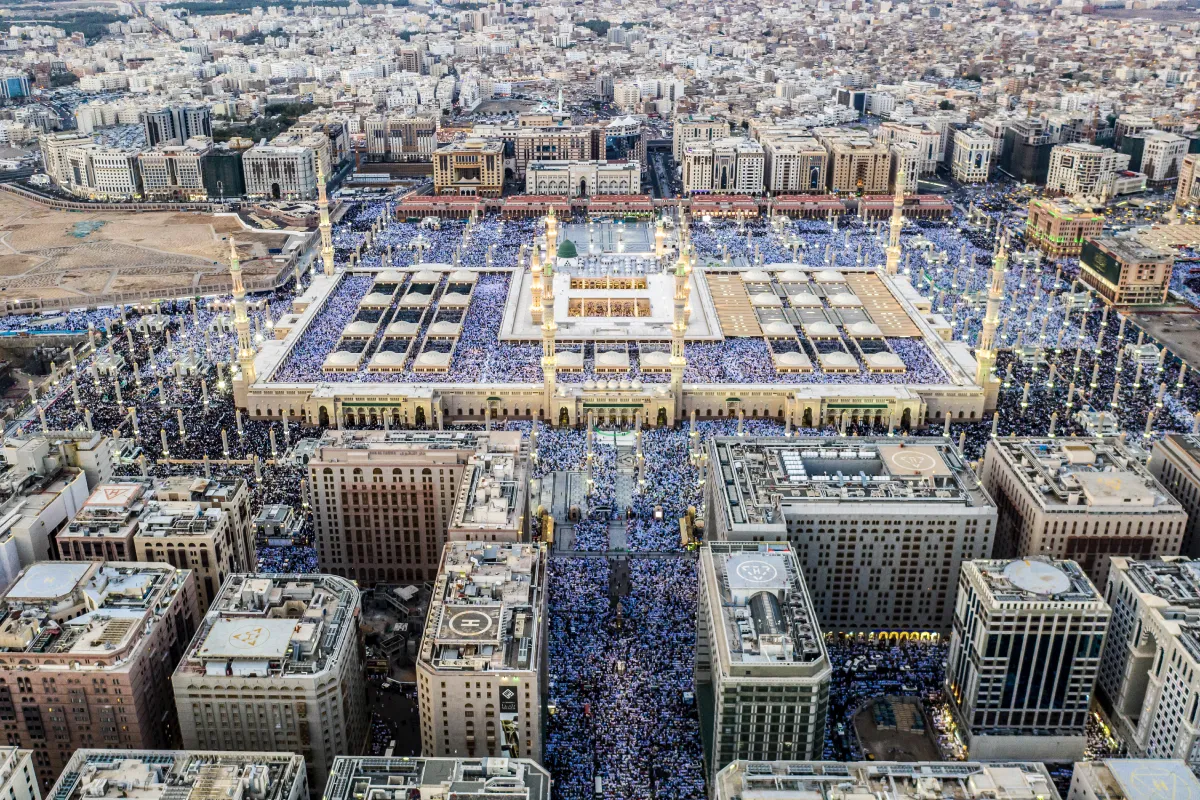
It runs between the Prophet's chamber, which was the room of Aisha, may Allah be pleased with her, and the place of his minbar. Both are in the oldest part of the mosque, on the southern side near the qibla wall.
Saudipedia gives the dimensions as about 26.5 metres long by roughly 15 metres wide, around 397.5 square metres. Other sources give about 22 metres by 15. The difference comes from where you draw the line at each end. Either way, understand the scale: this is a small room by the standards of a mosque that holds two million people.
It is marked by carpet of a different colour from the surrounding prayer hall, and by the historic columns that stand within it.
How to get in
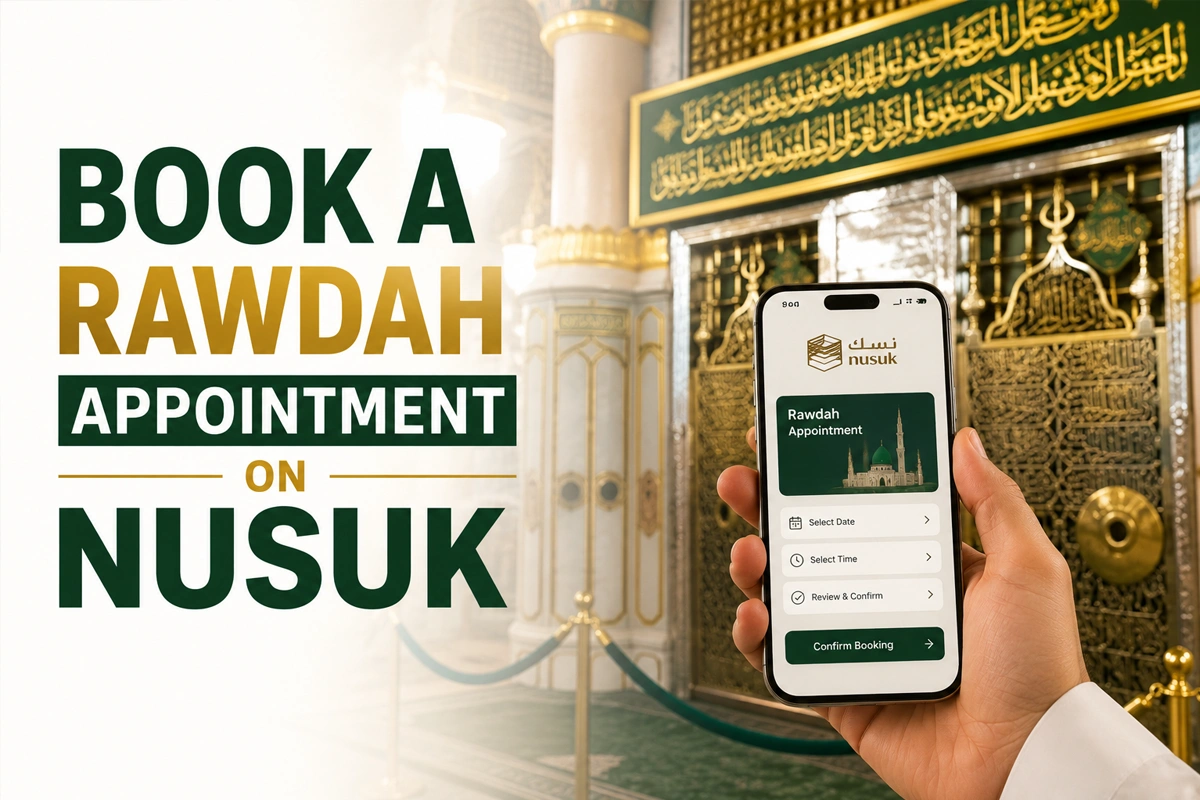
You need a free timed permit from the Nusuk app. There is no other way in, and nobody can sell you access.
The short version:
- Sign in to Nusuk and choose the Rawdah service for Madinah.
- Choose men or women. The slots and the gates are different.
- Pick a date and time. Slots open a few days ahead and are taken within minutes.
- Add each visitor with their passport or iqama number. Children aged five and above generally need their own permit.
- Save the QR code.
Our full walkthrough, including what to do when no slots appear, is here: how to book a Rawdah appointment on Nusuk. If you have not set the app up yet, start with the Nusuk app guide.
Two warnings. First, the permit costs nothing, so anyone charging you for "Rawdah access" is selling air. Second, the rules change. Timings, how far ahead slots open and how often you may book have all been adjusted before. Check the app, not a blog, including this one.
What it is like inside
Organised, crowded, and quick.
You will be checked at the gate, moved along in a group, and given roughly ten to fifteen minutes. Staff will keep the line moving. The floor is carpeted, the columns are close together, and there are more people than space.
What to do with the time: pray two rak'ahs if you can find room, make du'a, and then move so that the person behind you gets their turn. That is the whole visit.
What not to do: do not push, do not argue with the staff, do not film people's faces, and do not try to stay longer than your slot. The organisation is what makes the visit possible at all.
A word for anyone travelling with an elderly parent: it is a standing crowd with limited room to manoeuvre. Think honestly about whether it suits them, and look at our accessibility guide before you commit.
About the pillars
Inside and around the Rawdah stand columns with historic names: the Pillar of Aisha, the Pillar of the Emigrants, the Pillar of Casting Lots, and others. These names are recorded in the historical literature and mark places associated with events in the mosque's early life.
Now the honest part, and it matters, because pilgrims are pushed towards these columns by people who should know better.
There is no authentic hadith assigning a specific reward to praying beside one particular pillar. The names are historical identification. The practice of seeking out a named column is a custom that grew later. It is not established the way the Rawdah hadith itself is established.
So: if you happen to pray near one, fine. Do not push another person out of the way to reach it, do not feel you have failed if you cannot get near one, and be careful with anyone who tells you a particular column carries a guaranteed reward. That claim is going beyond the evidence.
You have not lost anything if you miss it
This needs saying plainly, because people leave Madinah upset about it.
Praying in the Rawdah is not part of Hajj and not part of Umrah. It is not obligatory, it is not a condition of anything, and no rite of yours is incomplete without it. The whole of Masjid an-Nabawi carries the reward of a thousand prayers, which is in the same authentic collections.
If you did not get a slot, if the app defeated you, if your group's timing did not work out, you have lost a good opportunity and nothing more. Give the salam from where you can and get on with your visit.
Practical tips
- Book before you fly. Set the app up and log in at home, not in a hotel lobby with weak wifi and a queue behind you.
- Be flexible with dates. The people who get slots are the ones who will take any day, not the ones holding out for Friday.
- Check back for cancellations. Permits are released again when people cancel.
- Arrive at your slot, not an hour early. Early arrivals are simply asked to wait outside.
- Know your gate. Men and women assemble at different gates and the arrangement changes; follow the signage on the day rather than a friend's memory of last year.
- Keep your expectations right. Fifteen minutes in a crowd is what it is. Decide in advance what du'a you want to make so you are not thinking about it while being moved along.
Around the mosque
- Masjid an-Nabawi — the mosque as a whole, its history and how to visit.
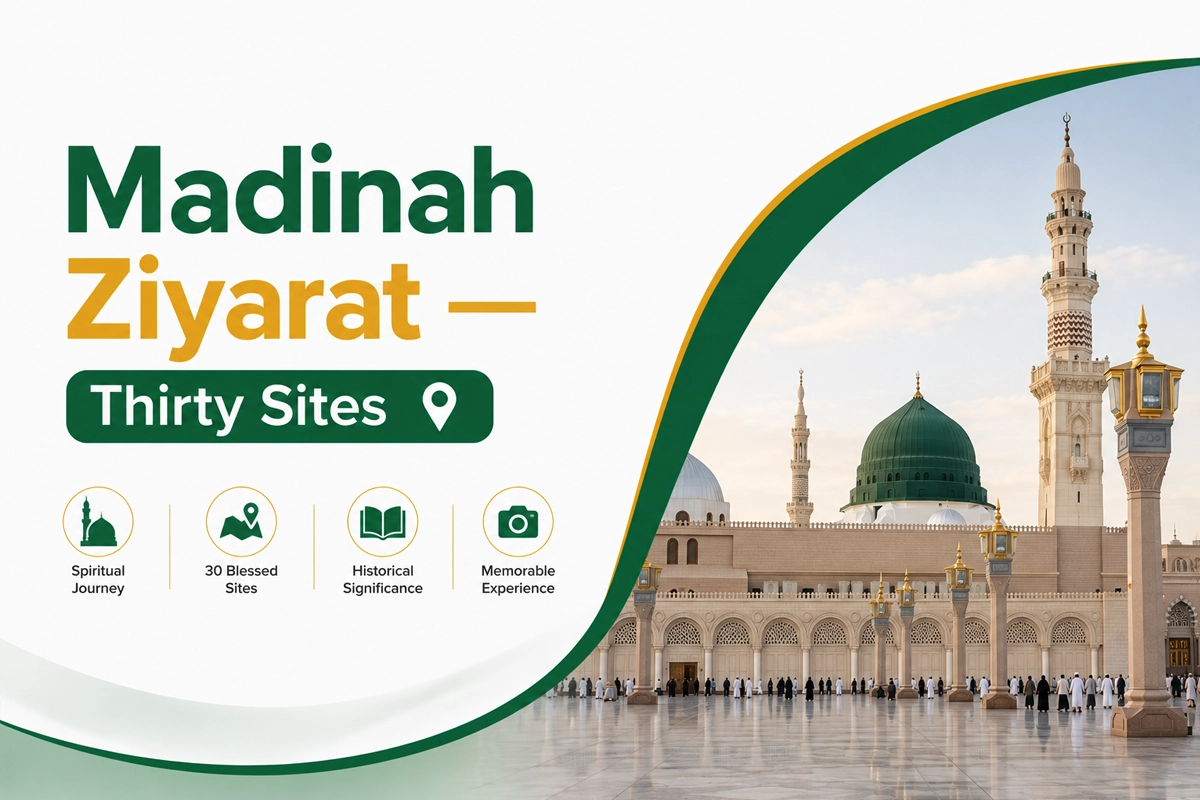
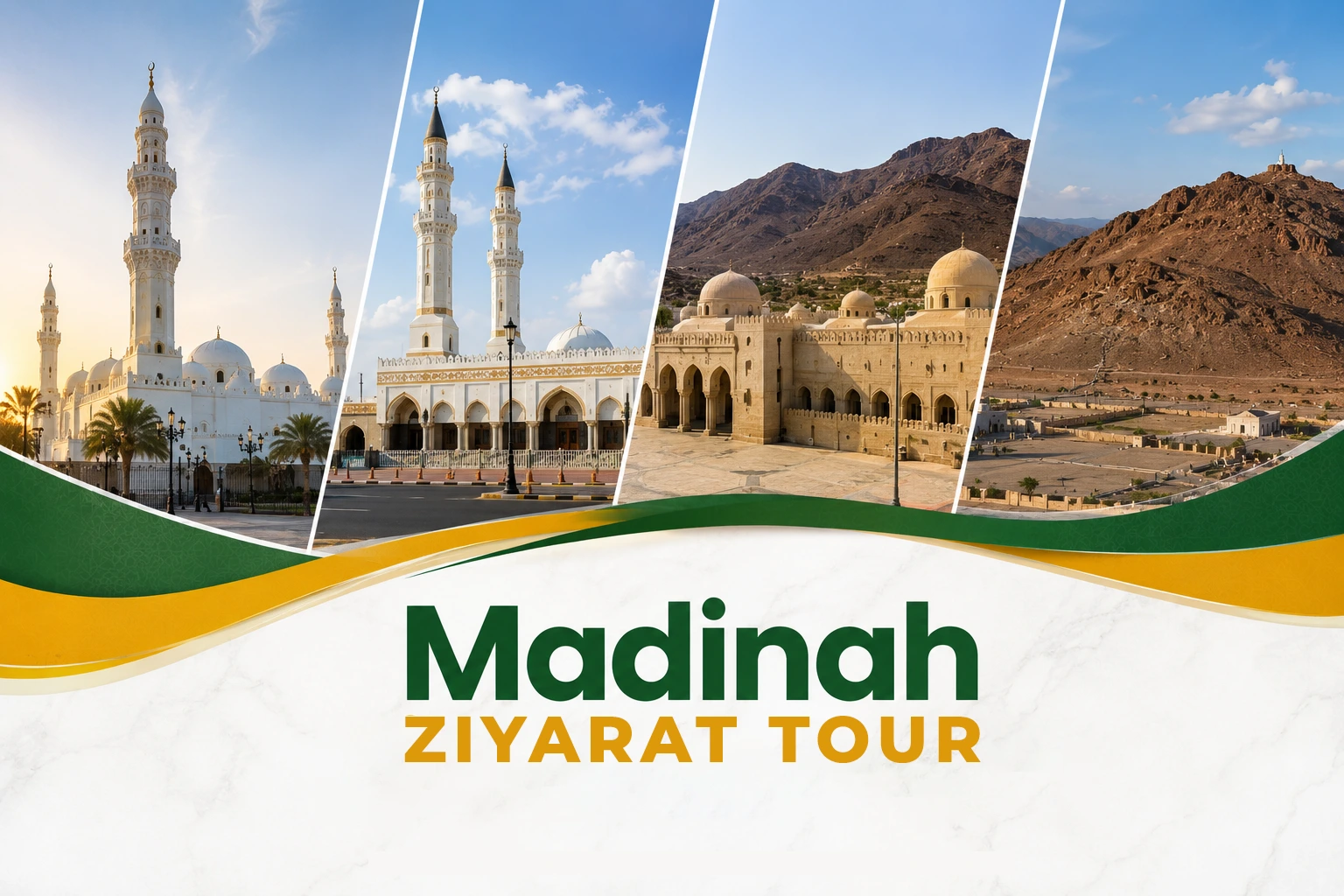
- The Madinah Ziyarat guide — thirty sites, with the evidence for each set out honestly.
- Where to stay in Madinah — because how far you walk five times a day decides how your trip feels.
Getting to Madinah
You will walk to the mosque itself if you are staying centrally, so there is no taxi to book for the Rawdah.
Where a car genuinely helps is the arrival and the Ziyarat sites. Landing at Madinah airport late with luggage and a permit early the next morning is a bad combination to solve at the taxi rank. Our Madinah airport transfer has fixed fares, and the airport to hotel guide compares all the options. For Quba, Uhud and the rest, the Madinah Ziyarat private car covers the round with the driver waiting at each stop.
Accuracy note
The hadith that the area between the Prophet's house and his minbar is a garden from the gardens of Paradise is recorded in Sahih al-Bukhari and Sahih Muslim. The two scholarly readings of its meaning are both long-established; we have not picked between them. Rawdah measurements of about 26.5 m by 15 m, around 397.5 m², are from Saudipedia; other published sources give about 22 m by 15 m. The named pillars are historically identified, but we know of no authentic hadith assigning a particular reward to a particular column, and we have said so rather than repeating a popular claim. Permit details follow the current Nusuk process as described in our own booking guide; timings and booking rules change, so check the app. Praying in the Rawdah is not a rite of Hajj or Umrah. Content verified August 2026. If something here has changed, tell us.
Frequently asked questions
Planning a Saudi trip?
Pre-book a private car, find a stay, or ask us anything on WhatsApp.
Last updated: 9 October 2026·Sources reviewed by the Wadana Go editorial team.