Mina: The Valley of Tents, and What Actually Happens There
Short answer
Mina is a valley roughly seven to eight kilometres east of the Grand Mosque in Makkah, covering about 16.8 square kilometres within its Sharia boundaries. Pilgrims stay there on the eighth of Dhul Hijjah and again on the days of Tashreeq. It holds the three Jamarat, Masjid al-Khayf and Masjid al-Bay'ah, and stands empty outside the Hajj season.
Key takeaways
- ✓Mina lies roughly 7 to 8.4 km from the Grand Mosque and covers about 16.8 sq km within its Sharia boundaries.
- ✓It is a valley between mountains, with Jamrat al-Aqabah at the Makkah end and Wadi Muhassir at the Muzdalifah end.
- ✓Pilgrims stay there on 8 Dhul Hijjah, then again on 10, 11, 12 and sometimes 13.
- ✓On the eighth day the four prayers are shortened but prayed separately, not combined.
- ✓It holds the three Jamarat, Masjid al-Khayf and Masjid al-Bay'ah.
- ✓It is the largest tent city in the world and is empty for most of the year.
- ✓Outside Hajj you can drive through it freely, and it is a standard stop on a Makkah Ziyarat round.
Quick facts
- City
- Makkah, Saudi Arabia
- Distance from the Haram
- About 7 to 8.4 km
- Area
- About 16.8 sq km within the Sharia boundaries
- Days spent there
- 8 Dhul Hijjah, then 10 to 12 or 13
- What is in it
- The three Jamarat, Masjid al-Khayf, Masjid al-Bay'ah
- Occupied
- Only during the Hajj season
- Car access
- Yes, outside Hajj. Restricted during it.
- Part of Umrah?
- No. Mina belongs to Hajj.
What Mina is
Mina is a valley roughly seven to eight kilometres east of the Grand Mosque, on the road out towards Muzdalifah and Arafat. Saudipedia gives the distance as seven kilometres on one page and 8.4 on another, so treat it as approximate. Saudipedia gives its area within the Sharia boundaries as roughly 16.8 square kilometres.
It is closed at both ends by geography and by rules. Mountains run along its northern and southern sides. At the Makkah end sits Jamrat al-Aqabah. At the far end is Wadi Muhassir, which is outside Mina and marks where it stops.
Those boundaries are not decoration. Where Mina begins and ends decides whether a pilgrim has spent the night where he was supposed to, which is why the limits are marked and why the crowds sit where they sit.
For most of the year the valley is empty. Nobody lives there. There are service and government buildings, roads, and a great deal of nothing. Then for a few days it holds more people than most countries' capital cities.
The largest tent city in the world
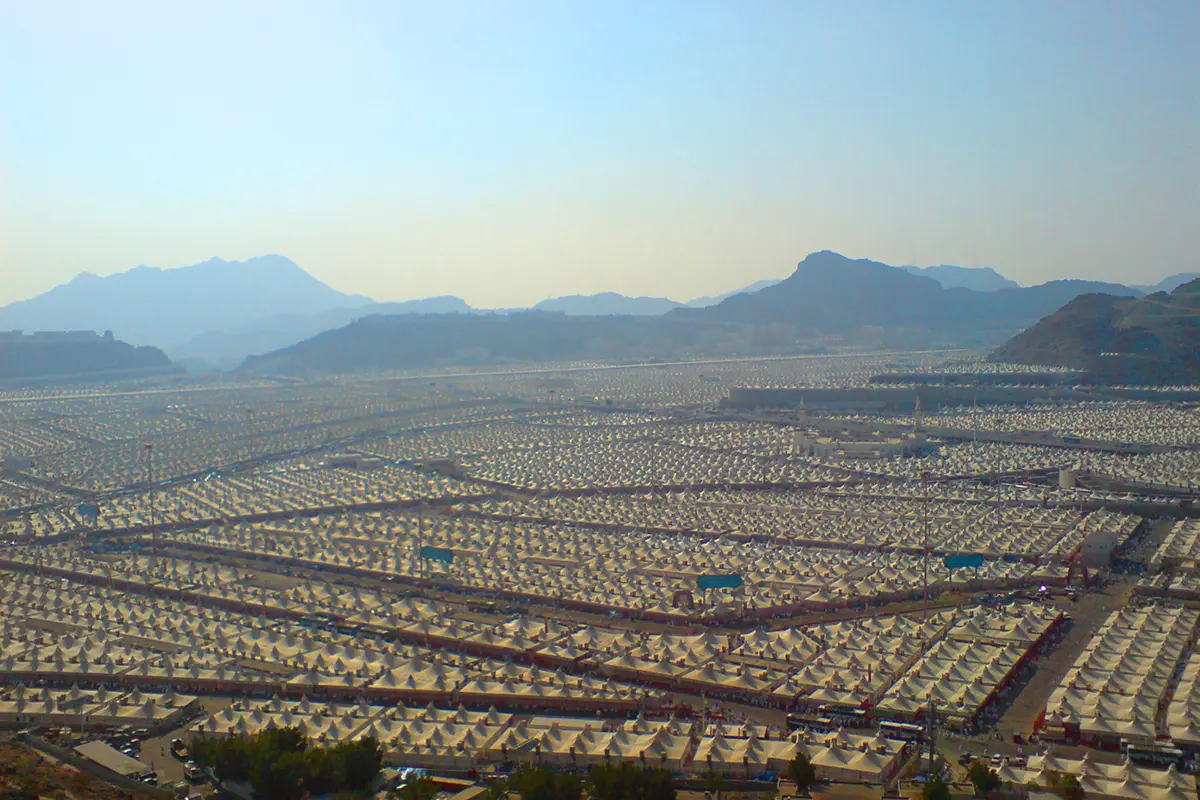
More than a hundred thousand air-conditioned tents stand in Mina, laid out in numbered blocks with roads between them, with capacity in the millions.
They are permanent structures rather than camping tents. Fireproof fabric on steel frames, air conditioning, lighting, washrooms in blocks, and a numbering system that is how anybody finds anything.
Two practical things follow from that, and both matter more than the photographs suggest.
First, learn your camp number before you need it. Every group of tents looks like every other group of tents. People get lost in Mina constantly, and a written camp number, or a photograph of the sign, is what gets them back.
Second, the walking is the hard part of Hajj, not the heat in the tent. Distances between the camps and the Jamarat can be several kilometres each way, and you do it on foot in a crowd. Anyone who tells you Hajj is physically easy now has not walked from a far camp to the bridge and back.
Which days you are in Mina
This is where most first-time pilgrims get confused, because you go there, leave, and come back.
| Day | Where | What happens |
|---|---|---|
| 8 Dhul Hijjah | Mina | Yawm al-Tarwiyah. Arrive, pray, stay the night. |
| 9 Dhul Hijjah | Arafat, then Muzdalifah | The standing at Arafat, then the night at Muzdalifah. |
| 10 Dhul Hijjah | Mina | Return. Stone Jamrat al-Aqabah, sacrifice, shave or trim. |
| 11 and 12 | Mina | Days of Tashreeq. Stone all three Jamarat each day. |
| 13 | Mina | Only for those not leaving early on the twelfth. |
So you are in Mina for the eighth, then away for the ninth, then back for three or four more days. Roughly four or five nights in total.
Yawm al-Tarwiyah, and a prayer detail people get wrong
The eighth of Dhul Hijjah is called Yawm al-Tarwiyah, the day of quenching thirst, from the days when water was carried out to Mina for the journey ahead.
Here is the detail worth knowing in advance. On that day in Mina, pilgrims pray Dhuhr, Asr, Maghrib and Isha each at its own time, shortened but not combined.
That surprises people, because at Arafat the next day Dhuhr and Asr are combined, and at Muzdalifah that night Maghrib and Isha are combined. Mina on the eighth is different. Four prayers, four times, shortened to two units where the prayer is four.
Staying the night in Mina on the eighth is the sunnah, following what the Prophet did.
What is inside the valley
The three Jamarat
The three stone pillars, in order from the Muzdalifah end towards Makkah: al-Jamrah al-Sughra, the smallest; al-Jamrah al-Wusta, the middle; and Jamrat al-Aqabah, the largest, at the Makkah end. They sit inside the multi-level Jamarat complex, which has its own page.
Masjid al-Khayf
The main mosque of Mina, at the southern side of the valley. Saudipedia gives its area as 23,500 square metres with capacity for about 25,000 worshippers, four minarets, and 1,700 washrooms. It was expanded in 1987, and the Ministry of Islamic Affairs runs educational programmes for pilgrims from it during the season.
Masjid al-Bay'ah
Near Jamrat al-Aqabah, on the site connected with the pledges the Ansar of Madinah gave the Prophet before the Hijrah. Saudipedia records that the mosque was built by the Abbasid caliph Abu Ja'far al-Mansur in 761.
Wadi Muhassir
The valley between Mina and Muzdalifah, about two kilometres long and twenty metres wide. It is outside both. The sunnah on passing through it is to move quickly.
What happened here
Mina carries more history than any other part of the Hajj route outside the Haram itself.
The stoning at the three Jamarat and the sacrifice are connected in the sources with Ibrahim and the ransom of his son Ismail. The Prophet Muhammad performed these rites here during the Farewell Pilgrimage, and it is from that performance that the method of Hajj is taken.
The two Pledges of Aqaba took place in Mina, in the years before the Hijrah, when men of Madinah met the Prophet in secret during the pilgrimage season and gave him their commitment. Those meetings are the reason the Hijrah had somewhere to go.
Saudipedia also records that Surah al-Nasr was revealed during the Farewell Pilgrimage.
On the naming, several explanations circulate in the sources. One connects it with Adam and Paradise; another simply notes that in Arabic a place where people gather can be called mina. Treat these as the usual range of traditional explanations for an old place name rather than as settled fact.
Visiting Mina outside Hajj
This is the part most Umrah pilgrims do not realise is available, and it is worth an hour.
Outside the Hajj season Mina is open and quiet. You drive in on a good road, the tents are standing empty, and you can see the whole shape of the valley in a way that is impossible when three million people are in it.
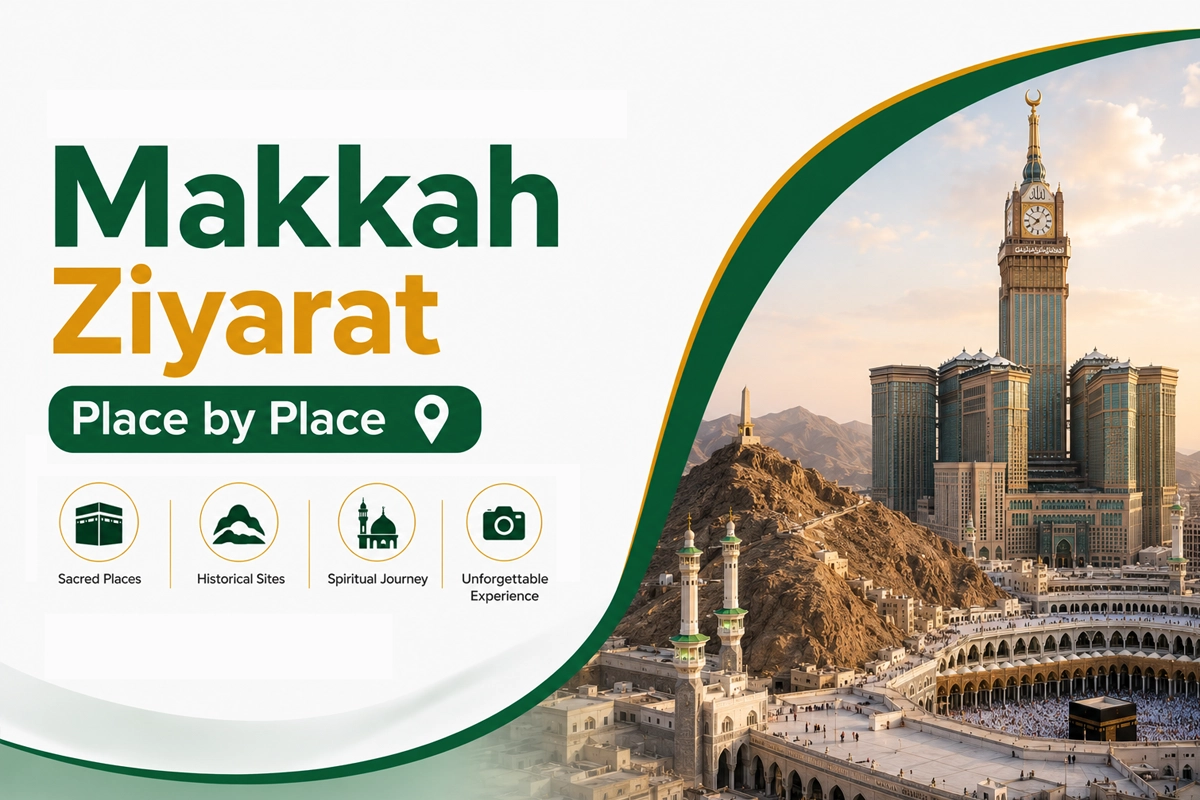
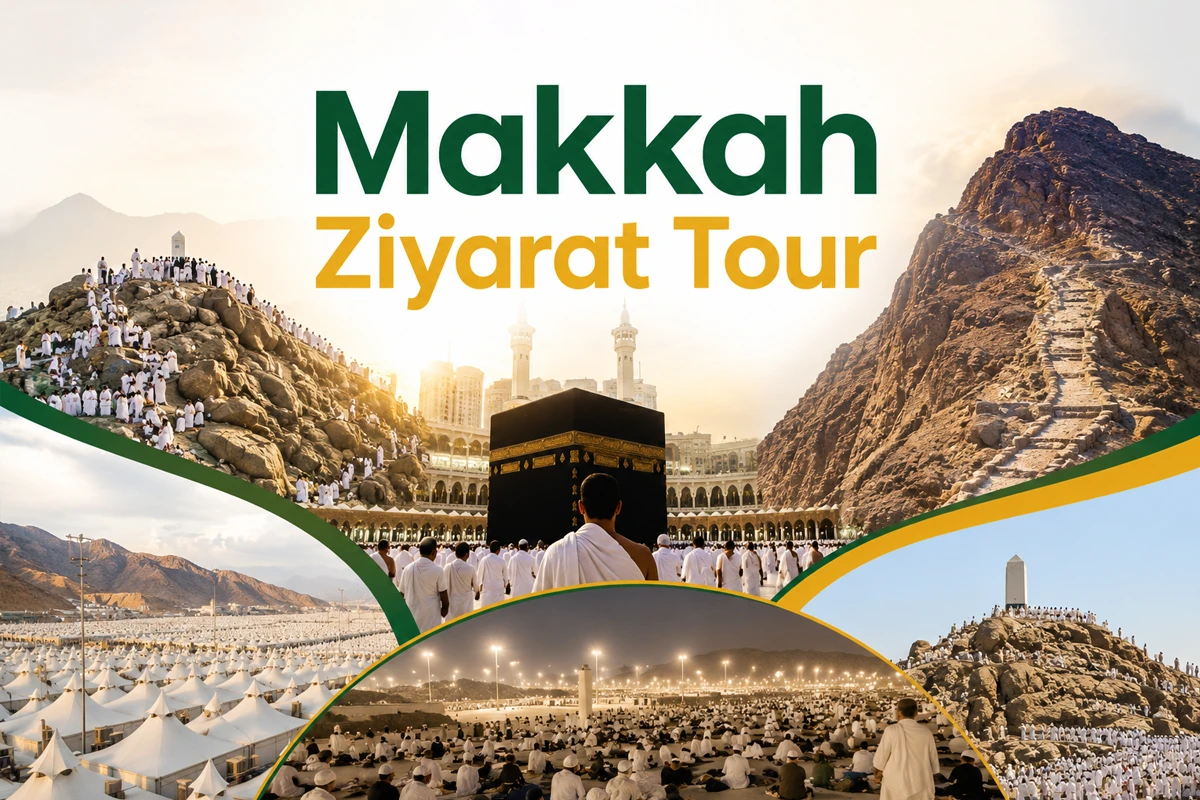
It is a standard stop on a Makkah Ziyarat round, usually taken together with Muzdalifah and Arafat since they lie one after another on the same road out.
- Allow 20 to 30 minutes for Mina itself within a wider round.
- The Jamarat complex is visible from the road and is the thing most people want to see.
- Masjid al-Khayf is easy to reach and you can usually pray there.
- Go early. The valley is exposed and there is no shade outside the buildings.
Our Makkah Ziyarat private car covers Mina, Muzdalifah and Arafat as part of the round from SAR 200 per vehicle with waiting at each stop. Fares reviewed August 2026.
Is Mina part of Umrah?
No. Mina belongs to Hajj. There is no rite of Umrah performed there, no prescribed prayer for a visitor outside Hajj, and no reward established for going to look at it.
Visiting outside the season is history and geography rather than worship, and that is a perfectly good reason to go. Many pilgrims say afterwards that seeing the empty valley did more for their understanding of Hajj than anything they read.
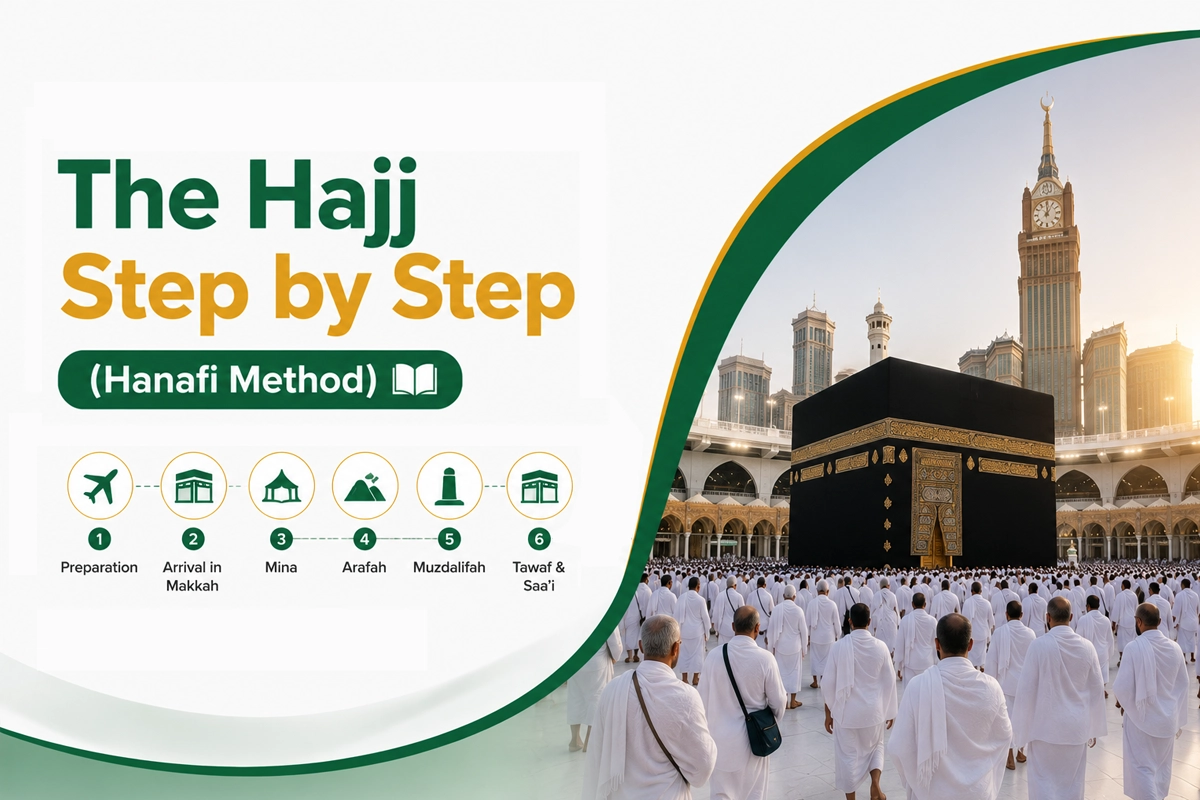
If you are planning the actual pilgrimage, our Hajj step by step guide sets out the days in order.
Where it sits on the route
| Place | Distance from the Haram | What it is |
|---|---|---|
| Mina | About 7 to 8.4 km | The tent valley. Four or five nights of Hajj. |
| Muzdalifah | About 12 km | The night after Arafat, in the open. |
| Arafat | About 20 km | The standing on the ninth. The heart of Hajj. |
| Jabal al-Noor | About 4 km | On the same road out of the city. |
Our Makkah Ziyarat guide puts the three holy sites into one morning with the city stops.
Accuracy note
Mina's area of approximately 16.8 square kilometres within its Sharia boundaries, its position given variously as seven and 8.4 kilometres from the Grand Mosque on different Saudipedia pages, its situation in a valley between mountains with Jamrat al-Aqabah towards Makkah and Wadi Muhassir towards Muzdalifah, the three Jamarat and their order, the prayers on Yawm al-Tarwiyah being prayed individually rather than combined, the details of Masjid al-Khayf at 23,500 square metres and about 25,000 worshippers with four minarets and 1,700 washrooms and its expansion in 1987, the building of the Aqaba mosque by Abu Ja'far al-Mansur in 761, and the dimensions of Wadi Muhassir at two kilometres by twenty metres all come from Saudipedia.
That the Prophet performed the rites of Hajj at Mina during the Farewell Pilgrimage, and that the two Pledges of Aqaba took place there, is established history. Saudipedia records that Surah al-Nasr was revealed during the Farewell Pilgrimage.
The explanations offered for the name Mina are traditional accounts recorded in the sources and we have presented them as such rather than as settled fact.
Tent numbers and capacity figures change between seasons as the site is developed, and access during the Hajj season is controlled by the authorities. Fares are our own published rates, reviewed August 2026. Verified August 2026.
Frequently asked questions
Planning a Saudi trip?
Pre-book a private car, find a stay, or ask us anything on WhatsApp.
Last updated: 12 October 2026·Sources reviewed by the Wadana Go editorial team.