Quba Fort: Built in 1915, Not in the Seerah
Short answer
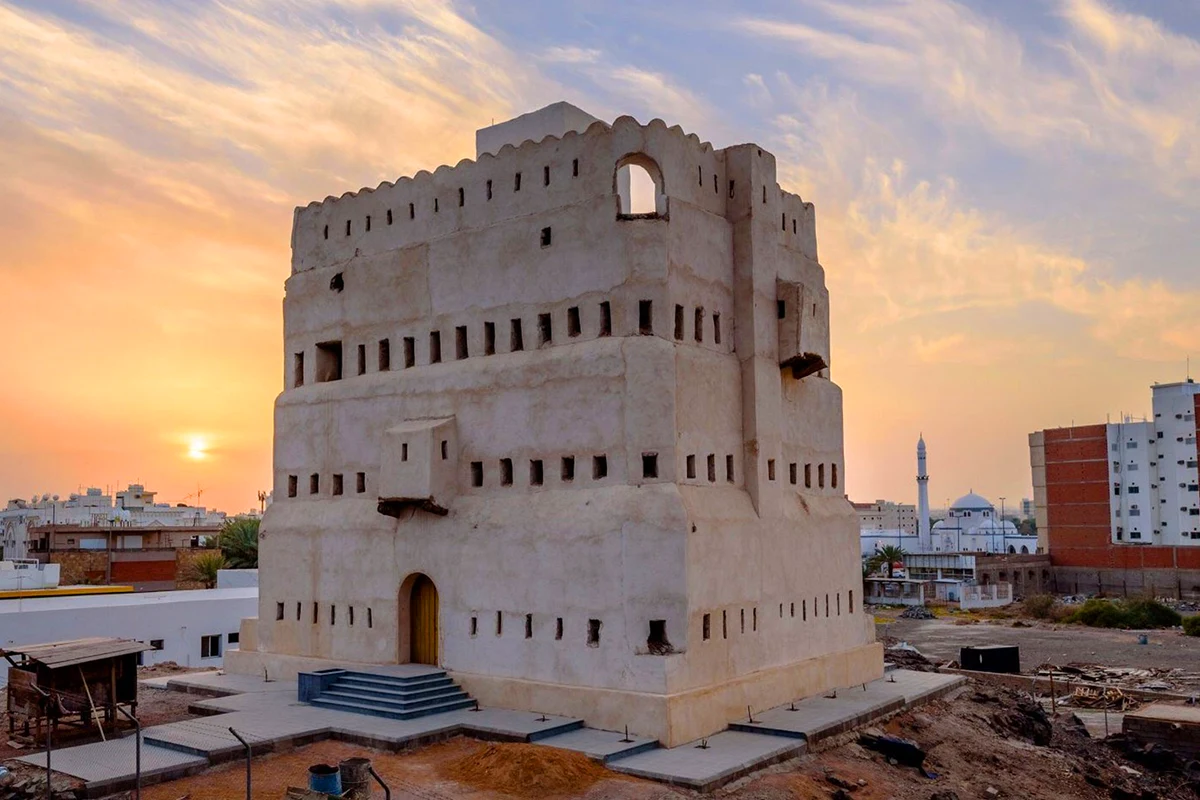
Quba Fort stands on high ground near Masjid Quba in the al-Duweymah district of Madinah. It was built in 1915 by Fakhri Pasha, the Ottoman commander who governed Madinah from 1916 to 1919, to control the Quba approach. It has three floors, covers about 218 square metres, and is restored and open to visitors.
Key takeaways
- ✓The fort was built in 1915 by Fakhri Pasha, the Ottoman commander who governed Madinah from 1916 to 1919.
- ✓It is about a hundred and ten years old, not fourteen centuries. The name misleads visitors constantly.
- ✓It was built on a high plateau to control the Quba approach, the direction an attack on the city could come from.
- ✓Fakhri Pasha held Madinah for more than two years, past the end of the war elsewhere, in one of the longest sieges of the period.
- ✓Some sources associate the ground with a much older fort of the Banu Qaynuqa. That is a separate question; the standing building is Ottoman.
- ✓Three floors, about 218 square metres, built for defence rather than display, restored and open to visitors.
- ✓It is a military historical site, not a religious one, and it pairs well with Quba precisely because of the contrast.
Quick facts
- City
- Madinah, al-Duweymah district near Quba
- Built
- 1915, by Fakhri Pasha
- Purpose
- Controlling the Quba approach during the Arab Revolt
- Size
- Three floors, about 218 m²
- Connection to the seerah
- None. Name and location only
- Status
- Restored and open to visitors
- Part of Umrah or Hajj
- No. A military site, not a religious one
- Time to allow
- 15 to 20 minutes
- Best for
- The view, and teenagers tired of mosques
- Evidence level
- B. Documented modern history, well recorded
Quba Fort stands on high ground near Masjid Quba, in the al-Duweymah district of Madinah. It is a solid three-storey stone building of about 218 square metres, it has been restored, and it is open to visitors.
Now the thing to get straight before you go, because the name misleads a lot of people.
It is not from the Prophet's time
The fort was built in 1915, by Fakhri Pasha, the Ottoman commander who governed Madinah from 1916 to 1919.
Not fourteen centuries old. About a hundred and ten years old, and built by the Ottoman army.
People arrive at a place called "Quba Fortress", next to the first mosque in Islam, and assume the two belong to the same period. They do not. The mosque marks 622. The fort was raised during the First World War.
You will also see the site associated with a much older fort of the Banu Qaynuqa. Treat that as a separate question about the ground, not as a description of the building in front of you. The standing structure is Ottoman.
Why it was built
Fakhri Pasha needed to hold the Quba approach.
Madinah was under siege conditions during the Arab Revolt, and the Quba side was the direction from which an attack on the city could come. The fort was put on a high plateau there to control that approach.
He held Madinah for more than two years, well past the end of the war elsewhere, in one of the longest sieges of the period. This building is a piece of that.
Why that makes it more interesting, not less
Ziyarat itineraries are heavily weighted to one century. Everything is 622 to 632, and then a gap, and then the present day.
Madinah's actual history did not stop. This fort is a physical piece of the last time the city was fought over, built by the last Ottoman commander to hold it, standing within sight of the first mosque in Islam.
Standing between the two is a useful ten minutes. One building marks the beginning of the community. The other marks the end of the last empire that governed it.
The building
- Three floors, with several window openings.
- About 218 square metres. Compact, and built for defence rather than display.
- On a high plateau, which is the whole point of it.
- Restored and open, and visited by large numbers each year.
The evidence, plainly
- Construction in 1915 by Fakhri Pasha: documented in published heritage and historical sources.
- Its purpose in controlling the Quba approach during the revolt: the same sources.
- The dimensions and three floors: published descriptions.
- Any connection to the Prophet ﷺ or the seerah period: none. The name and the location are the only link.
- Older fortifications on or near the ground: a separate historical question we have not resolved here.
Is visiting part of Hajj or Umrah?
No. It is a military historical site, not a religious one, and nobody should present it otherwise.
Visiting
- Fifteen to twenty minutes, and it pairs perfectly with Quba.
- The view is the reason to go up. You are on a plateau, and you can see why a commander wanted it.
- Restored and open, though arrangements and hours change. Check on the day.
- Good for teenagers who have run out of patience with mosques. A real fort with a real siege behind it usually lands.
Nearby
- Masjid Quba — within sight, and 1,300 years older.
- Masjid Banu Anif — the roofless basalt mosque nearby.
- Banu Waqif fortress — the older clan fort on the same side of the city.
- Madinah Ziyarat guide — every site with its evidence stated.
Getting there
Madinah's historic sites are scattered across the city, and reaching them one taxi at a time turns a short list into a whole morning. Our Madinah Ziyarat private car covers the round on one fixed fare for the whole vehicle with the driver waiting at every stop, and the Madinah Ziyarat tour is the guided version. For arrival, the Madinah airport transfer has fixed fares.
Accuracy note
Quba Fort was built in 1915 by Fakhri Pasha, the Ottoman commander who served as governor of Madinah from 1916 to 1919, on high ground near Masjid Quba in the al-Duweymah district, to control the Quba approach to the city during the period of the Arab Revolt. Its three floors, several window openings and area of about 218 square metres, and its restoration and opening to visitors, follow published heritage and historical descriptions. The standing structure has no connection to the Prophet ﷺ or to the seerah period; the name and the location are the only link, and we have said so because the name misleads visitors. Some sources associate the ground with a much older fort of the Banu Qaynuqa; that is a separate historical question about the site rather than a description of the present building, and we have not resolved it here. Visiting arrangements and opening hours change. This is a military historical site, not a religious one, and visiting is not a rite of Hajj or Umrah. Content verified August 2026. Correction? Tell us.
Frequently asked questions
Planning a Saudi trip?
Pre-book a private car, find a stay, or ask us anything on WhatsApp.
Last updated: 9 September 2026·Sources reviewed by the Wadana Go editorial team.