Masjid Quba: The First Mosque in Islam, and the Reward for Praying There
Short answer
Masjid Quba, about 3.5 km southwest of Masjid an-Nabawi, is the first mosque built in Islam, founded in 622 as the Prophet ﷺ arrived on the Hijrah. A sound hadith reports that whoever purifies himself at home then prays there has a reward like an Umrah. Visiting is a virtue, not a rite of Hajj or Umrah.
Key takeaways
- ✓Quba is the first mosque built in Islam, founded in 622 when the Prophet ﷺ stopped there on the Hijrah before entering Madinah.
- ✓A hasan hadith in Ibn Majah, al-Nasa'i and al-Tirmidhi reports the reward of an Umrah for one prayer at Quba.
- ✓The condition is in the wording: purify yourself in your house, then come. Do your wudu where you are staying.
- ✓A reward like an Umrah is not an Umrah. There is no ihram and it replaces no obligation.
- ✓Sahih al-Bukhari records that the Prophet ﷺ came to Quba every Saturday, sometimes walking, sometimes riding.
- ✓The King Salman expansion, announced April 2022, takes the mosque to about 50,000 m² and roughly 66,000 worshippers. It will not look like older photos.
- ✓Visiting is not a rite of Hajj or Umrah, but the evidence for it is stronger than for most Madinah sites.
Quick facts
- City
- Madinah, southwest on the Hijra road
- Distance
- About 3.5 km from Masjid an-Nabawi
- Founded
- 622 CE, on the Prophet's arrival
- Reported reward
- Like an Umrah, if you make wudu at home first
- Part of Umrah or Hajj
- No. A virtue, not a rite
- Can a car reach it
- Yes, with parking. Walkable in cool weather
- After expansion
- About 50,000 m², roughly 66,000 worshippers
- Evidence level
- A. Sound hadith, plus a report in Bukhari on the Prophet's visits
- Best time
- Early, or between prayers, before the coach groups
Masjid Quba is the first mosque built in Islam. The Prophet ﷺ stopped at Quba on the Hijrah, before he entered Madinah itself, and the building went up there.
It is about 3.5 km southwest of Masjid an-Nabawi, on the Hijra road, and it carries something no other mosque outside the Haramayn carries: a reported reward, in a sound hadith, for two rak'ahs prayed in it.
The hadith about praying at Quba
Sahl ibn Hunayf, may Allah be pleased with him, reported that the Messenger of Allah ﷺ said that whoever purifies himself in his house, then comes to the mosque of Quba and prays one prayer in it, has a reward like that of an Umrah.
The report is in Sunan Ibn Majah, and also in al-Nasa'i and al-Tirmidhi. It is graded hasan, sound. This is a genuine, well-attested virtue, not a folk claim.
Notice the condition in the wording. You purify yourself in your house, then come. Do your wudu at your hotel or apartment rather than at the mosque taps, because the wudu at home is part of what is described.
Now the clarification people need and rarely get: a reward like an Umrah is not an Umrah. It does not replace the Umrah you came to perform, it involves no ihram, and it does not remove any obligation. It is a reward, described by comparison. Anyone who tells you they "did an Umrah at Quba" has misunderstood the hadith.
The Prophet's own habit
Sahih al-Bukhari records that the Prophet ﷺ used to come to Quba every Saturday, sometimes walking and sometimes riding.
That is a small, human detail and it is worth keeping. He did not do it once as a ceremony. He made a habit of it, week after week, and covered the distance on foot when he had no mount.
The verse about a mosque founded on taqwa
The Qur'an speaks of a mosque founded on righteousness from the first day, and says it is more deserving that you stand in it.
Most of the classical commentators understood this as referring to Masjid Quba. Some understood it as the Prophet's Mosque. Both views are recorded in the tafsir literature and we are not going to flatten that into a single claim. Either way, the verse describes the character of a mosque built for the right reason from the beginning, and Quba is the standing example.
The mosque today
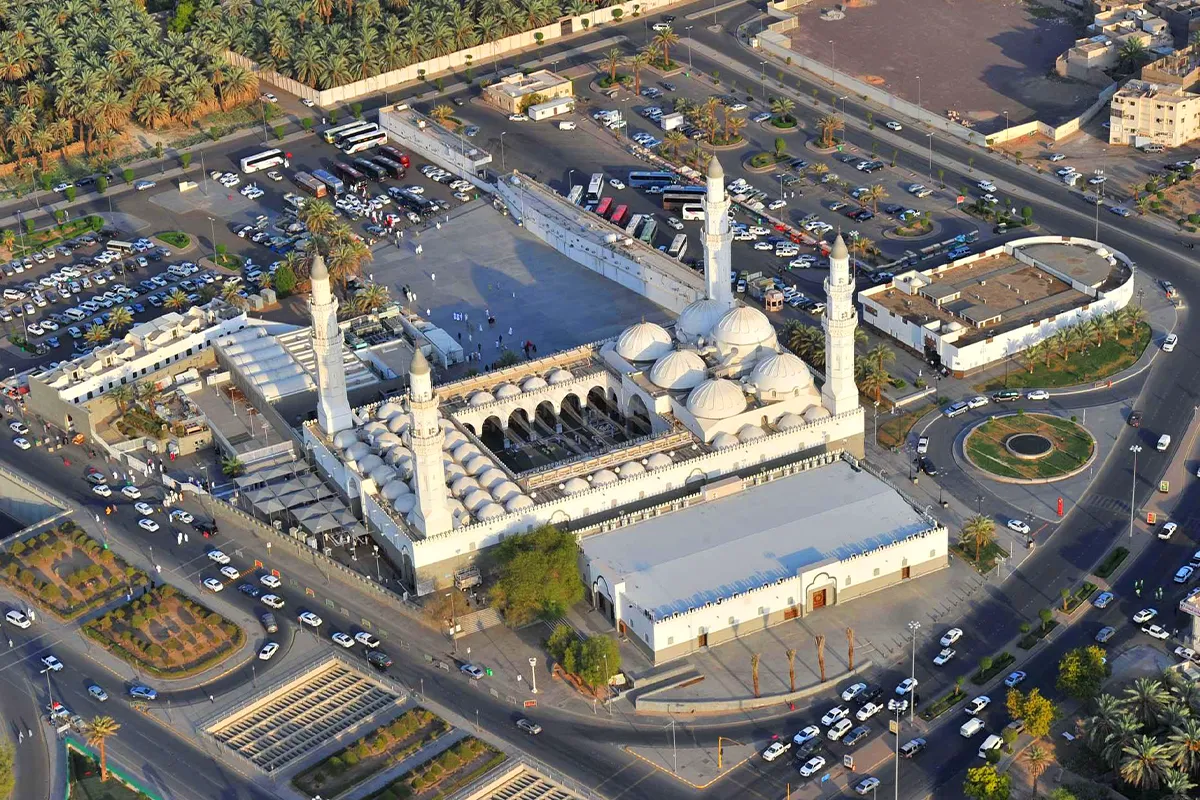
Nothing of the original mud-brick building is visible. What stands now is the product of many rebuildings, and the mosque has just been through the largest expansion in its history.
The King Salman Expansion Project for Quba Mosque was announced in April 2022. Saudipedia gives the target as a total area of 50,000 square metres and a capacity of about 66,000 worshippers.
Practical consequence: if you visited Quba a few years ago, it will not look the same. Building work around the site has been ongoing, and access arrangements, parking and entrances change while it continues. Check on the day rather than trusting an old photo or an old blog.
Saudipedia also records Quba as the first mosque in which the Friday prayer was established openly.
Visiting Quba
- Do your wudu where you are staying. This is the one piece of advice specific to Quba and it comes from the hadith itself.
- Two rak'ahs is enough. The report speaks of one prayer. You do not need to stay for hours.
- Go early or between prayers. Quba is on every Ziyarat itinerary in the city, and coach groups arrive in waves.
- It is a working local mosque, not only a visitor site. People live around it and pray there daily. Keep your voice down and do not treat it as a photo stop.
- Women's areas are provided, and the sections have moved with the building work. Follow the signs on the day.
Is it part of Umrah or Hajj?
No. Visiting Quba is not a rite of Umrah or Hajj. It is a virtue with a sound hadith behind it, which is a strong thing, but it is not an obligation and your Umrah is complete without it.
If you only have one afternoon in Madinah for Ziyarat, Quba is a reasonable first choice precisely because the evidence for it is strong.
Other Madinah sites
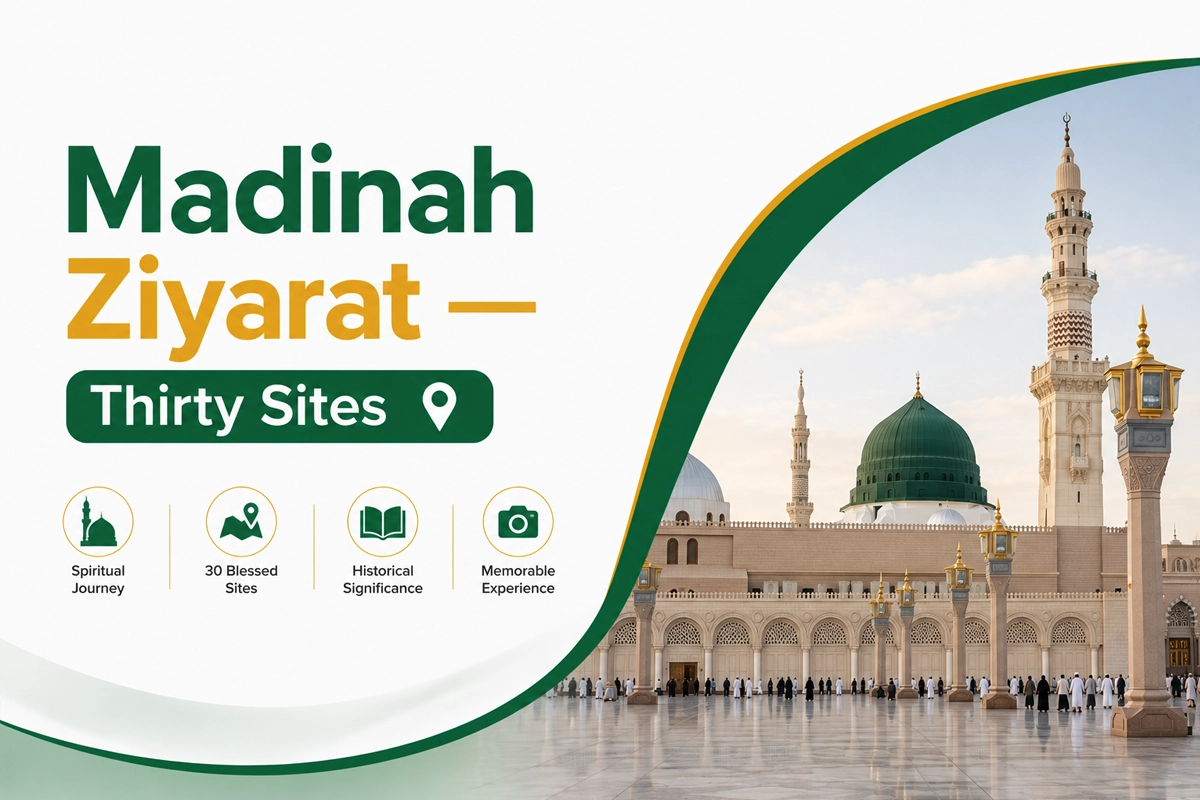
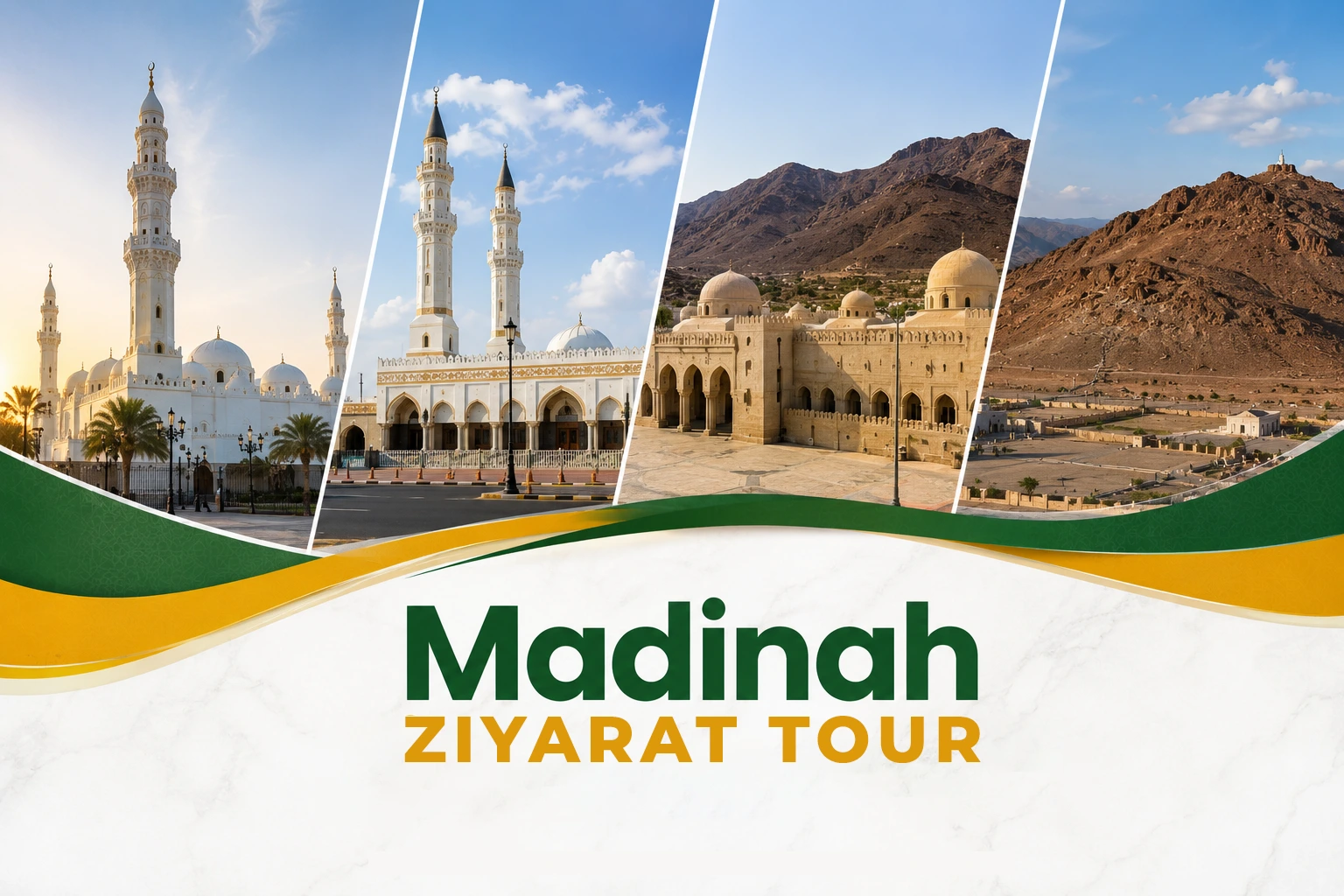
Quba is usually done as part of a round with Masjid al-Qiblatayn and Uhud, which sit on the other side of the city. Our Madinah Ziyarat guide covers thirty sites with the evidence for each, so you can decide what is worth your time rather than being driven through a list.
- Masjid an-Nabawi — the mosque at the centre of everything.
- Masjid al-Qiblatayn — where the qibla changed.
- Mount Uhud — the battle site north of the city.
- Jannat al-Baqi — the cemetery beside the Prophet's Mosque.
Getting to Quba
Quba is about 3.5 km from Masjid an-Nabawi. That is walkable in cool weather for someone fit and unhurried, and it has a certain appeal given the Prophet ﷺ walked it. For most visitors, in most months, in Madinah heat, with family, it is a drive.
Doing Quba, Qiblatayn and Uhud by separate taxis wastes a morning waiting at kerbsides. The Madinah Ziyarat private car covers the round on one fixed fare for the vehicle, with the driver waiting at every stop. If you would rather have the whole thing arranged, the Madinah Ziyarat tour covers the main sites. Arriving in the city, our Madinah airport transfer has fixed fares.
Accuracy note
The report that whoever purifies himself in his house then prays at Quba has a reward like an Umrah is narrated from Sahl ibn Hunayf and recorded in Sunan Ibn Majah, al-Nasa'i and al-Tirmidhi, graded hasan. It describes a reward by comparison and does not replace an actual Umrah. The Prophet's ﷺ habit of visiting Quba on Saturdays, walking and riding, is in Sahih al-Bukhari. The identification of the Qur'anic "mosque founded on righteousness" with Quba is the view of most classical commentators; some identified it with the Prophet's Mosque, and we have given both. The founding in 622, the location southwest of Madinah on the Hijra road, the distance of about 3.5 km, the first open Friday prayer, and the King Salman expansion announced in April 2022 to 50,000 m² and about 66,000 worshippers are from Saudipedia. Access arrangements change while building work continues, so check on the day. Visiting Quba is not a rite of Hajj or Umrah. Content verified August 2026. Out of date? Tell us.
Frequently asked questions
Planning a Saudi trip?
Pre-book a private car, find a stay, or ask us anything on WhatsApp.
Last updated: 9 October 2026·Sources reviewed by the Wadana Go editorial team.