Mount Uhud: The Mountain the Prophet ﷺ Said He Loved
Short answer
Mount Uhud is a ridge on the northern edge of Madinah, about four km from the Prophet's Mosque, roughly 1,077 m high and 7.5 km long. The Battle of Uhud was fought at its foot in the third year after the Hijrah, and around seventy Companions were martyred there. An authentic hadith records the Prophet ﷺ saying Uhud is a mountain that loves us and we love it.
Key takeaways
- ✓An authentic hadith in Bukhari and Muslim records the Prophet ﷺ saying Uhud is a mountain that loves us and we love it.
- ✓The Battle of Uhud was fought at its foot in year three after the Hijrah. Around seventy Companions were martyred, including Hamza ibn Abd al-Muttalib.
- ✓The day turned when most of the archers left the hill they had been ordered to hold. That is what Uhud is remembered for.
- ✓The site has three parts: the mountain, the martyrs' cemetery, and the small archers' hill across the open ground.
- ✓Uhud attracts more folklore than any other Madinah site. Precise identifications of caves and exact spots are traditional at best.
- ✓Touching stones, taking earth or tying things to fences has no basis in the sunnah. You lose nothing by not joining in.
- ✓Visiting is not a rite of Hajj or Umrah, and no special prayer or reward for going is authentically reported.
Quick facts
- City
- Madinah, on the northern edge
- Distance
- About 4 km from Masjid an-Nabawi
- Height and length
- About 1,077 m high, roughly 7.5 km long
- Battle
- Year 3 after the Hijrah; around 70 Companions martyred
- What is there
- The mountain, the martyrs' cemetery, the archers' hill
- Part of Umrah or Hajj
- No. No prescribed prayer or reported reward
- Can a car reach it
- Yes, with a large visitor parking area
- Climbing
- Not needed. The archers' hill is a short easy rise
- Best time
- Early morning. There is no shade
- Evidence level
- A for the hadith and the battle; C for most pointed-out spots
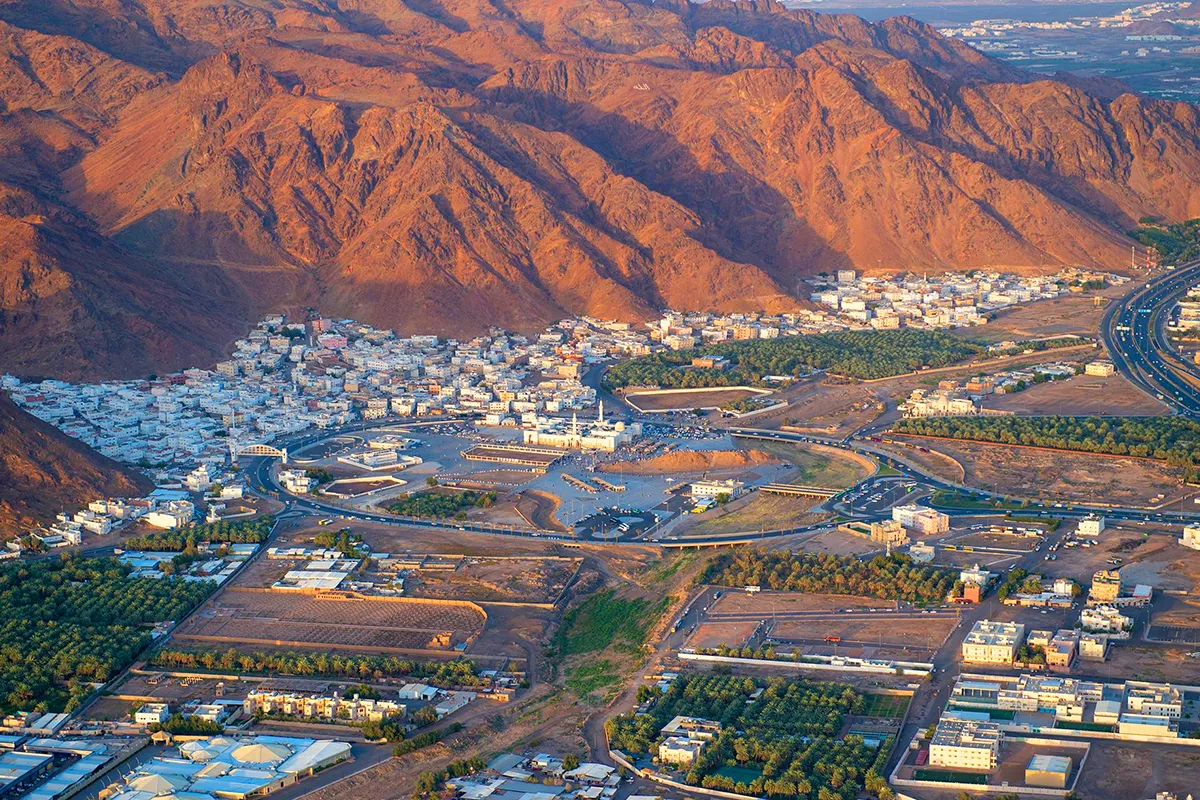
Mount Uhud is a long red-brown ridge on the northern edge of Madinah, about four kilometres from the Prophet's Mosque. It is roughly 1,077 metres at its highest point and around seven and a half kilometres long.
The Prophet ﷺ said of it: "Uhud is a mountain that loves us and we love it." That is recorded in Sahih al-Bukhari and Sahih Muslim. Very few places in the world have a statement like that attached to them.
The battle
In the third year after the Hijrah, a Makkan army came north to Madinah. The fighting took place on the plain at the foot of this mountain.
The short version of what happened. The Muslims had the advantage early. A group of archers had been placed on a small hill to guard the flank and told not to leave it under any circumstances. When it looked as though the battle was won, most of them came down. The Makkan cavalry swept round the exposed flank and the day turned.
Around seventy Companions were killed. Among them was Hamza ibn Abd al-Muttalib, the Prophet's uncle, known as the Chief of the Martyrs. The Prophet ﷺ himself was wounded.
Uhud is not remembered as a victory. It is remembered as the day the Muslims learned what happens when an instruction is treated as optional once things start going well. That lesson is why the site is worth standing on.
What is at the site today
Three things, close together at the foot of the mountain:
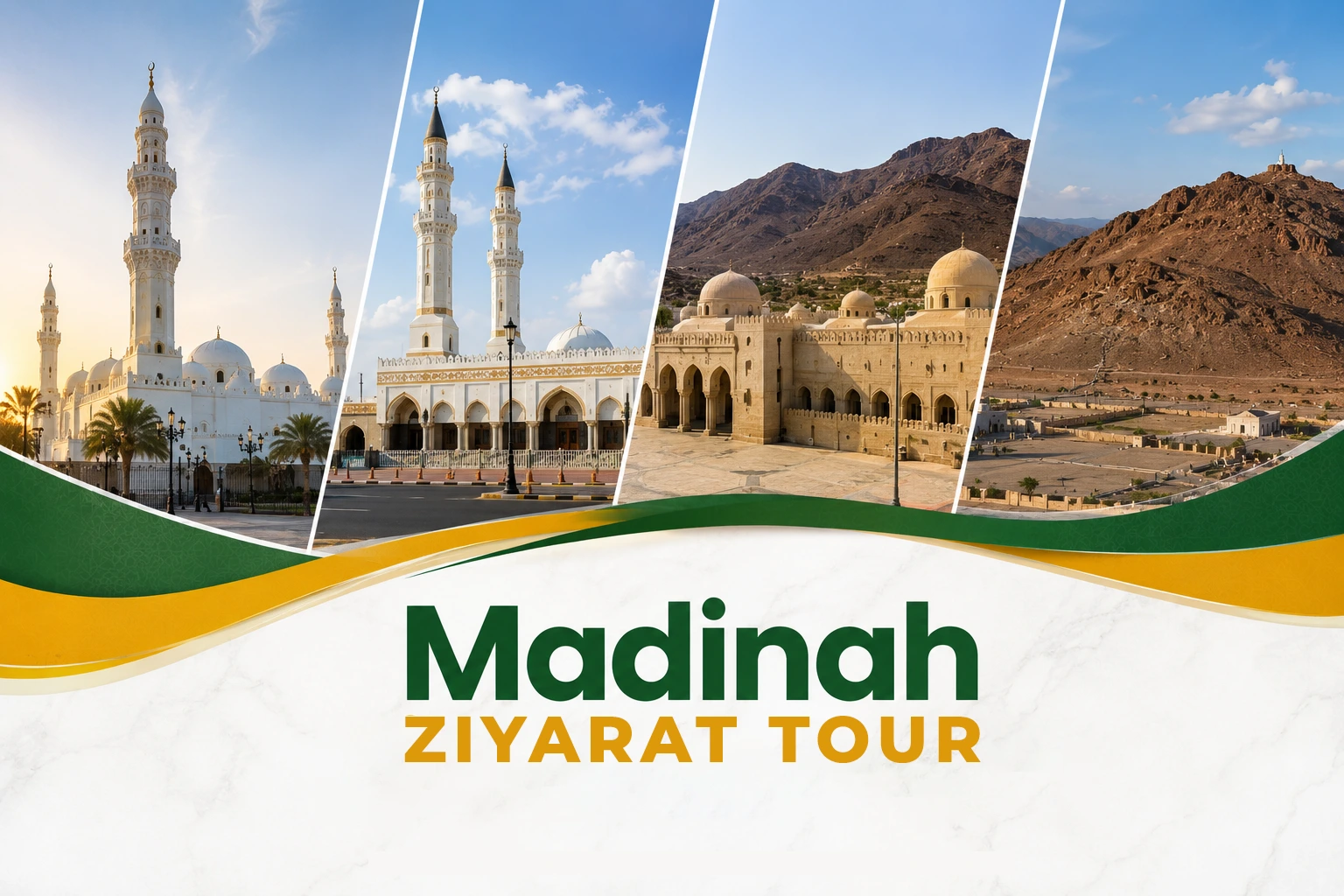
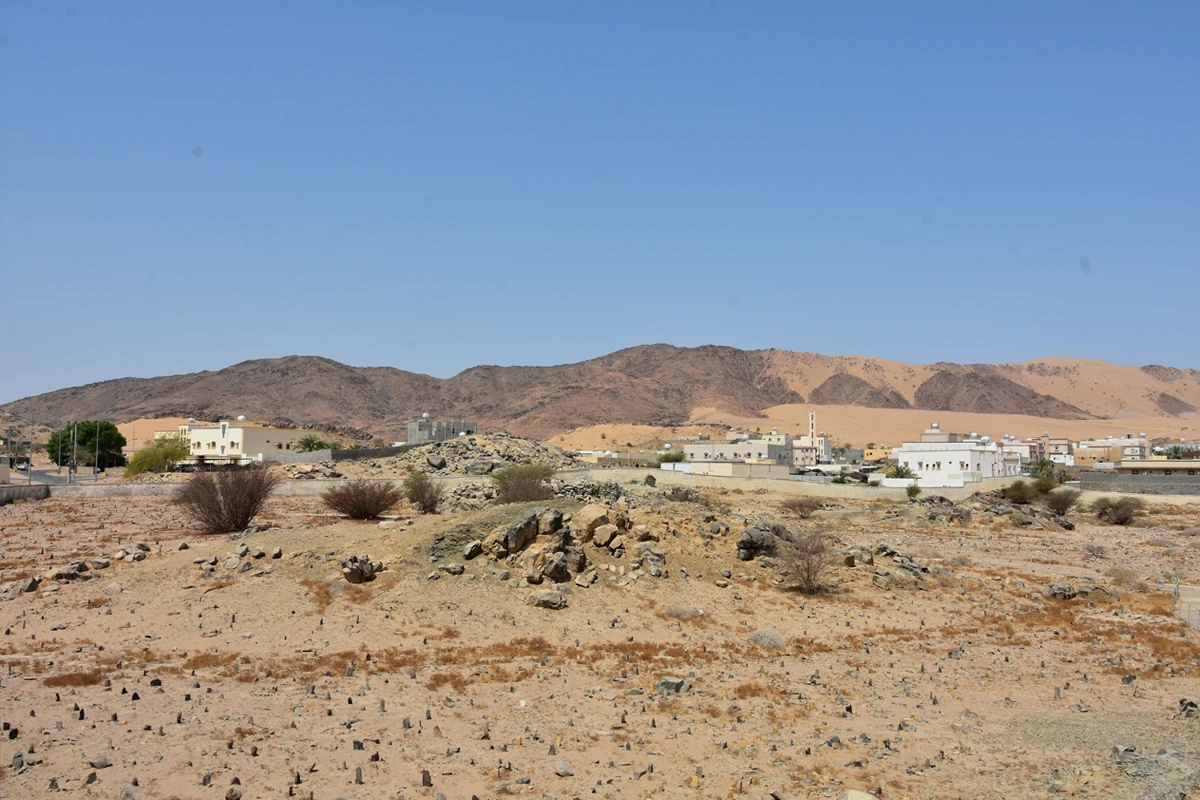
- The mountain itself, bare red-brown rock, unmistakable and much bigger than photographs suggest.
- The martyrs' cemetery, a walled enclosure of plain graves where the Companions killed at Uhud are buried, including Hamza, may Allah be pleased with him.
- The small hill of the archers, Jabal al-Rumah, a modest rise across the open ground, low enough that you can see at a glance how the whole thing unfolded.
There is also a visitor area with shops, sellers and parking, which can feel busy and commercial. Take it as it is.
Be careful what you are told here
Uhud attracts more folklore than almost any other Madinah site. You will hear people point out a particular cave, a particular rock, or the exact spot where a specific event occurred.
Some of these identifications are traditional. Some are recent inventions. Very few of them are established by authentic evidence, and the honest position is that the general location of the battle is well documented while precise spots mostly are not.
You are also likely to see people touching stones, taking earth away, or tying things to fences. None of that has a basis in the sunnah. You are not obliged to join in and you are not missing anything by declining.
What is established is the battle, the martyrs, and the Prophet's ﷺ statement about the mountain. That is plenty.
Is visiting Uhud part of Hajj or Umrah?
No. It is not a rite of either. There is no prescribed prayer at Uhud and no authentic report of a specific reward for visiting.
Visiting graves and remembering the dead is a sunnah with a stated purpose, and Uhud is one of the most affecting places to do it. But nobody's Umrah depends on it.
Visiting well
- Go early. Open ground, red rock, and no shade. By mid-morning in summer it is punishing.
- You do not need to climb. The mountain is not a Ziyarat site to ascend, and the archers' hill is a short easy rise for anyone who wants a view of the ground.
- Give salam at the cemetery, as you would at any Muslim graveyard, and make du'a for those buried there. Do not walk across the graves.
- Expect sellers. Prices at the stalls are not fixed and there is no need to buy anything.
- Take water. More than you think.
- Stand still for a minute and look at the ground between the hill and the mountain. Understanding the geography is the whole point of coming.
On the same trip
- Masjid al-Qiblatayn — between the city and Uhud, a natural stop on the way.
- Masjid Quba — on the other side of the city, best done first.
- Jannat al-Baqi — the cemetery beside the Prophet's Mosque.
- Masjid an-Nabawi — the centre of any Madinah trip.
- Madinah Ziyarat guide — every site with the evidence for it set out plainly.
Getting to Uhud
About four kilometres north of Masjid an-Nabawi. Too far to walk in the heat, easy in a car, and normally the last stop on the Madinah round.
Doing Quba, Qiblatayn and Uhud with separate taxis means three fares, three waits and a lot of standing at kerbsides in the sun. The Madinah Ziyarat private car covers the whole round on one fixed fare for the vehicle, and the driver waits at every stop, which matters most at Uhud because you will want longer there than you expect. For a guided version, see the Madinah Ziyarat tour, and for arrival in the city our Madinah airport transfer has fixed fares.
Accuracy note
The statement that Uhud is a mountain that loves us and we love it is recorded in Sahih al-Bukhari and Sahih Muslim. The Battle of Uhud in the third year after the Hijrah, the martyrdom of around seventy Companions including Hamza ibn Abd al-Muttalib, and the events involving the archers are established in the hadith and seerah literature. The height of about 1,077 m, the length of about 7.5 km and the distance of about four km from the Prophet's Mosque are from Saudipedia. Precise identifications of individual caves, rocks or exact spots at the site are traditional at best and we have not repeated them; the general location of the battle is well documented, particular points mostly are not. Visiting Uhud is not a rite of Hajj or Umrah and no special prayer or reward for visiting is authentically reported. Content verified August 2026. Something wrong here? Tell us.
Frequently asked questions
Planning a Saudi trip?
Pre-book a private car, find a stay, or ask us anything on WhatsApp.
Last updated: 25 September 2026·Sources reviewed by the Wadana Go editorial team.