Al-Hijr, Hegra and Mada'in Salih: One Place, Three Names
Short answer
Al-Hijr is the Qur'anic name, Hegra the ancient Nabataean city, and Mada'in Salih a later Arabic name. Bukhari and Muslim record the Prophet ﷺ passing it on the way to Tabuk, telling the army not to enter except weeping, and ordering them to discard water taken from its wells. The standing carved tombs are Nabataean and far later than Thamud.
Key takeaways
- ✓Al-Hijr is the Qur'anic name, Hegra the ancient city name, and Mada'in Salih a later Arabic name for the same place.
- ✓Surah 15 is named al-Hijr and describes its people rejecting the messengers and being seized by the Shout in the morning.
- ✓On the march to Tabuk the Prophet ﷺ told the army not to enter except weeping, then covered his face and moved on.
- ✓He ordered water taken from its wells poured out and dough kneaded with it thrown away, and sent them to the she-camel's well instead.
- ✓The carved facades you photograph are Nabataean tombs of roughly the first century BC to first century AD, not houses of Thamud.
- ✓Thamud is attested far earlier, in an Assyrian inscription of about 715 BC and in later Greek and Roman writers.
- ✓On whether a Muslim should visit, scholars differ. Ask a scholar you trust, not a tour brochure.
Quick facts
- Location
- AlUla, Madinah Province
- Qur'anic name
- Al-Hijr. Surah 15 is named after it
- The people
- Thamud. The prophet sent to them was Salih
- The hadith
- Bukhari 3379 and 3380, Muslim 2980
- What stands today
- Nabataean tombs, 1st century BC to 1st century AD
- UNESCO figure
- 111 monumental tombs, 94 decorated
- World Heritage
- Inscribed 2008, Saudi Arabia's first
- Access
- Booked guided tour only, through the official channel
- Part of Umrah or Hajj
- No
One place. Three names. And most of the confusion around it comes from people using them as if they mean the same thing.
Al-Hijr is the Qur'anic name. Hegra is the ancient name of the Nabataean city. Mada'in Salih, "the cities of Salih", is a later Arabic name that ties the ruins to the prophet Salih.
The UNESCO listing carries all three, which tells you the naming has never been simple.
What the Qur'an says
The Qur'an names Ashab al-Hijr, the companions of al-Hijr, and says they rejected the messengers, that signs were given to them and they turned away, and that the Shout seized them in the morning (al-Hijr 15:80–84).
Elsewhere it describes them carving houses out of the mountains, and feeling secure because of it. Surah 15 is named after this place.
The people are Thamud, and the prophet sent to them is Salih. We have set out the Qur'anic account verse by verse on a separate page, because it deserves the room.
What the Prophet ﷺ did there
This is the part that matters most, and it is level A: recorded in Sahih al-Bukhari and Sahih Muslim.
On the way to Tabuk, the army passed al-Hijr. Several things are recorded.
He told them not to enter except weeping. The wording in Bukhari 3380 is: do not enter upon those who wronged themselves unless you are weeping, lest what befell them befall you. Muslim 2980 has the same instruction.
He covered his face. The narration adds that he then covered his face with his cloak while on his mount, and moved on.
He stopped them using the water. Bukhari 3379 records that when the army camped at al-Hijr, he ordered them not to drink from its wells or carry water from them. They said they had already kneaded dough with that water and filled their bags. He told them to pour the water out and throw the dough away, and to take water instead from the well the she-camel used to drink from.
Read that again, because it is a strong instruction. Food and water in a desert march are not thrown away lightly.
What you actually see today
Here is the thing most visitors have wrong, and it is worth getting straight before you go.
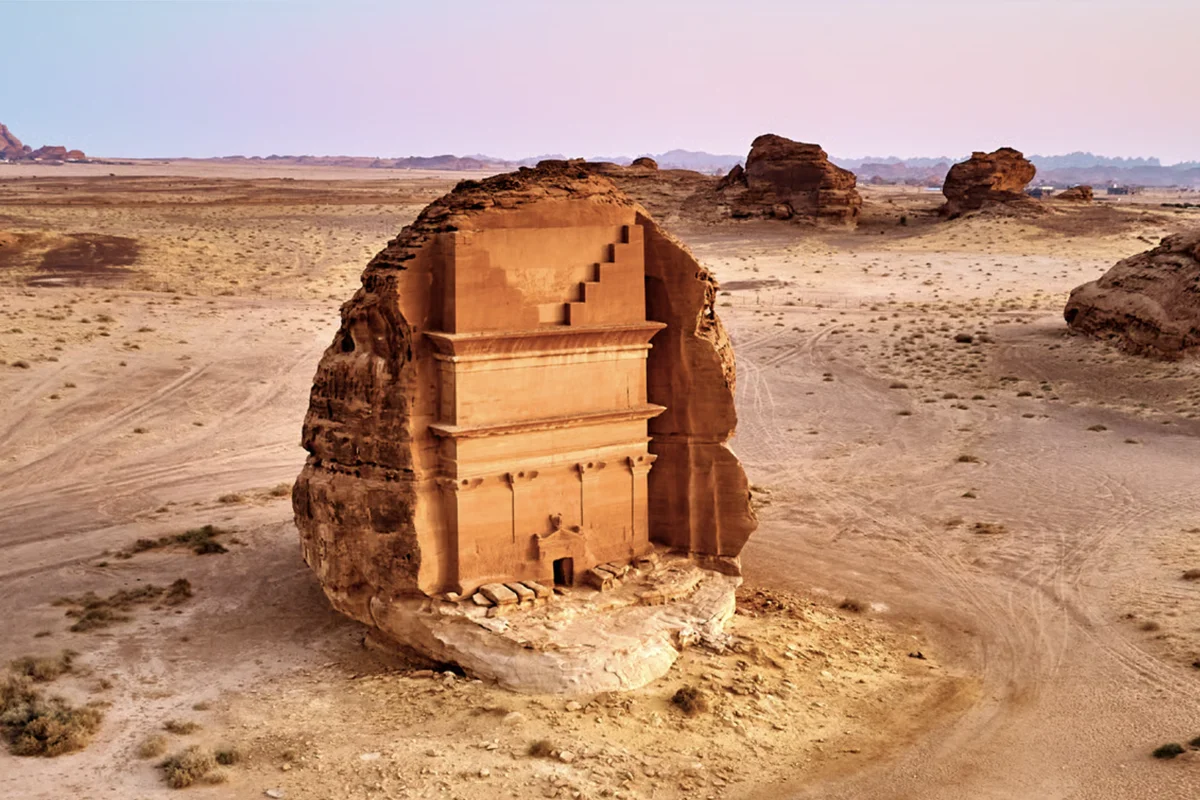
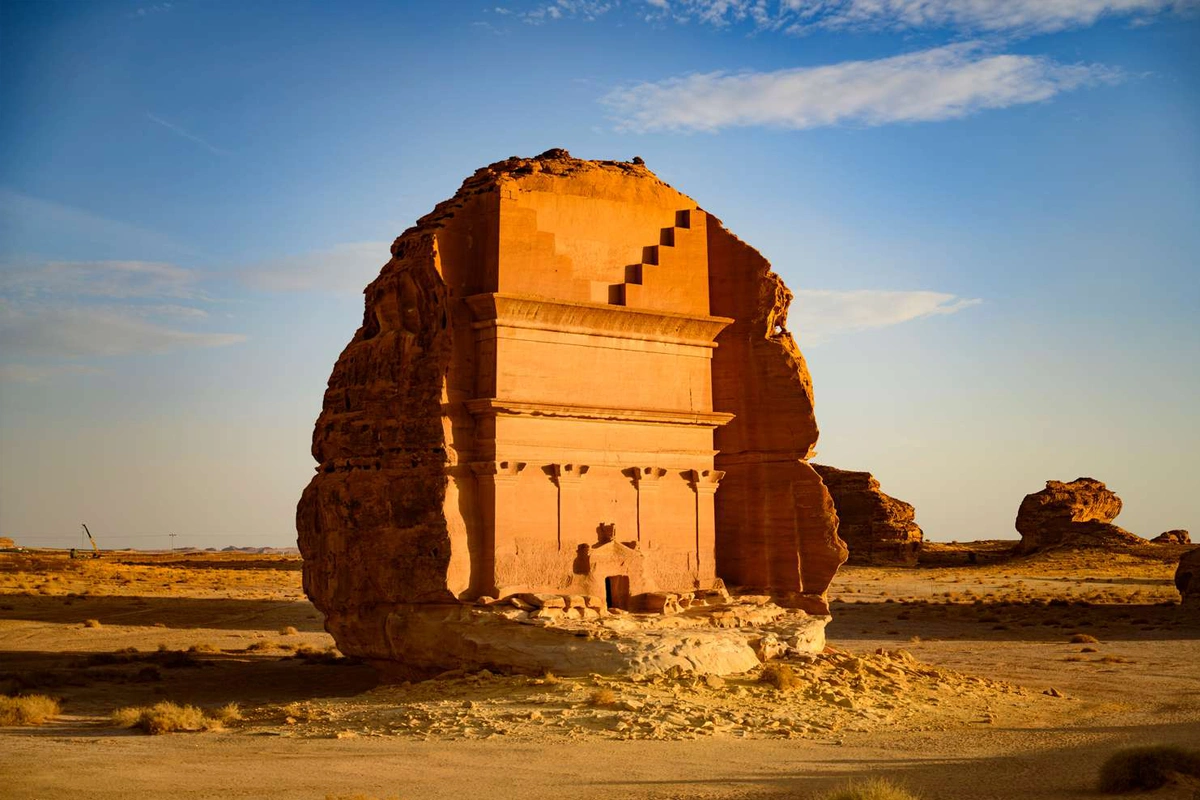
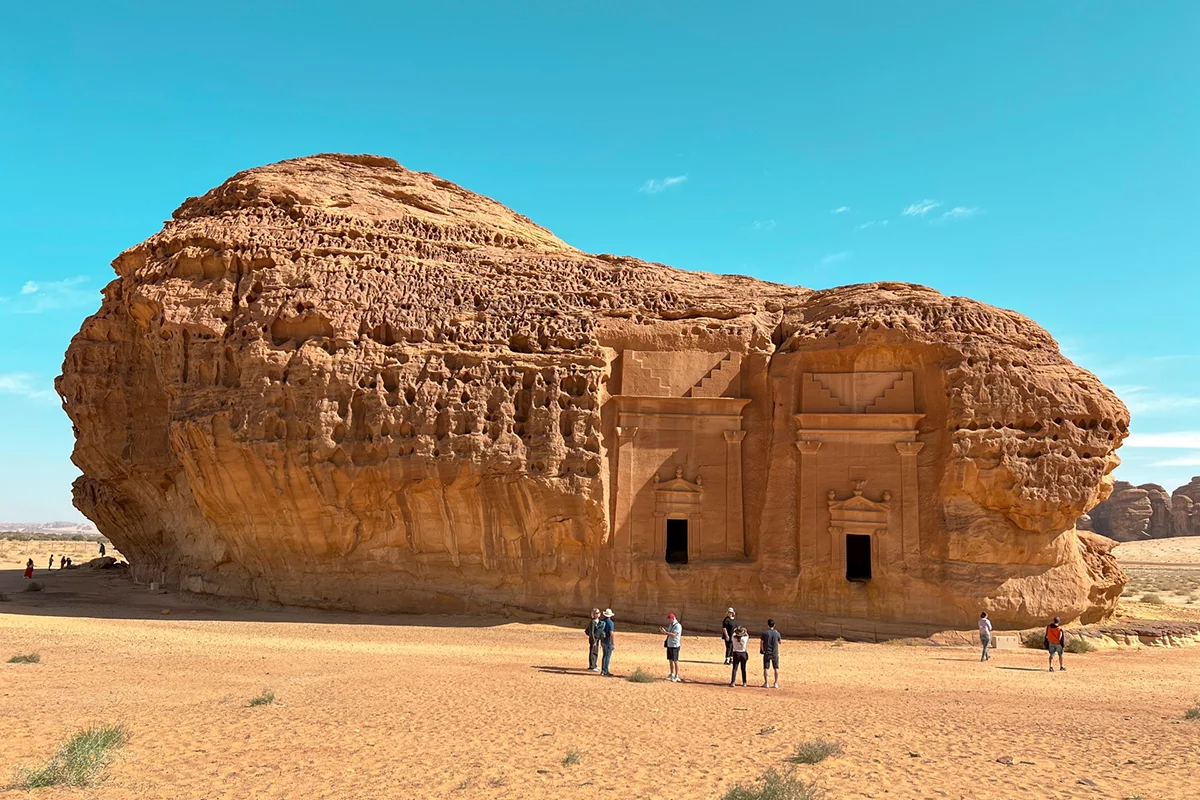
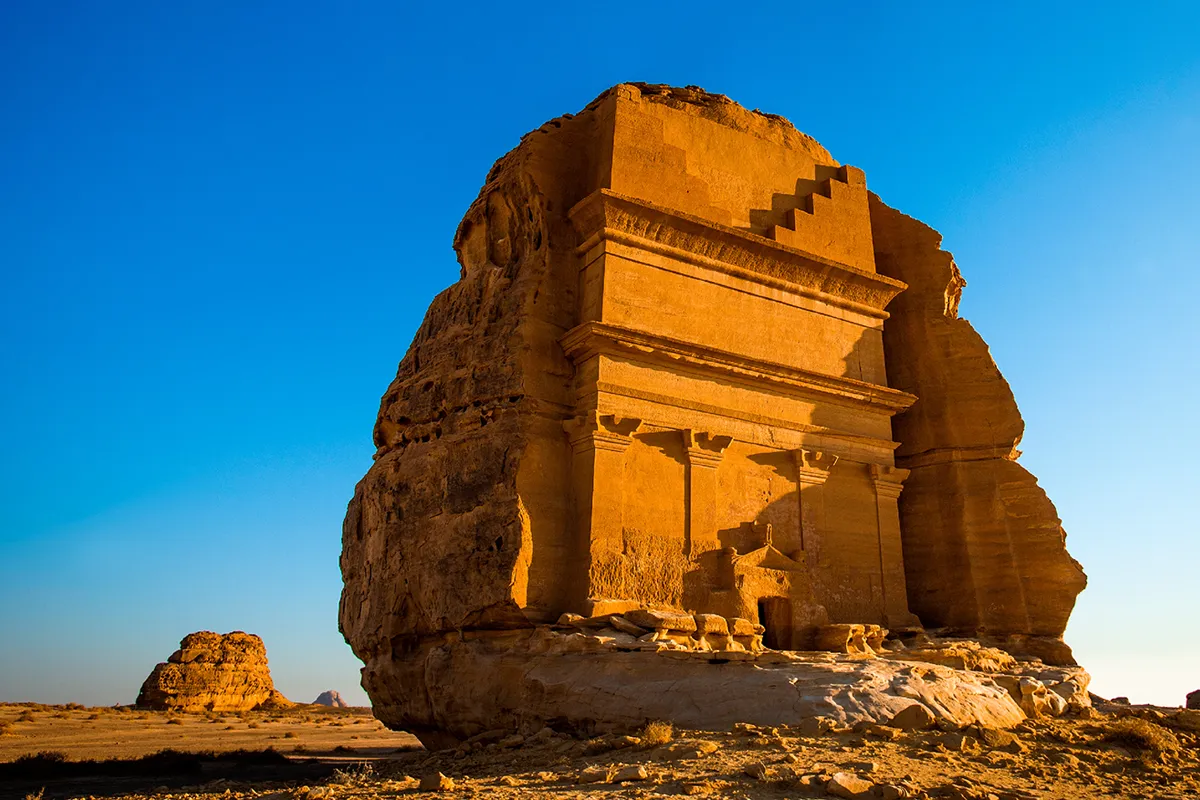
The famous carved facades at Hegra are Nabataean tombs. They date from roughly the first century BC to the first century AD. The Nabataeans are the same people who built Petra, and Hegra was their southern city.
UNESCO records 111 monumental tombs, 94 of them with decorated facades, along with wells cut into the rock and around fifty inscriptions from before the Nabataean period. Published counts differ depending on what is counted as monumental, so treat any single figure as approximate.
Thamud, by contrast, is attested a great deal earlier. The oldest known outside reference is an Assyrian inscription of Sargon II, around 715 BC, listing them among desert Arab peoples. Later Greek and Roman writers, including Ptolemy and Pliny, mention a people of that name in north-western Arabia.
So the tombs you photograph are not the houses of Thamud. They are the tombs of a later people who settled the same valley, centuries afterwards. The name "Mada'in Salih" was applied to the ruins long after both.
None of that touches the Qur'anic account. The Qur'an describes Thamud carving into rock, and this is a region where people carved into rock for a very long time. What it does mean is that pointing at a decorated facade and calling it a house of Thamud is a mistake, and a common one.
The well
The hadith speaks of the well the she-camel drank from, and it was evidently identifiable in the seventh century.
Whether any well on the site today is that well is a different question, and we could not verify any authoritative identification. There are many rock-cut wells at Hegra. If a guide tells you a particular one is the she-camel's well, ask what that rests on.
Should a Muslim visit?
People ask us this, and it deserves a straight answer rather than a sales pitch.
We are a transport company, not a house of fatwa, so we are not going to rule on it. What we can do is set out what the discussion actually is.
The hadith is the starting point for everyone. No one disputes it. The disagreement is about what it requires now.
One view: avoid the site altogether. The instruction is a prohibition on entering, the exception is narrow, and casual tourism is plainly not what the exception describes.
Another view: the instruction turns on how you enter. Entering to take a lesson and reflect is within the exception; entering for entertainment is not. Fatwas along these lines discourage visiting for leisure while allowing a reflective visit, and warn against using "reflection" as a cover for a day out.
A further distinction some draw is between the dwellings of the punished people and the wider AlUla valley. Dadan, Jabal Ikmah, the Old Town and Elephant Rock are different sites of different periods and are not what the hadith addresses.
Take it to a scholar you trust and follow their answer. Do not take it from us, and do not take it from a tour brochure.
The practical side
Access to Hegra is by booked guided tour only, arranged through the official AlUla channel. You cannot drive in and wander. Arrangements and timings change, so confirm on the official channel rather than trusting any schedule you read second-hand, this page included.
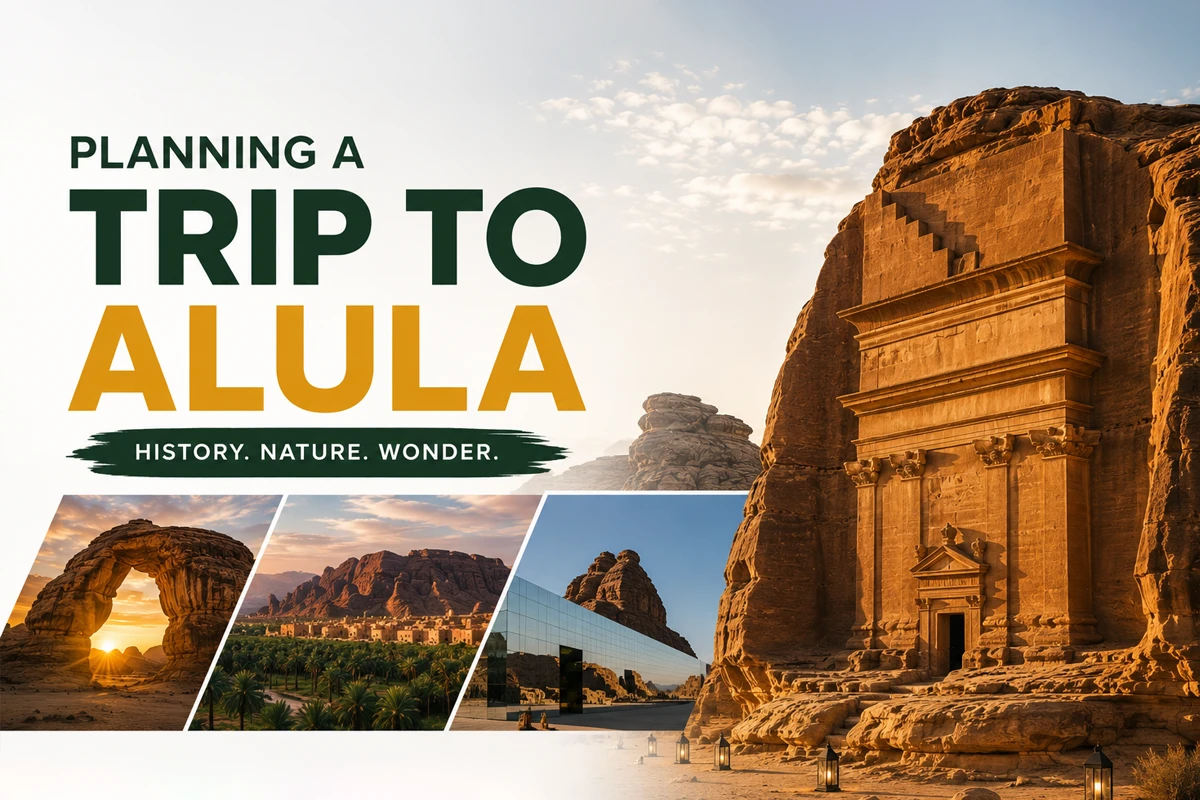
Our AlUla and Hegra guide covers what you see and how the valley fits together, planning a trip to AlUla covers seasons and logistics, and the AlUla destination page is the overview.
Is visiting part of Hajj or Umrah?
No. It is not a rite of either, and nothing prescribed attaches to it.
Related reading
- Thamud and Prophet Salih — the Qur'anic account, verse by verse.
- Wadi al-Qura — the valley this site sits in, and its place in the seerah.
- Hijr Fort and the Syrian Hajj route — the Ottoman layer.
- The expedition of Tabuk — the march this hadith belongs to.
Accuracy note
The Qur'anic references to Ashab al-Hijr and to Thamud carving dwellings in the mountains are level A. The instruction of the Prophet ﷺ at al-Hijr during the march to Tabuk, not to enter upon those who wronged themselves except weeping, his covering his face with his cloak on his mount, his order to pour out water taken from the wells and discard dough kneaded with it, and his direction to take water from the well the she-camel drank from, are recorded in Sahih al-Bukhari 3379 and 3380 and Sahih Muslim 2980, and are level A. The dating of the Nabataean monuments at Hegra to roughly the first century BC to the first century AD, the UNESCO figure of 111 monumental tombs of which 94 are decorated, the rock-cut wells and the roughly fifty pre-Nabataean inscriptions, and the inscription of the site as Saudi Arabia's first World Heritage property in 2008, follow the UNESCO listing; published counts differ depending on what is counted. The attestation of Thamud in an Assyrian inscription of Sargon II around 715 BC and in later Greek and Roman writers including Ptolemy and Pliny follows published scholarship. We have found no authoritative identification of any surviving well at the site with the well named in the hadith, and have said so rather than guessing. On the question of visiting we have set out the range of scholarly positions and have deliberately not issued a ruling; ask a scholar you trust. Access to Hegra is by booked guided tour through the official AlUla channel and arrangements change, so confirm current details there. Visiting is not a rite of Hajj or Umrah. Content verified August 2026. Correction? Tell us.
Frequently asked questions
Planning a Saudi trip?
Pre-book a private car, find a stay, or ask us anything on WhatsApp.
Last updated: 3 September 2026·Sources reviewed by the Wadana Go editorial team.