The Expedition of Tabuk: The Campaign Where Nothing Happened
Short answer
The expedition of Tabuk took place in Rajab of year 9 after the Hijrah, the last campaign the Prophet ﷺ led in person, marching about 700 km north in the hot season during a drought. No battle was fought. Rulers on the frontier came to terms, and Surah al-Tawbah deals at length with who went and who did not.
Key takeaways
- ✓Rajab, year 9 after the Hijrah, around October 630. The last campaign the Prophet ﷺ led in person.
- ✓Everything about it was hard: hot season, drought, ripe harvest, extreme distance, and the Byzantine empire as the reported threat.
- ✓The destination was announced in advance, unlike earlier campaigns, because people needed to know what they were walking into.
- ✓It is called Jaysh al-'Usrah, the army of hardship, and the Qur'an calls the moment the hour of difficulty (9:117).
- ✓Abu Bakr brought all his wealth and said he had left his family Allah and His Messenger. Umar brought half.
- ✓Three Companions stayed behind with no excuse and refused to lie about it. They were boycotted fifty days, then forgiven in 9:118.
- ✓No battle was fought. The frontier settled by treaty, and the community sorted itself in a way no victory could have done.
Quick facts
- When
- Rajab, year 9 AH. Around October 630
- Where
- Tabuk, about 700 km north of Madinah
- Name
- Jaysh al-'Usrah, the army of hardship
- Reported size
- Up to 30,000. Early figures are estimates
- Battle fought
- None
- Time at Tabuk
- About twenty days
- The three
- Ka'b ibn Malik, Murarah ibn al-Rabi', Hilal ibn Umayyah
- Their boycott
- Fifty days, then al-Tawbah 9:118
- Evidence level
- A for the Qur'an and Bukhari/Muslim; B for the campaign detail
Tabuk is the campaign where nothing happened, and it is one of the most important things in the seerah.
No battle was fought. No enemy army appeared. And more Qur'an was revealed about it than about most of the fighting.
When and why
It took place in Rajab of the ninth year after the Hijrah, around October 630. It was the last campaign the Prophet ﷺ led in person.
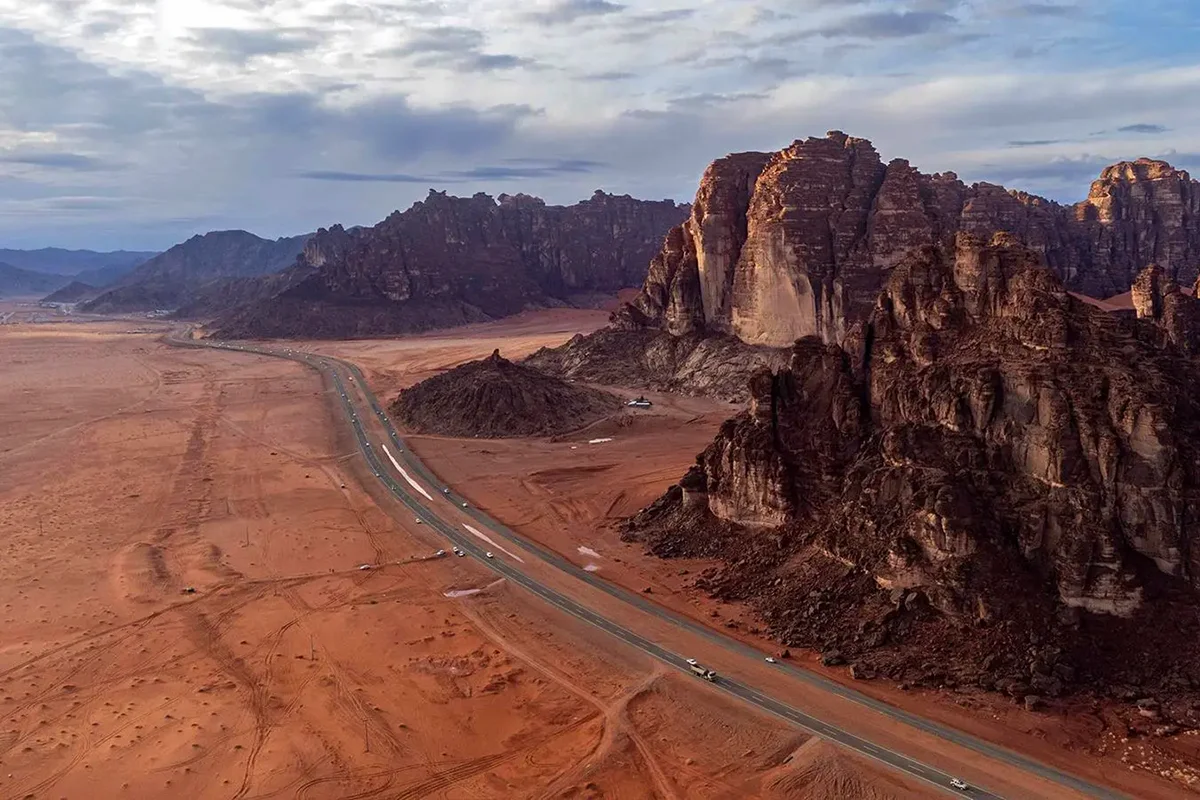
Reports had reached Madinah of a Byzantine build-up on the northern frontier. Tabuk lies about 700 kilometres north of Madinah, near the top of the Hijaz, and the march went there to meet it.
Why it is called the army of hardship
Every factor that could be wrong was wrong.
- It was the hot season. Not the campaigning season.
- There was a drought. The Hijaz was short of water that year.
- The harvest was ready. Leaving meant abandoning the year's dates on the trees.
- The distance was extreme by the standards of any previous expedition.
- The enemy was the Byzantine empire, not a tribe.
Unlike previous campaigns, the destination was announced in advance rather than concealed, precisely because people needed to prepare for what they were walking into.
The accounts of the march are grim. Men shared a single date between several, passing it round for a bite each. Ibn Hisham records men eating leaves until their lips split. The army is called Jaysh al-'Usrah, the army of hardship, and the Qur'an itself uses the phrase sa'at al-'usrah, the hour of difficulty (al-Tawbah 9:117).
Numbers as high as 30,000 are given in the sources. Figures for early armies are estimates and are worth holding loosely, but every account agrees this was by far the largest force assembled to that point.
The giving
Equipping it took everything.
Uthman ibn Affan's contribution is the one always remembered, and the narrations record it as enormous: hundreds of camels with their saddles and gear, and a large sum of gold.
Abu Bakr brought all his wealth. Asked what he had left for his family, the narration records his answer: Allah and His Messenger. Umar brought half of his, and had intended to beat him for once.
Others came asking to be carried and had to be turned away because there were no mounts, and the Qur'an mentions them turning back with their eyes overflowing with tears at having nothing to spend (al-Tawbah 9:92).
The three who stayed behind
This is the part of Tabuk that people remember for life, and it is level A: recorded at length in Sahih al-Bukhari and Sahih Muslim, narrated by Ka'b ibn Malik himself.
Three Companions of the Ansar stayed behind with no excuse: Ka'b ibn Malik, Murarah ibn al-Rabi' and Hilal ibn Umayyah.
Ka'b's account of why is painfully honest. He kept meaning to get ready. He had two riding camels, better prepared than he had ever been. He went out each day, did nothing, came back. The army left without him.
When the army returned, many came with excuses and the Prophet ﷺ accepted what they said and left their inner state to Allah. Ka'b decided he would not lie.
The three were boycotted. No one spoke to them. After forty days their wives were told to withdraw as well. Ka'b describes the town he had grown up in becoming strange to him, and the earth, as he puts it, closing in.
After fifty days, the forgiveness came down, and the Qur'an describes it in words that use Ka'b's own image:
"And to the three who were left behind, until the earth, vast as it was, closed in on them, and their own souls closed in on them, and they were certain there is no refuge from Allah except in Him. Then He turned to them so that they might repent." (al-Tawbah 9:118)
Ka'b said that no blessing had come to him greater than telling the truth that day.
The other group
Surah al-Tawbah deals at length with those who found reasons not to go, and with the mosque built in Madinah as a base for division, which the Prophet ﷺ ordered demolished on his return.
Tabuk is where the difference between the two responses became impossible to hide. That, more than any frontier, is what the campaign settled.
What happened at Tabuk
The army arrived. No Byzantine force came.
They stayed around twenty days. During that time:
- Yuhannah ibn Ru'bah, the ruler of Ayla at the head of the Gulf of Aqaba, came in person and made terms, paying the jizyah. Terms were made with Adhruh, Jarba and others.
- Khalid ibn al-Walid was sent with a body of horsemen to Dumat al-Jandal, where he captured its ruler Ukaydir ibn Abd al-Malik, and the place came to terms.
- Sahih Muslim records the incident at the spring of Tabuk.
Then they went home. The march back passed al-Hijr, and Wadi al-Qura.
Why a campaign with no battle mattered
Two reasons, and neither is military.
It settled the northern frontier without fighting. Rulers along the edge came to terms voluntarily, which is a result no battle guarantees.
It sorted the community. A hard march in the heat, announced in advance, with no loot in prospect, is the most efficient test anyone ever devised. Nobody could go along for the ride.
Getting there, honestly
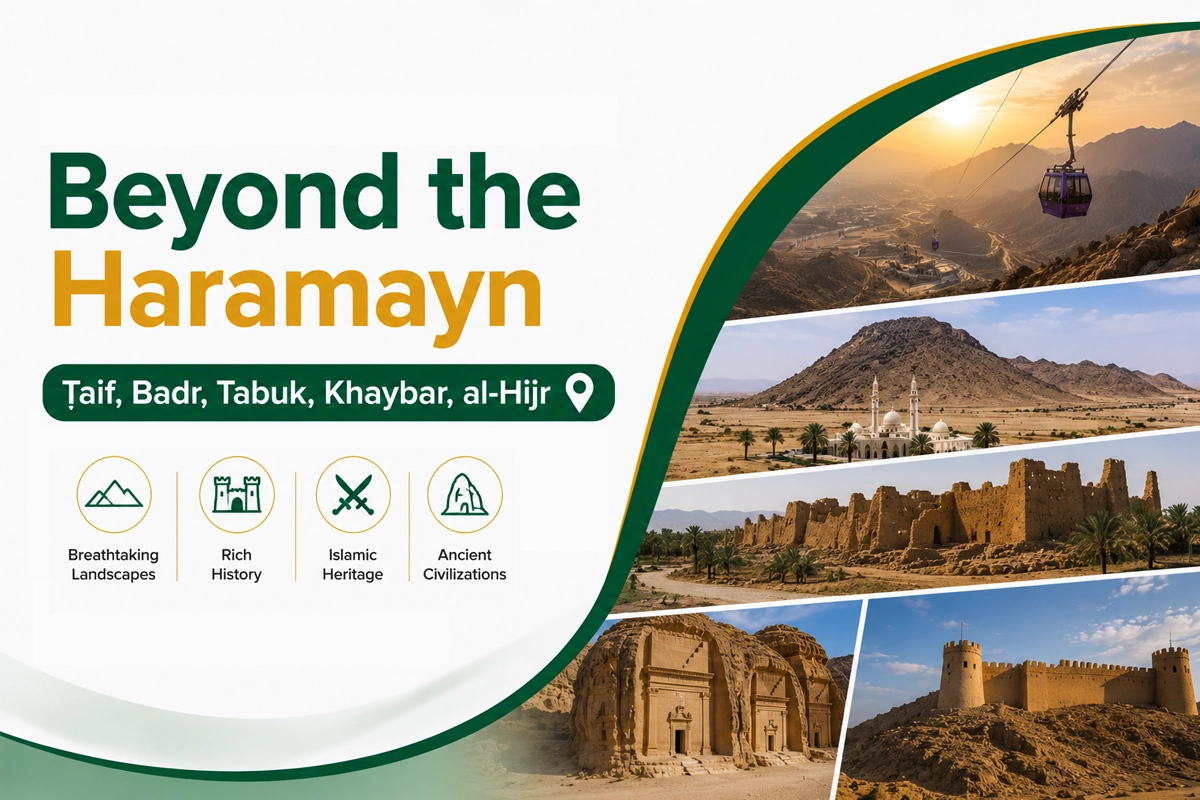
We do not run a scheduled service this far north and there is no published Wadana Go fare for it. Flying to the regional airport and hiring a car, or arranging a private car in advance, are the practical options. See driving yourself versus a private driver and renting a car in Saudi Arabia. Our Beyond the Haramayn guide puts this region alongside Badr, Khaybar, AlUla and Taif.
Is visiting Tabuk part of Hajj or Umrah?
No. Not a rite of either.
Related reading
- Masjid al-Tawbah in Tabuk — where he prayed on the campaign.
- Ayn al-Sukkar — the spring, and the hadith about it.
- Tabuk Castle — the later Ottoman layer.
- Al-Hijr — what the army was told when it passed there.
Accuracy note
The expedition took place in Rajab of the ninth year after the Hijrah, around October 630, and was the last campaign the Prophet ﷺ led in person; it followed reports of a Byzantine build-up on the northern frontier. The conditions, the hot season, the drought, the ripe harvest and the extreme distance, the announcement of the destination in advance, and the name Jaysh al-'Usrah, follow the seerah literature and are level B; the Qur'anic phrase sa'at al-'usrah is at al-Tawbah 9:117 and is level A. Figures of up to 30,000 are given in the sources and should be treated as estimates, as all early army figures should. The contributions of Uthman ibn Affan, Abu Bakr's giving of all his wealth with the answer that he left Allah and His Messenger for his family, and Umar's half, are recorded in the hadith and seerah literature; we have described Uthman's contribution in general terms because the reported figures vary between narrations. The account of Ka'b ibn Malik, Murarah ibn al-Rabi' and Hilal ibn Umayyah, the fifty-day boycott, the withdrawal of their wives after forty days, and Ka'b's statement that no blessing was greater than telling the truth, are recorded at length in Sahih al-Bukhari and Sahih Muslim and are level A; the verse quoted is al-Tawbah 9:118. The treaty with Yuhannah ibn Ru'bah of Ayla and terms with Adhruh and Jarba, the sending of Khalid ibn al-Walid to Dumat al-Jandal and the capture of Ukaydir ibn Abd al-Malik, and the stay of about twenty days, follow the seerah and historical accounts and are level B. The incident at the spring of Tabuk is in Sahih Muslim. The demolition of the mosque built as a base for division is recorded in the seerah and addressed in Surah al-Tawbah. Visiting is not a rite of Hajj or Umrah. We do not run a scheduled service to Tabuk and have not quoted a fare. Content verified August 2026. Correction? Tell us.
Frequently asked questions
Planning a Saudi trip?
Pre-book a private car, find a stay, or ask us anything on WhatsApp.
Last updated: 1 September 2026·Sources reviewed by the Wadana Go editorial team.