Ayn al-Sukkar and the Spring of Tabuk: What Mu'adh Was Told
Short answer
Sahih Muslim records that at the spring of Tabuk the Prophet ﷺ ordered that nobody touch the water before he arrived, rebuked two men who did, then washed in the little water gathered and returned it, after which the army drank its fill. Ayn al-Sukkar in Tabuk is traditionally associated with that spring.
Key takeaways
- ✓The narration is in Sahih Muslim, in the long hadith of Mu'adh ibn Jabal about the expedition. Level A.
- ✓The army was told that whoever reached the spring first must not touch the water until the Prophet ﷺ arrived.
- ✓Two men reached it and touched it. The water was a thin trickle, Mu'adh says no thicker than a shoelace.
- ✓He rebuked them, then washed his hands and face in the little water gathered and returned it to the spring. It gushed and the army drank its fill.
- ✓He told Mu'adh that if he lived long enough he would see the place with its water irrigating gardens.
- ✓The lesson people skip is the rebuke: two exhausted men drank first, and were still told off, because the instruction had been clear.
- ✓Ayn al-Sukkar beside Tabuk Castle is traditionally identified with that spring. That association is reported, not established.
Quick facts
- Where
- Beside Tabuk Castle, Tabuk city
- The narration
- Sahih Muslim, the hadith of Mu'adh ibn Jabal
- Evidence for the hadith
- Level A
- Evidence for the identification
- Traditional. Not independently verified
- Saudi sources say
- Oldest spring in Tabuk, once its only irrigation
- Area
- About 2,500 square metres, with pools and channels
- Today
- A landscaped heritage feature, not a gushing spring
- Blessed water
- No. Nothing prescribed attaches to it
- Part of Umrah or Hajj
- No
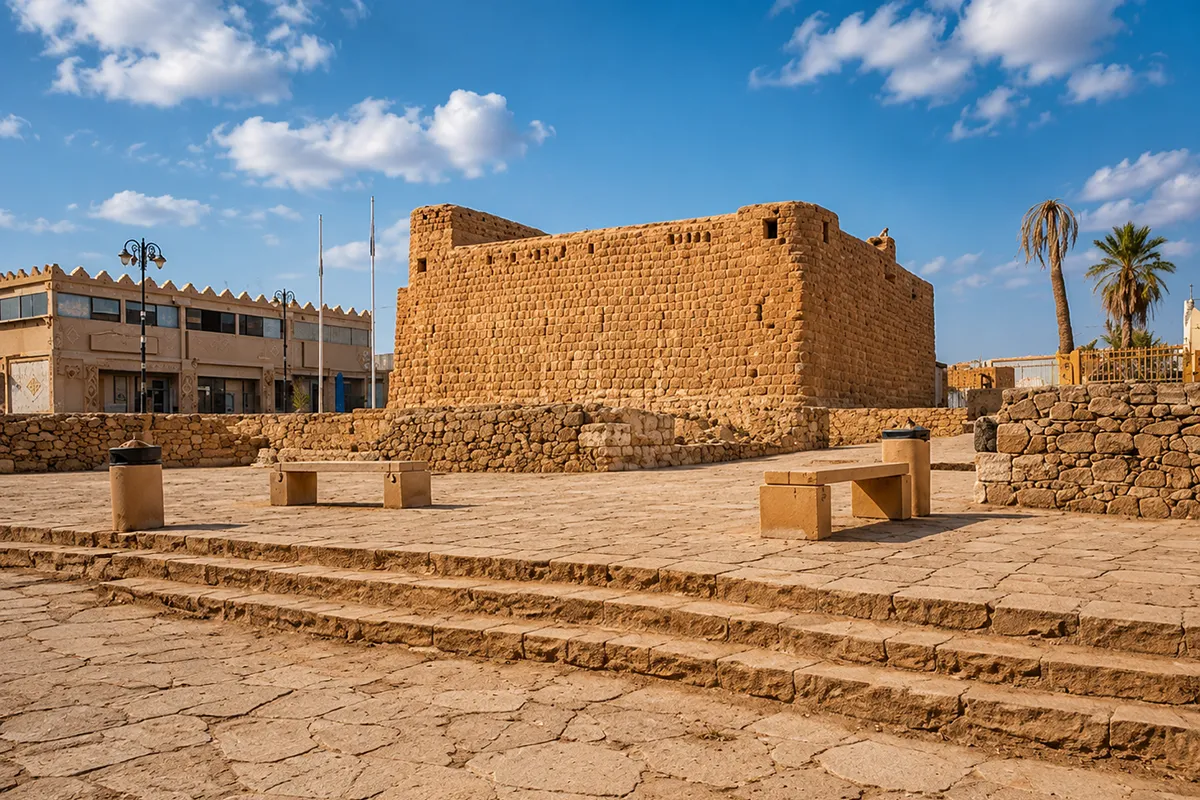
There is a spring in Tabuk, beside the old castle, called Ayn al-Sukkar. Saudi sources call it the oldest spring in the city and say it was once the only source of water for growing anything there.
And there is a hadith about a spring at Tabuk that is worth the trip on its own.
The narration
It is in Sahih Muslim, in the long account of Mu'adh ibn Jabal, who was on the expedition. Level A.
The Prophet ﷺ told the army that they would reach the spring of Tabuk the next day, and that whoever got there first should not touch its water until he arrived.
Two men reached it ahead of the rest. The water, Mu'adh says, was coming out in a thin trickle, no thicker than a shoelace.
They had touched it.
The Prophet ﷺ asked them, they admitted it, and he rebuked them.
Then the people scooped what water there was from the spring with their hands until a little had gathered. He washed his hands and his face in it, and returned it to the spring.
Water gushed out, and the whole army drank its fill.
And then the line
He turned to Mu'adh and said that if he lived long enough, he would see this place with its water irrigating gardens.
Think about what that is. Standing at a trickle in a drought year, in the hardest march the community ever made, in country where there was nothing, and describing the place as farmland.
Mu'adh was a young man at the time. The remark was made to someone who might realistically live to check.
What the narration is actually teaching
Two things, and the second is easy to miss.
The obvious one is the sign: the water increasing.
The one people skip is the rebuke. Two men, desperately thirsty at the end of a march through heat, reached water first and drank. That is the most human thing in the world. They were told off for it anyway, because they had been given a clear instruction and they broke it.
Tabuk is full of this. The whole campaign is a sorting of who does what they are told when it is hard and there is nothing in it for them.
Is Ayn al-Sukkar that spring?
Straight answer: we cannot confirm it, and we are not going to pretend.
Saudi heritage sources describe Ayn al-Sukkar as the oldest spring in Tabuk, report that it supplied the Prophet ﷺ and the army during the expedition, and place it beside the castle in an area of about 2,500 square metres, with pools and channels around it.
That is a reported association resting on local tradition. It is reasonable. Tabuk was not a large place, the water sources were few, and an army camped where the water was.
But a reported association is level B or C, depending on how much weight you put on the chain, and the hadith itself does not name a spring you can point to today.
So: the narration is certain, the place is likely, the identification is traditional. That is the honest sentence.
What is there now
The spring area sits next to Tabuk Castle. It has been landscaped as a heritage area, with a semi-circular pool and a fence around the pond and spring.
Do not expect a gushing spring. Expect a maintained heritage feature in a city centre, which is what it is.
The gardens, though. Look around Tabuk province at what grows there now, and then read that hadith again.
The evidence, plainly
- The narration of the spring of Tabuk: level A, Sahih Muslim, in the long hadith of Mu'adh ibn Jabal about the expedition.
- Ayn al-Sukkar as the oldest spring in Tabuk and formerly its only irrigation source: stated by Saudi heritage sources.
- Its identification with the spring in the hadith: a reported traditional association. We could not verify it independently.
- Any prescribed prayer, virtue or benefit in its water: none. Do not treat it as blessed water.
Is visiting part of Hajj or Umrah?
No. Not a rite of either.
Getting there, honestly
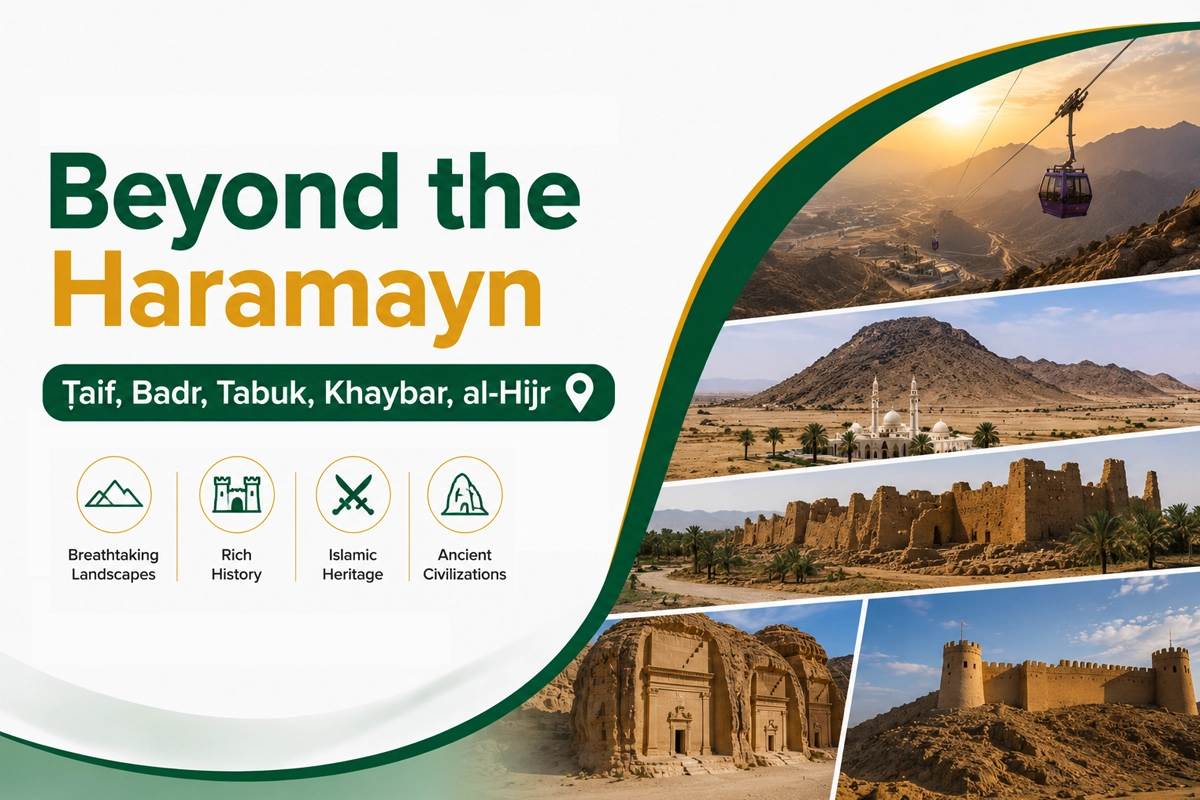
We do not run a scheduled service this far north and there is no published Wadana Go fare for it. Flying to the regional airport and hiring a car, or arranging a private car in advance, are the practical options. See driving yourself versus a private driver and renting a car in Saudi Arabia. Our Beyond the Haramayn guide puts this region alongside Badr, Khaybar, AlUla and Taif.
Related reading
- The expedition of Tabuk — the campaign this belongs to.
- Masjid al-Tawbah — the mosque in the city.
- Tabuk Castle — right next door.
- Beyond the Haramayn — the wider ziyarat picture.
Accuracy note
The narration of the spring of Tabuk is recorded in Sahih Muslim within the long hadith of Mu'adh ibn Jabal about the expedition, and is level A: the instruction that whoever reached the spring first should not touch its water until the Prophet ﷺ arrived; the two men who reached it and touched it; the water described as a thin trickle like a shoelace; the rebuke; the gathering of water by hand; his washing his hands and face in it and returning it to the spring; the water gushing so the army drank its fill; and his remark to Mu'adh that if he lived long he would see the place with its water irrigating gardens. We have paraphrased the narration rather than reproducing a translation in full. That Ayn al-Sukkar is the oldest spring in Tabuk, that it was formerly the only source for irrigating crops there, that it lies beside the Tabuk archaeological castle over an area of about 2,500 square metres with pools and channels, and that it is reported to have supplied the Prophet ﷺ and his companions during the expedition, follows Saudi heritage sources including Saudipedia. That reported association rests on local tradition; the hadith does not name a spring identifiable on the ground today, and we could not verify the identification independently, so we have graded it as traditional rather than established. No prescribed prayer, virtue or benefit attaches to the water and it should not be treated as blessed water. The spring area has been landscaped as a heritage feature with a semi-circular pool and a fence. Visiting is not a rite of Hajj or Umrah. We do not run a scheduled service to Tabuk and have not quoted a fare. Content verified August 2026. Correction? Tell us.
Frequently asked questions
Planning a Saudi trip?
Pre-book a private car, find a stay, or ask us anything on WhatsApp.
Last updated: 31 August 2026·Sources reviewed by the Wadana Go editorial team.