Tabuk Castle: A Water Stop That Became a City
Short answer
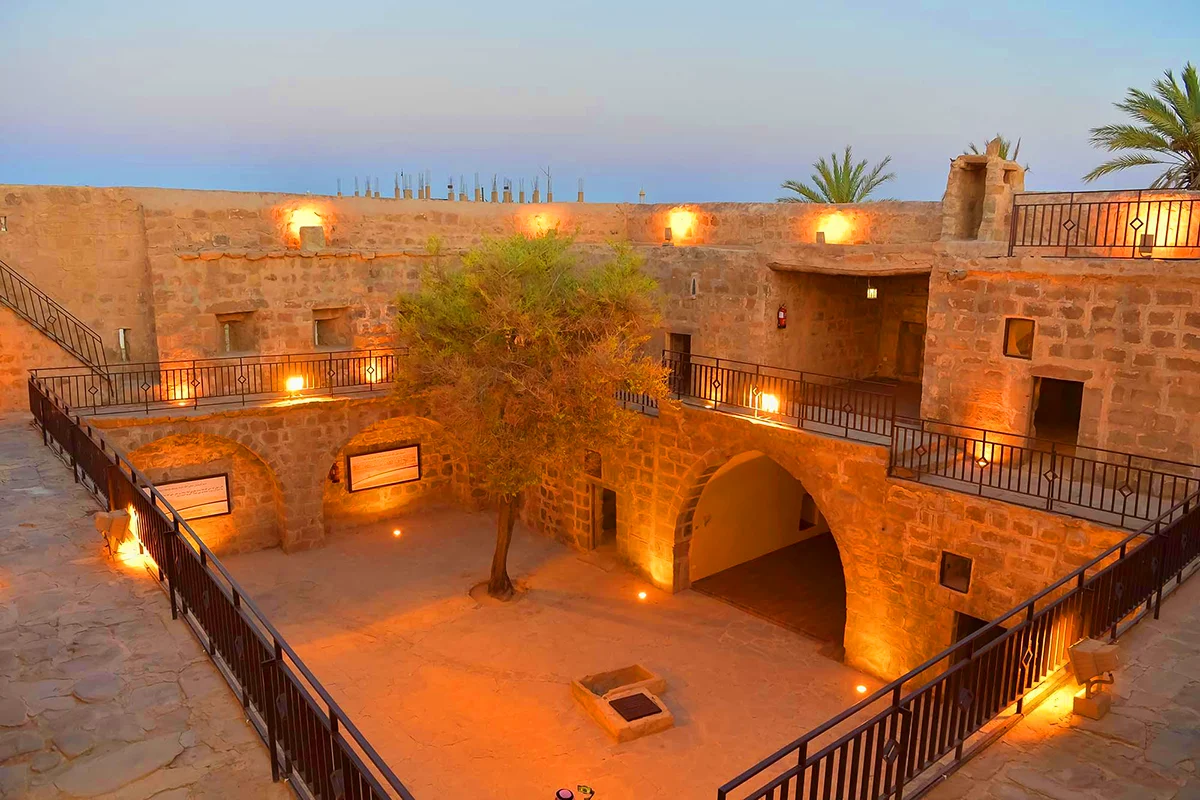
Tabuk Castle is a station on the Levant Hajj route from Damascus to Madinah. The standing structure dates to 1559, in the reign of Suleiman the Magnificent, with renovations in 1653, 1844, 1951 and 1993 and a restoration in 2013. It holds a courtyard, a well, a small mosque and corner towers.
Key takeaways
- ✓The Levant Hajj route ran from Damascus to Madinah and Makkah, and Tabuk was one of its stations.
- ✓Stations existed for water and supply. Tens of thousands of pilgrims and animals arrived once a year, thirsty.
- ✓The standing castle dates to 1559, in the reign of Suleiman the Magnificent.
- ✓It was renovated in 1653, 1844, 1951 and 1993, and restored in 2013 by the national heritage authority.
- ✓Inside is exactly what a caravan station needs: courtyard, well, small mosque, corner towers, two floors of rooms.
- ✓Saudi sources also describe the site as about 3,500 years old. That is the site, not the building, and the two get confused.
- ✓The army of year 9 camped at Tabuk, but this building is nine hundred years later. The link is the water, not the stones.
Quick facts
- Where
- Central Tabuk, beside Ayn al-Sukkar
- Standing structure
- 1559, reign of Suleiman the Magnificent
- Renovations on record
- 1653, 1844, 1951, 1993
- Restoration
- 2013, by the national heritage authority
- What is inside
- Courtyard, well, small mosque, corner towers
- Its job
- Water and supply station on the Levant Hajj route
- Site age reported as
- About 3,500 years. The site, not the building
- Railway reached Tabuk
- 1906
- Part of Umrah or Hajj
- No
The square stone castle in the middle of Tabuk is the city's landmark, and it has almost nothing to do with the expedition of the ninth year.
It belongs to a much later story, and that story is worth knowing, because it explains why Tabuk exists as a town at all.
Tabuk was a stop on a road
The Levant Hajj route ran from Damascus south to Madinah and on to Makkah, and Tabuk was one of its stations.
Every pilgrim from Anatolia, the Balkans, Persia and Syria who went overland came through here. Tens of thousands of people and animals, once a year, arriving thirsty.
The stations existed for water and supply. That was their whole function, and the castle is a station.
The castle
The standing structure dates to 1559, in the reign of Suleiman the Magnificent.
It was renovated repeatedly, and the dates are on record: 1653, 1844, 1951 and 1993, with a restoration in 2013 by the national heritage authority.
What is inside is exactly what a caravan station needs:
- A courtyard big enough to work in.
- A well.
- A small mosque.
- Defensive towers at the corners.
- Two floors of rooms and stores.
Water, shelter, prayer, and enough defence to deter a raid. Nothing decorative.
The awkward number
Saudi heritage sources give the standing castle as 1559 and also describe the site as roughly 3,500 years old.
Those two statements are not in conflict, but they are easy to misread. The building is Ottoman. The site is reported as far older, which is unsurprising, because a place with water in this country tends to have been used continuously for as long as there have been people.
If you see the 3,500-year figure repeated as the age of the castle, that is a misreading. We could not verify what the figure is based on, and we are reporting it as stated rather than endorsing it.
And the expedition?
The army of the ninth year camped at Tabuk, and the sources are clear about that. But this building is nine hundred years later.
The connection is the place, not the stones. Both the army and the caravans came here for the same reason: the water.
The spring, Ayn al-Sukkar, is right beside the castle. That is not a coincidence. It is the reason there is a castle.
What replaced it
The caravan era ended with the Hejaz Railway. The first train reached Tabuk in 1906, and the line to Madinah was complete by 1908.
Tabuk's station is one of the main stations on that line and has been renovated. Between the castle and the station you have both halves of the same story, a few minutes apart.
Visiting
The castle has been restored and is being developed as the Tabuk Castle Museum.
Opening arrangements for heritage sites in Saudi Arabia change often. Check locally or through the official heritage channel before you plan a day around it, rather than trusting a schedule you read online, this page included.
Getting there, honestly
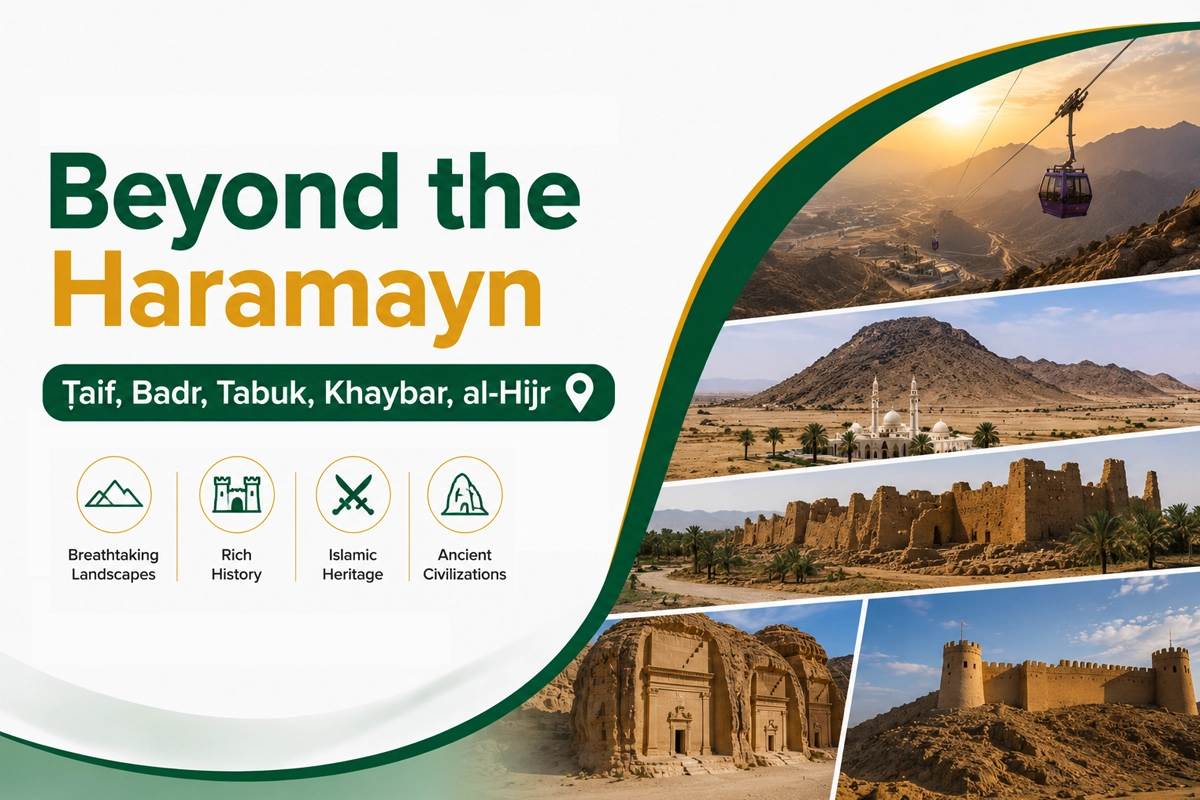
We do not run a scheduled service this far north and there is no published Wadana Go fare for it. Flying to the regional airport and hiring a car, or arranging a private car in advance, are the practical options. See driving yourself versus a private driver and renting a car in Saudi Arabia. Our Beyond the Haramayn guide puts this region alongside Badr, Khaybar, AlUla and Taif.
Is visiting part of Hajj or Umrah?
No. The castle served pilgrims; visiting it is not a rite of anything.
Related reading
- The expedition of Tabuk — the seventh-century layer.
- Ayn al-Sukkar — the spring beside it.
- Hijr Fort — the next station south on the same road.
- Masjid al-Tawbah — the other stop in the city.
Accuracy note
Tabuk Castle as a station on the Levant Hajj route linking the Levant to Madinah, the dating of the standing structure to 1559 in the reign of Suleiman the Magnificent, the renovations recorded in 1653, 1844, 1951 and 1993, the restoration in 2013 by the national heritage authority, its two floors with courtyard, mosque, well and defensive towers, and its preparation as the Tabuk Castle Museum, follow Saudi heritage sources including Saudipedia. Those sources also describe the site as approximately 3,500 years old; we could not verify what that figure rests on and have reported it as stated rather than endorsed it, and we have distinguished the age of the site from the date of the standing building because the two are frequently confused. That the army of the ninth year after the Hijrah camped at Tabuk is established in the seerah, but the standing castle postdates that by roughly nine hundred years and no part of it is connected to the expedition. The first train reached Tabuk in 1906 and the Hejaz Railway line to Madinah was complete by 1908; Tabuk's station is one of the main stations on the line and has been renovated. Opening arrangements for Saudi heritage sites change often, so confirm locally or through the official heritage channel rather than relying on this page. Visiting is not a rite of Hajj or Umrah. We do not run a scheduled service to Tabuk and have not quoted a fare. Content verified August 2026. Correction? Tell us.
Frequently asked questions
Planning a Saudi trip?
Pre-book a private car, find a stay, or ask us anything on WhatsApp.
Last updated: 31 August 2026·Sources reviewed by the Wadana Go editorial team.