Masjid al-Tawbah, Tabuk: What Is Solid and What Is Tradition
Short answer
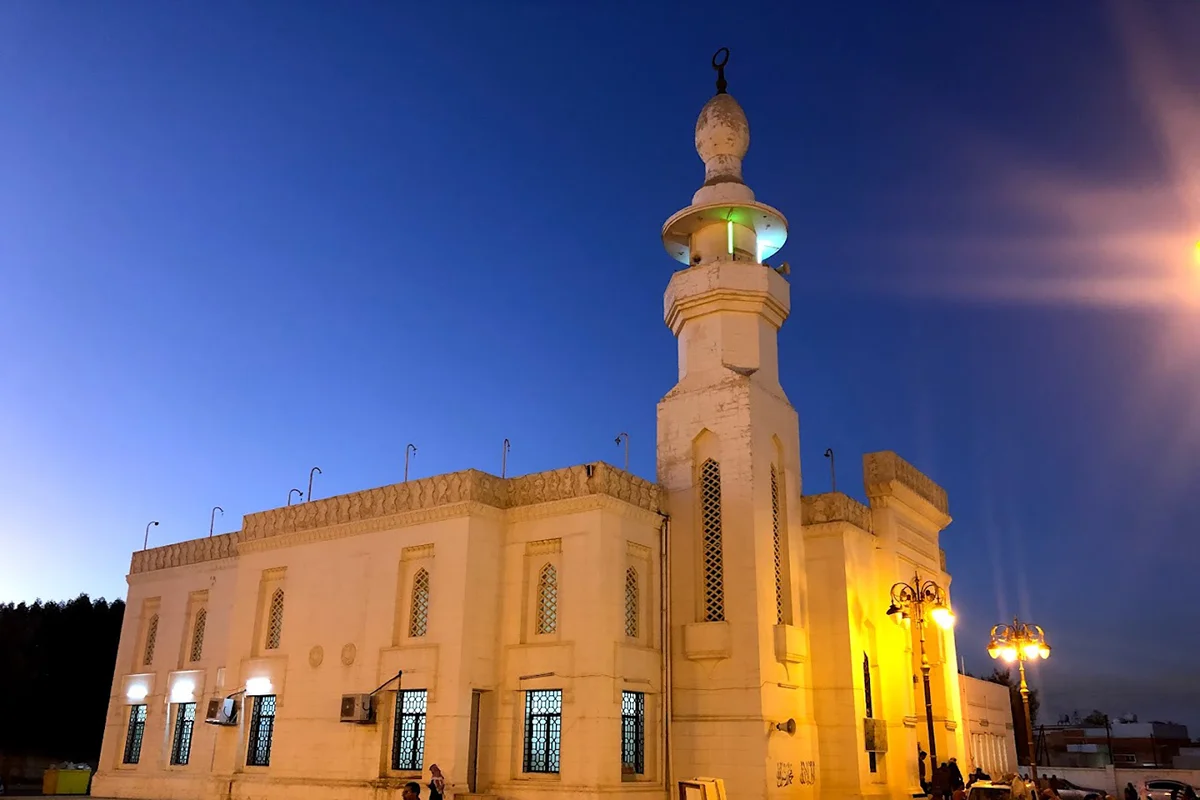
Masjid al-Tawbah in Tabuk marks where the Prophet ﷺ is said to have prayed during the expedition of year 9. That he was at Tabuk is level A. The identification of this exact spot rests on early marking, reported under Umar ibn Abd al-Aziz in 98 AH, and local tradition. The building today is modern.
Key takeaways
- ✓That the Prophet ﷺ was at Tabuk for about twenty days on the expedition is level A, from the Qur'an and the sound collections.
- ✓A mosque at Tabuk marking where he prayed is not a strange claim. Something of the kind is what you would expect.
- ✓The identification of this precise spot is level B: reported as established under Umar ibn Abd al-Aziz in 98 AH, on a site held by local memory.
- ✓It was originally a simple structure of clay roofed with palm fronds.
- ✓It was restored in 1652 and rebuilt completely on King Faisal's order, designed to resemble the Prophet's Mosque in Madinah.
- ✓The building you walk into is modern. Nothing standing there dates from year 9, and nobody serious claims otherwise.
- ✓No special virtue or prescribed prayer for this mosque could be verified. Travel is prescribed for three mosques only.
Quick facts
- Where
- Tabuk city, northern Saudi Arabia
- Also called
- The Prophet's Mosque of Tabuk
- Marks
- Where he is said to have prayed on the expedition
- Reported founding
- Under Umar ibn Abd al-Aziz, 98 AH
- Original form
- Clay, roofed with palm fronds
- Rebuilds
- Restored 1652, rebuilt under King Faisal
- Building today
- Modern, resembling the Prophet's Mosque
- Special virtue
- None we could verify
- Part of Umrah or Hajj
- No
Tabuk has a mosque on the spot where the Prophet ﷺ is said to have prayed during the expedition. It is called Masjid al-Tawbah, the Mosque of Repentance, and also the Prophet's Mosque of Tabuk.
Here is what is solid, what is traditional, and what you will actually see.
What is solid
That the Prophet ﷺ was at Tabuk with the army for about twenty days in the ninth year after the Hijrah is level A. It is in the Qur'an and the sound collections.
That he prayed while he was there is not in doubt either. Sahih Muslim records his prayer arrangements on the march in detail, including combining prayers.
So a mosque at Tabuk on the site of the army's camp is not a strange claim. Something of the kind is exactly what you would expect.
What is traditional
The identification of this precise spot is another matter.
Saudi official sources describe it as the mosque where the Prophet ﷺ prayed during the expedition, and say it was originally a simple structure of clay roofed with palm fronds. It is also reported to have been established during the caliphate of Umar ibn Abd al-Aziz, in the year 98 after the Hijrah.
Read that carefully, because it tells you the honest position. A mosque marked out roughly ninety years after the event, by a caliph known for marking such places, on a site preserved by local memory.
That is a respectable chain and it is how most of the marked sites in the Hijaz came to be marked. It is level B. It is not the same as the Qur'an telling you where he stood.
What you see today
The building has been rebuilt more than once. It was restored in 1652, and then rebuilt completely on the order of King Faisal, who visited it. The new building was designed to resemble the Prophet's Mosque in Madinah.
So the structure you walk into is modern. Nothing standing there is from the ninth year after the Hijrah, and nobody serious claims otherwise.
That is normal for the Hijaz. Almost every marked site is a modern building over a remembered location, and knowing that in advance saves the disappointment people feel when they arrive expecting something ancient.
Why "Repentance"
The name is connected in local usage with the repentance of those who had stayed behind from the campaign, the subject of a long passage in Surah al-Tawbah.
We could not verify an early narration tying the name to the building itself. The name may well be later. It is a good name either way, because the theme is unquestionably the theme of Tabuk.
The account of Ka'b ibn Malik and the fifty days is in the expedition article, and it is the thing worth carrying in your head when you visit.
If you go
- Pray there as you would in any mosque. A prayer in a mosque is a prayer in a mosque. Nothing extra is prescribed for this one.
- Do not touch, kiss or wipe the building. There is no basis for it here or anywhere like it.
- Do not expect ancient fabric. The building is modern.
- Prayer times only. Access outside them is not guaranteed; ask locally.
The evidence, plainly
- The Prophet ﷺ at Tabuk on the expedition: level A.
- A mosque here marking where he prayed: level B, resting on early marking and continuous local tradition.
- Establishment under Umar ibn Abd al-Aziz in 98 AH: reported in Saudi heritage sources.
- The present building: modern, rebuilt under King Faisal, resembling the Prophet's Mosque.
- Any special virtue or prescribed prayer for this mosque: none that we could verify.
Is visiting part of Hajj or Umrah?
No. Not a rite of either. The only mosques with prescribed travel for prayer are the three named in the hadith: al-Masjid al-Haram, the Prophet's Mosque in Madinah, and al-Masjid al-Aqsa.
Getting there, honestly
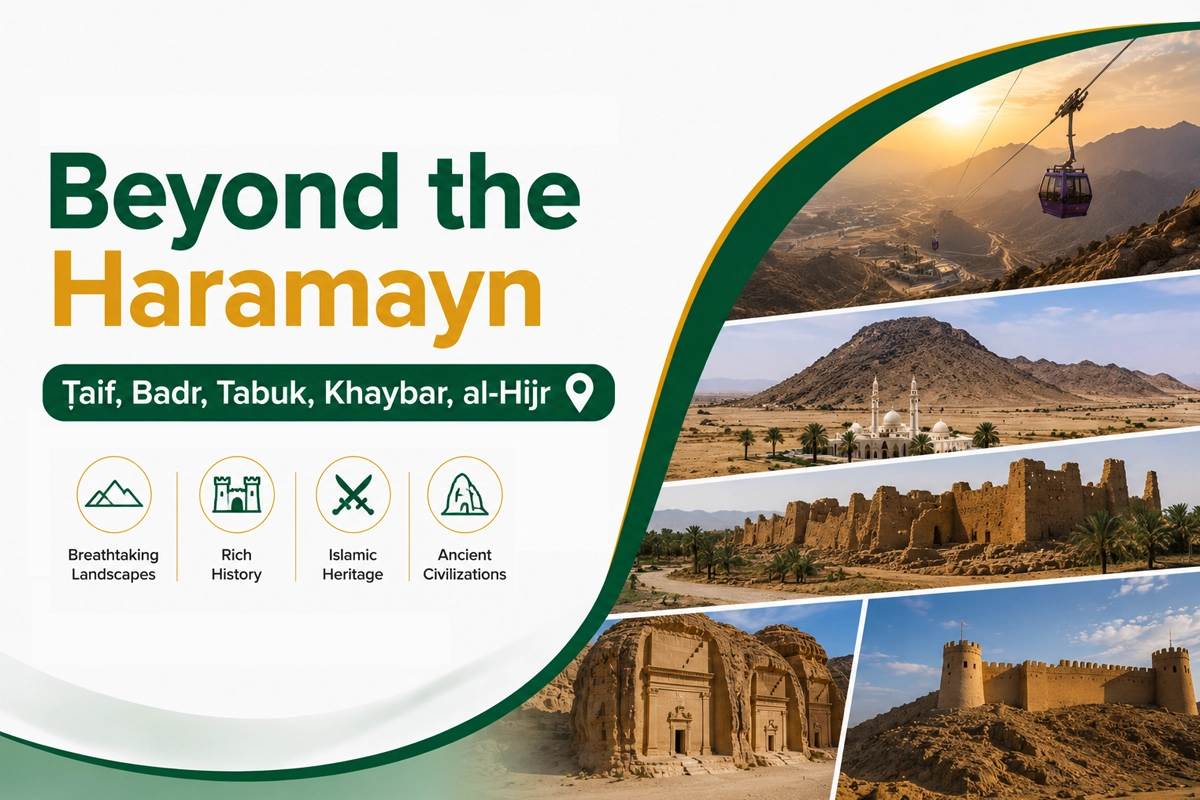
We do not run a scheduled service this far north and there is no published Wadana Go fare for it. Flying to the regional airport and hiring a car, or arranging a private car in advance, are the practical options. See driving yourself versus a private driver and renting a car in Saudi Arabia. Our Beyond the Haramayn guide puts this region alongside Badr, Khaybar, AlUla and Taif.
Related reading
- The expedition of Tabuk — the campaign, and the three who stayed.
- Ayn al-Sukkar — the spring and the hadith about it.
- Tabuk Castle — the Ottoman Hajj-route layer.
- Beyond the Haramayn — the wider ziyarat picture.
Accuracy note
That the Prophet ﷺ was at Tabuk with the army for about twenty days in the ninth year after the Hijrah, and that Sahih Muslim records his prayer arrangements on that march including the combining of prayers, is level A. The identification of this specific site as the place where he prayed, its original form as a structure of clay roofed with palm fronds, and its establishment during the caliphate of Umar ibn Abd al-Aziz in the year 98 after the Hijrah, are reported in Saudi heritage sources including Saudipedia and rest on early marking and continuous local tradition; that is level B and we have not presented it as more. The restoration in 1652 and the complete rebuilding on the order of King Faisal, with the new building designed to resemble the Prophet's Mosque in Madinah, follow the same sources; the structure standing today is modern and nothing in it dates from the ninth year after the Hijrah. The connection of the name to the repentance of those who stayed behind from the campaign is local usage; we could not verify an early narration tying the name to the building and have said so. We could not verify any special virtue or prescribed prayer for this mosque. The three mosques for which travel is prescribed are al-Masjid al-Haram, the Prophet's Mosque and al-Masjid al-Aqsa. Access outside prayer times is not guaranteed; ask locally. Visiting is not a rite of Hajj or Umrah. We do not run a scheduled service to Tabuk and have not quoted a fare. Content verified August 2026. Correction? Tell us.
Frequently asked questions
Planning a Saudi trip?
Pre-book a private car, find a stay, or ask us anything on WhatsApp.
Last updated: 1 September 2026·Sources reviewed by the Wadana Go editorial team.