Wadi al-Qura: The Valley of Villages, and One Very Hard Hadith
Short answer
Wadi al-Qura, the valley of the villages, was a chain of oasis settlements on the caravan road running north from Madinah to Syria, in the area of modern AlUla. The Prophet ﷺ came here after Khaybar and Fadak and reached similar terms. Bukhari 4234 records the death of his servant Mid'am here and what was said about it.
Key takeaways
- ✓Wadi al-Qura means the valley of the villages: a chain of oasis settlements, not one place.
- ✓It ran through the area of modern AlUla, and the Hegra site lies within it.
- ✓The caravan road from Madinah to Syria went oasis to oasis because that is where the water was: Khaybar, Fadak, Wadi al-Qura, Tayma.
- ✓After Khaybar and Fadak the Prophet ﷺ came here, stayed several days, and reached terms like those at Khaybar. The oases were not emptied.
- ✓Bukhari 4234 records that his servant Mid'am was killed by a stray arrow while unsaddling his camel.
- ✓People said congratulations on martyrdom. The reply was no, because of a sheet taken from the spoils before they were divided.
- ✓That is ghulul, and the lesson is harder than any ruin in the valley.
Quick facts
- Meaning
- The valley of the villages
- Where
- The area of modern AlUla, north of Madinah
- What it was
- A chain of farming oases on the Syria road
- When the Prophet ﷺ came
- Year 7 after the Hijrah, after Khaybar and Fadak
- The terms
- Like Khaybar. People stayed and kept farming
- The hadith
- Sahih al-Bukhari 4234
- Placed at Wadi al-Qura by
- Malik's Muwatta
- A single site to visit
- No. It is a valley and a district
- Part of Umrah or Hajj
- No
Wadi al-Qura means the valley of the villages. Not one settlement but a chain of them, strung along a valley that ran north from Madinah towards Syria.
The name is functional and it tells you what the place was: a corridor of oases with farming and water, on the road everybody had to use.
Where it was
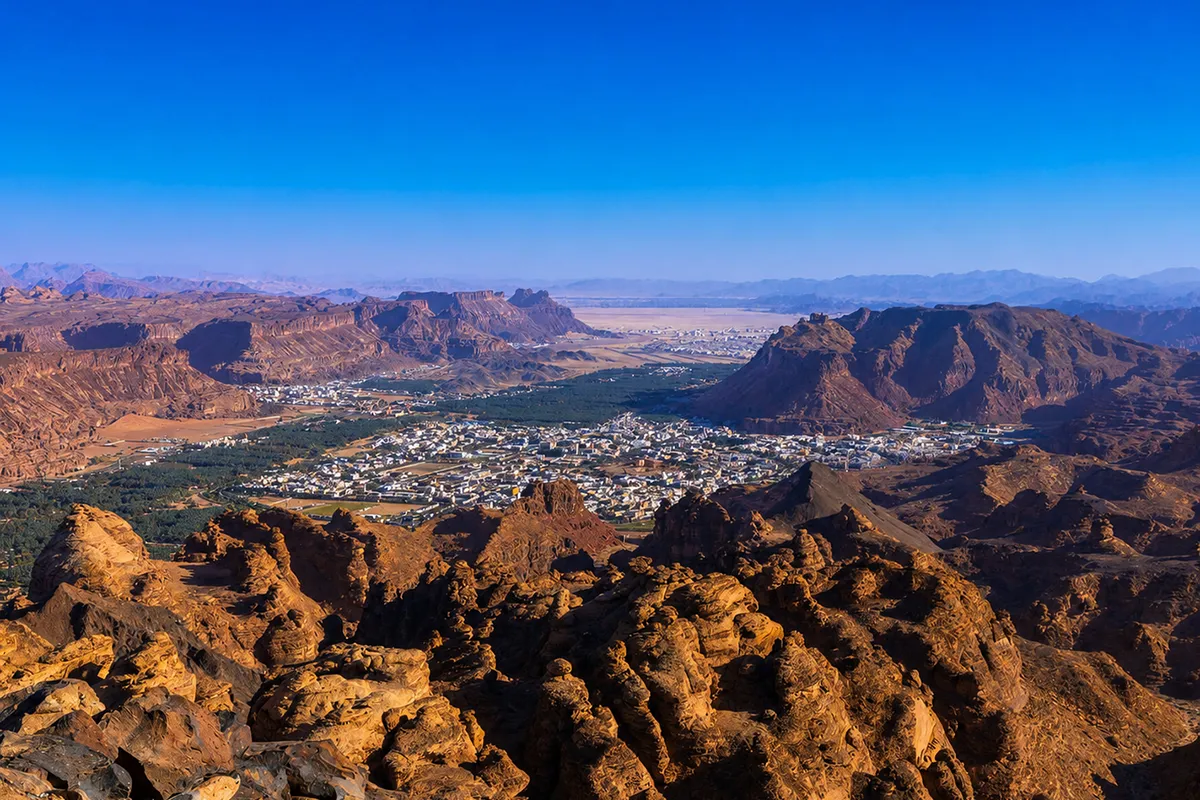
The valley runs through the area of modern AlUla. The Hegra site sits within it.
North of Madinah, the caravan road to Syria ran through this line of oases because that is where the water was. Khaybar, Fadak, Wadi al-Qura, Tayma. A merchant leaving Madinah for Damascus travelled from oasis to oasis, and Wadi al-Qura was one of the fixed points on that chain.
That is the whole reason it keeps appearing in the seerah. It was on the road.
Who lived there
Jewish farming communities held settlements in the valley, as at Khaybar and Fadak, alongside Arab tribes.
It was agricultural country: date palms, irrigation, walled plots. The same pattern you see across the northern Hijaz oases.
After Khaybar
In the seventh year after the Hijrah, after Khaybar and Fadak, the Prophet ﷺ moved on to Wadi al-Qura.
The historical accounts record that he stayed there several days, that the settlements came to terms, and that the arrangement resembled the one made at Khaybar: the people stayed on their land and continued to farm it.
That is the pattern worth noticing. The northern oases were not emptied. They were brought under the same settled arrangement, one after another, along the road.
The one incident everybody should know
This is the reason Wadi al-Qura is worth a page rather than a line, and it is level A.
The Prophet ﷺ had a servant named Mid'am, who had been given to him. Malik's Muwatta places the incident at Wadi al-Qura: Mid'am was unsaddling the Prophet's camel when a stray arrow struck and killed him.
People said what people say: congratulations to him on martyrdom.
Sahih al-Bukhari 4234 records the reply. No. By the One in whose hand my soul is, the sheet he took from the spoils on the day of Khaybar, before they were distributed, is burning him with fire.
One sheet of cloth. Taken from a pile that had not yet been divided.
Why that narration is so hard
Because everything about the scene points the other way.
Mid'am was a servant of the Prophet ﷺ himself. He died on campaign, doing a plain useful job, killed by an arrow nobody aimed at him. Every visible sign says martyr.
And the answer was no, and the reason given was a piece of cloth that nobody had missed.
That is ghulul: taking from the spoils before they are shared out. The narration continues in some versions with a man bringing a shoelace or two he had taken, and being told it was a lace of fire.
You can visit ruins for a very long time and not learn as much as that one exchange teaches.
Later
Wadi al-Qura remained a working agricultural district and a stage on the northern route for centuries afterwards. The road it sat on later carried the Syrian Hajj caravan from Damascus, and later still the Hejaz Railway.
Same valley, same reason: the water and the line of the road.
Visiting
There is no single site called Wadi al-Qura to stand in front of. It is a valley and a district, and you are already in it when you are in AlUla.
What you can see is the landscape that made it matter: the cliffs, the oasis floor, the palms, the narrowness of the usable ground. Stand in the valley and the geography explains itself.
The practical side
Access to Hegra is by booked guided tour only, arranged through the official AlUla channel. You cannot drive in and wander. Arrangements and timings change, so confirm on the official channel rather than trusting any schedule you read second-hand, this page included.
Our AlUla and Hegra guide covers what you see and how the valley fits together, planning a trip to AlUla covers seasons and logistics, and the AlUla destination page is the overview.
Is visiting part of Hajj or Umrah?
No. Not a rite of either.
Related reading
- Al-Hijr, Hegra and Mada'in Salih — the site inside this valley.
- Khaybar — the oasis before this one on the same road.
- Hijr Fort and the Syrian Hajj route — the later layers.
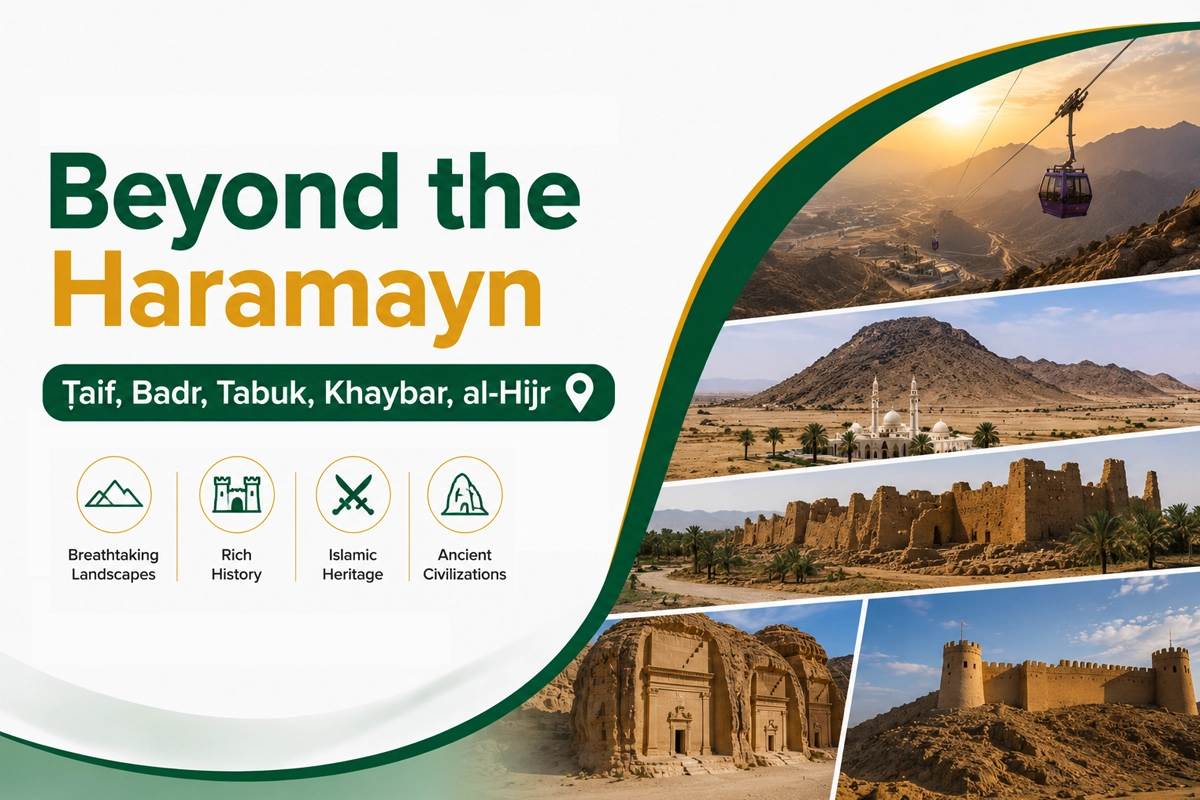
- Beyond the Haramayn — the wider ziyarat picture.
Accuracy note
Wadi al-Qura, the valley of the villages, as a chain of oasis settlements on the caravan road running north from Madinah towards Syria, and its location in the area of modern AlUla with the Hegra site lying within it, follow the geographical and historical literature and the UNESCO listing's placement of the site. That Jewish farming communities held settlements in the valley alongside Arab tribes, and that after Khaybar and Fadak in the seventh year after the Hijrah the Prophet ﷺ moved on to Wadi al-Qura, stayed several days and reached terms resembling those made at Khaybar with the people remaining on their land, follow the seerah and historical accounts and are level B. The incident of Mid'am, a servant given to the Prophet ﷺ, being killed by a stray arrow while unsaddling his camel, and the reply that the sheet taken from the spoils on the day of Khaybar before their distribution was burning him with fire, is recorded in Sahih al-Bukhari 4234 and is level A; the placing of the incident specifically at Wadi al-Qura is in Malik's Muwatta. The continuation about a man bringing a shoelace and being told it was a lace of fire appears in some versions of the narration and we have described it as such. That the same route later carried the Syrian Hajj caravan and the Hejaz Railway is documented. There is no single monument called Wadi al-Qura to visit; it is a valley and a district. Visiting is not a rite of Hajj or Umrah. Content verified August 2026. Correction? Tell us.
Frequently asked questions
Planning a Saudi trip?
Pre-book a private car, find a stay, or ask us anything on WhatsApp.
Last updated: 1 September 2026·Sources reviewed by the Wadana Go editorial team.