The Battle of the Trench: Where It Was, and What Is Left
Short answer
The Battle of the Trench was fought in the fifth year after the Hijrah, when a coalition of around ten thousand besieged Madinah. On the advice of Salman al-Farsi the Muslims dug a trench across the open northern approach, and the cavalry could not cross. The siege broke after roughly a month. No part of the original trench is visible today.
Key takeaways
- ✓A coalition of around ten thousand besieged Madinah in year five after the Hijrah. The Muslims could field about three thousand.
- ✓Salman al-Farsi suggested digging a trench across the exposed northern approach, a tactic from outside the Arabian tradition.
- ✓Sahih al-Bukhari records that the Prophet ﷺ dug alongside the Companions, carrying earth himself, in cold weather with very little food.
- ✓Commonly cited figures give the trench as about 5.5 km long, 4.5 m deep and 9 m wide, dug in roughly six days. Sources differ.
- ✓The siege lasted around a month and ended without a pitched battle when a bitter wind broke up the confederate camp.
- ✓Surah al-Ahzab describes the siege without flattery, including eyes turning aside and hearts reaching the throats.
- ✓No section of the original trench survives. The area northwest of Masjid an-Nabawi is now built up, and the honest attraction is the geography.
Quick facts
- City
- Madinah, northwest, at the foot of Mount Sela'
- Date
- Year 5 after the Hijrah
- Forces
- About 10,000 confederates against roughly 3,000 Muslims
- Trench
- Commonly cited as about 5.5 km long, dug in around six days
- Visible today
- No. No section of the original trench survives
- Part of Umrah or Hajj
- No. No prescribed prayer or reported reward
- Can a car reach it
- Yes, with parking at the mosque site
- Time to allow
- About 20 minutes, more if you pray there
- Evidence level
- A for the battle and the digging; B for details of individual incidents
In the fifth year after the Hijrah, a coalition of tribes marched on Madinah with a force the sources put at around ten thousand men. The Muslims could field roughly three thousand.
They did not fight. They dug.
The Battle of the Trench, al-Khandaq, is also called the Battle of the Confederates, al-Ahzab, and a long passage of Surah al-Ahzab is about it. This page covers what happened, where it happened, and the honest answer to what you can actually see there today.
Salman's idea
Madinah was hard to attack from most sides. Lava fields, rock and dense palm groves closed off the approaches. Only the northern side was open ground, and that was where cavalry could come in.
Salman al-Farsi, may Allah be pleased with him, was Persian, and he had seen siege warfare done differently. He proposed digging a trench across the exposed northern approach, which was not an Arabian practice at all.
The Prophet ﷺ accepted it. That is worth noticing on its own: a tactic from outside the Arab tradition, suggested by a man who had arrived in Madinah as a former slave, adopted for the defence of the city.
The digging
Commonly cited figures give the trench as roughly five and a half kilometres long, around four and a half metres deep and about nine metres wide, dug in something like six days. Sources differ on all of these numbers, so treat them as the order of magnitude rather than a survey.
What is firmly established is the manner of it. Sahih al-Bukhari records that the Prophet ﷺ dug alongside the Companions, carrying earth on his own back, in cold weather and with very little food. Bukhari also preserves the lines they chanted while working, and his reply to them, asking Allah for the good of the Hereafter and for the Muhajirun and Ansar.
The seerah literature records incidents during the digging, including a rock that would not break and food that stretched further than it should have. Those accounts come from the historical literature rather than the strongest hadith collections, and we are labelling them that way rather than presenting them as equal to Bukhari.
The siege
The confederates arrived and found they could not cross. Cavalry is useless against a ditch. What was planned as a short decisive attack became a siege of roughly a month; the sources differ on the exact number of days.
It was cold, food ran out, and the pressure inside the city was severe. Surah al-Ahzab describes it without flattery: eyes turning aside, hearts reaching the throats.
The end came without a pitched battle. A bitter wind tore through the confederate camp, overturning tents and putting out fires, and the coalition broke up and went home. The Qur'an refers to that directly, describing a wind and forces that were not seen.
Afterwards the Prophet ﷺ said, in a report in Sahih al-Bukhari, that from now on the Muslims would go to them and they would not come to the Muslims. That turned out to be exactly right.
The du'a
Recorded in Bukhari and Muslim: he called on Allah, the revealer of the Book, swift in reckoning, to defeat the confederates and shake them.
Short, direct, and made under real pressure. It is worth knowing for its own sake.
Where the trench was
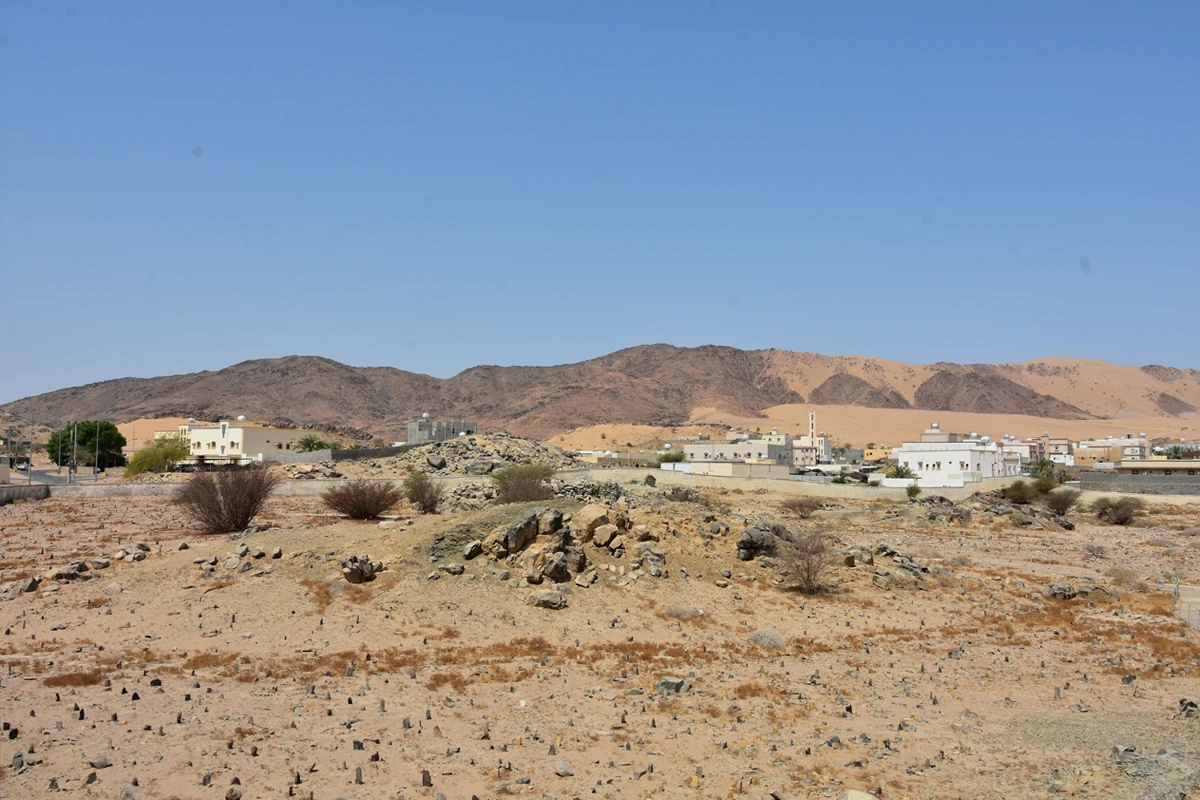
Across the northern approach to Madinah, on the open ground at the foot of Mount Sela', in the area now known as the al-Fath neighbourhood, northwest of Masjid an-Nabawi.
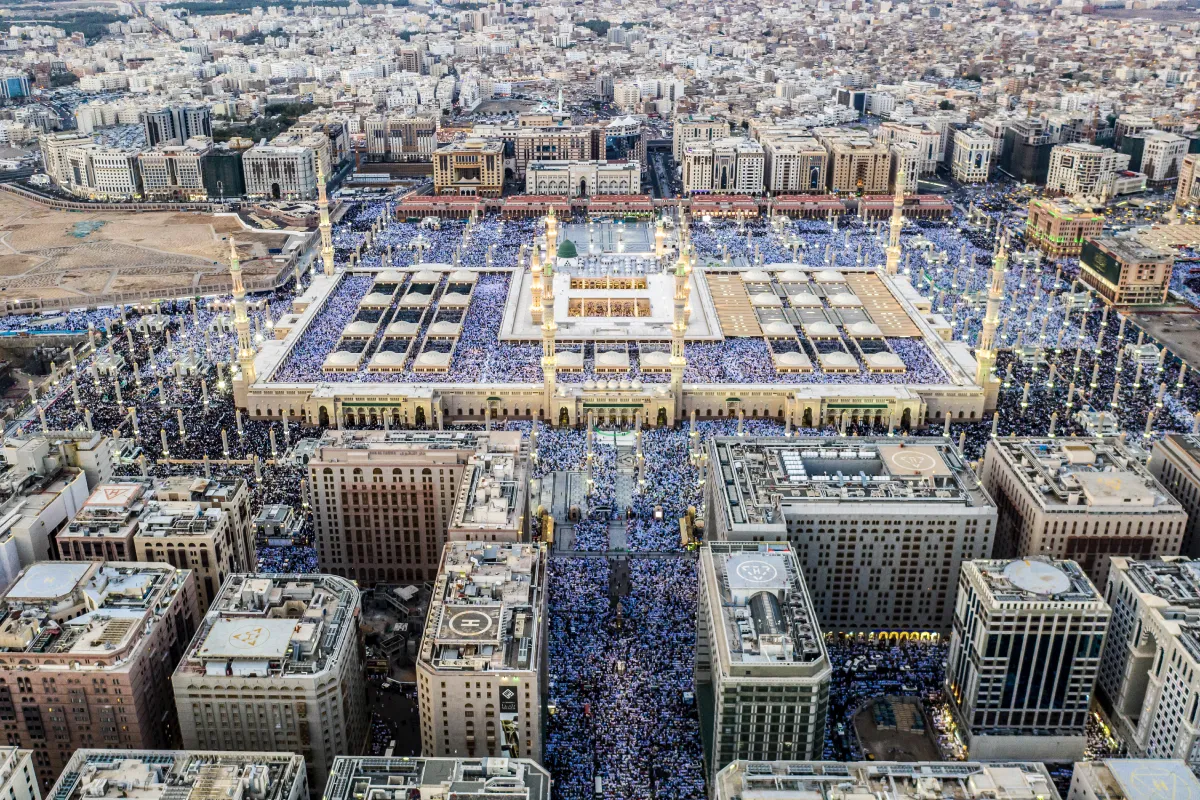
Now the honest part. No section of the original trench is visible today. Fourteen centuries have passed, Madinah has grown over the ground, and what stood as an earthwork in 5 AH is now streets, buildings and a developed mosque site.
What you can do is stand in the right area, look up at Mount Sela' behind you, and understand the geography: the mountain at the defenders' back, the open ground in front, the line the trench had to cover.
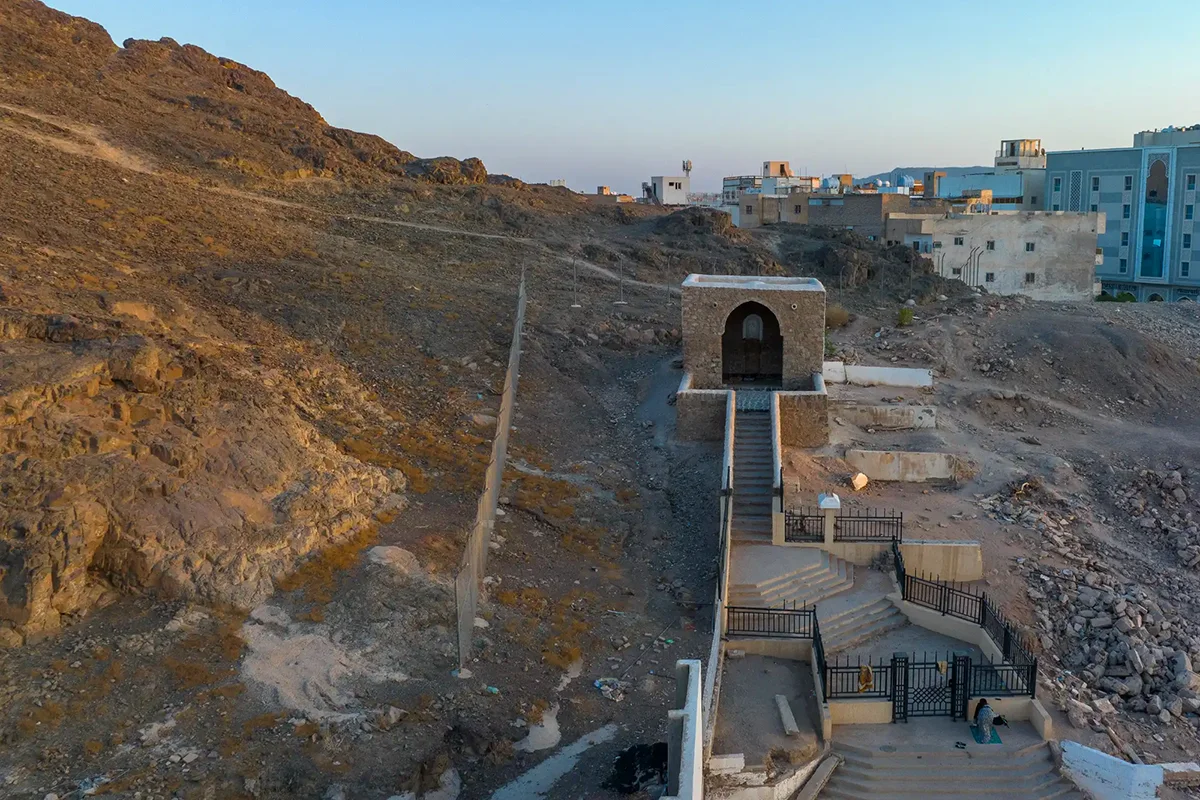
The cluster of small historic mosques on the slope, known today as the Seven Mosques, marks positions traditionally associated with the battle.
What to expect on a visit
- There is no trench to see. If your expectations are set, you will not be disappointed.
- The area is urban. Roads, buildings, parking. It does not feel like a battlefield the way Uhud does.
- Twenty minutes is a full visit, unless you want to pray at the mosque on the site.
- Look at Mount Sela'. That is the one piece of the landscape that has not changed.
- Combine it with the Seven Mosques and Mount Sela', since they are all the same stop.
Is visiting part of Hajj or Umrah?
No. The Trench site is not a rite of Hajj or Umrah, no prayer is prescribed there, and no authentic report gives a reward for visiting it.
It is history, and the lesson in it is a practical one: preparation, an idea taken from an outsider, and a month of holding on.
Related
- Mount Sela' — the mountain behind the trench, named in authentic hadith.
- The Seven Mosques — the cluster on the slope, and what is actually there.
- The Battle of Uhud — two years earlier, and the reason Madinah changed its approach.
- Madinah Ziyarat guide — every site with the evidence for it.
Getting there
The area is a short drive northwest of Masjid an-Nabawi, closer than Uhud, and it is a standard stop on the Madinah Ziyarat round. Parking is available at the mosque site.
Because it is a short stop, it works best bundled with Quba, Qiblatayn and Uhud rather than as a trip of its own. Our Madinah Ziyarat private car covers the round on one fixed fare for the vehicle with the driver waiting at each stop, and the Madinah Ziyarat tour is the guided version.
Accuracy note
The Battle of the Trench in the fifth year after the Hijrah, the suggestion of the trench by Salman al-Farsi, the approximate figures of ten thousand confederates against three thousand Muslims, and the breaking of the siege are established in the hadith and seerah literature. The Prophet ﷺ digging alongside the Companions, carrying earth himself, and the lines chanted during the work, are in Sahih al-Bukhari, as is his statement afterwards that the Muslims would now go to them rather than the reverse. The du'a against the confederates is in Bukhari and Muslim. The wind that broke up the coalition is referred to in Surah al-Ahzab. Trench dimensions of about 5.5 km long, 4.5 m deep and 9 m wide, dug in around six days, are commonly cited figures and sources differ; treat them as approximate. Incidents during the digging involving the rock and the food are reported in the seerah literature rather than the strongest hadith collections, and we have labelled them so. No section of the original trench is visible today. Visiting is not a rite of Hajj or Umrah. Content verified August 2026. Correction? Tell us.
Frequently asked questions
Planning a Saudi trip?
Pre-book a private car, find a stay, or ask us anything on WhatsApp.
Last updated: 24 September 2026·Sources reviewed by the Wadana Go editorial team.