The Battle of Uhud: What Happened, and How to Read the Ground
Short answer
The Battle of Uhud was fought in Shawwal of year three after the Hijrah on the plain below Mount Uhud, north of Madinah. Around seven hundred Muslims faced roughly three thousand Makkans. The Muslims were winning until most of the archers left their hill, and the Makkan cavalry came round the open flank. Around seventy Companions were killed.
Key takeaways
- ✓Uhud was fought in Shawwal of year three after the Hijrah, roughly seven hundred Muslims against about three thousand Makkans.
- ✓The Prophet ﷺ preferred to defend inside Madinah but accepted the majority view to go out, and never revisited the decision when the day went badly.
- ✓Around fifty archers were placed on a small hill with orders not to move whatever happened. Most came down when the battle looked won.
- ✓Khalid ibn al-Walid, then fighting for Quraysh, brought cavalry through the open flank. A rumour that the Prophet ﷺ had been killed broke what order was left.
- ✓Around seventy Companions were killed, including Hamza ibn Abd al-Muttalib and Mus'ab ibn Umayr, may Allah be pleased with them.
- ✓Surah Al Imran names the cause exactly: losing heart, disputing about the order, disobeying after being shown what they love.
- ✓The same passage tells the Prophet ﷺ to pardon them and keep consulting them, immediately after a defeat caused by ignoring his instruction.
Quick facts
- City
- Madinah, on the plain below Mount Uhud
- Date
- Shawwal, year 3 after the Hijrah
- Forces
- About 700 Muslims against roughly 3,000 Makkans
- Muslim losses
- Around 70 Companions
- Turning point
- The archers leaving Jabal al-Rumah
- Qur'anic passage
- Surah Al Imran
- Part of Umrah or Hajj
- No. Historical, not a rite
- Time to allow
- About an hour for the whole site
- Evidence level
- A for the battle; C for most spots pointed out on the field
The Battle of Uhud was fought in Shawwal of the third year after the Hijrah, on the plain at the foot of Mount Uhud, north of Madinah.
It is the most closely examined defeat in Islamic history, and a long passage of Surah Al Imran is given over to it. This page walks through the day in order, and then explains how to read the ground when you are standing on it.
Before the battle
A year earlier the Muslims had won at Badr. Quraysh came north to settle it.
The sources give the Makkan army as around three thousand men, with a substantial force of cavalry. The Muslims fielded roughly seven hundred, after a group withdrew before the fighting began.
There was a disagreement about tactics beforehand. The Prophet's ﷺ own preference was to remain in Madinah and fight in the streets. Many of the younger men, who had missed Badr, pressed to go out and meet the enemy in the open. He went with the majority view.
That detail is often skipped. He did not overrule them. He consulted, accepted the decision, and then did not revisit it when the day went badly.
The archers
He placed around fifty archers on a small hill on the flank, under Abdullah ibn Jubayr, with orders not to move under any circumstances, whether the Muslims appeared to be winning or losing.
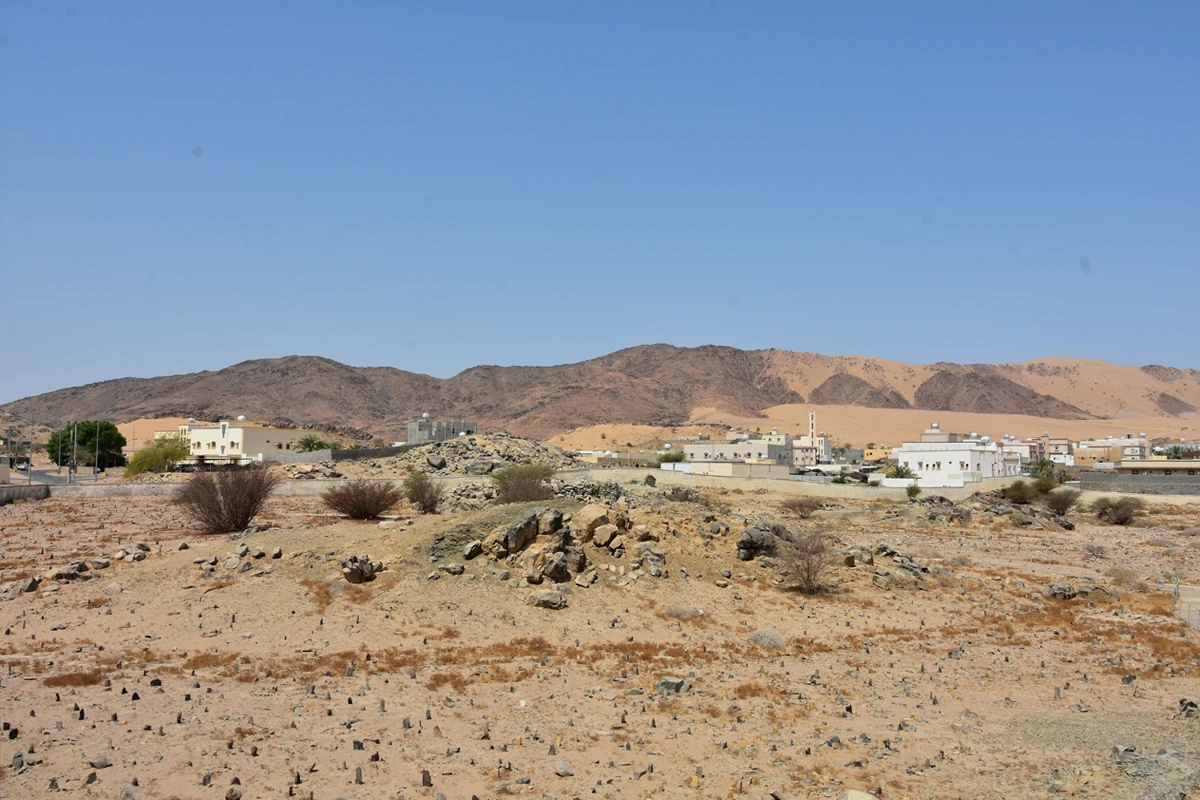
That hill, Jabal al-Rumah, is still there and you can walk up it.
How the day went
The first phase. The Muslims fought well. The Makkan line gave way and men began to flee, leaving their camp behind.
The turn. From the hill the archers could see the camp being stripped. Most of them came down to join in, over their commander's objections. The flank was left open.
The counter-attack. Khalid ibn al-Walid, who at that point was still fighting for Quraysh, brought the cavalry round through the gap and struck the Muslim army from behind. The line collapsed into confusion, and in the chaos some Muslims struck at one another without recognising who they were.
The Prophet ﷺ was wounded. A rumour spread through the field that he had been killed, and this broke what order was left.
The end. Around seventy Companions were killed, including Hamza ibn Abd al-Muttalib and Mus'ab ibn Umayr, may Allah be pleased with them. The Makkans withdrew rather than pressing on to Madinah.
What the Qur'an says about it
Surah Al Imran deals with Uhud at length and does not soften it. Several themes stand out.
The cause is named. The promise was fulfilled while they fought by Allah's permission, until they lost heart, disputed about the order, and disobeyed after being shown what they love.
The dead are described as alive. Do not think of those killed in the way of Allah as dead; they are alive with their Lord and provided for.
The message is not the messenger. The Qur'an asks whether, if the Prophet ﷺ were to die or be killed, they would turn back on their heels. This addresses the rumour that had gone round the battlefield.
And a verse about how he treated them afterwards. It was by a mercy from Allah that he was gentle with them, and had he been harsh and hard-hearted they would have scattered from around him; so pardon them, seek forgiveness for them, and consult them in affairs.
Consider the timing of that last one. It comes after a defeat caused by people ignoring his instruction, and the instruction it gives him is to forgive them and keep consulting them.
Reading the ground today
The site is compact and easy to understand if you know where to look.
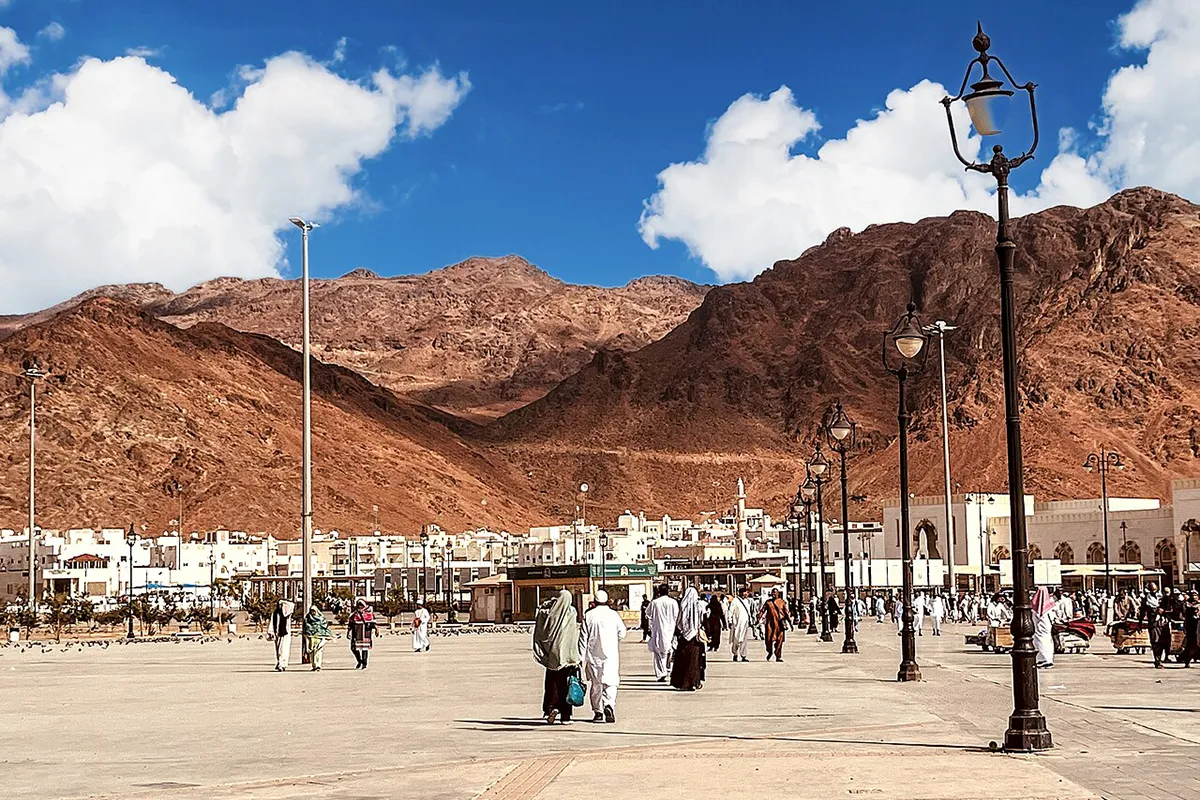
- Stand in the open ground between the archers' hill and the mountain. This flat plain is where the armies met.
- Look at Mount Uhud behind you. The Muslim position was set with the mountain at their back, which is why only the one flank needed guarding.
- Look at the hill. Notice how small it is, and how obvious it is that whoever holds it controls the route round the side.
- Walk up it if you can. Ten minutes at the top does more than an hour of reading.
- Then go to the martyrs' cemetery, which is a short walk away, and give salam.
The distances are much shorter than you imagine. That is the thing that surprises almost everyone.
A caution about what you are told there
Uhud attracts more invented detail than anywhere else in Madinah. You will be shown the exact rock, the exact cave, the exact spot.
The battle itself is thoroughly documented. Precise identifications of individual points on the field are traditional at best and often recent. Enjoy the site without needing them to be true, and be wary of anyone who insists on them.
Is visiting part of Hajj or Umrah?
No. Uhud is not a rite of Hajj or Umrah, no prayer is prescribed there, and no authentic report gives a reward for visiting the battlefield. Giving salam at the martyrs' graves is a sunnah of visiting graves in general.
Related
- Mount Uhud — the mountain and the hadith about it.
- The Martyrs of Uhud — the cemetery and how they were buried.
- Jabal al-Rumah — the hill, in detail.
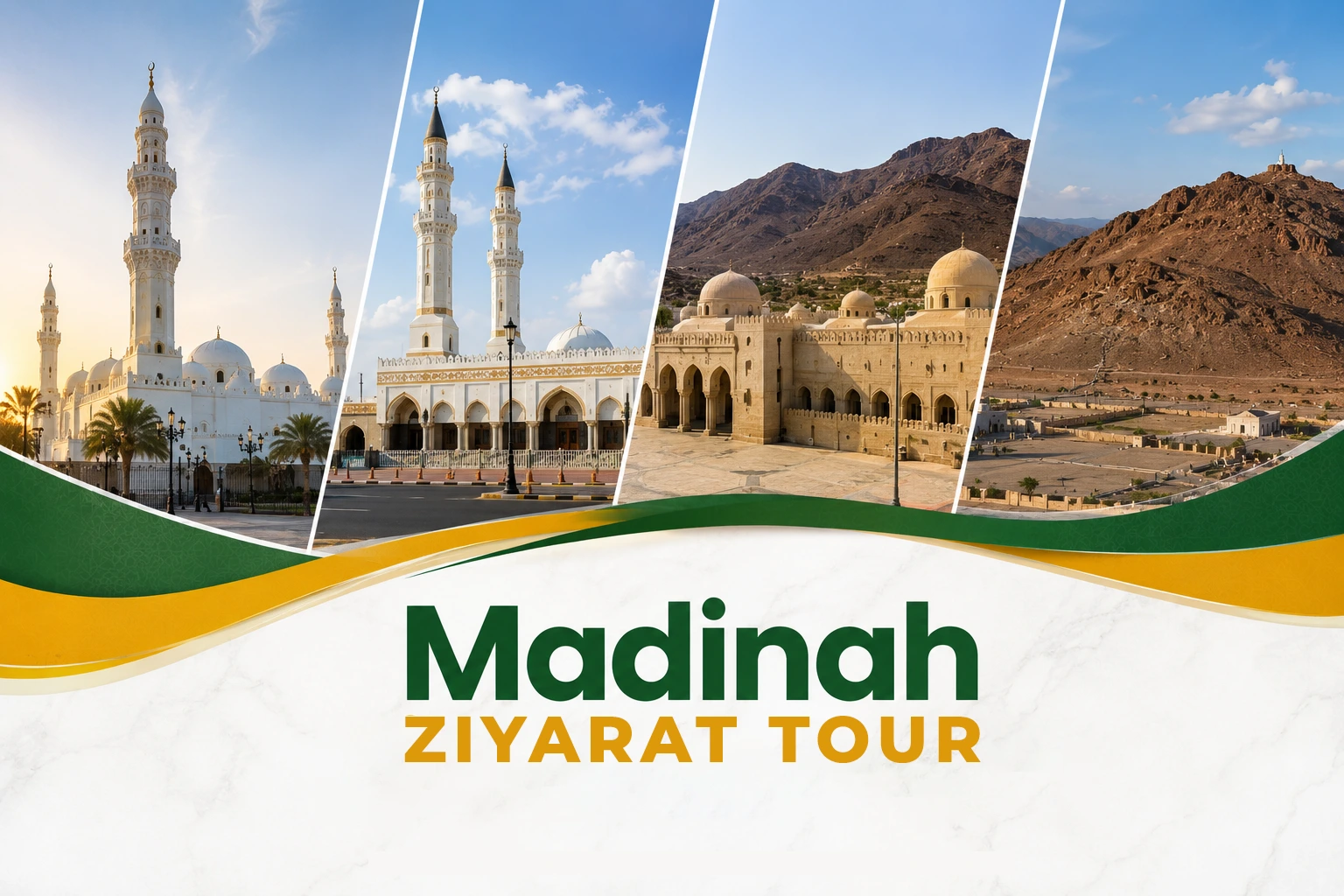
- Madinah Ziyarat guide — thirty sites with the evidence for each.
Getting to the site
Everything is in one place, about four kilometres north of Masjid an-Nabawi, with a large car park. Once there you walk between the cemetery, the hill and the open ground.
Uhud is normally the final stop on the Madinah round after Quba and Qiblatayn, and it is the one people underestimate. Allow an hour. Our Madinah Ziyarat private car covers the whole round on one fixed fare for the vehicle with waiting included at each stop, which is what makes the extra time at Uhud possible without a second fare. For a guided version, see the Madinah Ziyarat tour.
Accuracy note
The date of Shawwal in the third year after the Hijrah, the approximate numbers of three thousand Makkans and seven hundred Muslims, the consultation before the battle, the stationing of around fifty archers under Abdullah ibn Jubayr, their descent, the cavalry counter-attack led by Khalid ibn al-Walid, the wounding of the Prophet ﷺ, the rumour of his death, and the roughly seventy Companions killed including Hamza and Mus'ab ibn Umayr, are established in the hadith and seerah literature. The verses referred to are in Surah Al Imran and are given here in meaning, not as translation. Precise identifications of individual rocks, caves or spots on the battlefield are traditional at best and we have not repeated them. Visiting is not a rite of Hajj or Umrah and no reward for visiting the battlefield is authentically reported. Content verified August 2026. Found a mistake? Tell us.
Frequently asked questions
Planning a Saudi trip?
Pre-book a private car, find a stay, or ask us anything on WhatsApp.
Last updated: 25 September 2026·Sources reviewed by the Wadana Go editorial team.