The Martyrs of Uhud: The Cemetery at the Foot of the Mountain
Short answer
The Martyrs of Uhud cemetery is a walled enclosure at the foot of Mount Uhud, about four km north of Masjid an-Nabawi, holding around seventy Companions killed in the battle in year three. Hamza ibn Abd al-Muttalib is among them. Sahih al-Bukhari records they were buried unwashed, in their clothes, two to a grave. Visiting is not a rite of Hajj or Umrah.
Key takeaways
- ✓Around seventy Companions are buried at the foot of Mount Uhud, including Hamza ibn Abd al-Muttalib, the Chief of the Martyrs.
- ✓Sahih al-Bukhari records they were not washed, were buried in their own clothes, and were placed two to a grave.
- ✓The Prophet ﷺ asked which of the two knew more Qur'an and placed that one in the grave first. The funeral prayer was not offered at the time.
- ✓Bukhari also records that eight years later he went out and prayed over them, like a man bidding farewell to the living and the dead.
- ✓Surah Al Imran describes those killed in the way of Allah as alive with their Lord. Sahih Muslim explains their souls are in the bodies of green birds.
- ✓The graves are plain and individual graves cannot be identified. What is marked is the enclosure, not the person.
- ✓Touching the fence, throwing money over it, or taking earth away has no basis in the sunnah, whatever you see others doing.
Quick facts
- City
- Madinah, at the foot of Mount Uhud
- Distance
- About 4 km north of Masjid an-Nabawi
- Buried there
- Around 70 Companions, including Hamza ibn Abd al-Muttalib
- Access
- Viewed from outside the fenced enclosure
- Women
- Yes. The viewing area outside the enclosure is open
- Part of Umrah or Hajj
- No. A sunnah visit, not a rite
- Can a car reach it
- Yes, with a large visitor car park
- Best time
- Early morning. No shade anywhere on the site
- Evidence level
- A. Burial details and the later prayer are in Sahih al-Bukhari
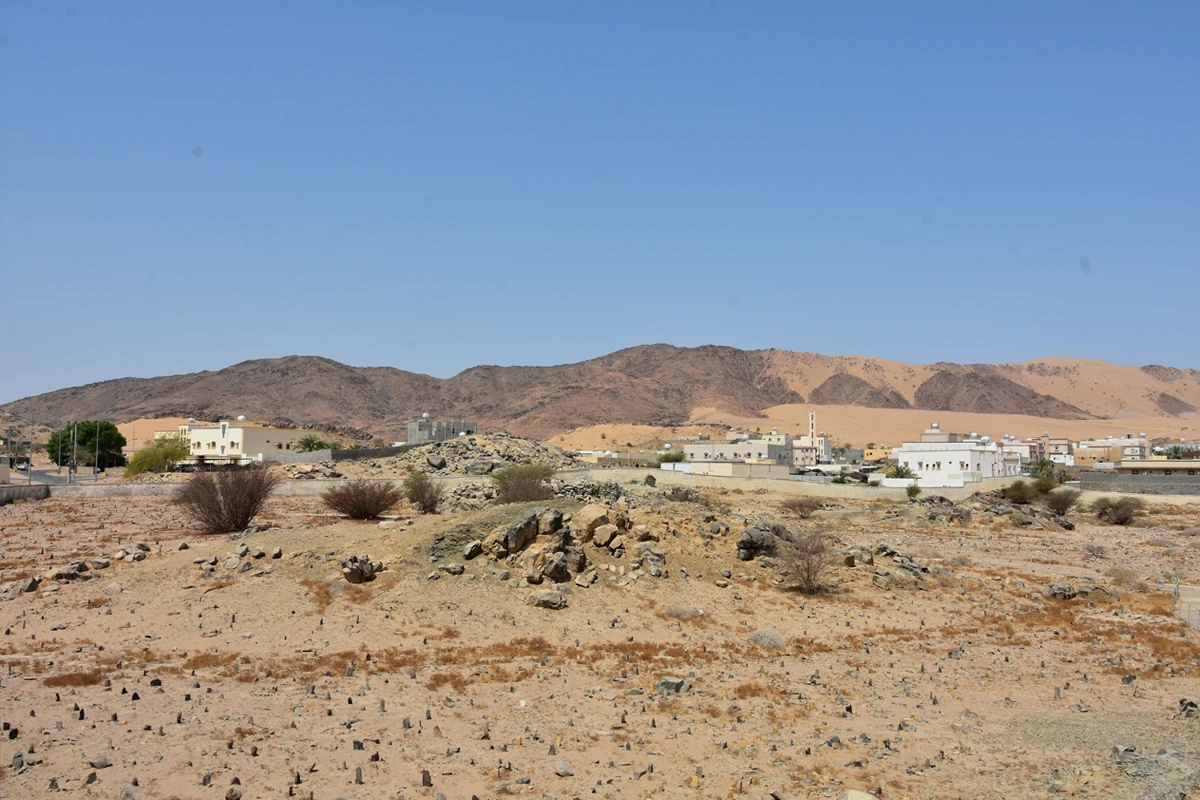
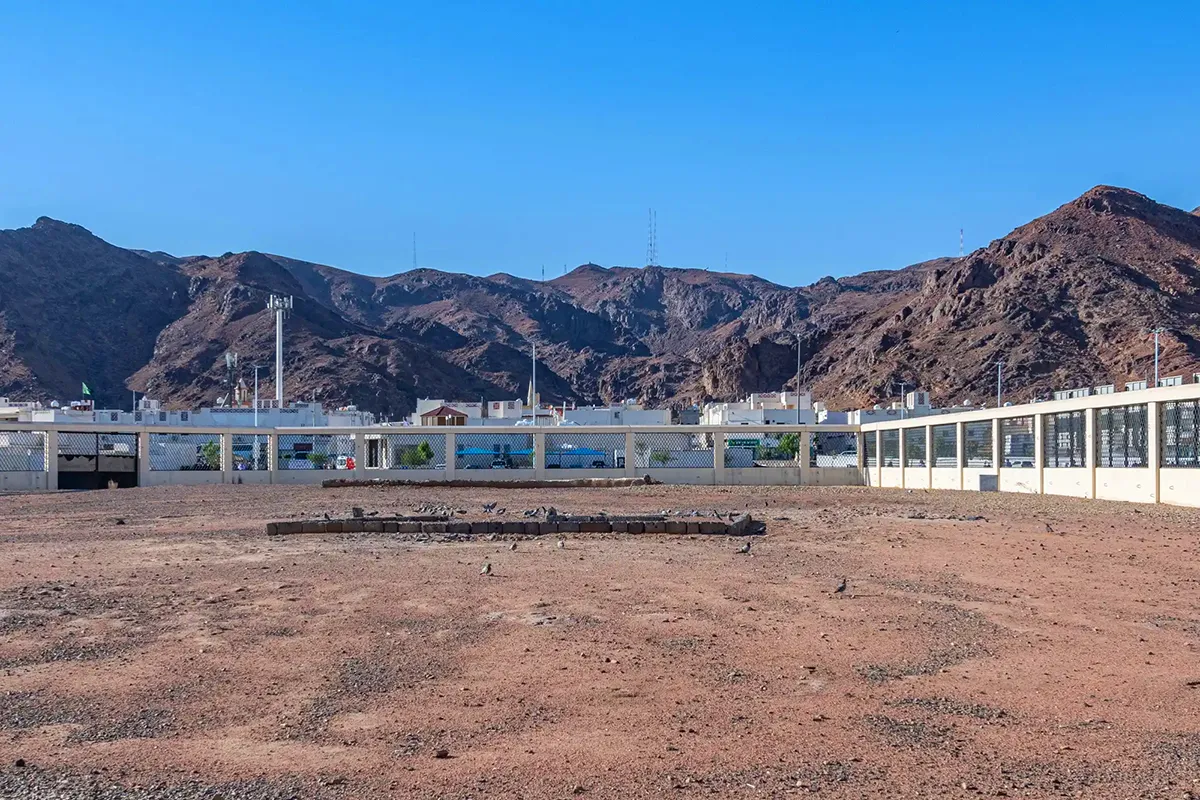
At the foot of Mount Uhud there is a low walled enclosure of plain graves. Around seventy Companions killed in the battle are buried inside it, among them Hamza ibn Abd al-Muttalib, the Prophet's uncle, may Allah be pleased with him.
It is a small place and most visitors are there for ten minutes. This page is about what those ten minutes are actually for.
How they were buried
The burial of the Uhud martyrs is unusual, and it is described in Sahih al-Bukhari in some detail.
- They were not washed. Ordinarily a Muslim body is washed before burial. These were buried in the state they were found.
- They were buried in their own clothes, with their blood on them.
- Two were placed in one grave, and sometimes shrouded together in a single cloth.
- The Prophet ﷺ would ask which of the two knew more of the Qur'an, and that one was placed in the grave first.
- The funeral prayer was not offered over them at the time.
That last detail has been discussed by scholars for centuries, and it is one of the reasons the martyr's death is treated differently in Islamic law from any other.
Sahih al-Bukhari also records that eight years later the Prophet ﷺ went out and prayed over the martyrs of Uhud, like a man bidding farewell to the living and the dead. Eight years. He did not forget them.
Who is buried there
Around seventy Companions. The most well known is Hamza, called Sayyid al-Shuhada, the Chief of the Martyrs. The sources record that he was buried in the same grave as his nephew Abdullah ibn Jahsh, may Allah be pleased with them both.
Others buried at Uhud include Mus'ab ibn Umayr, who had been the first teacher sent to Madinah, and Abdullah ibn Amr ibn Haram, the father of Jabir ibn Abdullah, may Allah be pleased with them.
As at Jannat al-Baqi, the graves today are plain and the individual graves are not identifiable. What is marked is the enclosure, not the person.
What the Qur'an says about them
Surah Al Imran addresses this directly: do not think of those killed in the way of Allah as dead. They are alive with their Lord, and provided for.
Sahih Muslim records an explanation of that verse in which the souls of the martyrs are in the bodies of green birds that go where they wish in Paradise.
This is level A material, from the Qur'an and an authentic report, and it changes the mood of the visit. You are not standing at the graves of people who lost. You are standing at the graves of people the Qur'an describes as alive.
What you will see
A rectangular enclosure with a low wall and a metal fence, level ground inside, plain stone-edged graves, and a raised area associated with the grave of Hamza. There is a viewing area outside the fence where most visitors stand.
There are no domes, no headstones and no inscriptions. Structures over the graves were removed, in line with the reports prohibiting building over graves, and the site has been kept plain since.
Outside the enclosure there is a busy visitor area with parking, stalls and sellers. It can feel more like a market than a cemetery. Walk past it.
What to do, and what not to
Do:
- Give the salam to the people of the graves, as taught for visiting any Muslim cemetery.
- Make du'a to Allah for them.
- Stand for a moment and think about what they gave up, and how little was written over them afterwards.
Do not:
- Do not ask anything of the dead. Du'a is asked of Allah.
- Do not touch or rub the fence or the walls, and do not throw money or objects over the railings.
- Do not take earth or stones away.
- Do not raise your voice, and do not photograph other visitors.
You will see all four of those things happening. None of them has a basis in the sunnah, and you lose nothing at all by not joining in.
Is visiting part of Hajj or Umrah?
No. It is not a rite of either, and there is no prescribed prayer at the cemetery. Visiting graves in general is a sunnah, and the Prophet ﷺ himself came back to these graves, so there is a real precedent for the visit. But nothing you are obliged to do depends on it.
Practical notes
- Opening. The cemetery area is open around the standard Ziyarat hours, but the enclosure itself is fenced and you view from outside. Times and access change; ask on the day.
- Go early. The whole Uhud site is open and shadeless.
- Allow more time than you planned. Most people arrive expecting a quick stop and end up staying.
- Women visit too. The viewing area outside the enclosure is open, unlike Jannat al-Baqi where the arrangements differ.
On the same site
- Mount Uhud — the mountain itself and the hadith about it.
- Jabal al-Rumah — the archers' hill, a few minutes' walk away.
- The Battle of Uhud — how the day actually unfolded, and where.
- Madinah Ziyarat guide — every site with the evidence for it.
Getting there
The cemetery is at the foot of Mount Uhud, about four kilometres north of Masjid an-Nabawi, with a large visitor car park. Everything at Uhud is within walking distance once you arrive.
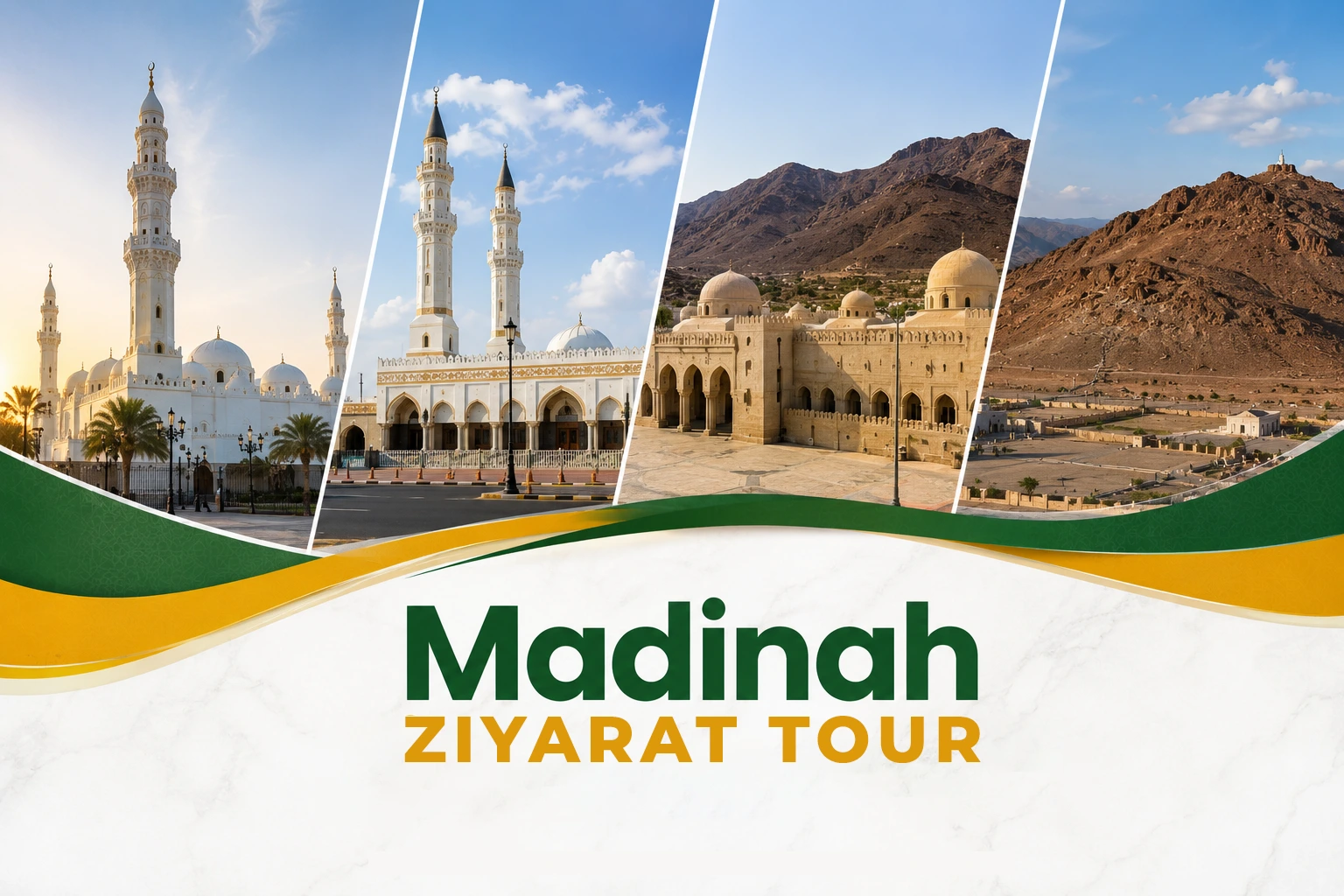
Uhud is normally the last stop on the Madinah round after Quba and Qiblatayn. Doing that round by separate taxis means waiting at a kerbside in the sun three times. The Madinah Ziyarat private car covers it on one fixed fare for the vehicle with the driver waiting, which matters here because almost everyone stays longer at Uhud than they planned. For a guided version see the Madinah Ziyarat tour.
Accuracy note
The details of the burial of the Uhud martyrs, including that they were not washed, were buried in their clothes, were placed two to a grave, that the one who knew more Qur'an was placed first, and that the funeral prayer was not offered at the time, are recorded in Sahih al-Bukhari. The report that the Prophet ﷺ prayed over the martyrs eight years later, like one bidding farewell to the living and the dead, is also in Sahih al-Bukhari. The verse describing those killed in the way of Allah as alive with their Lord is in Surah Al Imran, and the explanation involving the souls of the martyrs in the bodies of green birds is in Sahih Muslim. The figure of around seventy martyrs and the burial of Hamza with Abdullah ibn Jahsh follow the hadith and seerah literature. Individual graves at the site are not identifiable today. Visiting is not a rite of Hajj or Umrah. Access arrangements and viewing times change; check on the day. Content verified August 2026. Something to correct? Tell us.
Frequently asked questions
Planning a Saudi trip?
Pre-book a private car, find a stay, or ask us anything on WhatsApp.
Last updated: 25 September 2026·Sources reviewed by the Wadana Go editorial team.