Jamrat al-Aqaba: The Only Pillar Stoned on the Day of Eid
Short answer
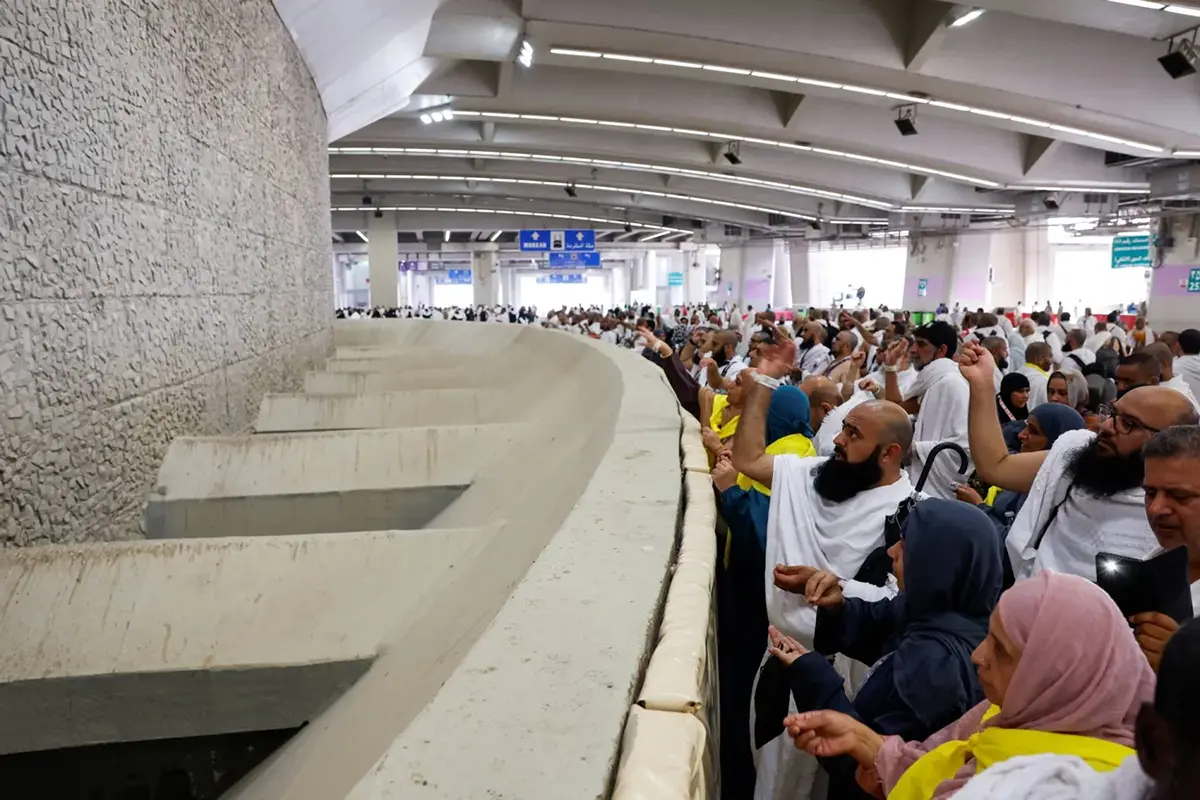
Jamrat al-Aqaba is the largest of the three Jamarat in Mina, standing at the Makkah end of the valley. It is the only pillar stoned on the tenth of Dhul Hijjah, with seven pebbles. Unlike the other two, no standing for du'a follows the stoning. On the days of Tashreeq it is stoned last of the three.
Key takeaways
- ✓Jamrat al-Aqaba is the largest of the three Jamarat and sits at the Makkah end of Mina.
- ✓It is the only pillar stoned on 10 Dhul Hijjah, the day of Eid, with seven pebbles.
- ✓You do not stop for du'a after stoning it, which is the opposite of the other two.
- ✓On the Tashreeq days it is stoned third, after the small and middle pillars.
- ✓Stoning it on the tenth is what begins the first release from ihram restrictions.
- ✓The mid-morning of the tenth is the most crowded period at the whole complex.
- ✓Masjid al-Bay'ah stands nearby, on the site of the pledges given before the Hijrah.
Quick facts
- Where
- Makkah end of Mina, in the Jamarat complex
- Which pillar
- The largest of the three
- Also called
- Al-Jamrah al-Kubra
- Stoned on 10 Dhul Hijjah
- Yes, and it alone
- Pebbles
- Seven
- Du'a after stoning?
- No, unlike the other two
- Order on Tashreeq days
- Third and last
- Part of Umrah?
- No. The stoning belongs to Hajj.
Which pillar this is
Of the three Jamarat in Mina, Jamrat al-Aqaba is the largest and the closest to Makkah. It is also called al-Jamrah al-Kubra.
Its position at the Makkah end of the valley is not just a detail of geography. It marks the boundary of Mina on that side, and it is the pillar you reach last if you are walking towards the city.
It stands inside the same multi-level complex as the other two, and can be approached from any of the five floors.
Three ways it is different
Most confusion on the day of Eid comes from treating all three pillars the same. They are not the same.
1. On the tenth, it is the only one
On the tenth of Dhul Hijjah, after the night at Muzdalifah, pilgrims return to Mina and stone Jamrat al-Aqaba alone, with seven pebbles. The small and middle pillars are not stoned that day at all.
People arrive at the complex on the tenth, see three pillars, and worry they have missed something. They have not.
2. No du'a afterwards
On the days of Tashreeq, after stoning the small pillar and after the middle one, the sunnah is to step aside, face the qibla and stand a long while making du'a.
After Jamrat al-Aqaba, you do not. You throw your seven and you move on.
This is one of those details that is easy to remember once you know the reason it is asked about: people see others standing after the first two and assume they should do the same after the third.
3. It opens the way out of ihram
Stoning Jamrat al-Aqaba on the tenth is the first of the acts that release a pilgrim from the restrictions of ihram. With it, and with shaving or trimming, most restrictions lift, though relations between spouses remain until the tawaf is done.
That is why the tenth feels like a turning point in a way the other days do not.
The order on the tenth
Four things happen on the day of Eid, and the order the Prophet performed them in is the order most pilgrims follow.
- Stone Jamrat al-Aqaba with seven pebbles.
- The sacrifice, for those on whom it is due.
- Shave or trim the hair.
- Tawaf al-Ifadah at the Grand Mosque, with sa'i for those who owe it.
Scholars discuss what happens when someone does these out of order, and the general position reported from the Prophet on that day was that people who had done things in a different sequence were told to proceed without blame. Ask your own group's scholar if it applies to you rather than working it out in the crowd.
Our Hajj step by step guide lays the whole day out in sequence.
The busiest hour of Hajj
Mid-morning on the tenth at Jamrat al-Aqaba is, by some distance, the heaviest concentration of people anywhere in the pilgrimage.
Everyone has come from Muzdalifah. Everyone has the same single pillar to reach. And the older habit of insisting on the morning specifically, when later in the day is permitted, concentrates it further.
Practical points, and they are worth taking seriously:
- Later in the day is allowed. Going in the afternoon or evening of the tenth is valid and much safer.
- Use the floor you are directed to. Each level of the complex is fed from a different direction so that groups do not cross.
- Throw and keep walking. Since there is no du'a after this pillar, there is no reason to stand still, and standing still is what causes crushes.
- Weak and elderly pilgrims may appoint a deputy to throw for them.
- Count your seven pebbles before you get there.
What stands beside it
Close to Jamrat al-Aqaba is Masjid al-Bay'ah, on the site connected with the two Pledges of Aqaba, when men of Madinah met the Prophet during the pilgrimage season in the years before the Hijrah and committed themselves to him.
Saudipedia records that the mosque was built by the Abbasid caliph Abu Ja'far al-Mansur in 761.
The two things are close together and unconnected in meaning. The stoning is a rite of Hajj. The pledges were a political and religious commitment that made the Hijrah possible. They simply happened in the same corner of the same valley, several years apart.
Outside Hajj
There is no rite at Jamrat al-Aqaba outside Hajj. No pebbles, no prayer, no reward for visiting it, and nothing to perform.
You can see it from the road when passing through Mina on a Ziyarat round, which is worth doing for the scale, and that is the whole of it. Mina, Muzdalifah and Arafat sit one after another on the same road, so all three fit into one leg of a Makkah Ziyarat round, from SAR 200 per vehicle with waiting included. Fares reviewed August 2026.
Nearby
| Place | What it is |
|---|---|
| The three Jamarat | The full ritual, the order and the complex. |
| Mina | The valley, its days and its boundaries. |
| Masjid al-Bay'ah | Beside the pillar, on the site of the pledges. |
| Masjid al-Khayf | The main mosque of Mina, at the southern side. |
Accuracy note
The identification of Jamrat al-Aqabah as the largest of the three Jamarat, standing at the Makkah end of Mina, comes from Saudipedia, as does the record that Masjid al-Bay'ah near it was built by the Abbasid caliph Abu Ja'far al-Mansur in 761.
That Jamrat al-Aqabah alone is stoned on the tenth of Dhul Hijjah with seven pebbles, that all three are stoned in order on the days of Tashreeq, that a long du'a facing the qibla follows the first and second pillars but not the third, and that stoning it on the tenth is among the acts that release a pilgrim from the restrictions of ihram are the positions established from the Prophet's performance at the Farewell Pilgrimage as recorded in the authentic collections.
Scholars differ on the details of performing the acts of the tenth out of order, and a pilgrim in that situation should ask a scholar rather than rely on a general page. We have not given a ruling.
No rite exists at the pillar outside the Hajj season. Fares are our own published rates, reviewed August 2026. Verified August 2026.
Frequently asked questions
Planning a Saudi trip?
Pre-book a private car, find a stay, or ask us anything on WhatsApp.
Last updated: 12 October 2026·Sources reviewed by the Wadana Go editorial team.