Jawatha Mosque: The Second Place Jumu'ah Was Ever Prayed
Short answer
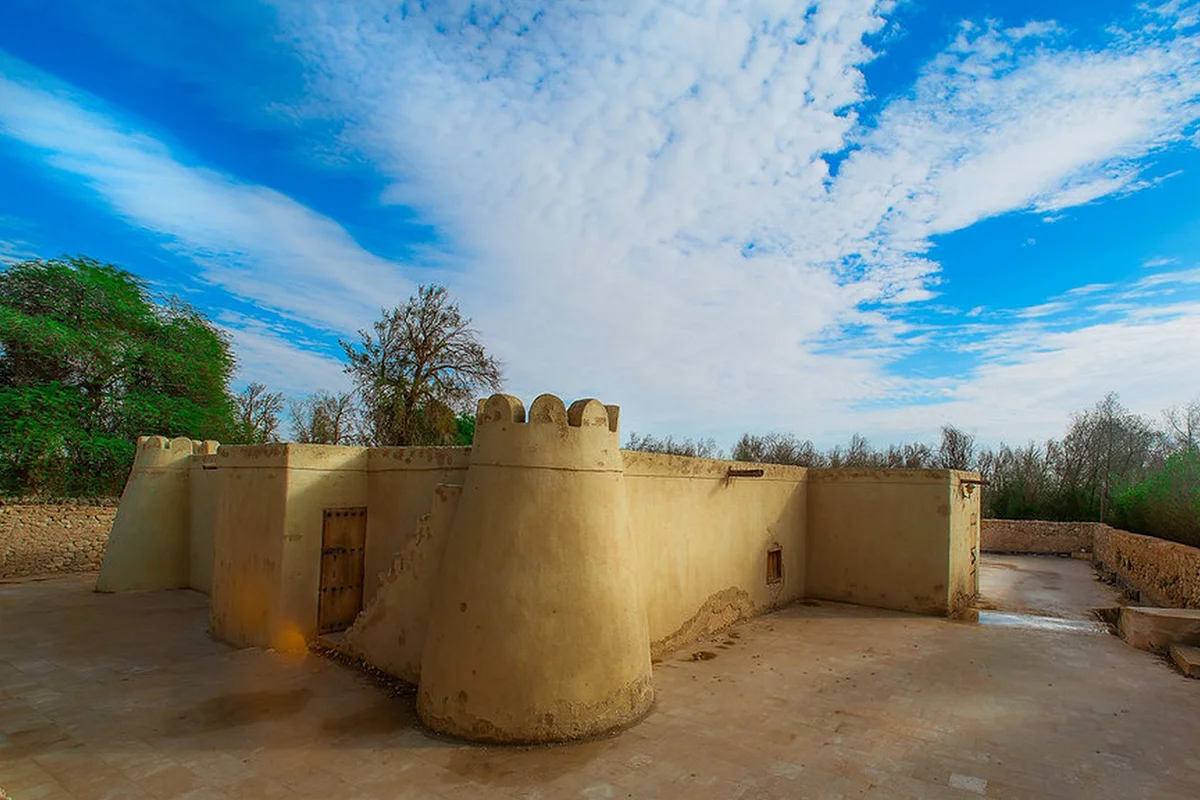
Jawatha Mosque in al-Ahsa was built by the Banu Abd al-Qays in the seventh year after the Hijrah. Sahih al-Bukhari 892 records that the first Jumu'ah after the one in the Prophet's Mosque was prayed at the mosque of Abd al-Qays at Jawatha. It survives as low ruined walling covering about 205 square metres.
Key takeaways
- ✓Bukhari 892 records that the first Jumu'ah after the one in the Prophet's Mosque was prayed at the mosque of Abd al-Qays at Jawatha.
- ✓Bahrain in the early sources means the whole eastern coastal region, not the island state. Jawatha is in al-Ahsa.
- ✓The delegation of Abd al-Qays is recorded in Bukhari and Muslim. They came from the far edge of Arabia, and they came anyway.
- ✓Saudi sources record the mosque as built by the Banu Abd al-Qays in the seventh year after the Hijrah, initiated by al-Mundhir ibn Amr, al-Ashajj.
- ✓It covers about 205.5 square metres, holds around 170 worshippers, and was laid out in three aisles.
- ✓What survives is low mud-brick and stone walling, not a complete building. Restored in 2009, with further work announced in August 2022.
- ✓The story that the Black Stone was kept here is a tradition we could not verify from an early source.
Quick facts
- Where
- Al-Ahsa Governorate, Eastern Province
- Built by
- The Banu Abd al-Qays
- Date
- Seventh year after the Hijrah, given as 628
- The claim
- Second place in Islam where Jumu'ah was prayed
- The evidence
- Sahih al-Bukhari 892. Level A
- Size
- About 205.5 square metres, three aisles
- Capacity
- Around 170 worshippers
- Condition
- Ruined low walling. Restored 2009
- Part of Umrah or Hajj
- No
There is a mosque in al-Ahsa, in the Eastern Province, that most pilgrims have never heard of, and it holds a place in Islamic history that very few buildings can claim.
The second place in Islam where Jumu'ah was prayed.
And that is not a local boast. It is in Sahih al-Bukhari.
The hadith
Ibn Abbas is recorded as saying that the first Jumu'ah prayed after the Jumu'ah in the mosque of the Messenger of Allah ﷺ was prayed in the mosque of Abd al-Qays at Jawatha, in Bahrain.
That is Sahih al-Bukhari 892, in the Book of Jumu'ah. Level A.
"Bahrain" in the early sources means the whole eastern coastal region, not the island state. Jawatha is in al-Ahsa.
Who Abd al-Qays were
This is where it gets good, because the Qur'an and the sound collections give you these people directly.
The delegation of Abd al-Qays is one of the well-known accounts in Bukhari and Muslim. They came a long way to Madinah. The Prophet ﷺ asked who they were, welcomed them, and gave them instruction, since they said they could only travel in the sacred months and needed something they could take back and teach their people.
He commanded them with belief in Allah alone, and asked them if they knew what that meant. Then prayer, zakat, fasting Ramadan, and giving a fifth of what they gained. And he prohibited certain vessels used for fermenting drink.
These were not a tribe on the road to Makkah. They were at the far edge, on the Gulf, and they came anyway.
The mosque
Saudi heritage sources record that Jawatha Mosque was built by the Banu Abd al-Qays after they accepted Islam, in the Prophet's ﷺ lifetime, with the date given as 628, in the seventh year after the Hijrah.
Their leader, al-Mundhir ibn Amr, known as al-Ashajj, is named as the one who initiated it.
The building is small. Saudi sources give it as 205.5 square metres, holding about 170 worshippers, laid out in three aisles, with the remains of a mihrab and a minbar.
Two hundred square metres. That is the second place Jumu'ah was prayed.
What you see
Parts of it have collapsed over the centuries. What survives is low mud-brick and stone walling and the outlines of the aisles, not a complete building.
It was structurally restored in 2009. In August 2022 it was announced as part of the national historical mosques development project, for further conservation work.
Go expecting an archaeological ruin that you can pray beside, not a functioning grand mosque. That is what it is, and knowing that in advance is most of the visit.
The Black Stone story
You will hear that the Black Stone was kept at Jawatha for around twenty-two years after the Qarmatians took it from Makkah in 317 AH.
The Qarmatian seizure of the Black Stone and its long detention in eastern Arabia before its return is a matter of record. The specific claim that this mosque is where it was kept is a tradition, and we could not verify it from an early source. Saudi heritage descriptions of the mosque do not make the claim.
So: treat it as a story attached to the place, not as history you can lean on.
The evidence, plainly
- Jumu'ah prayed at the mosque of Abd al-Qays at Jawatha, second after the Prophet's Mosque: level A, Sahih al-Bukhari 892.
- The delegation of Abd al-Qays: level A, Bukhari and Muslim.
- Construction by Banu Abd al-Qays in the seventh year, and the dimensions: Saudi heritage sources.
- The Black Stone kept in this mosque: tradition. Not verified by us.
- Any special virtue or prescribed prayer here: none that we could verify.
Is visiting part of Hajj or Umrah?
No. Not a rite of either. Travel for prayer is prescribed for three mosques only: al-Masjid al-Haram, the Prophet's Mosque and al-Masjid al-Aqsa.
Getting there, honestly
We do not run a scheduled service to al-Ahsa and there is no published Wadana Go fare for it. Al-Ahsa has its own airport and is a straightforward drive from Dammam and Khobar. See our Khobar and Eastern Province guide for the region, and renting a car in Saudi Arabia if you plan to drive. Our Beyond the Haramayn guide covers ziyarat outside Makkah and Madinah.
Related reading
- The Jawatha archaeological site — the town around the mosque.
- Dumat al-Jandal — another edge of the early map.
- Khobar and the Eastern Province — the region.
- Beyond the Haramayn — the wider ziyarat picture.
Accuracy note
The narration of Ibn Abbas that the first Jumu'ah prayed after the Jumu'ah in the mosque of the Messenger of Allah ﷺ was prayed in the mosque of Abd al-Qays at Jawatha in Bahrain is recorded in Sahih al-Bukhari 892 in the Book of Jumu'ah and is level A; "Bahrain" in the early sources refers to the eastern coastal region of Arabia, not the modern island state. The account of the delegation of Abd al-Qays coming to the Prophet ﷺ, their statement that they could travel only in the sacred months, and the instruction given to them, is recorded in Sahih al-Bukhari and Sahih Muslim and is level A; we have summarised it rather than reproducing a translation. That Jawatha Mosque was built by the Banu Abd al-Qays after they accepted Islam, with the date given as 628 in the seventh year after the Hijrah, that their leader al-Mundhir ibn Amr known as al-Ashajj initiated it, that the mosque covers 205.5 square metres with capacity for about 170 worshippers in three aisles with the remains of a mihrab and minbar, that it was structurally restored in 2009, and that it was announced in August 2022 as part of the national historical mosques development project, follows Saudi heritage sources including Saudipedia; we note that one Saudi source carries an internal discrepancy in its construction date and we have used the seventh-year figure that the body of that source and other sources give. The claim that the Black Stone was kept in this mosque for around twenty-two years after the Qarmatians took it in 317 AH is a tradition attached to the place; the seizure and long detention of the Black Stone in eastern Arabia is a matter of record, but we could not verify the specific identification of this mosque from an early source, and Saudi heritage descriptions of the mosque do not make the claim. We could not verify any special virtue or prescribed prayer for this mosque. Travel for prayer is prescribed for three mosques only. Visiting is not a rite of Hajj or Umrah. We do not run a scheduled service to al-Ahsa and have not quoted a fare. Content verified August 2026. Correction? Tell us.
Frequently asked questions
Planning a Saudi trip?
Pre-book a private car, find a stay, or ask us anything on WhatsApp.
Last updated: 29 August 2026·Sources reviewed by the Wadana Go editorial team.