Masjid al-Ghamamah: The Cloud Mosque, 300 Metres from the Haram
Short answer
Masjid al-Ghamamah stands about 300 metres southwest of Masjid an-Nabawi, on the ground identified by tradition as the musalla where the Prophet ﷺ prayed Eid and the prayer for rain. Its name means the cloud. Al-Samhudi records a mosque built here under Umar ibn Abd al-Aziz as governor. Visiting is not a rite of Hajj or Umrah.
Key takeaways
- ✓The name al-Ghamamah means the cloud, and connects the site with the prayer for rain.
- ✓It is also called Masjid al-Musalla, because this ground was the open prayer area used for the Eid prayers.
- ✓The Prophet ﷺ praying Eid on open ground rather than inside the mosque is established in the authentic collections.
- ✓The prayer for rain is well documented, in more than one form. The Bukhari narration names Mount Sela', not this site.
- ✓That this exact ground was the musalla is historical tradition, level B, carried by the Madinah historians.
- ✓Al-Samhudi records a mosque built here under Umar ibn Abd al-Aziz as governor, 87 to 93 AH. The present building is Ottoman in character.
- ✓No special reward for praying here is authentically reported, and the mosque is not always open.
Quick facts
- City
- Madinah, about 300 m southwest of Masjid an-Nabawi
- Also called
- Masjid al-Musalla
- Name means
- The cloud
- First built
- Under Umar ibn Abd al-Aziz as governor, 87 to 93 AH
- Present building
- Ottoman in character from the last major renovation
- Special prayer or reward
- None authentically reported
- Part of Umrah or Hajj
- No
- Can a car reach it
- Yes, but it is an easy walk from the Prophet's Mosque
- Time to allow
- 5 to 10 minutes
- Evidence level
- A for the Eid prayer and istisqa; B for this being the site
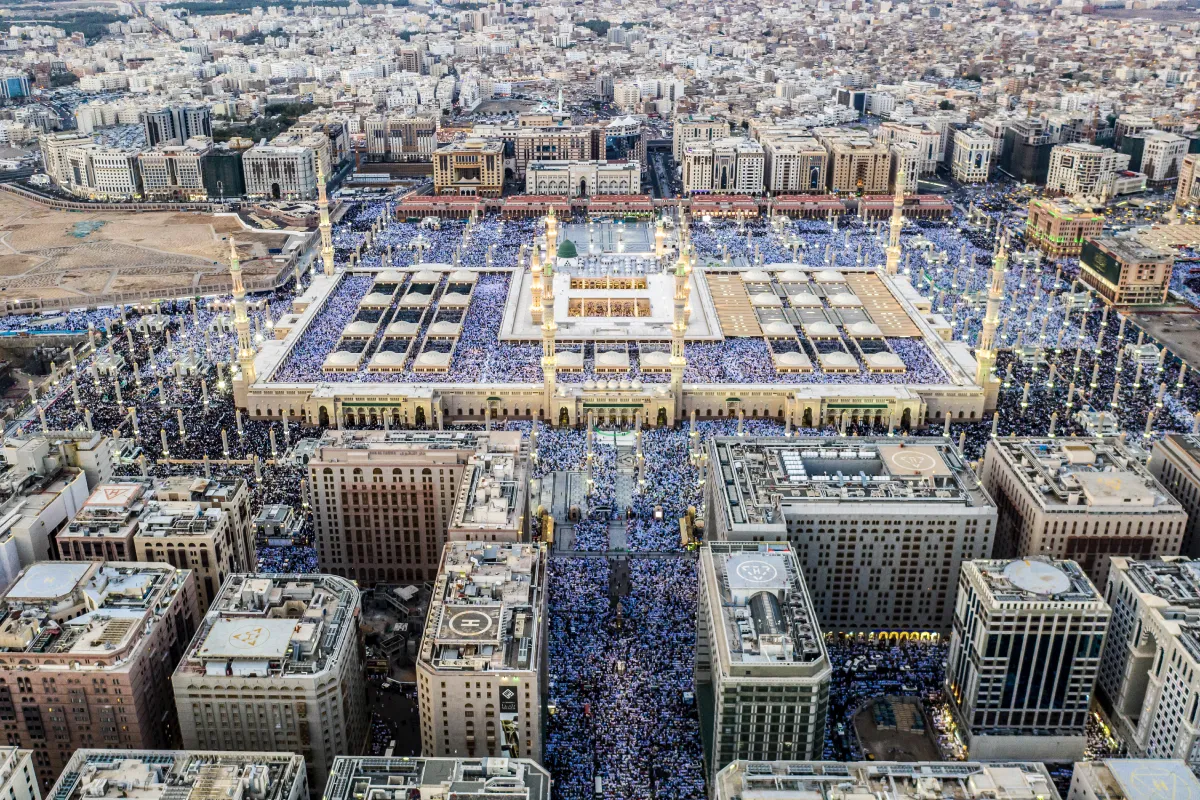
Masjid al-Ghamamah stands about 300 metres southwest of Masjid an-Nabawi, close enough that most pilgrims walk past it without stopping. It is one of the oldest surviving mosque buildings in Madinah and it is worth five minutes of your time.
The name means the cloud.
Where the name comes from
This ground was the musalla, the open prayer ground outside the mosque used for the Eid prayers and for the prayer for rain. That is why the building is also called Masjid al-Musalla.
The name al-Ghamamah is connected with the prayer for rain, salat al-istisqa. The people of Madinah complained of drought, the Prophet ﷺ prayed, and clouds gathered and rain fell.
One point of accuracy here. The istisqa is well documented in the hadith literature, and it is recorded in more than one form: a narration in Sahih al-Bukhari describes a man coming into the mosque during the Friday khutbah and asking for rain, with a cloud appearing from behind Mount Sela'; other narrations describe the Prophet ﷺ going out to the musalla and praying two rak'ahs there.
So the practice is established. Which particular occasion gave this building its name is the kind of detail the later literature settled rather than the hadith itself.
The Eid prayer ground
What is firmly established is that the Prophet ﷺ prayed the Eid prayers on open ground outside the mosque rather than inside it. That is recorded in the authentic collections and it is why so many scholars encourage praying Eid in an open space where the weather allows.
This site is the place identified by tradition as that musalla. Abu Bakr al-Siddiq, may Allah be pleased with him, is recorded as continuing to use it during his caliphate, which is why a mosque named after him stands nearby.
The building
Al-Samhudi, the great historian of Madinah who died in 911 AH, records that a mosque was built here during the period when Umar ibn Abd al-Aziz governed Madinah, between 87 and 93 AH.
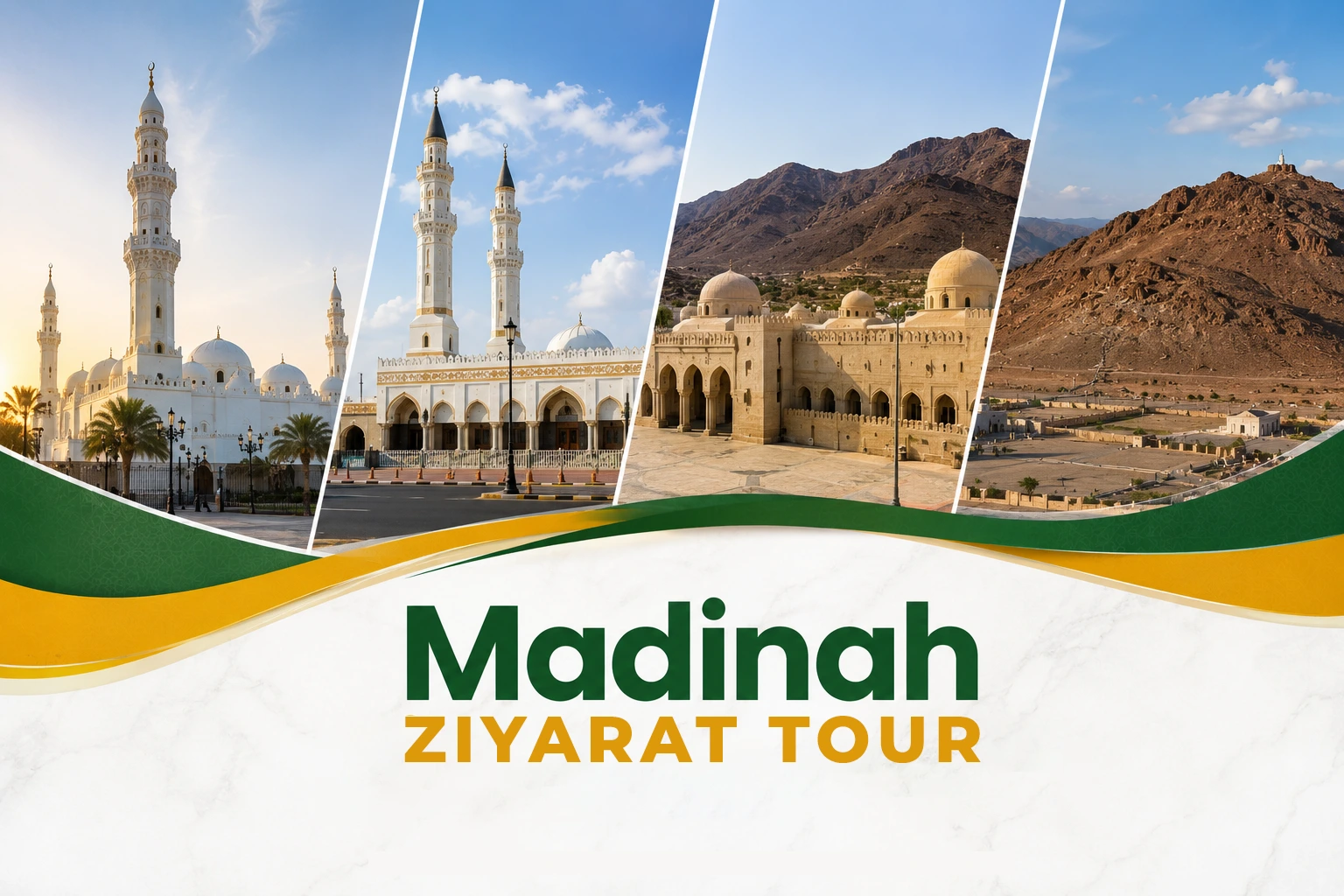
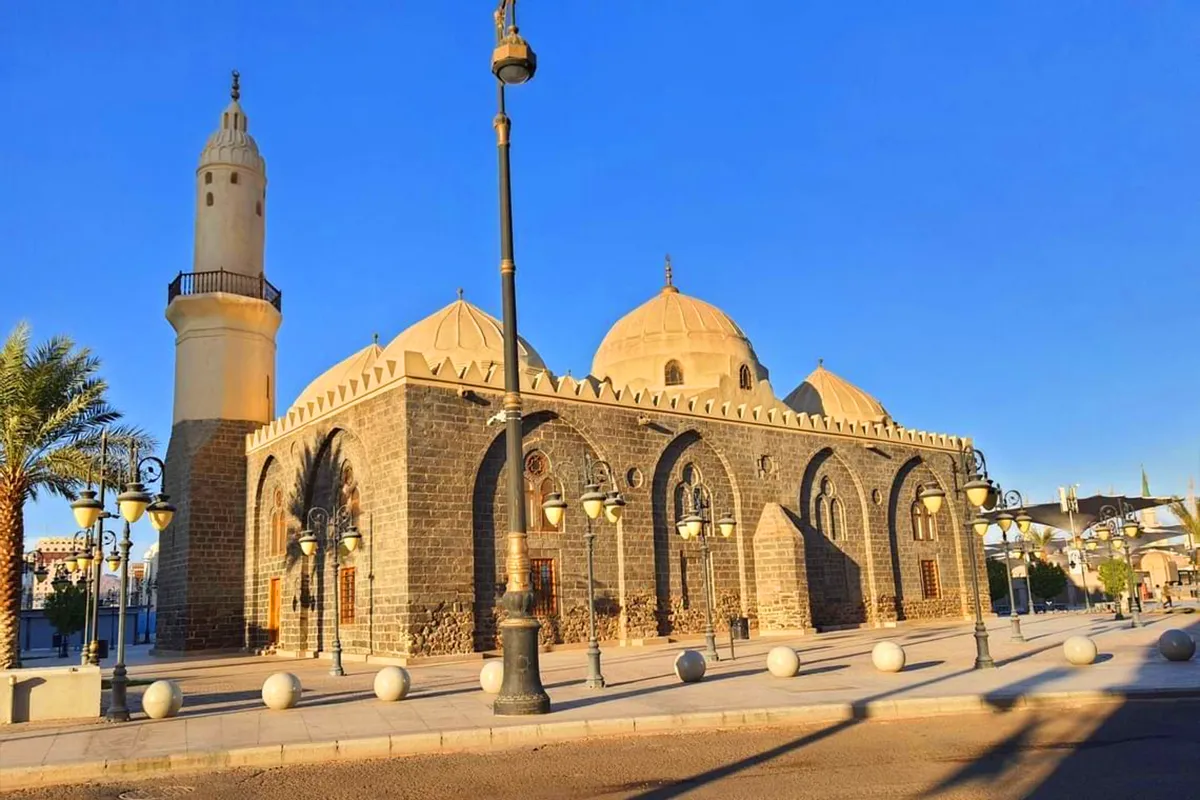
What stands today keeps its Ottoman character from the last major renovation: pale stone, a set of low domes over a square hall, and a plain, restrained exterior with no minaret of any height.
It is a genuinely old building in a city where very little that is old survives, and that alone makes it worth a look.
The evidence, plainly
- Praying Eid on open ground, and the prayer for rain: established in the authentic collections.
- That this exact site was the musalla: historical tradition, level B, carried by the Madinah historians and continuous use.
- A special reward for praying in this mosque: none that we know of. No prescribed prayer attaches to it.
Is visiting part of Hajj or Umrah?
No. Not a rite of either.
Visiting
- Five to ten minutes, and you can walk there from the Prophet's Mosque.
- Access varies. The mosque is not always open, and it has been reported closed outside prayer times.
- Look at the domes. The roof arrangement is the most distinctive thing about it.
- Go on the way to or from Masjid an-Nabawi rather than making a separate trip.
Nearby
- Masjid an-Nabawi — 300 metres away.
- Masjid Abu Bakr — the standing one, in the same area.
- Mount Sela' — named in the Bukhari narration of the prayer for rain.
- Madinah Ziyarat guide — every site with its evidence stated.
Getting there
Madinah's historic mosques are spread out, and doing them one taxi at a time wastes most of a morning at kerbsides. Our Madinah Ziyarat private car covers the round on one fixed fare for the whole vehicle, with the driver waiting at every stop, and the Madinah Ziyarat tour is the guided version. Arriving in the city, the Madinah airport transfer has fixed fares.
Accuracy note
The Prophet ﷺ praying the Eid prayers on open ground outside the mosque, and the prayer for rain, are established in the authentic hadith collections; the Bukhari narration of the istisqa names Mount Sela'. The identification of this site as the musalla used for those prayers is historical tradition carried by the Madinah historians and continuous local use, not fixed by an authentic hadith. Al-Samhudi, who died in 911 AH, records a mosque built here during the period Umar ibn Abd al-Aziz governed Madinah, 87 to 93 AH. The present building retains its Ottoman-era character from the last major renovation. The distance of about 300 m southwest of Masjid an-Nabawi follows published descriptions. We know of no authentic report attaching a special reward to praying in this mosque. Visiting is not a rite of Hajj or Umrah, and the building is not always open. Content verified August 2026. Correction? Tell us.
Frequently asked questions
Planning a Saudi trip?
Pre-book a private car, find a stay, or ask us anything on WhatsApp.
Last updated: 22 September 2026·Sources reviewed by the Wadana Go editorial team.