Masjid al-Sakharat: The Lost Mosque at the Foot of Jabal al-Rahmah
Short answer
Masjid al-Sakharat, the Mosque of the Rocks, stood at the foot of Jabal al-Rahmah on the plain of Arafat. It marked the place where the Prophet Muhammad stood on the Day of Arafah after praying at Masjid Namirah. Saudipedia lists it among the mosques of the holy sites that no longer exist.
Key takeaways
- ✓Masjid al-Sakharat stood at the foot of Jabal al-Rahmah in Arafat, not in Mina.
- ✓Saudipedia lists it among the holy site mosques that no longer exist.
- ✓It marked where the Prophet stood on the Day of Arafah until sunset.
- ✓The name comes from the rocks, al-sakharat, at the base of the hill.
- ✓The whole plain of Arafat is a valid place to stand. That spot has no exclusive status.
- ✓Crowding towards one point on the ninth is a common and avoidable mistake.
- ✓Wadi Uranah is the one part of the area that does not count for the standing.
Quick facts
- Where it stood
- Foot of Jabal al-Rahmah, Arafat
- Status
- No longer exists
- Name means
- The rocks
- What it marked
- The Prophet's standing on the Day of Arafah
- Distance from the Haram
- Arafat is about 20 km away
- Needed for Hajj?
- No. Any part of Arafat is valid.
- Car access
- Yes to Arafat, outside the Hajj season
- Part of Umrah?
- No. Arafat belongs to Hajj.
It is not there
Masjid al-Sakharat appears on Ziyarat lists and in older books about the holy sites. Saudipedia lists it among the mosques of the holy sites that no longer exist, alongside Masjid al-Kawthar, Masjid al-Kabsh and Masjid al-Mursalat.
If you have it on an itinerary, there is nothing to arrive at. What is still there is the ground, the rocks and the hill above them, and those are worth seeing for their own reasons.
One more correction while we are here, because it appears on a lot of pages: Masjid al-Sakharat was in Arafat, not in Mina. Several lists group it with the Mina mosques. It was not one of them.
What it was
Al-sakharat means the rocks. The mosque took its name from the large boulders at the foot of Jabal al-Rahmah, the hill that rises out of the plain of Arafat.
It marked the place where the Prophet Muhammad stood on the Day of Arafah during the Farewell Pilgrimage. The sequence of that day is well recorded: he prayed Dhuhr and Asr combined at Masjid Namirah, then moved to the area near the foot of the hill, and remained there in supplication until sunset.
A mosque was later built among those rocks to mark the spot. It is gone now.
The point that matters more than the mosque
Here is the thing worth taking away from this page, and it will save some pilgrims a great deal of difficulty.
The whole of Arafat is a valid place to stand. The standing, the wuquf, is fulfilled anywhere within the boundaries of Arafat on the Day of Arafah. There is no requirement to be at the hill, at the rocks, or at any particular point.
The Prophet said that he had stood there and that all of Arafat is a place of standing. That statement is precisely what stops the plain from becoming a scramble for one patch of ground.
The one exception is Wadi Uranah, which lies outside the boundary and does not count. That is why the boundary markers matter and why the mosque at Namirah is built partly outside them.
So a pilgrim standing at the far edge of Arafat, in the shade of a tent, has done the rite exactly as a pilgrim halfway up the hill has. Every year large numbers of people exhaust themselves in the heat trying to reach the summit of Jabal al-Rahmah, and no part of that effort is required.
What you can see now
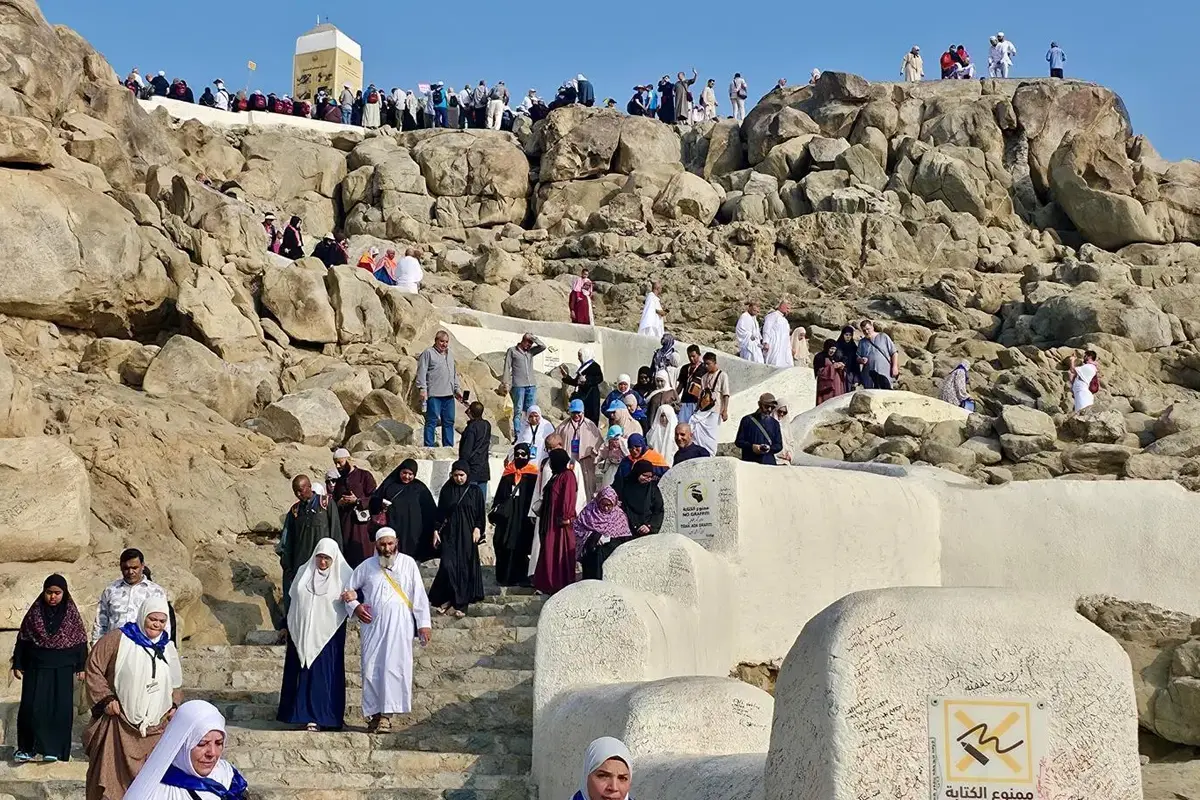
The rocks are still there. So is the hill, and the white pillar on top of it that marks the summit.
Outside the Hajj season the plain is open and empty, and you can walk to the base of Jabal al-Rahmah and up it if you want to. The scale of Arafat is the thing that surprises people: it is much larger and much flatter than photographs suggest, and standing in the middle of it while it is empty is a strange and useful experience.
There is no marker for where the mosque stood, and we would be cautious about anyone who offers to show you the exact spot.
Is there anything prescribed here?
No prayer is prescribed at the site of Masjid al-Sakharat, no reward for reaching that particular place is established, and it is not required for Hajj.
Climbing Jabal al-Rahmah is not a rite either. No authentic evidence establishes a reward for it. People do it, and scholars have generally discouraged treating it as an act of worship, which is a separate question from whether it is permitted to walk up a hill.
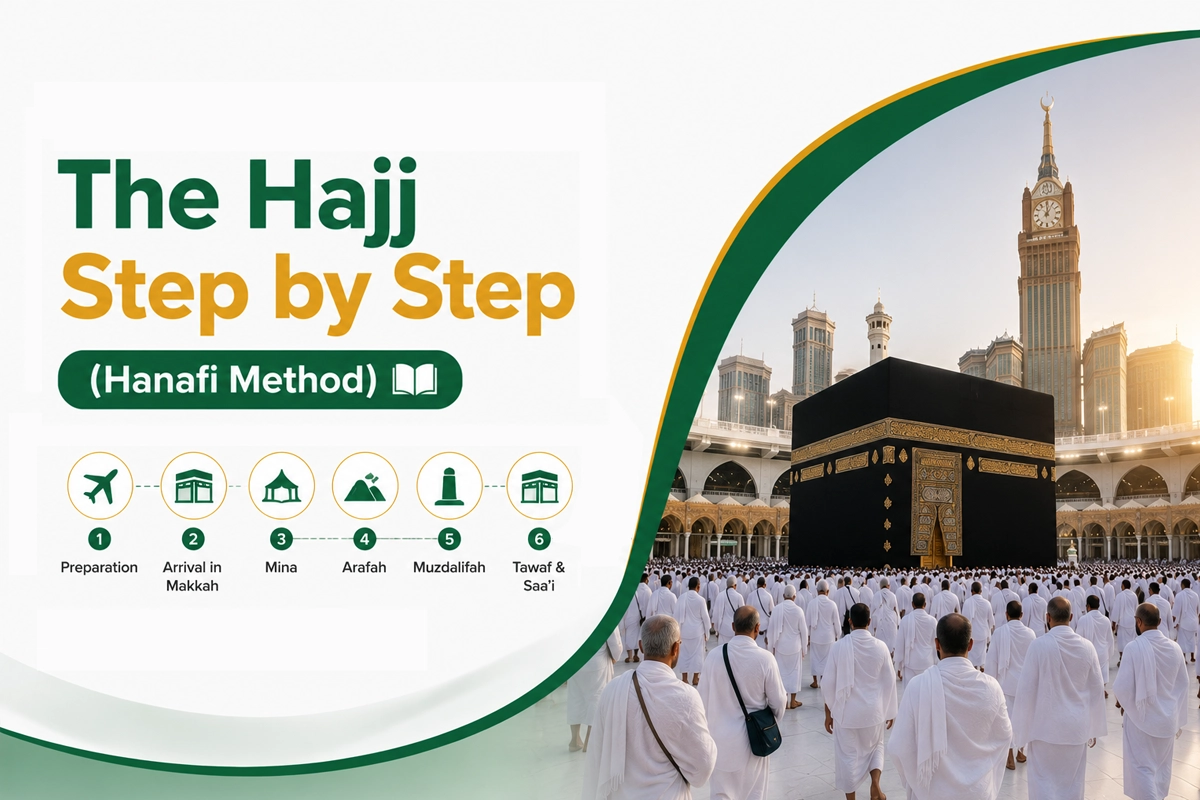
Our page on Mina covers the days of Hajj in the valley, and the Hajj step by step guide sets out the Day of Arafah in order.
Visiting Arafat outside Hajj
Arafat is about twenty kilometres from the Grand Mosque, the furthest of the three holy sites, and it comes last on the road out past Mina and Muzdalifah.
- Allow 30 to 40 minutes at Arafat within a wider round.
- The hill is climbable outside the season, and takes a few minutes.
- There is almost no shade. Go early.
- Nothing is marked or explained on site, including the old mosque's position.
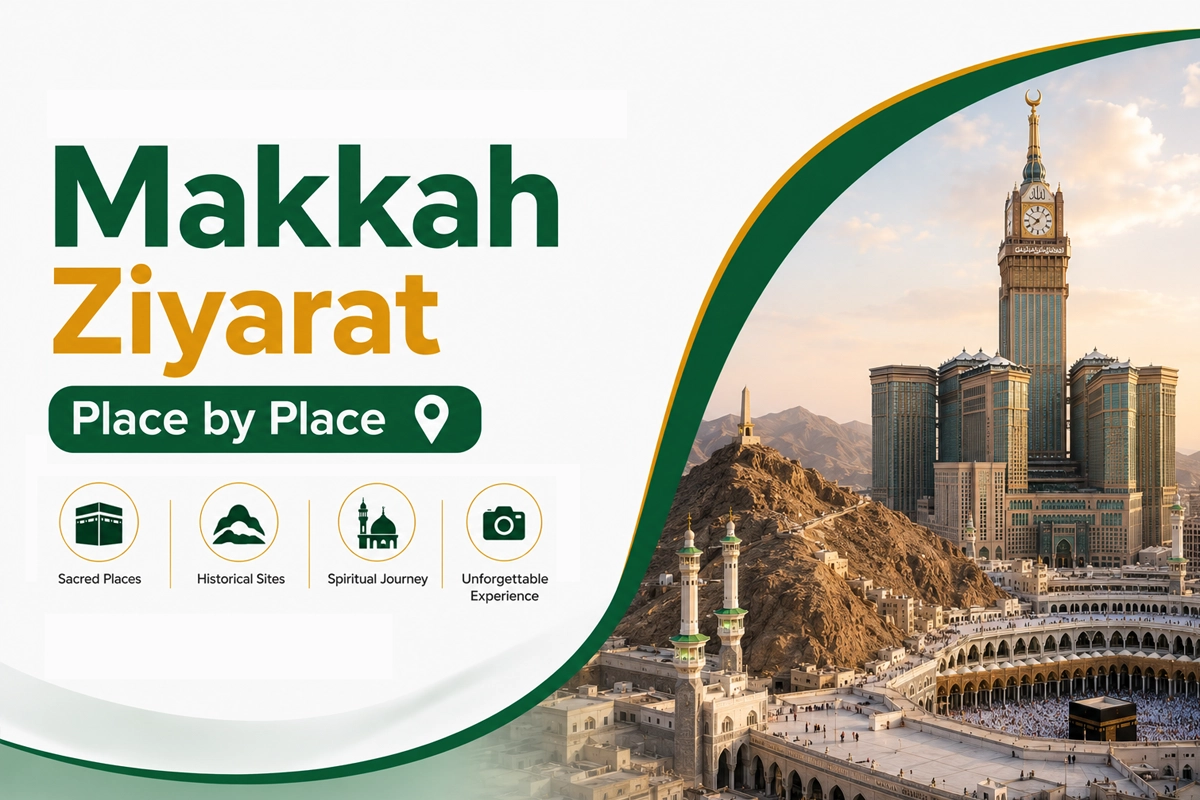
All three holy sites lie one after another on the same road, so they fit into one leg of a Makkah Ziyarat round, from SAR 200 per vehicle with waiting at each stop. Fares reviewed August 2026.
Nearby
| Place | What it is | Still there? |
|---|---|---|
| Jabal al-Rahmah | The hill above the rocks, with the pillar on top. | Yes |
| Masjid Namirah | Where Dhuhr and Asr are prayed on the ninth. | Yes |
| Masjid al-Kabsh | A Mina mosque, also long gone. | No |
| Mina | The tent valley, first of the three sites. | Yes |
Accuracy note
Saudipedia's list of holy site mosques places Masjid al-Sakharat in Arafat and lists it among the mosques of the holy sites that no longer exist. We have corrected the common error of grouping it with the mosques of Mina.
That the Prophet prayed Dhuhr and Asr combined at Namirah on the Day of Arafah and then stood near the foot of Jabal al-Rahmah until sunset is established from the accounts of the Farewell Pilgrimage in the authentic collections.
That all of Arafat is a valid place of standing, with Wadi Uranah excluded, is established from the Prophet's own statement recorded in the authentic collections. No reward for standing at any particular point within Arafat, or for climbing Jabal al-Rahmah, is established.
No marker identifies the site of the former mosque today. Fares are our own published rates, reviewed August 2026. Verified August 2026.
Frequently asked questions
Planning a Saudi trip?
Pre-book a private car, find a stay, or ask us anything on WhatsApp.
Last updated: 12 October 2026·Sources reviewed by the Wadana Go editorial team.