Masjid al-Suqya: Where the Army Was Reviewed Before Badr
Short answer
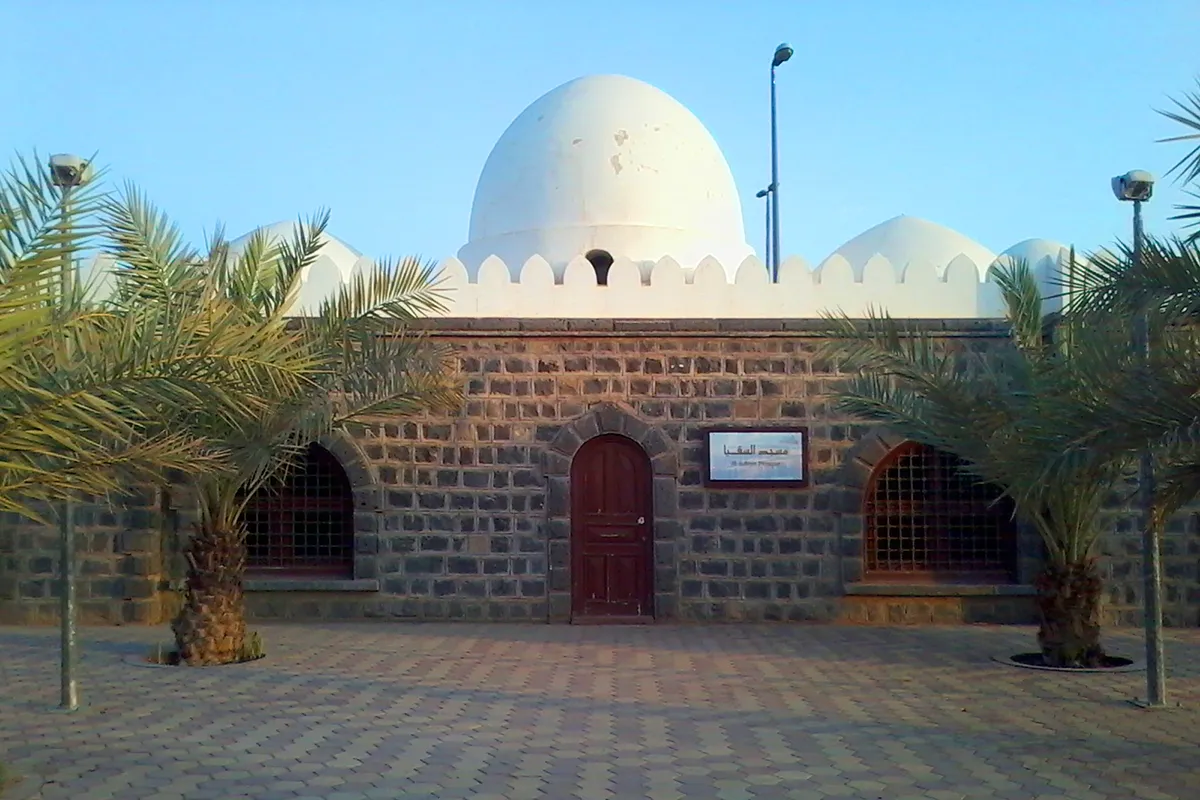
Masjid al-Suqya stands in the Anbariyah district about two kilometres west of Masjid an-Nabawi, beside the old Hejaz Railway complex. The historical sources record that the Prophet ﷺ halted here on the way to Badr in Ramadan of year two, made wudu, prayed, supplicated for the people of Madinah and reviewed his army. Visiting is not a rite of Hajj or Umrah.
Key takeaways
- ✓The mosque marks the halt on the way out to Badr, in Ramadan of the second year after the Hijrah.
- ✓The Muslim force was between 310 and 315 men. They were reviewed on this ground before setting out.
- ✓The Suqya well nearby belonged to Sa'd ibn Abi Waqqas, and the sources record that the Prophet ﷺ made wudu and drank from it.
- ✓The du'a for the blessing of Madinah's sa' and mudd is established in Bukhari and Muslim. That it was said here is level B historical reporting.
- ✓The building is a small rectangular hall with three domes, attributed originally to Umar ibn Abd al-Aziz and restored under King Fahd.
- ✓It sits by the old Hejaz Railway terminus at Anbariyah, not the modern high-speed station. Say Anbariyah to your driver.
- ✓Visiting is not a rite of Hajj or Umrah, and no prayer is prescribed there.
Quick facts
- City
- Madinah, Anbariyah district
- Distance
- About 2 km west of Masjid an-Nabawi
- Marks
- The halt and army review before Badr
- Building
- A small rectangular hall with three domes
- Nearby
- The old Hejaz Railway station complex
- Special prayer or reward
- None authentically reported
- Part of Umrah or Hajj
- No
- Can a car reach it
- Yes. Ask for Anbariyah, not the station
- Time to allow
- About 10 minutes
- Evidence level
- A for Badr and the du'a; B for this being the exact halt
Masjid al-Suqya stands in the Anbariyah district, about two kilometres west of Masjid an-Nabawi, beside the old Hejaz Railway station complex. It is a small rectangular mosque with three domes, and hardly anyone stops there.
It marks the place where the Prophet ﷺ halted on the way out to Badr.
The morning of Badr
In Ramadan of the second year after the Hijrah, the Muslims set out from Madinah for what became the Battle of Badr. The sources put the force at somewhere between 310 and 315 men.
They stopped here. The Prophet ﷺ made wudu, prayed, supplicated for the people of Madinah, and reviewed the men who were with him before going on.
Picture the arithmetic for a moment. Three hundred men, mostly on foot, some sharing a camel between three, heading out against a Makkan caravan escort that would turn out to be three times their number. That review took place on this piece of ground.
The well
South of the mosque, just outside the boundary wall of the railway station, stood the Suqya well. The historical sources record that it belonged to Sa'd ibn Abi Waqqas, may Allah be pleased with him, and that the Prophet ﷺ made wudu with its water on his way to Badr, and drank from it.
That is where the name comes from. Suqya relates to giving water to drink.
The supplication for Madinah
The historical literature connects a du'a for Madinah with this stop, in which the Prophet ﷺ said that Ibrahim was Allah's servant and friend and had supplicated for Makkah, and that he was Allah's servant and Messenger and supplicated for Madinah with the like of it, and more.
Be careful how firmly you tie the two together. The du'a for Madinah's blessing is established, in Sahih al-Bukhari and Sahih Muslim, where the Prophet ﷺ asks Allah to bless the sa' and mudd of Madinah, its measures of grain. That it was said at this precise spot is reported in the historical literature rather than fixed by those authentic narrations.
So: the du'a, level A. The location, level B. Both worth knowing, and they are not the same thing.
The building
Small and plain: a rectangular hall with three domes. The sources record that it was originally built by Umar ibn Abd al-Aziz, and it was restored during the reign of King Fahd.
It sits inside the Anbariyah station area, which is the old Hejaz Railway terminus, not the modern high-speed station on the other side of the city. If you tell a driver "the train station" you may end up in the wrong place; say Anbariyah, or say Masjid al-Suqya.
Is visiting part of Hajj or Umrah?
No. Not a rite of either, and no prayer is prescribed there.
Visiting
- Ten minutes, and it pairs naturally with the Hejaz Railway buildings, which are worth seeing in their own right.
- Access varies. The mosque is small and not always open.
- Say Anbariyah, not "the station", to your driver.
- Do not look for the well. It is not a maintained visitor feature and we cannot confirm what is currently visible.
Nearby
- Masjid an-Nabawi — two kilometres east.
- Masjid al-Ghamamah — on the same side of the mosque.
- Jannat al-Baqi — where many of the men reviewed here are buried.
- Madinah Ziyarat guide — every site with its evidence stated.
Getting there
Madinah's smaller historic mosques are scattered across the city, and reaching them one taxi at a time turns a short list into a whole morning. Our Madinah Ziyarat private car covers the round on one fixed fare for the whole vehicle with the driver waiting at every stop, and the Madinah Ziyarat tour is the guided version. For arrival, the Madinah airport transfer has fixed fares.
Accuracy note
The departure for Badr in Ramadan of the second year after the Hijrah and the approximate strength of 310 to 315 men are established in the hadith and seerah literature. The halt at al-Suqya, the wudu and prayer there, the review of the army, the well belonging to Sa'd ibn Abi Waqqas and the Prophet ﷺ drinking and making wudu from its water are recorded in the historical literature on Madinah; this is level B documentation rather than an authentic hadith naming the spot. The du'a for the blessing of Madinah, its sa' and its mudd, is established in Sahih al-Bukhari and Sahih Muslim, but those narrations do not fix the location, and we have separated the two rather than merging them. The location in the Anbariyah district about 2 km west of Masjid an-Nabawi beside the old Hejaz Railway complex, the three-domed rectangular form, the original construction attributed to Umar ibn Abd al-Aziz and the restoration under King Fahd follow published heritage sources. We cannot confirm what is currently visible of the well and have not described it. Visiting is not a rite of Hajj or Umrah. Content verified August 2026. Correction? Tell us.
Frequently asked questions
Planning a Saudi trip?
Pre-book a private car, find a stay, or ask us anything on WhatsApp.
Last updated: 19 September 2026·Sources reviewed by the Wadana Go editorial team.