Souq al-Nabi: The Market Where Nobody Could Own the Pitch

Short answer
The Prophet ﷺ designated a market for Madinah, known as Souq al-Manakhah and later Souq al-Nabi. The sources record that no permanent building was to be erected on the ground, and Umar ibn al-Khattab maintained it as an endowment for the Muslims. The area west of the Prophet's Mosque is still a market quarter today.
Key takeaways
- ✓When the people of Madinah asked for a market, the Prophet ﷺ chose the ground and established one.
- ✓It became known as Souq al-Manakhah, and later as Souq al-Nabi, the Prophet's Market.
- ✓The sources record that no permanent building was to be put up on it, and Umar maintained the ground as an endowment for the Muslims.
- ✓No building means no owned pitch. Every trader arrives on the same footing and nobody inherits the best corner.
- ✓Reports that no tax was taken there are in the Sunan literature with discussed chains, so we name them as reported rather than top grade.
- ✓It was not charity. It was economic design, from the same man in the same year as the mosque.
- ✓The ground is the al-Manakhah area west of the mosque, and it is still a working market quarter.
Quick facts
- City
- Madinah, al-Manakhah area west of the mosque
- Also called
- Souq al-Manakhah
- The rule
- No permanent building on the ground
- Maintained by
- Umar ibn al-Khattab, as an endowment
- The no-tax report
- Sunan literature, chain discussed
- Still a market
- Yes. Traders and stalls to this day
- Part of Umrah or Hajj
- No
- Virtue in shopping there
- None whatsoever
- Best time
- Evening, after Isha
- Evidence level
- A to B for the founding; B for the rules
When the Prophet ﷺ settled in Madinah he did three things that shaped the city: he built a mosque, he bound the tribes into one community, and he founded a market.
The third one gets almost no attention on Ziyarat itineraries, and it is arguably the most quietly radical.
Why he founded a new one
Madinah already had markets. They were controlled, and the control was the problem: whoever held the ground set the terms and took a cut.
The sources record that when the people of Madinah asked the Prophet ﷺ to designate a market for them, he chose a site and established it, and the market became known as Souq al-Manakhah, and later Souq al-Nabi, the Prophet's Market.
The terms he set
What is remembered about it is the rules, and they are worth stating carefully.
The sources record that no permanent building was to be put up on the ground, and this was maintained under Umar ibn al-Khattab, who treated the market as an endowment for the Muslims.
Think about why that matters. If nobody can build on it, nobody can own the pitch. Every trader arrives on the same footing every morning. You cannot inherit the best corner, and you cannot rent it out to someone else.
Reports also record that no tax or levy was to be taken in it. That report appears in the Sunan literature rather than in Bukhari or Muslim, and its chain is discussed, so we are naming it as reported rather than presenting it at the highest grade. The no permanent building rule and Umar's treatment of the ground as an endowment are the parts most consistently carried in the sources.
What that produced
A market with no rent, no permanent stalls and no gatekeeper.
Set that beside a modern shopping street, where the rent on the pitch decides who gets to trade at all, and you can see the shape of what was being done. It was not charity. It was a deliberate piece of economic design, and it came from the same man in the same year as the mosque.
Where it was, and what is there now
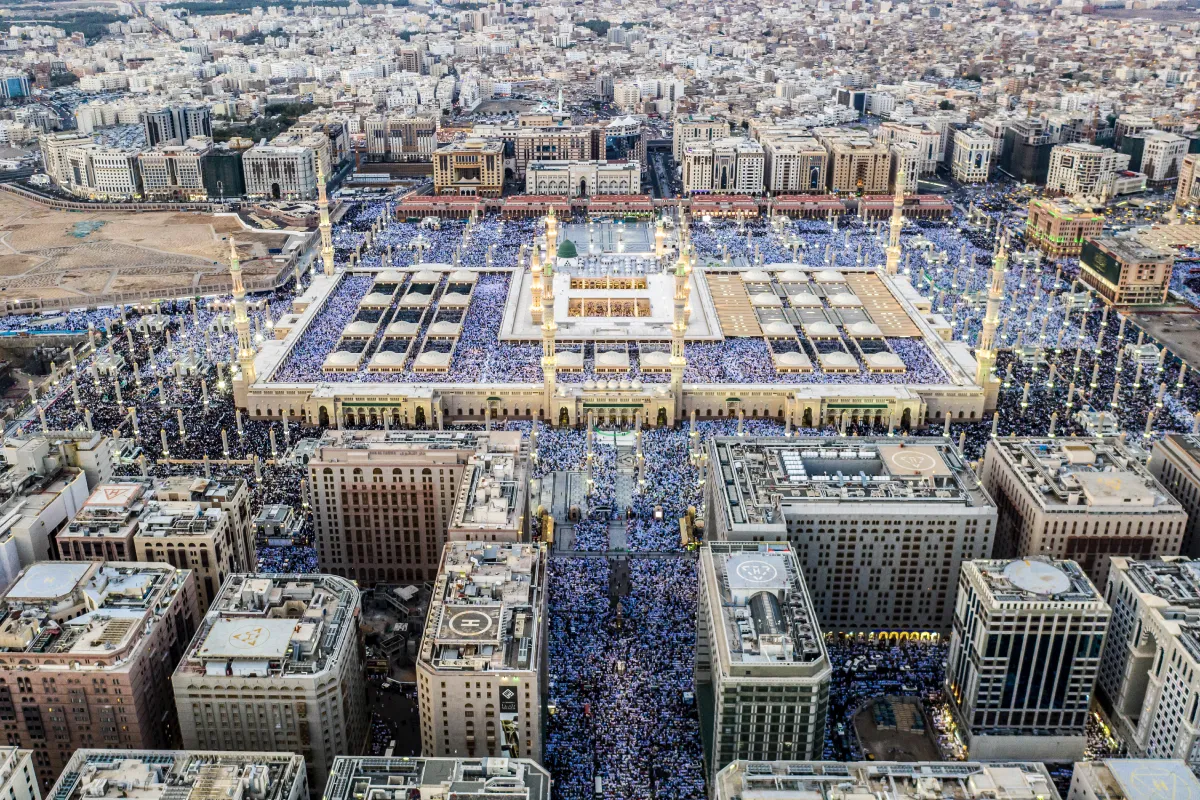
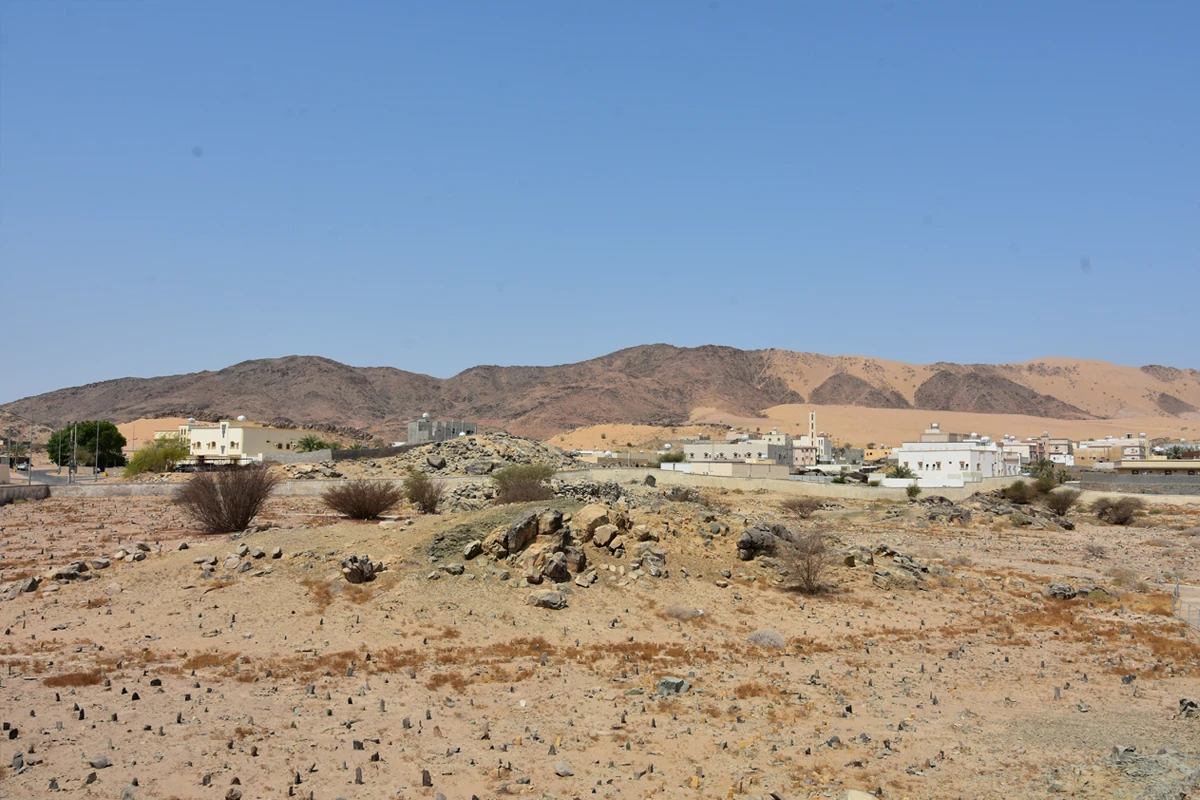
The ground is the area west of the Prophet's Mosque now known as al-Manakhah, today a large open square and the surrounding old commercial quarter.
It is still a market area. There are still traders, still stalls, still people selling dates and prayer mats and perfume within a few hundred metres of where the original ground was.
That continuity is the reason to walk through it. Not because the buildings are old, because they are not, but because the function has never stopped.
The evidence, plainly
- That the Prophet ﷺ designated a market for Madinah: recorded in the historical and hadith literature. Level A to B depending on the specific report.
- The no-permanent-building rule and Umar treating it as an endowment: carried consistently in the historical sources. Level B.
- The no-tax report: in the Sunan literature, chain discussed. Reported, not top grade.
- The identification of al-Manakhah as the ground: standard in the Madinah literature and in Saudi accounts of the area.
- A prescribed prayer, reward or virtue in shopping there: none whatsoever.
Is visiting part of Hajj or Umrah?
No. And nobody should tell you there is any special reward in buying something in that quarter. There is not.
Visiting
- Thirty minutes to an hour, if you enjoy markets. It is a walk, not a stop.
- It is walking distance from the Prophet's Mosque, on the western side.
- Prices are not fixed. Agree the price before you hand anything over.
- Best in the evening, after Isha, when the square fills up.
- Watch your bag. Ordinary crowded-market advice, nothing to do with Madinah in particular.
Nearby
- Masjid al-Ghamamah — in the same quarter.
- Saqifah Banu Sa'idah — also on the western side.
- Masjid an-Nabawi — a few minutes' walk east.
- Madinah Ziyarat guide — every site with its evidence stated.
Getting there
Madinah's historic sites are scattered across the city, and reaching them one taxi at a time turns a short list into a whole morning. Our Madinah Ziyarat private car covers the round on one fixed fare for the whole vehicle with the driver waiting at every stop, and the Madinah Ziyarat tour is the guided version. For arrival, the Madinah airport transfer has fixed fares.
Accuracy note
That the Prophet ﷺ designated a market for the people of Madinah, which became known as Souq al-Manakhah and later Souq al-Nabi, is recorded in the historical and hadith literature. The rule that no permanent building was to be erected on the ground, and Umar ibn al-Khattab's treatment of the market as an endowment for the Muslims, are carried consistently in the historical sources and are level B. Reports that no tax or levy was to be taken in the market appear in the Sunan literature rather than in Bukhari or Muslim, and their chains are discussed by hadith scholars; we have named that as reported rather than presenting it at the highest grade. The identification of the al-Manakhah area west of the Prophet's Mosque as the ground is standard in the Madinah literature and in Saudi accounts of the area. No prescribed prayer, reported reward or special virtue attaches to shopping in that quarter, and visiting is not a rite of Hajj or Umrah. Content verified August 2026. Correction? Tell us.
Frequently asked questions
Planning a Saudi trip?
Pre-book a private car, find a stay, or ask us anything on WhatsApp.
Last updated: 10 September 2026·Sources reviewed by the Wadana Go editorial team.