Thaniyat al-Wada': The Story Everyone Tells, and What the Chain Says

Short answer
Thaniyat al-Wada', the Pass of Farewell, is a landmark on the edge of Madinah. It is famous for the story of Tala'a al-badru alayna being sung as the Prophet ﷺ arrived on the Hijrah. That narration comes through al-Bayhaqi from Aisha and was graded weak by al-Albani and others. Scholars also differ over which pass and which arrival.
Key takeaways
- ✓Thaniyat al-Wada' means the Pass of Farewell, a gap in the hills where travellers were seen off from Madinah.
- ✓The narration about Tala'a al-badru alayna is carried through al-Bayhaqi from Aisha and was graded weak by al-Albani and others.
- ✓It is not in Bukhari or Muslim, and transmitters differ over whether the occasion was the Hijrah or the return from Tabuk.
- ✓Ibn Hajar records two passes of that name: one on the Makkah road and one on the Syrian side to the north.
- ✓If the pass in the poem is the northern one, a party arriving from Makkah would not pass through it at all.
- ✓Keep singing the nasheed if you like it. Singing it is not a claim about history. Stop teaching it as an event.
- ✓What is established about the arrival is richer anyway, including the camel being allowed to choose where it knelt so no clan could claim him.
Quick facts
- City
- Madinah, on the edge of the old city
- Name means
- The Pass of Farewell
- The famous narration
- Via al-Bayhaqi from Aisha; graded weak by al-Albani
- In Bukhari or Muslim
- No
- The occasion
- Disputed: the Hijrah, or the return from Tabuk
- How many passes
- Ibn Hajar records two of the name, Makkah road and Syrian side
- A marked site today
- Not verified by us
- Part of Umrah or Hajj
- No
- Evidence level
- B for the pass as a landmark; the famous story is weak
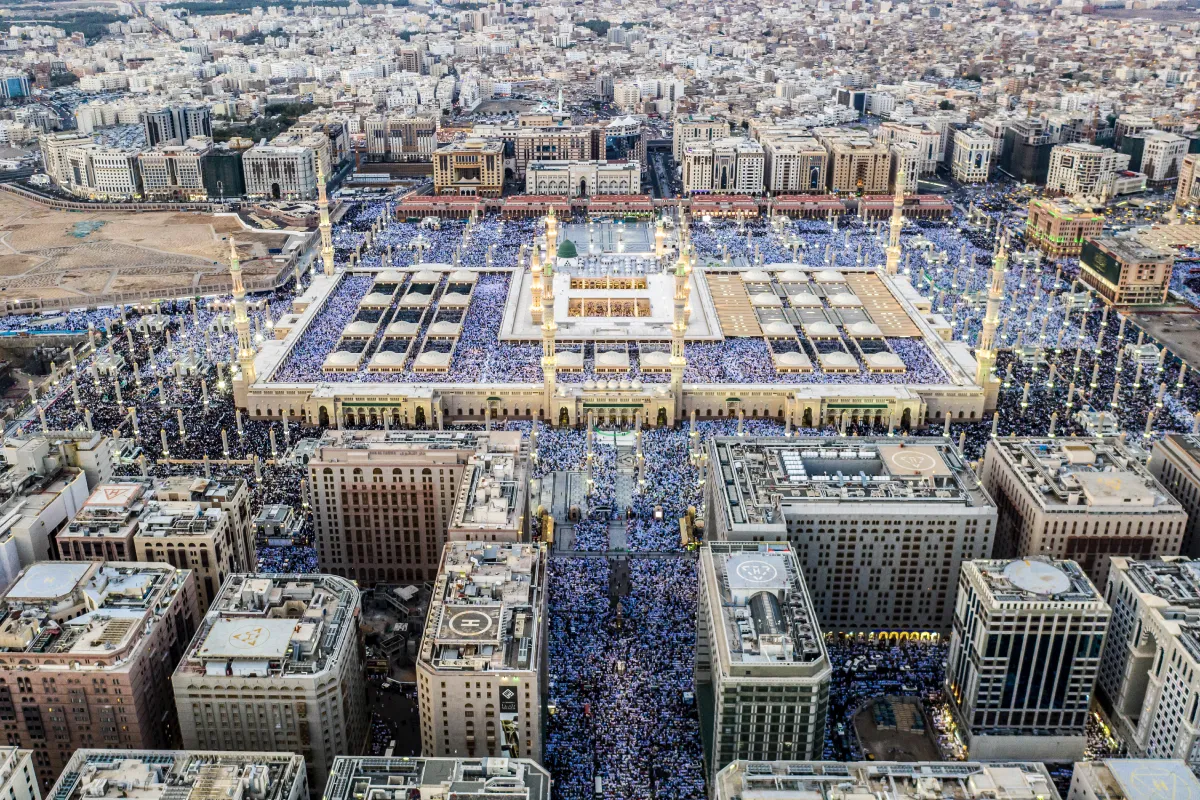
Thaniyat al-Wada' means the Pass of Farewell: a gap in the hills outside Madinah where travellers were seen off and where returning parties came into view.
It is the setting for one of the best-loved stories in the entire seerah, the one about the girls of Madinah singing Tala'a al-badru alayna as the Prophet ﷺ arrived from the Hijrah.
We have to be straight with you about that story, and it will not be what you were expecting.
The nasheed
Everyone knows it. The full moon has risen over us, from the valley of al-Wada'.
It is sung at weddings, at graduations, at every event where somebody arrives to be welcomed, all over the Muslim world.
The problem with the story
Three separate difficulties, and they stack.
One: the chain. The narration is carried through al-Bayhaqi, attributed to Aisha, may Allah be pleased with her. Al-Albani and others graded it weak because of deficiencies in its chain of transmission. It is not in Bukhari or Muslim.
Two: which arrival. Even among those who transmit it, there is disagreement about the occasion. Some place it at the arrival from Makkah on the Hijrah. Others place it at the return from Tabuk, years later.
Three: the geography. This is the one that does the most damage. Ibn Hajar records that scholars identified a Thaniyat al-Wada' on the Makkah road, and another of the same name on the Syrian side, to the north.
If the Thaniyat al-Wada' in the poem is the northern one, then a party arriving from Makkah would not come through it at all. They would be coming from the opposite direction. That is exactly why some scholars connected the verses with the return from Tabuk, which was from the north.
So what should you do with it?
Something more useful than either repeating it or throwing it away.
Keep singing it if you like it. There is nothing wrong with a nasheed. It is beautiful, it is old, and singing it is not a claim about history.
Stop teaching it as an event. When you tell a child that the girls of Madinah sang this as the Prophet ﷺ came over the hill, you are teaching a weakly transmitted account as if it were in Bukhari. Then one day they find out, and they start wondering what else they were told that way.
Say "it is said". Two words. They cost nothing and they keep you honest.
What is actually established about the arrival
Plenty, and it is not thin material.
The hadith and seerah literature record the arrival in Madinah in detail: the days at Quba, the building of the first mosque, the first Jumu'ah prayed in the valley of Ranuna, the whole city coming out, and the camel being allowed to choose where it knelt so that no clan could claim him.
That last detail is worth ten of the poem. He refused to be a guest of any single tribe, and let the animal decide, so that nobody could say they had him first.
See our page on the Hijrah route for the journey and Masjid al-Jumu'ah for the Friday prayer on the way in.
The pass itself
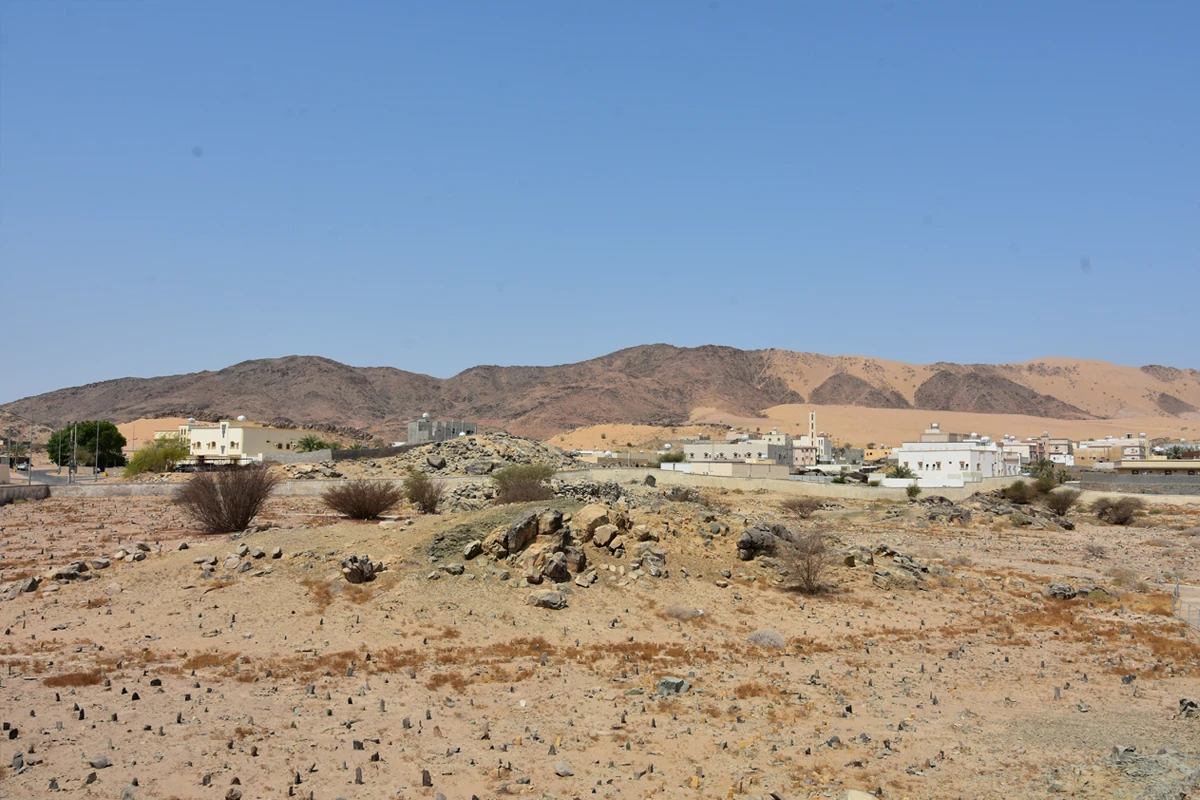
As a place, Thaniyat al-Wada' is a genuine feature of Madinah's geography and appears in the historical literature as a landmark of the city's edge.
Scholars differ on which pass carries the name, and the modern city has grown well past all of them. We could not verify a specific marked or accessible site, and we are not going to send you to one.
Is visiting part of Hajj or Umrah?
No. Not a rite of either, no prescribed prayer, no reported reward.
Related
- The Hijrah route — what is established about the journey.
- Masjid al-Jumu'ah — the first Friday prayer on the way in.
- Masjid Quba — where he stopped first.
- Madinah Ziyarat guide — every site with its evidence stated.
Getting there
Madinah's historic sites are scattered across the city, and reaching them one taxi at a time turns a short list into a whole morning. Our Madinah Ziyarat private car covers the round on one fixed fare for the whole vehicle with the driver waiting at every stop, and the Madinah Ziyarat tour is the guided version. For arrival, the Madinah airport transfer has fixed fares.
Accuracy note
Thaniyat al-Wada', the Pass of Farewell, appears in the historical literature as a landmark on the edge of Madinah. Ibn Hajar records that scholars identified a Thaniyat al-Wada' on the Makkah road and another of the same name on the Syrian side to the north. The narration describing the singing of Tala'a al-badru alayna is carried through al-Bayhaqi, attributed to Aisha, and was graded weak by al-Albani and others on account of deficiencies in its chain; it is not in Sahih al-Bukhari or Sahih Muslim. Transmitters also differ over the occasion, some placing it at the arrival from Makkah on the Hijrah and others at the return from Tabuk, and the northern location of one Thaniyat al-Wada' is the reason several scholars connected the verses with the Tabuk return rather than the Hijrah. Nothing on this page is a criticism of the nasheed itself, which is beloved and whose singing is not a claim about history; the objection is to teaching a weakly transmitted account as established event. The arrival in Madinah, the days at Quba, the first Friday prayer in the valley of Ranuna and the camel being allowed to choose where it knelt are recorded in the hadith and seerah literature. We could not verify a specific marked or accessible site for the pass today. Visiting is not a rite of Hajj or Umrah. Content verified August 2026. If you hold a stronger chain for the narration, please send it to us.
Frequently asked questions
Planning a Saudi trip?
Pre-book a private car, find a stay, or ask us anything on WhatsApp.
Last updated: 10 September 2026·Sources reviewed by the Wadana Go editorial team.