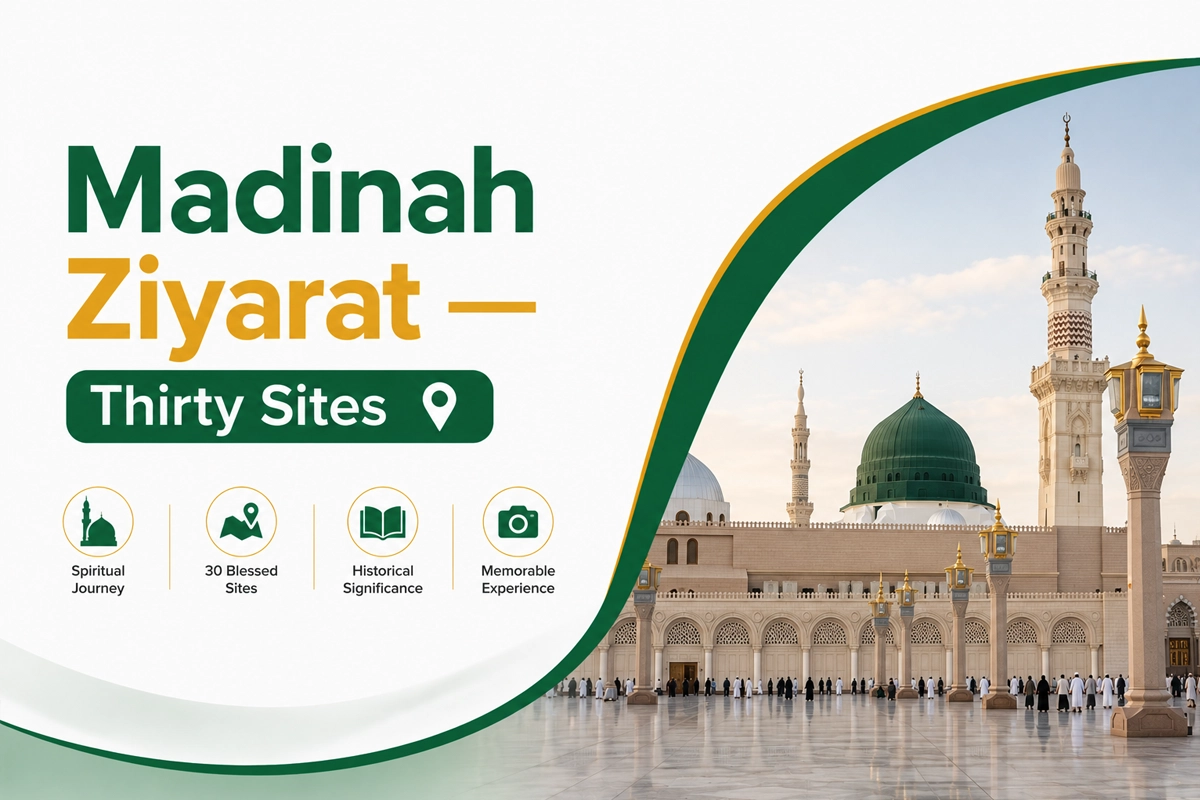
The Hijrah Route: How the Prophet Actually Got From Makkah to Madinah
Short answer
The Prophet Muhammad migrated from Makkah to Madinah in the year that became year one of the Islamic calendar. He sheltered three nights in Ghar Thawr south of Makkah, then travelled north by an inland and coastal route with a hired guide, reaching Quba on the edge of Madinah. Several stops along the way are recorded in the sources.
Key takeaways
- ✓The journey began by going south to Ghar Thawr, the opposite direction from Madinah.
- ✓Sahih al-Bukhari records the hired guide, the two camels and the three nights.
- ✓The guide was from Banu al-Dil and was not a Muslim at the time.
- ✓The route avoided the main road, running west towards the coast before turning north.
- ✓Suraqah ibn Malik pursued them and his horse sank in the sand, which is in Bukhari.
- ✓Some stops are firmly recorded and others, like Umm Ma'bad's tent, are less so.
- ✓The journey ended at Quba, where the first mosque was built.
Quick facts
- From
- Makkah
- To
- Quba, on the edge of Madinah
- First move
- South to Ghar Thawr, away from Madinah
- Nights in the cave
- Three
- Guide
- A man of Banu al-Dil, not a Muslim
- Rough distance
- Over 400 km by the direct road
- Recorded in
- Sahih al-Bukhari and the early histories
- Can you drive it?
- Partly. The modern road differs.
It starts by going the wrong way
Madinah is north of Makkah. The first move of the Hijrah was south.
The Prophet and Abu Bakr left the city and climbed Jabal Thawr, about four kilometres south of the Haram, and stayed in Ghar Thawr for three nights while the search parties spread out along the northern roads.
Everything about the journey follows from that decision. This was not a flight. It was a planned departure with a decoy direction, a hired professional, a supply chain and a timetable.
The plan, as Bukhari records it
Sahih al-Bukhari sets out the arrangements in unusual detail, and it reads like logistics.
- A guide was hired in advance. A man of Banu al-Dil, an expert in the desert roads. He was not a Muslim. He was trusted with the two camels and told to bring them to the cave on the morning after the third night, and he kept the appointment.
- Intelligence came nightly. Abdullah ibn Abi Bakr spent each night at the cave and was back among the Quraysh before dawn, so nobody knew he had left. Whatever was being planned, he carried it up the mountain after dark.
- Food and cover. Amir ibn Fuhayra brought Abu Bakr's sheep past the cave after nightfall for milk, and the flock wiped out the tracks.
- Supplies. Asma bint Abi Bakr carried provisions up and tore her waist belt in two to tie the bundle, which is why she is called Dhat al-Nitaqayn.
Four people, each with one job. That is the whole operation, and it is recorded in the most authentic collection there is.
The road they took
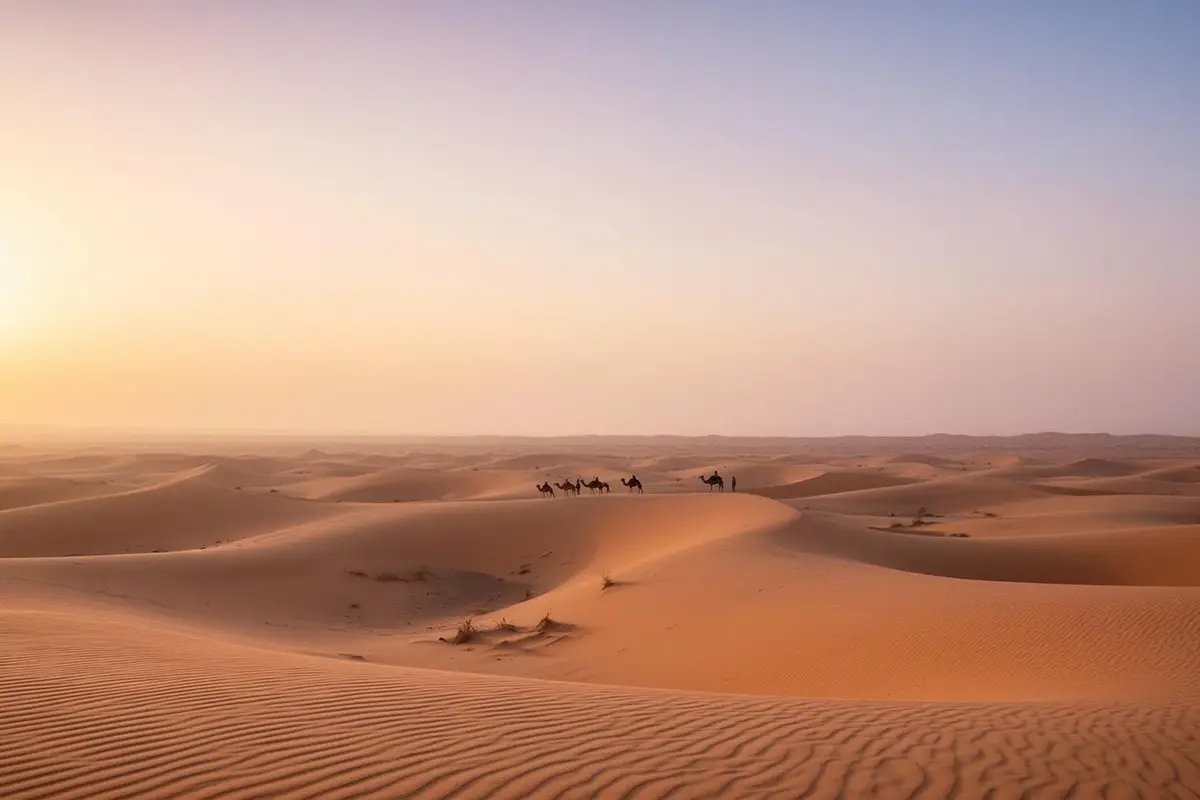
They did not take the main road north. The route ran west towards the coast and then turned north, keeping away from the caravan track where they would be looked for.
The classic stops along the way, in rough order, are these. We have marked how firm each one is, because they are not equal.
| Stop | What is said to have happened | How firm |
|---|---|---|
| Ghar Thawr | Three nights in hiding. | Named in the Qur'an |
| The coastal track | The pursuit, and Suraqah ibn Malik. | Sahih al-Bukhari |
| Umm Ma'bad's tent | The barren goat, and her description of him. | Reported, and debated |
| Usfan | A stage on the road, a fortress site later. | A known place on the route |
| Al-Juhfah | They stopped there. | Recorded |
| Al-Abwa | On the road, near his mother's grave. | A known place on the route |
| Quba | Arrival, and the first mosque. | Established |
Suraqah, and the price on their heads
Quraysh set a bounty of a hundred camels for each of them, and that produced the best-known episode of the road.
Suraqah ibn Malik heard where they might be and went after them alone, meaning to collect. He got close enough to see them. Then his horse's forelegs sank into the ground and threw him. He got up, tried again, and it happened again.
At that point he called out to them, asked for safety, and asked the Prophet to write him a guarantee. He was given one. He then turned back, and spent the rest of the day sending other pursuers in the wrong direction.
The account is in Sahih al-Bukhari. Suraqah accepted Islam years later, after the conquest of Makkah.
Where the evidence gets softer
Some parts of the route are recorded with the same strength as the cave. Others are not, and it is worth being clear which.
The episode at Umm Ma'bad's tent, where a goat that had given no milk gave milk, and where she afterwards described the Prophet to her husband in the most detailed physical description we have of him, is not in Bukhari or Muslim. It is recorded by al-Hakim, who considered it authentic, and al-Dhahabi agreed with him. Other scholars have been less certain.
So: a well-known report, accepted by serious scholars, not of the same class as the material in the two Sahih collections. Tell it as that.
The precise locations of most of the stops are softer still. The road is known in general terms, the named places existed and can be pointed to on a map, but the specific spot where a tent stood or a camel knelt is not established anywhere.
The arrival
They reached Quba, on the southern edge of what was then Yathrib, and stopped there. The mosque built at Quba is the first mosque of Islam.
The Prophet stayed at Quba before entering the city itself, and the accounts of the people of Madinah going out daily to watch the road for him, and the sound that went up when he was finally sighted, are among the best-known passages of the seerah.
What followed was not a refuge. It was a state. Within ten years the community that had crept out of Makkah at night controlled Arabia.
Can you follow the route today?
Partly, and it is worth setting expectations.
The modern highway between Makkah and Madinah is over 400 kilometres of good road and takes four to five hours. It does not follow the Hijrah route. The route the Prophet took avoided the main road deliberately, and much of it is now empty desert away from the highway.
What you can realistically do:
- See Ghar Thawr and Jabal Thawr in Makkah, which is where it starts.
- Stop at named places on the modern road: Usfan, al-Juhfah near Rabigh, al-Abwa. These are on or near the highway.
- Visit Quba in Madinah at the other end, where the first mosque still stands.
- Not expect a marked trail, signage or a preserved route. There is none.
Our Makkah to Madinah transport guide compares the road against the Haramain train, and a private car between the two cities lets you stop where the train cannot. The Haramain train guide covers the faster option for anyone not stopping. Fares reviewed August 2026.
What the route shows
One thing, and it runs against how the story is usually told.
The Hijrah is often presented as pure reliance on Allah. The record shows reliance and preparation, in the same operation. A decoy direction. A hired guide who did not share their religion. Nightly intelligence. A supply line. A timetable kept to the day.
The Qur'an's own account of the cave, in Surah al-Tawbah, says that Allah sent down tranquillity and support they could not see. It says that about two men who had also planned the thing carefully. Both halves are in the record, and taking one without the other misreads it.
Accuracy note
The three nights in the cave of Thawr are referred to in the Qur'an in Surah al-Tawbah. The arrangements for the journey, including the guide hired from Banu al-Dil who was not a Muslim, the two camels brought on the fourth morning, the nightly role of Abdullah ibn Abi Bakr, the sheep brought by Amir ibn Fuhayra and the provisions carried by Asma bint Abi Bakr, are recorded in Sahih al-Bukhari. The pursuit by Suraqah ibn Malik, his horse sinking, his request for safety and the written guarantee are also in Sahih al-Bukhari. This is established evidence.
The episode at Umm Ma'bad's tent is not in Bukhari or Muslim. It is recorded by al-Hakim, who graded it authentic, and al-Dhahabi agreed, while other scholars have been less certain. We have marked it accordingly.
The general line of the route, running west towards the coast and then north to avoid the main caravan road, and the named places along it, are recorded in the early histories and topographical literature. The precise locations of individual incidents along the way are not established, and there is no marked or preserved route today.
Fares are our own published rates, reviewed August 2026. Verified August 2026.
Frequently asked questions
Planning a Saudi trip?
Pre-book a private car, find a stay, or ask us anything on WhatsApp.
Last updated: 9 October 2026·Sources reviewed by the Wadana Go editorial team.