Al-Bazah Fortress, Khaybar: A Name We Could Not Place
Short answer
Al-Bazah appears as a fort name in some listings of the Khaybar strongholds but is not among the seven named in the classical sources we could check. We could not verify its identification with any of the seven, a narration naming it, its location, condition or access. Visiting is not a rite of Hajj or Umrah.
Key takeaways
- ✓Al-Bazah appears in some listings of Khaybar's forts but is not among the seven named in the classical sources.
- ✓The seven are Na'im, al-Qamus, al-Katibah, al-Natat, al-Shiqq, al-Watih and al-Sulalim.
- ✓It may be a local name, an alternative transliteration, a smaller stronghold outside the seven, or a modern site name. We could not tell which.
- ✓We could not verify a narration naming it, its location in the oasis, its condition or any visitor access.
- ✓Khaybar is exactly where fort names multiply: a large oasis, extensive remains, layered periods and many transliterations.
- ✓You can easily be shown eight or ten named forts, some of which are the same wall under two names.
- ✓The seven named in the seerah are the ones with history attached. Anything beyond that should come with a source.
Quick facts
- Location
- Khaybar oasis. Exact position not verified
- Among the classical seven
- No
- The seven
- Na'im, al-Qamus, al-Katibah, al-Natat, al-Shiqq, al-Watih, al-Sulalim
- A narration naming it
- Not verified by us
- Condition and access
- Not verified by us
- Possible explanations
- Local name, transliteration, minor fort, or modern site name
- Part of Umrah or Hajj
- No
- Can we direct you there
- No
- Evidence level
- Unverified. Listed in some sources, not placed
Al-Bazah appears as a fort name in some listings of the strongholds of Khaybar.
This page is short, and it exists to tell you honestly what we could and could not establish about that name, because doing so is more useful than writing around a gap.
The seven forts, and the three regions
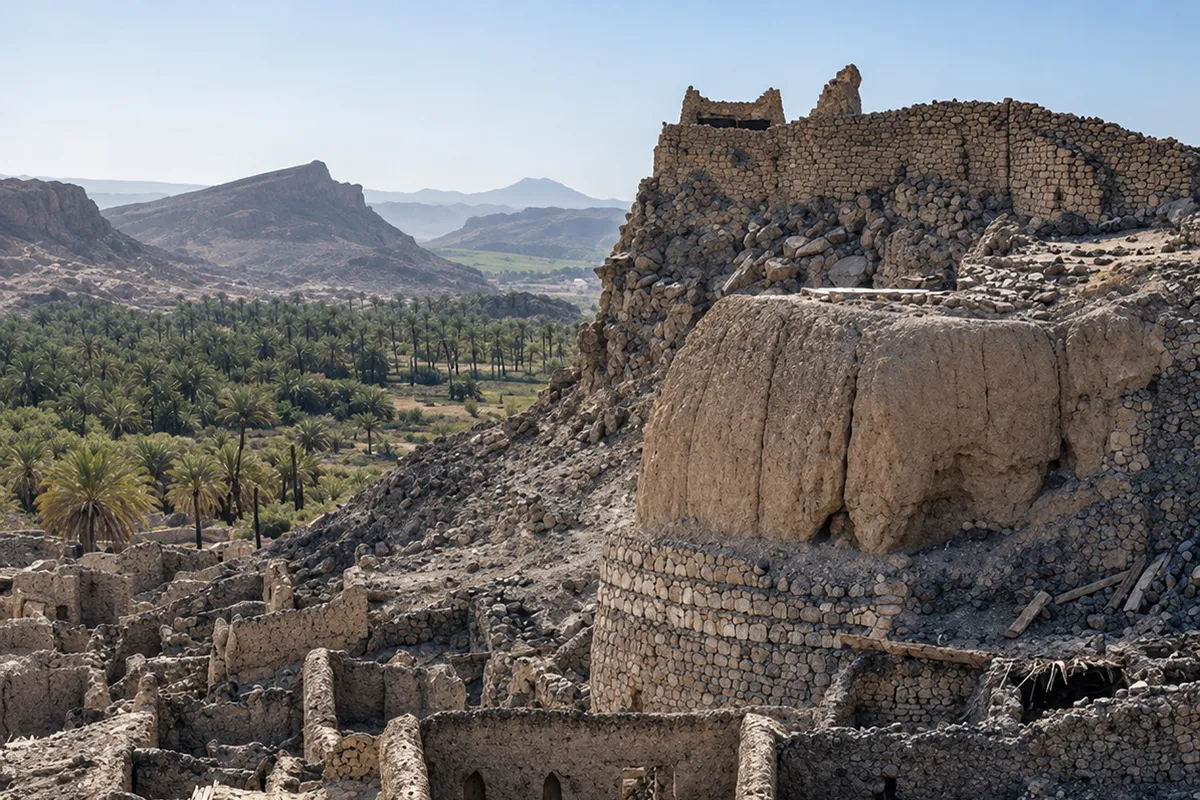
Khaybar was an oasis defended by a network of strongholds, not a single castle. The classical sources name seven: Na'im, al-Qamus, al-Katibah, al-Natat, al-Shiqq, al-Watih and al-Sulalim, grouped across three regions: al-Natat, al-Shiqq and al-Katibah.
The sources describe underground passages linking strongholds, used to move supplies during a siege. That is why the campaign ran as a sequence of operations rather than one assault.
Where al-Bazah sits
Al-Bazah is not among the seven forts named in the classical sources we could check.
That does not make the name wrong. There are several possibilities, and we cannot tell you which applies:
- It may be a local name for a site at Khaybar that the classical lists record under a different name.
- It may be an alternative transliteration of one of the seven, since Arabic names travel badly into English and Khaybar's fort names appear in several spellings.
- It may be a smaller stronghold outside the main seven, since the oasis had more fortified structures than the seven the seerah singles out.
- It may come from a modern archaeological or heritage listing using site names rather than historical ones.
We could not verify which, and we are not going to pick one and write it up as though it were established.
What we could not verify
- An identification of al-Bazah with any of the seven classical forts.
- A specific narration in the seerah literature naming it.
- Its location within the oasis.
- Its condition, or any visitor access.
Why say all this
Because Khaybar is exactly the kind of place where fort names multiply.
The oasis is large, the remains are extensive, several periods of building are layered on the same ground, and the classical Arabic names have been transliterated many different ways. Add a guide who wants to give you a full tour, and you can easily be shown eight or ten named forts, some of which are the same wall under two names.
The seven named in the seerah are the ones with history attached. Everything beyond that list should come with a source.
What is solid at Khaybar
Plenty, and none of it depends on this page:
- The oasis, the lava fields and the geology that explains both.
- The campaign of the seventh year, and its sequence fort by fort.
- The standard given to Ali ibn Abi Talib, in Bukhari and Muslim.
- The sharecropping arrangement afterwards, in Bukhari and Muslim, which shaped Islamic agricultural law.
Is visiting part of Hajj or Umrah?
No. Not a rite of either, and in this case there is also nothing we can direct you to.
Related
- The Khaybar guide — the oasis and how to plan a day.
- The Battle of Khaybar — the campaign and the standard.
- Al-Watih — the fort that ended it by agreement.
- Na'im Fort — the first to fall.
Getting there, honestly
We do not run a scheduled service to Khaybar and there is no published Wadana Go fare for it. A private car arranged in advance from Madinah or a hire car are the practical options; see driving yourself versus a private driver and renting a car in Saudi Arabia. Ask before you travel, not on the morning. Our Beyond the Haramayn guide covers Khaybar alongside Badr, Taif, Tabuk and al-Hijr.
Accuracy note
Al-Bazah appears as a fort name in some listings of the strongholds of Khaybar. It is not among the seven forts named in the classical sources we were able to check, which are Na'im, al-Qamus, al-Katibah, al-Natat, al-Shiqq, al-Watih and al-Sulalim, grouped across the three regions of al-Natat, al-Shiqq and al-Katibah. We could not verify an identification of al-Bazah with any of those seven, a specific narration in the seerah literature naming it, its location within the oasis, its condition or any visitor access, and we have listed those gaps rather than filling them. The possibilities we set out, that it may be a local name, an alternative transliteration, a smaller stronghold outside the seven, or a modern archaeological site name, are stated as possibilities and not as findings. What is established at Khaybar, including the campaign of the seventh year, the standard given to Ali ibn Abi Talib recorded in Sahih al-Bukhari and Sahih Muslim, and the sharecropping arrangement recorded in the same collections, does not depend on this name. Visiting is not a rite of Hajj or Umrah. We do not run a scheduled service to Khaybar and have not quoted a fare. Content verified August 2026. If you hold a sourced reference for al-Bazah, please send it to us and we will update this page.
Frequently asked questions
Planning a Saudi trip?
Pre-book a private car, find a stay, or ask us anything on WhatsApp.
Last updated: 3 September 2026·Sources reviewed by the Wadana Go editorial team.