The Battle of Khaybar: The Standard, and What He Told Ali to Do With It
Short answer
The Khaybar campaign took place in the seventh year after the Hijrah, after the treaty of al-Hudaybiyah freed the southern front. It was a siege operation against a network of forts rather than a single battle. Bukhari and Muslim record the standard being given to Ali ibn Abi Talib, with the instruction to call them to Islam first.
Key takeaways
- ✓Khaybar was a siege operation against a network of forts, conducted over days, taken one stronghold at a time.
- ✓It was possible because al-Hudaybiyah had neutralised Makkah by agreement, freeing the Muslims to turn north.
- ✓The Qur'an calls al-Hudaybiyah a clear victory. Khaybar is what that victory bought.
- ✓Bukhari and Muslim record the Prophet ﷺ saying he would give the standard to a man who loved Allah and His Messenger and whom they loved.
- ✓The Companions spent the night hoping for it. In the morning he asked for Ali, who had an eye complaint, and relieved it, and gave him the standard.
- ✓Ali asked whether to fight them until they became like us. He was told to go carefully, reach their open ground, and call them to Islam first.
- ✓And then: that Allah should guide one man through you is better for you than red camels, the most valuable property an Arab could own.
Quick facts
- Location
- Khaybar, about 153 km north of Madinah
- Date
- Year 7 after the Hijrah
- Type of campaign
- Sieges of a network of forts, not one battle
- What made it possible
- The treaty of al-Hudaybiyah the year before
- The standard
- Given to Ali ibn Abi Talib
- The instruction
- Call them to Islam before fighting
- Recorded in
- Sahih al-Bukhari and Sahih Muslim
- Fortress access
- Fenced off. Unsafe and under archaeological study
- Part of Umrah or Hajj
- No
- Evidence level
- A. The standard and the instruction are in both Sahihs
The campaign at Khaybar took place in the seventh year after the Hijrah. It was not a battle in the sense that Badr and Uhud were battles. It was a siege operation against a network of forts, conducted over days, taken one stronghold at a time.
Why it happened when it did
Because of al-Hudaybiyah.
The treaty with Quraysh the year before had looked, to many of the Muslims, like a defeat. It committed both sides to a truce, and it meant the southern front went quiet.
That is exactly what made Khaybar possible. With Makkah neutralised by agreement, the Muslims could turn north to deal with a hostile power that had been active against them, including during the siege of Madinah.
The Qur'an calls al-Hudaybiyah a clear victory. Khaybar is what that victory bought.
Fort by fort
Khaybar's strength was that it was not one place. The oasis held a series of fortified strongholds, and each had to be dealt with separately.
The classical sources group them and name, among others, the fort of Na'im in the al-Na'im area, and al-Qamus, described as the strongest and most important.
The strongholds fell in sequence. Our separate pages cover the individual forts named in the Saudi and historical listings.
The night before
The best-known moment of the campaign is recorded in Sahih al-Bukhari and Sahih Muslim.
On the day before, the Prophet ﷺ said that he would give the standard the next day to a man who loved Allah and His Messenger, and whom Allah and His Messenger loved, and that Allah would grant victory through him.
The narrations record the Companions spending the night wondering who it would be, and each of them hoping.
In the morning he asked where Ali ibn Abi Talib, may Allah be pleased with him, was. He was told Ali was suffering from an eye complaint. He sent for him, and the narrations record him applying his saliva to Ali's eyes, and Ali being relieved of the complaint. He gave him the standard.
Level A, in both Bukhari and Muslim.
And what he told him to do with it
This is the part that gets left out, and it is the best part.
The narrations record that Ali asked whether he should fight them until they became like us.
He was told: go carefully until you reach their open ground, then call them to Islam and tell them what is obligatory upon them. And then: by Allah, that Allah should guide one man through you is better for you than red camels.
Red camels were the most valuable property an Arab could own. He was being told, on the morning of an assault, with the standard in his hand, that one person guided is worth more than the richest thing he could imagine.
The site today
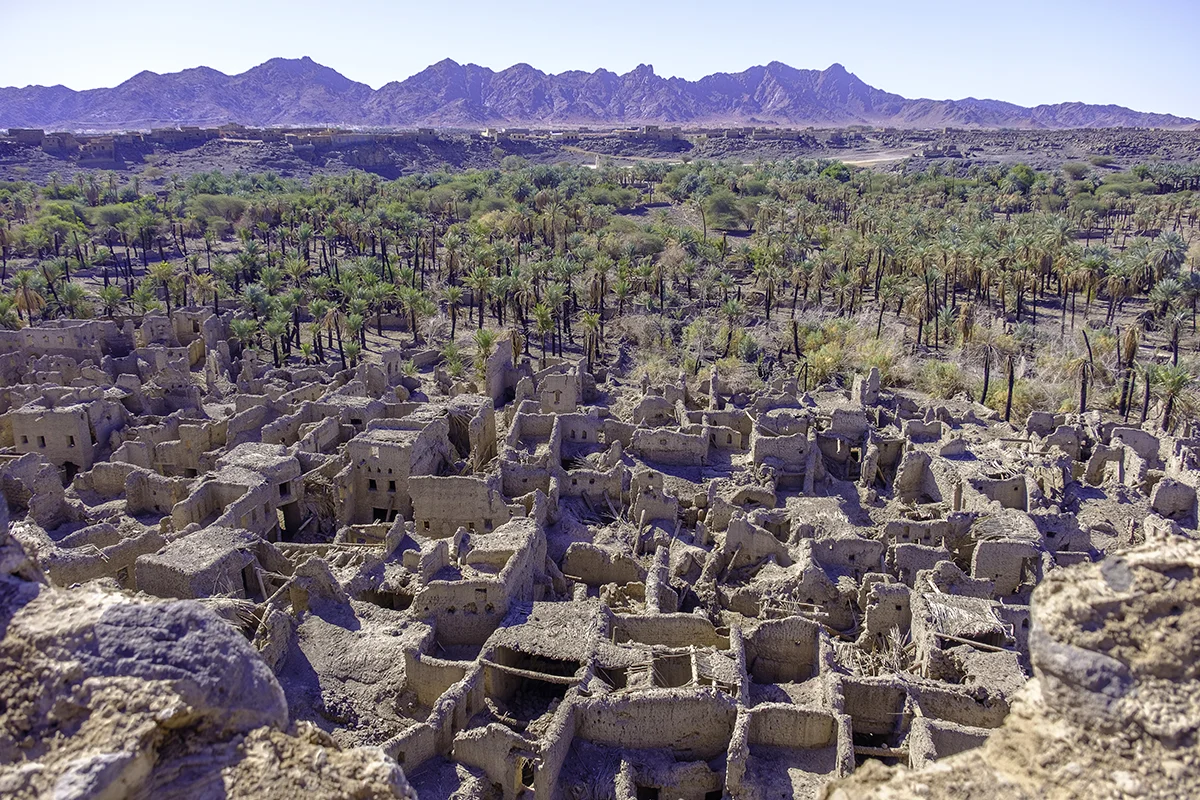
The fortress remains are at Khaybar, in the oasis about 153 km north of Madinah.
The area immediately around the main fortress is fenced off, both because the structure is considered unsafe and because it is under archaeological study. You will be looking from outside a fence, and you should.
See our Khaybar guide for the oasis, the geology and how to plan the day.
Is visiting part of Hajj or Umrah?
No. Not a rite of either, and no prescribed prayer or reported reward for visiting.
Related
- The Khaybar guide — the oasis and the practicalities.
- Na'im Fort — the first stronghold.
- Khaybar martyrs' cemetery.
- Al-Hudaybiyah — the treaty that made Khaybar possible.
Getting there, honestly
We do not run a scheduled service to Khaybar and we are not going to pretend otherwise. There is no published Wadana Go fare for it.
What works: a private car arranged in advance from Madinah, treated as a long day out, or a hire car if you are comfortable driving in Saudi Arabia. Our guide on driving yourself versus a private driver sets out the trade-offs, and renting a car in Saudi Arabia covers the paperwork.
If you want us to arrange a car and driver for a Khaybar day, ask before you travel rather than on the morning. It is a long run and the driver has to plan for it.
Our Beyond the Haramayn guide covers Khaybar alongside Badr, Taif, Tabuk and al-Hijr, and is the right place to start if you are building a trip beyond the two cities.
Accuracy note
The campaign at Khaybar in the seventh year after the Hijrah, following the treaty of al-Hudaybiyah, and its character as a series of operations against a network of fortified strongholds rather than a single battle, are established in the hadith and seerah literature; the classical sources name among the strongholds the fort of Na'im in the al-Na'im area and al-Qamus as the strongest. The account of the Prophet ﷺ saying he would give the standard to a man who loved Allah and His Messenger and whom they loved, the Companions spending the night hoping for it, his asking for Ali ibn Abi Talib, Ali's eye complaint and its relief, and the standard being given to him, is recorded in Sahih al-Bukhari and Sahih Muslim. The instruction to proceed carefully, call them to Islam and tell them what is obligatory upon them, and the statement that Allah guiding one man through him is better for him than red camels, is recorded in the same collections. The Qur'an describes al-Hudaybiyah as a clear victory. The area immediately around the main fortress at Khaybar is fenced off because the structure is deemed unsafe and is under archaeological study. Visiting is not a rite of Hajj or Umrah and no reward for visiting is reported. We do not run a scheduled service to Khaybar and have not quoted a fare for it. Content verified August 2026. Correction? Tell us.
Frequently asked questions
Planning a Saudi trip?
Pre-book a private car, find a stay, or ask us anything on WhatsApp.
Last updated: 4 September 2026·Sources reviewed by the Wadana Go editorial team.