Al-Watih Fortress: The Fort That Ended Khaybar by Agreement
Short answer
Al-Watih was one of the last two forts at Khaybar to fall, in the al-Katibah region alongside al-Sulalim. The sources record that they surrendered on terms, asking to be treated leniently and that their blood not be shed, and that the Prophet ﷺ agreed and did not take the property of those two forts. Visiting is not a rite of Hajj or Umrah.
Key takeaways
- ✓Al-Watih and al-Sulalim, in the al-Katibah region, were the last forts at Khaybar to fall.
- ✓They did not fall by assault. They surrendered on terms: to be treated leniently and their blood not shed.
- ✓The Prophet ﷺ agreed, and the sources record that he did not take the property of these two forts.
- ✓Bukhari and Muslim record that he then left the people of Khaybar on the land to work it for half of what it produced.
- ✓They kept farming and kept half. That arrangement is the foundation of the fiqh of sharecropping, muzara'ah and musaqah.
- ✓A hostile power that had worked against Madinah was defeated, and then left on its own land, working it, under an agreement.
- ✓Not expelled and not enslaved. Employed. You can read that as generosity or as good administration; both readings are in the sources.
Quick facts
- Location
- The al-Katibah region of the Khaybar oasis
- Significance
- One of the last two forts, and it surrendered on terms
- The terms
- Lenient treatment, blood not shed
- The property
- Not taken from these two forts
- What followed
- The land worked by its people for half the produce
- Recorded in
- Sahih al-Bukhari and Sahih Muslim
- Legal significance
- The basis of muzara'ah and musaqah in fiqh
- A marked site today
- Not verified by us
- Part of Umrah or Hajj
- No
- Evidence level
- A for the sharecropping arrangement; B for the fort
Al-Watih was one of the last two forts at Khaybar to fall, in the al-Katibah region, alongside al-Sulalim.
And they did not fall. They negotiated.
The seven forts, and the three regions
Khaybar was an oasis defended by a network of strongholds, not a single castle. The classical sources name seven: Na'im, al-Qamus, al-Katibah, al-Natat, al-Shiqq, al-Watih and al-Sulalim, grouped across three regions: al-Natat, al-Shiqq and al-Katibah.
The sources describe underground passages linking strongholds, used to move supplies during a siege. That is why the campaign ran as a sequence of operations rather than one assault.
The terms
The sources record that the people of al-Watih and al-Sulalim surrendered on condition that they be treated leniently and that their blood not be shed.
The Prophet ﷺ agreed, and the sources record that he did not take the property of these two forts.
Set that against what had already happened at Khaybar. The other strongholds had been taken by assault, and their property with them. These two asked for terms at the end of a campaign they had lost, and got them.
What happened afterwards
This is the part with the strongest evidence behind it, and it changed the fiqh of agriculture permanently.
Sahih al-Bukhari and Sahih Muslim record that the Prophet ﷺ left the people of Khaybar on the land to work it, on the basis that they would receive half of what it produced, in fruit and crops.
They kept farming. They kept half.
That arrangement is the foundation of the discussion of sharecropping, muzara'ah and musaqah, in the books of Islamic law. Generations of jurists worked from Khaybar.
Why the ending matters more than the assaults
The forts and the standard are the dramatic part. The ending is the instructive part.
A hostile power that had actively worked against Madinah, including during the siege, was defeated. And then the defeated population was left on its own land, working it, keeping half of everything it grew, under an agreement.
Not expelled. Not enslaved. Employed.
You can read that as generosity or as good administration, and both readings are available in the sources. Either way, it is the outcome that the two forts at al-Katibah negotiated their way into, and it is recorded in the two strongest collections.
The site today
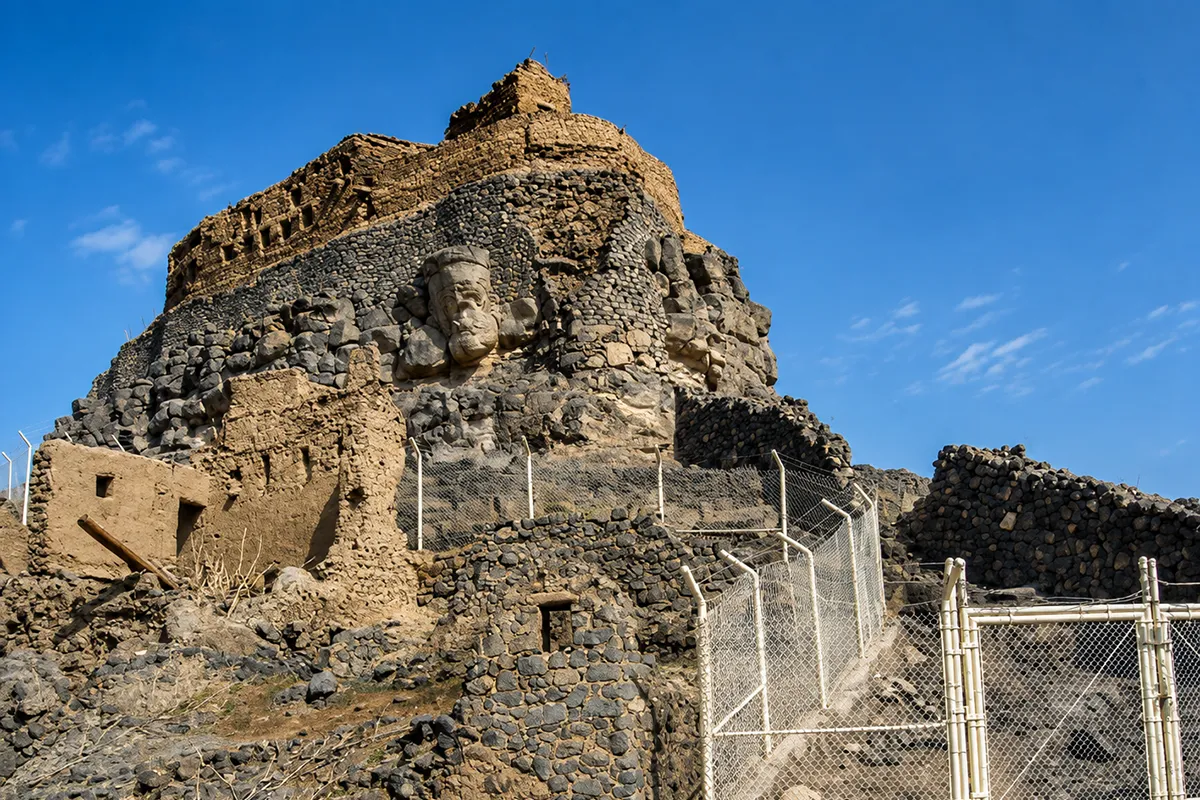
We could not verify a marked, signed or accessible site presented specifically as al-Watih.
The main fortress area at Khaybar is fenced off as unsafe and under archaeological study. Which surviving walls belong to which named stronghold is not something a visitor can determine, and we are not going to guess.
The evidence, plainly
- Al-Watih and al-Sulalim as the last forts, surrendering on terms: recorded in the seerah literature.
- The Prophet ﷺ leaving the people of Khaybar to work the land for half the produce: level A, Sahih al-Bukhari and Sahih Muslim.
- That arrangement as the basis of the fiqh of sharecropping: standard in the books of law.
- A specific identified or accessible fort site today: not verified by us.
Is visiting part of Hajj or Umrah?
No. Not a rite of either.
Related
- The Khaybar guide — the oasis and the practicalities.
- The Battle of Khaybar — the campaign in detail.
- Al-Zubayr fortress — the one taken by thirst.
- Na'im Fort — the first to fall.
Getting there, honestly
We do not run a scheduled service to Khaybar and there is no published Wadana Go fare for it. A private car arranged in advance from Madinah or a hire car are the practical options; see driving yourself versus a private driver and renting a car in Saudi Arabia. Ask before you travel, not on the morning. Our Beyond the Haramayn guide covers Khaybar alongside Badr, Taif, Tabuk and al-Hijr.
Accuracy note
Al-Watih and al-Sulalim as the last forts at Khaybar to fall, in the al-Katibah region, and their surrender on condition that they be treated leniently and that their blood not be shed, with the Prophet ﷺ agreeing and not taking the property of those two forts, are recorded in the seerah literature. That he left the people of Khaybar on the land to work it in return for half of what it produced in fruit and crops is recorded in Sahih al-Bukhari and Sahih Muslim, and that arrangement is the standard basis for the discussion of sharecropping, muzara'ah and musaqah, in the books of Islamic law. The seven forts of Khaybar named in the classical sources are Na'im, al-Qamus, al-Katibah, al-Natat, al-Shiqq, al-Watih and al-Sulalim, grouped across three regions. The characterisation of the outcome as generosity or as good administration is presented as two available readings, not as a claim from the sources. We could not verify a marked, signed or accessible site presented specifically as al-Watih today; the main fortress area at Khaybar is fenced off as unsafe and under archaeological study. Visiting is not a rite of Hajj or Umrah. We do not run a scheduled service to Khaybar and have not quoted a fare. Content verified August 2026. Correction? Tell us.
Frequently asked questions
Planning a Saudi trip?
Pre-book a private car, find a stay, or ask us anything on WhatsApp.
Last updated: 3 September 2026·Sources reviewed by the Wadana Go editorial team.